Category Archives: Food Pathogen

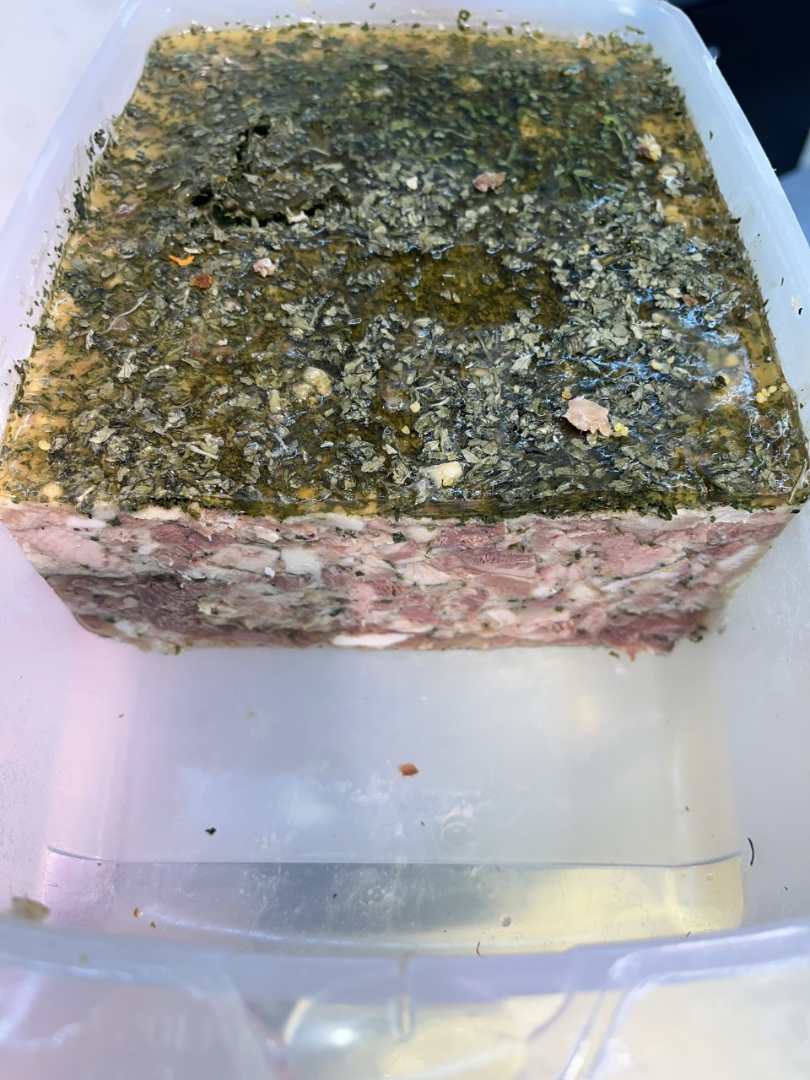
France – PARSILLE HEAD CHEESE WITH BURGUNDY ALIGOTE – Listeria monocytogenes

Gov france

Identification information of the recalled product

  • Product category Feed
  • Product subcategory Meats
  • Product brand name BRISSON
  • Model names or references PARSILLE HEAD CHEESE WITH BURGUNDY ALIGOTE
  • Identification of products
    GTIN Batch Date
    3521871020326 041-16 Use-by date 03/17/2023
  • Packaging 2.526 kg tray intended for the traditional department
  • Marketing start/end date From 03/03/2023 to 08/03/2023
  • Storage temperature Product to be stored in the refrigerator
  • Geographic area of ​​sale deposit 28
  • Distributors Intermarché de Cherisy

Practical information regarding the recall

  • Reason for recall Listeria contamination
  • Risks incurred by the consumer Listeria monocytogenes (causative agent of listeriosis)

USA – Regional Recall: Clio Snacks Voluntarily Recalls Strawberry Granola & Greek Yogurt Parfait Bars from Select Walmart Stores Because of Possible Health Risk – Listeria monocytogenes

FDA

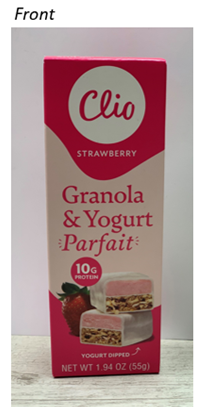
Strawberry Granola & Greek Yogurt Parfait Bar, front label, Net Wt. 1.94 oz

Clio Snacks of Piscataway, N.J. is voluntarily recalling 581 cases of its Strawberry Granola & Greek Yogurt Parfait Bar due to potential contamination with Listeria monocytogenes, an organism which can cause serious and sometimes fatal infections in young children, frail or elderly people, and others with weakened immune systems. Although healthy individuals may suffer only short-term symptoms such as high fever, severe headache, stiffness, nausea, abdominal pain and diarrhea, Listeria infection can cause miscarriages and stillbirths among pregnant women.

Product was distributed to select Walmart stores between 3/5/2023 and 3/8/2023.

The impacted product comes in a single-serving box with UPC Code 854021008152, Lot Number 048C2023 and an expiration date of 4/30/2023 stamped on the side of the box.

Strawberry Granola & Greek Yogurt Parfait Bar is the only product impacted. No other products are being recalled. No illnesses have been reported to date.

This potential limited exposure was found at a third-party manufacturer’s facility where Parfait Bars are produced. The third-party manufacturer does not manufacture any other Clio products. Clio does not manufacture Parfait bars at its own facility.

The recall was the result of a routine testing program by the company which revealed that affected Strawberry Parfait product produced by Clio’s contract manufacturer may contain Listeria monocytogenes. The third-party manufacturer has ceased production and Clio has ceased distribution of the affected product while the FDA and the company continue their investigation into what caused the problem.

Consumers who have purchased Clio Strawberry Granola & Yogurt Parfait bar with an expiration date of 4/30/2023 should not consume the product and are urged to return it to the place of purchase for a full refund or to destroy the recalled product.

Consumers with questions may contact the company at 1-908-505-2546 (Monday – Friday, 9-5pm EST).

 Italy – Chicken Julienne – Listeria monocytogenes

Salute

Brand : Coppiello Giovanni srl

Name : Chicken Julienne

Reason for reporting : Remind for microbiological risk

Date of publication : 15 March 2023

Documentation

Documentation

Italy – Sfilaccio di pollo – Listeria monocytogenes

Salute

Brand : Coppiello Giovanni srl

Name : Sfilaccio di pollo

Reason for reporting : Recall for microbiological risk

Date of publication : 15 March 2023

Documentation

Documentation

 Italy – Equine Sfilaccio 100 g atm – Listeria monocytogenes

Salute

Brand : Coppiello Giovanni srl

Name : Equine Sfilaccio 100 g atm

Reason for reporting : Remind for microbiological risk

Date of publication : 15 March 2023

Documentation
Documentation
Recall model Coppiello Giovanni srl – Sfilaccio of horse 100 g atm

15-03-2023 – PDF (297.3 Kb)

Italy – Equine sfilaccio 80 g (code 324154) – Listeria monocytogenes

Salute

Brand : Coppiello Giovanni srl

Name : Equine sfilaccio 80 g (code 324154)

Reason for reporting : Reminder for microbiological risk

Date of publication : 15 March 2023

Documentation

Documentation

Italy- Sfilaccio of Horse 100 g gold – Listeria monocytogenes

Salute

Brand : Coppiello Giovanni srl

Name : Sfilaccio of equine 100 g gold

Reason for reporting : Reminder for microbiological risk

Date of publication : 15 March 2023

Documentation

Documentation

UK – The Old Cheese Room recalls Baronet, Baby Baronet and Mini Baronet Soft Cheese because of the presence of Listeria monocytogenes

Gov UK

The Old Cheese Room is recalling Baronet, Baby Baronet and Mini Baronet Soft Cheese because Listeria monocytogenes has been found in some batches of these products.

Product details

Baronet Soft Cheese
Pack size 1kg
Best before 21 March 2023, 11 April 2023, 18 April 2023
Baby Baronet Soft Cheese
Pack size 200g
Best before 16 April 2023
Mini Baronet Soft Cheese
Pack size 270g
Best before 18 April 2023

Risk statement

The presence of Listeria monocytogenes in some batches of the products listed above.

Symptoms caused by this organism can be similar to flu and include high temperature, muscle ache or pain, chills, feeling or being sick and diarrhoea. However, in rare cases, the infection can be more severe, causing serious complications, such as meningitis.

Some people are more vulnerable to listeria infections, including those over 65 years of age, pregnant women and their unborn babies, babies less than one month old and people with weakened immune systems.

Action taken by the company

The Old Cheese Room is recalling the above products. Point of sale notices will be displayed where the products were sold. These notices explain to customers why the products are being recalled and tell them what to do if they have bought the products. Please see the attached notice.

Our advice to consumers

If you have bought any of the above products do not eat them. Instead, contact The Old Cheese Room for a full refund. For further information contact The Old Cheese Room at theoldcheeseroom@talktalk.net

Research – Human Pathogens in Primary Production Systems

MDPI

Human pathogenic micro-organisms can contaminate plants. Plants whose products can be consumed freshly or after minimal processing are of specific concern. It is under debate whether contaminations only occur at harvest or the after harvest processing of crops, or if they can already occur at the primary plant production stages.
Plants may be considered as secondary habitats for human pathogens [1], and, although they do not possess the full capacity to invade and colonize internal tissues of plants, like plant pathogens and endophytes do [2], they are still capable of maintaining themselves in the neighborhood of, and even inside, plants [3], and to proliferate in these ecosystems. Human pathogens can respond to chemical signals from plants [4] and, from that perspective, human pathogens may share properties with other micro-organisms commonly present in plant microbiomes. From an evolutionary perspective, it make sense that particular groups of zoonotic species are able to use plants as secondary habitats. These microbes can be transferred via feces among different flocks that graze on the same land [5]. Longer persistence on grazed plants may contribute to a wider distribution over different flocks. It is an important message for plant production that microbial interconnectivity will exist between ecosystems and that human pathogens can circulate between animals and plants when animal manure is applied to soil for fertilization [6]. Water used for irrigation is another human pathogen source in agricultural production systems, especially when derived from surface water bodies [7]. Human pathogens can contaminate surface water via drainage from arable fields recently fertilized with animal manure [8], but also from sewage overflow after severe precipitation [9] and wildlife [10].
The contamination of plant-derived products with human pathogens thus does not only result from harvest and post-harvest handlings, but can also occur at the primary production stage. The network activities of the EU COST Action on the control of human pathogens in plant production systems (HUPLANTcontrol) comprehended important aspects that were intended to gain a better understanding on the role of human pathogens in plant microbiomes in relation to ecology, taxonomical identity, and presumed virulence to humans. This information was relevant for the formulation of recommendations and guidelines to growers, but also to provide public information on the consequences of the presence of human pathogens in plant production systems. This Special Issue was dedicated to the main objectives of our network activities and resulted in seven manuscripts that are related to the topic of human pathogens in their relationship with plants.
It was shown that Escherichia coli, introduced via manure and seeds in production systems, had a higher preference for the root zone (roots and rhizosphere soil) than for the above-soil compartments [11,12]. Although different E. coli strains were incidentally found in stem parts shortly after their introduction, their abundance rapidly declined to levels below detection, whereas near, on, and inside roots, the introduced strains remained present up to plant senescence. As both experiments were performed under field-realistic circumstances, the key message derived from both manuscripts is critical for practice, because it would imply that plant roots are potential carriers of human pathogens once they are disseminated into production systems via external sources. The ability for microbial species to jump over from plant to animal kingdoms was indicated for two taxonomically distinct micro-organisms, Fusarium musae [13] and Bacillus cereus [14]. Namely, F. musae strains with the same genetic profile could infect both humans and plants (banana fruit), whereas B. cereus strains derived from 17 different agricultural soils sampled across Europe possessed genes that are potentially involved in human pathogenicity. Both studies made clear that human pathogens in plant production systems do not necessarily originate from external sources, but can be intrinsic members of soil and plant ecosystems. Soil treatment with composted sewage sludge resulted in a shift in the soil microbiome composition [15]. Salmonella enterica survived longer when simultaneously applied with composted sewage sludge to soil than when applied separately via irrigation. Changes in microbiomes as a result of soil amendments may thus influence the persistence of human pathogens in food production soils, and this information is relevant for understanding the mechanisms behind the soil persistence of human pathogens. Finally, it revealed that plants themselves can influence the behavior of human pathogens. Upon plant inoculation, flagellin expression was down-regulated in a vast majority of S. enterica cells, whereas high expression was found in a subfraction of the introduced population [16]. Heterogenous flagellin expression is an adaptational strategy of S. enterica inside plants. Plants defend themselves upon colonization by human pathogens via activating defensive networks [17]. Bioactive compounds produced by plants antagonize human pathogens in plants, offering new opportunities for the control of human pathogens in plant production systems.
The seven manuscripts in this Special Issue provide new and important information on the ecological behavior of human pathogens in the plant–soil environment and the roles that microbiomes play. They also demonstrated that plant microbiomes themselves harbor species that can potentially cross plant–animal frontiers and that the plant environment is a specific ecosystem where human pathogens are able to adapt to local prevailing circumstances. Valuable information was provided for further translation into practical recommendations, which is needed for the control of human pathogens in, or nearby, growing plants. Finally, the information provided is relevant for the transition towards extensive and circular agricultural production systems. The use of animal manure and other organic waste streams and reclaimed water as alternatives for fertilizers and irrigation water will become more opportune in this transition, affecting the introduction of human pathogens into plant production systems.

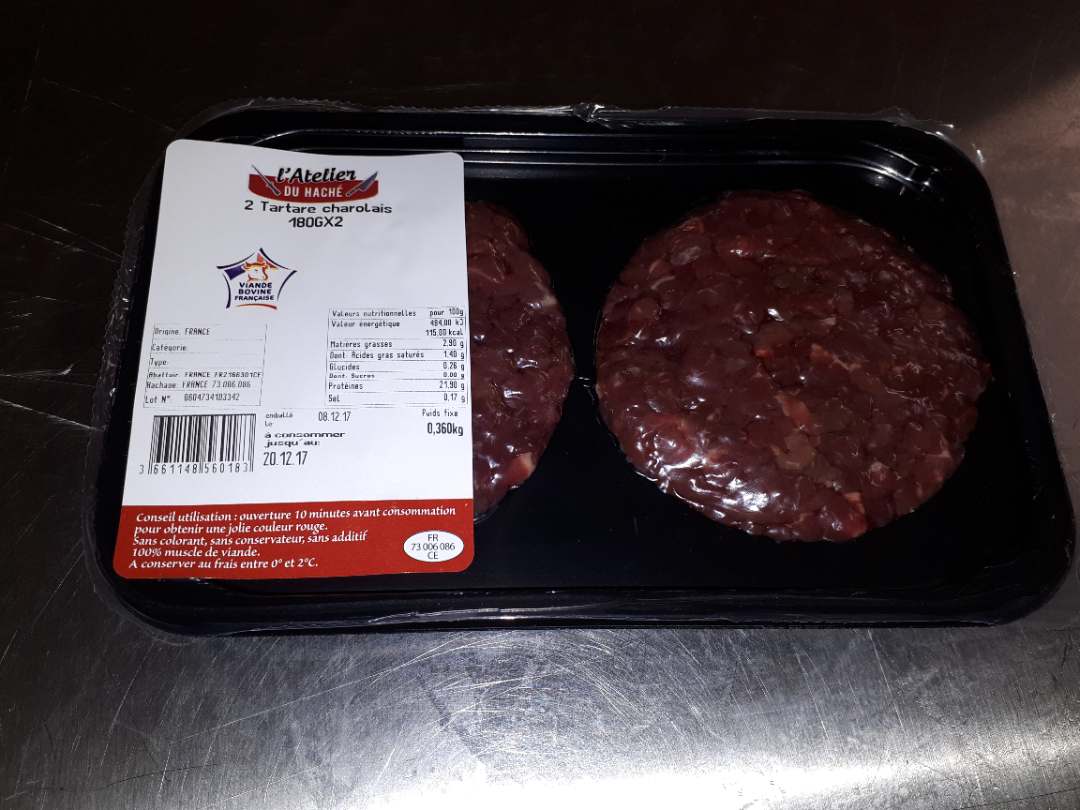
France – Tartar Mince 180gr and 140gr – Listeria monocytogenes

Gov france

Identification information of the recalled product

  • Product category Feed
  • Product subcategory Meats
  • Product brand name The minced meat workshop – Montagnes Saveurs
  • Model names or references Tartar knives 140gr Tartar knives 180gr
  • Identification of products
    GTIN Batch Date
    3701352514463 7929306203067 Use-by date 03/18/2023
    3701352514463 7929306203068 Use-by date 03/19/2023
    3701352514463 7929306203069 Use-by date 03/20/2023
    3701352520235 7929306203068 Use-by date 03/15/2023
    3701352520235 7929306203069 Use-by date 03/16/2023
  • Packaging under modified atmosphere and Skin
  • Marketing start/end date From 09/03/2023 to 13/03/2023
  • Storage temperature Product to be stored in the refrigerator
  • Health mark FR 73 006 086
  • Geographic area of ​​sale Departments: ISERE (38), SAVOIE (73), HAUTE-SAVOIE (74)
  • Distributors Independent restaurateur 8 to eight les halles savoyards

Practical information regarding the recall

  • Reason for recall Listeria presence
  • Risks incurred by the consumer Listeria monocytogenes (causative agent of listeriosis)