Category Archives: Food Microbiology Blog

Research – Toxoplasma gondii Antibodies in Raw Milk and Sera of Cows in China

MDPI

Toxoplasma gondii is a worldwide food-borne protozoa that has harmful influences on animal and human health. Raw milk containing T. gondii has been considered as one of the possible infectious sources for humans. Although China is one of the world’s leading milk consumers, there is still no study to investigate the seroprevalence of T. gondii in raw cow milk in China; especially for cows in rural areas. Thus, we conducted this study to examine the specific anti-T. gondii IgG-antibody in the raw milk and sera of domestic cows in China. In total, 894 cows were randomly selected from rural areas in northeastern China. The positive rate of T. gondii in the milk and serum samples were 6.38% (57/894) and 7.16% (64/894), respectively. Moreover, a history of abortion (OR = 2.03, 95% CI: 1.11–3.72, p = 0.022) was identified as the only risk factor for T. gondii infection in the studied cows. This study investigated the seroprevalence of T. gondii in the raw milk and sera of cows in China; it provided timely and useful data for public health and food safety, especially in rural areas. View Full-Text

Research – Project seeks to grow knowledge of Listeria in dairy sites

Food Safety News

An ongoing project is identifying the bacteria present in dairy processing environments to evaluate the impact on Listeria monocytogenes.

Teagasc in Ireland and the University of Veterinary Medicine Vienna in Austria are collecting samples from dairy processing plants and characterizing the microorganisms, with the aim being to prevent the presence of harmful pathogens.

The LmRNA project is gaining an understanding of Listeria monocytogenes’ response to dairy environment conditions. Mock communities of microorganisms are being created in the laboratory to mimic what is found in dairy environments. The role of other microorganisms is being investigated to determine their impact on Listeria monocytogenes.

A food processing environment is not sterile and the presence of some microorganisms in cheese production can be desired. During dairy processing, milk components may adsorb to surfaces enhancing attachment and biofilm formation.

Research – Sources and trends of human salmonellosis in Europe, 2015–2019: An analysis of outbreak data

Science Direct

Highlights

•

Salmonella outbreaks in Europe provide a picture of the most important sources at exposure level.

•

Relative importance of different food sources by year, European region and serotype is determined.

•

Eggs continue to be the most important food source of salmonellosis outbreaks in Europe.

•

Reported Salmonella outbreaks increased significantly in Eastern European countries.

Abstract

Salmonella remains a major cause of foodborne outbreaks in Europe despite the implementation of harmonized control programmes. Outbreak data are observed at the public health endpoint and provide a picture of the most important sources of human salmonellosis at the level of exposure. To prioritize interventions, it is important to keep abreast of the sources and trends of salmonellosis outbreaks. The objective of this study was to determine the main food sources and recent trends of Salmonella outbreaks in Europe. Salmonella outbreak data from 34 European countries in 2015–2019 were obtained from the European Food Safety Authority (EFSA). For the source attribution analysis, implicated foods were categorized according to EFSA’s zoonosis catalogue classification scheme. An established probabilistic source attribution model was applied using the information on the implicated foods, overall and by region and serotype. To assess significant trends in outbreak occurrence, overall and by region and serotype, mixed-effects Poisson models were used. Overall, the most important food source of salmonellosis outbreaks was eggs (33 %, 95 % Uncertainty Interval [UI]: 31–36 %), followed by pork (7 %, 95 % UI: 6–8 %), and (general) meat products (6 %, 95 % UI: 5–8 %). While eggs were the most important food source in all regions, pork was the second most common food source in Northern and Western Europe, and (general) meat products in Eastern and Southern Europe. Outbreaks caused by S. Enteritidis (SE) and other known serotypes (other than SE and S. Typhimurium and its monophasic variant [STM]) were mostly attributed to eggs (37 %, 95 % UI: 34–41 % and 17 %, 95 % UI: 11–25 %, respectively), whereas outbreaks caused by STM were mainly attributed to pork (34 %, 95 % UI: 27–42 %). Overall, there was a significant increase in the number of outbreaks reported between 2015 and 2019, by 5 % on average per year (Incidence Rate Ratio [IRR]: 1.05, 95 % Confidence Interval [CI]: 1.01–1.09). This was driven by a significantly increased number of outbreaks in Eastern Europe, particularly those caused by SE (IRR: 1.15, 95 % CI: 1.09–1.22), whereas in Northern and Southern Europe, outbreaks caused by SE decreased significantly from 2015 to 2019 (IRR: 0.72, 95 % CI: 0.61–0.85; IRR: 0.70, 95 % CI: 0.62–0.79, respectively). Regional, temporal and serotype-associated differences in the relative contributions of the different sources were also observed.

Research – Listeria monocytogenes survives better at lower storage temperatures in regular and low-salt soft and cured cheeses

Science Direct

Highlights

•

Salt reduction did not affect the behaviour of Listeria monocytogenes in soft cheeses.

•

The pathogen showed greater survival capacity at 4 °C than at 22 °C in both types of cheeses.

•

The prevalence of the serovar 1/2c strain increased over storage time in soft cheeses.

Abstract

The behaviour of Listeria monocytogenes was investigated in soft pasteurized milk cheese elaborated with different salt concentrations (1.17 and 0.30% w/w) and in cured raw sheep milk cheese over storage up to 189 days at different isothermal conditions. Commercial 25-g cheese samples were inoculated with a 4-strain cocktail of L. monocytogenes (serovars 4b, 1/2a, 1/2b and 1/2c) at approximately 104 CFU/g. The inoculated samples were stored at 4 and 22 °C and withdrawn at proper intervals for L. monocytogenes enumeration. The prevalence of the different serovar strains of L. monocytogenes was characterized on soft cheese samples over storage at 4 °C using multiplex PCR. Salt reduction did not affect the survival of L. monocytogenes in soft cheeses and a maximum of 1-log reduction was observed in both regular and low-salt cheeses after 189 days of storage at 4 °C. The pathogen showed greater survival capacity in both soft and cured cheeses during storage at 4 °C compared to the storage at 22 °C, where more than 2.5 log reductions were computed. The fate of L. monocytogenes was described through a Weibull model fitted to survival data. The time required for a first tenfold reduction of the L. monocytogenes population (δ) at 4 °C is around 150 days in soft and 72 days in cured cheeses. At 22 °C, the estimated δ values are at least 60% lower in both cheese types. Among the four L. monocytogenes serovars present in the inoculated cocktail, the serovar 4b strain was the most sensitive to refrigerated storage, while the prevalence of serovar 1/2c strain increased over time in soft cheeses. Overall, the data obtained in this study help to deepen knowledge into factors affecting L. monocytogenes behaviour on cheeses and evidenced the variability between serovars in terms of survival capacity, which may be considered when performing microbial risk assessments.

France – Chilled cooked peeled shrimp tails – Vibrio vulnificus

Gov france

Identification information of the recalled product

  • Product category Feed
  • Product subcategory Fishery and aquaculture products
  • Product brand name Unbranded
  • Model names or references Chilled cooked peeled shrimp tails
  • Identification of products
    GTIN Batch Date
    3760082438906 2222570003 2222580130 Use-by date between 26/09/2022 and 27/09/2022
  • Products List List_of_products_CRUSTA_C.pdf Attachment
  • Packaging Trays under modified atmosphere 300 g
  • Marketing start/end date From 09/14/2022 to 09/23/2022
  • Storage temperature Product to be stored in the refrigerator
  • Health mark EN 62.160.112 EC
  • Geographic area of ​​sale Whole France
  • Distributors H CENTRAL IN THE FOUR SEASONS
  • List of points of saleClient_list_CRUSTA_C.pdf

Practical information regarding the recall

  • Reason for recall Vibrio vulnificus
  • Risks incurred by the consumer Vibrio vulnificus

France – ANDOUILLE GUEMENE Listeria monocytogenes

Gov france

Identification information of the recalled product

  • Product category Feed
  • Product subcategory Others
  • Product brand name AT FRANCE
  • Model names or references ANDOUILLE GUEMENE
  • Identification of products
    Batch
    242P1637
  • Products List scan0002.pdf Attachment
  • Packaging SLICES AND/OR PIECE
  • Marketing start/end date From 09/10/2022 to 09/17/2022
  • Storage temperature Product to be stored in the refrigerator
  • Health mark LISTERIA DETECTED
  • Further information SALE IN THE TRADITIONAL CHARCUTERIE DEPARTMENT
  • Geographic area of ​​sale FAGNIERES-CHALONS IN CHAMPAGNE
  • Distributors CHADIS SAS (LECLERC FAGNIERES)

Practical information regarding the recall

  • Reason for recall LISTERIA DETECTED
  • Risks incurred by the consumer Listeria monocytogenes (causative agent of listeriosis)

France – PAVO Wurstel – Listeria monocytogenes

Gov france

Identification information of the recalled product

  • Product category Feed
  • Product subcategory Meats
  • Product brand name PVO
  • Model names or references WURS*PAVO HOT DOG1KG WURS.*PAVO FRANK.100
  • Identification of products
    Batch Date
    WURS*PAVO HOT DOG1KG Lots: 1825217 / 1846835 / 1863583 / 1869104 / 1873731 / 1883996 / 1911739 / 1921549 / 1929755 Use-by date between 21/09/2022 and 09/11/2022
    WURS.*PAVO FRANK.100 Lots: 1820701 / 1929176 Use-by date between 20/09/2022 and 08/11/2022
  • Packaging Vacuum plastic
  • Marketing start/end date Until 09/11/2022
  • Storage temperature Product to be stored in the refrigerator
  • Health mark IT 04 M EC
  • Geographic area of ​​sale Whole France
  • Distributors In progress

Practical information regarding the recall

  • Reason for recall Suspicion of the presence of Listeria monocytogenes
  • Risks incurred by the consumer Listeria monocytogenes (causative agent of listeriosis)

France – GOLOSINO DI POLLO AND TACCHINO- Listeria monocytogenes

Gov france

Identification information of the recalled product

  • Product category Feed
  • Product subcategory Meats
  • Product brand name NEGRONI
  • Model names or references GOLO PS 100 X20 NGR
  • Identification of products
    Batch Date
    1791526 / 1902495 Use-by date between 20/09/2022 and 14/11/2022
  • Packaging Vacuum plastic
  • Marketing start/end date Until 14/11/2022
  • Storage temperature Product to be stored in the refrigerator
  • Health mark IT 04 M EC
  • Geographic area of ​​sale Whole France
  • DistributorsI n progress

Practical information regarding the recall

  • Reason for recall Suspicion of the presence of Listeria monocytogenes
  • Risks incurred by the consumer Listeria monocytogenes (causative agent of listeriosis)

France – WUDY Wurstel – Listeria monocytogenes

Gov france

Identification information of the recalled product

  • Product category Feed
  • Product subcategory Meats
  • Product brand name AIA
  • Model names or references WUDY PARTY 240X12HALAL WUDY 150GX25 HALAL WUDY 1KG MAXIPAC WUDY 250GX15 WUDY HH COCKTAIL 1KG
  • Identification of products
    Lot Date
    WUDY PARTY 240X12HALAL Lots : 1900286 / 1916344 / 1947711 Use-by date between 21/09/2022 and 15/10/2022
    WUDY 150GX25 HALAL Lots : 1839024 / 1846862 / 1869111 / 1873756 / 1896650 / 1911224 / 1929185 / 1936510 / 1947712 Use-by date between 02/10/2022 and 24/11/2022
    WUDY 250GX15 Lots :1839009 / 1852807 / 1888982 / 1906129 / 1929751 / 1940795 Use-by date between 09/27/2022 and 11/15/2022
    WUDY 1KG MAXIPAC Lots : 1803199 / 1820077 / 1820665 / 1860349 / 1877305 / 1883993 / 1916974 / 1933896 / 1952362 Use-by date between 21/09/2022 and 30/11/2022
    WUDY HH COCKTAIL 1KG Lots : 1808935 / 1863556 Use-by date between 09/24/2022 and 10/21/2022
  • Packaging Vacuum plastic
  • Marketing start/end date Until 30/11/2022
  • Storage temperature Product to be stored in the refrigerator
  • Health mark IT 04 M CE
  • Geographic area of ​​sale Whole France
  • Distributors In progress

Practical information regarding the recall

  • Reason for recall Suspicion of the presence of Listeria monocytogenes
  • Risks incurred by the consumer Listeria monocytogenes (causative agent of listeriosis)

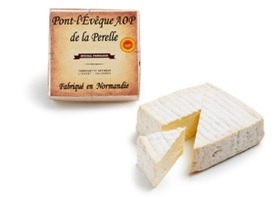
France – Petit Pont l’Eveque AOP La Perelle 240g-E.coli

Gov france

Identification information of the recalled product

  • Product category Feed
  • Product subcategory Milk and dairy products
  • Product brand name THE PEARL
  • Model names or references n / A
  • Identification of products
    GTIN Batch Date
    3252950007678 200822LI3 Use-by date 03/11/2022
  • Marketing start/end date From 08/09/2022 to 20/09/2022
  • Storage temperature Product to be stored in the refrigerator
  • Health markFR-14-371-001
  • Geographic area of ​​sale Whole France
  • Distributors Grand Fresh, Fresh

Practical information regarding the recall

  • Reason for recall Potential presence of Escherichia coli
  • Risks incurred by the consumer Escherichia coli