Category Archives: Food Hygiene

Belgium – Jumbo quinoa walnut snack salad – Salmonella

AFSCA

Jumbo recall
Product: Jumbo quinoa walnut snack salad.
Problem: possible presence of Salmonella.

In agreement with the FASFC, Jumbo is withdrawing from sale the product “Quinoa walnut snack salad” with DDM 17-01-2022 of the Jumbo brand and is recalling it from consumers due to the possible presence of Salmonella.

Jumbo asks its customers not to consume this product and to return it to the point of sale where it was purchased, where they will be reimbursed.

Product description: Product

name: Jumbo snack salade quinoa noten (Jumbo salad snack quinoa nuts)
Brand: Jumbo
EAN: 8718452542888
DDM: 17-01-2022
Period of sale: from 11-01-2022 to 14-01-2022
Nature of packaging: Plastic packaging
Weight: 200 g

The product was distributed in Jumbo subsidiaries in Belgium:
Pelt De koel, Lauwe Lauwbergstraat and Berlare Brugstraat.

For more information , customers can contact customer services on 0800-98998 or Jumbo.com . Our apologies for the inconvenience caused.

Netherlands – Safety warning 1st Best Beef Bratwurst and 1st Best Beef chipolatas from Dirk van den Broek contaminated with Salmonella

NVWA

Safety warning 1st Best Beef Bratwurst and 1st Best Beef chipolatas from Dirk van den Broek contaminated with Salmonella

Dirk immediately takes the 1 best beef bratwurst 6 pieces with best before 19-1 and beef chipolata 10 pieces with best before 20-1 from the boxes. The products may be contaminated with Salmonella.

Which products are involved?

  • 1 the Best beef bratwurst 6 pieces
    EAN code 2373291 Best before
    19-1-2022
  • 1 the Best beef chipolata 10 pieces
    EAN code 237073
    THT 20-1-2022

Customers are urged not to consume the product. If heated insufficiently, this product may pose a health hazard, especially to young children, the elderly, people with weakened immune systems and pregnant women.

See Dirk’s website

Sincerely

The Dutch Food and Consumer Product Safety Authority

Netherlands – Safety warning DekaVers beef chipolata, beef bratwurst, minced beef and Mediterranean beef sausage from DekaMarkt – Salmonella

NVWA

DekaMarkt immediately removes DekaVers beef chipolata, beef bratwurst, ground beef and Mediterranean beef sausage from DekaMarkt from the shelves. Checks have shown that these products may contain salmonella.

Which products are involved?

  • Dekavers beef chipolata 10 x 320 grams
    EAN code: 2337661 expiry date
    : 20-1-2022
  • Dekavers beef bratwurst 6 x
    EAN code: 2373281 Expiry date
    : 19-1-2022
  • Dekavers Minced beef 150 grams
    EAN code: 2336945 Expiry date
    : 18-1-2022
  • Dekavers beef sausage Mediterranean garlic 4 pieces
    EAN code: 2336908
    tht 19-1-2022

See also the website of Dekamarkt

Sincerely

The Dutch Food and Consumer Product Safety Authority

Germany – Natsu “Quinoa Nuts” salad, vegan – Salmonella

LMW

Recall Natsu Quinoa Nuts vegan 14.01.jpg

Manufacturer (distributor):

Natsu Foods GmbH & Co. KG Jagenbergstrasse 4b 41468 Neuss

Reason for warning:

Our own tests have shown that the product may contain salmonella. This germ can cause gastrointestinal diseases and, under certain circumstances, a serious illness (salmonellosis) in sensitive groups of people.

Packaging Unit: 200 g
Durability: Use by date: 01/16/22
Lot identification:

All products of the “Natsu Quinoa Nuts vegan” variety from Natsu Foods GmbH & Co with the use-by date of January 16, 2022

Further information:
Reference is made to the attached consumer information below.

Canada – Various Food Products recalled due to possible Salmonella contamination from rodent infestation

CFIA

Summary

Product
Various
Issue
Food » Microbial Contamination » Salmonella
What to do

Do not consume, use, sell, serve, or distribute the recalled products.

Issue

Bistak Enterprises Inc. and Bistak Groceries Inc. are recalling various products from the marketplace due to possible Salmonella contamination from rodent infestation.

The recalled products have been sold in Alberta and Ontario, and may have been distributed in other provinces and territories.

Consumers who are unsure if they have purchased the affected products are advised to contact their retailer.

What you should do

  • If you think you became sick from consuming a recalled product, call your doctor
  • Check to see if you have the recalled products in your home or establishment
  • Do not consume the recalled products
  • Do not serve, use, sell, or distribute the recalled products
  • Recalled products should be thrown out or returned to the location where they were purchased

Food contaminated with Salmonella may not look or smell spoiled but can still make you sick. Young children, pregnant women, the elderly and people with weakened immune systems may contract serious and sometimes deadly infections. Healthy people may experience short-term symptoms such as fever, headache, vomiting, nausea, abdominal cramps and diarrhea. Long-term complications may include severe arthritis.

Research – Genetic profiles and invasion ability of Listeria monocytogenes isolated from bovine carcasses in Southern Brazil

Journal of Food Protection

The goals of this study were to evaluate the persistence and the virulence potential of Listeria monocytogenes isolated from beef carcasses obtained in processing facilities in the Southern region of Rio Grande do Sul, Brazil, based on pulsed field gel electrophoresis (PFGE), invasion ability in human colorectal carcinoma cells (HCT-116), InlA expression by western blot (WB) and identification of mutation points in the inlA . PFGE profiles demonstrated that L. monocytogenes isolates were grouped based on their previously identified lineages and serogroups (lineage I: serogroups IIb, n = 2, and IVb, n = 5; lineage II, serogroup IIc, n = 5), isolates with indistinguishable genetic profiles by this method were obtained from different slaughterhouses and sampling steps, with up to 3-year interval. Seven isolates showed high invasion ability (2.4 to 7.4%, lineage I, n = 6, lineage II, n = 1) in HCT and expressed InlA. Five isolates showed low cell invasion ability (0.6 to 1.4%, lineage I, n = 1, lineage II, n = 4) and did not express InlA, and two of them (lineage II, serogroup IIc) presented mutations in inlA leading to a premature stop codon (PMSC) type 19, at position 326 (GAA → TAA). The results demonstrated that most of L. monocytogenes isolates from Lineage I expressed InlA and were the most invasive in HCT indicating their high virulence potential, while most isolates from Lineage II showed attenuated invasion due to non-expression of InlA and the presence of PMSC type 19 in inlA . The obtained results demonstrated that L. monocytogenes with indistinguishable PFGE profiles can be persisting or being reintroduced in beef processing facilities in the studied region and differences on their virulence potential based on their lineages and serogroups.

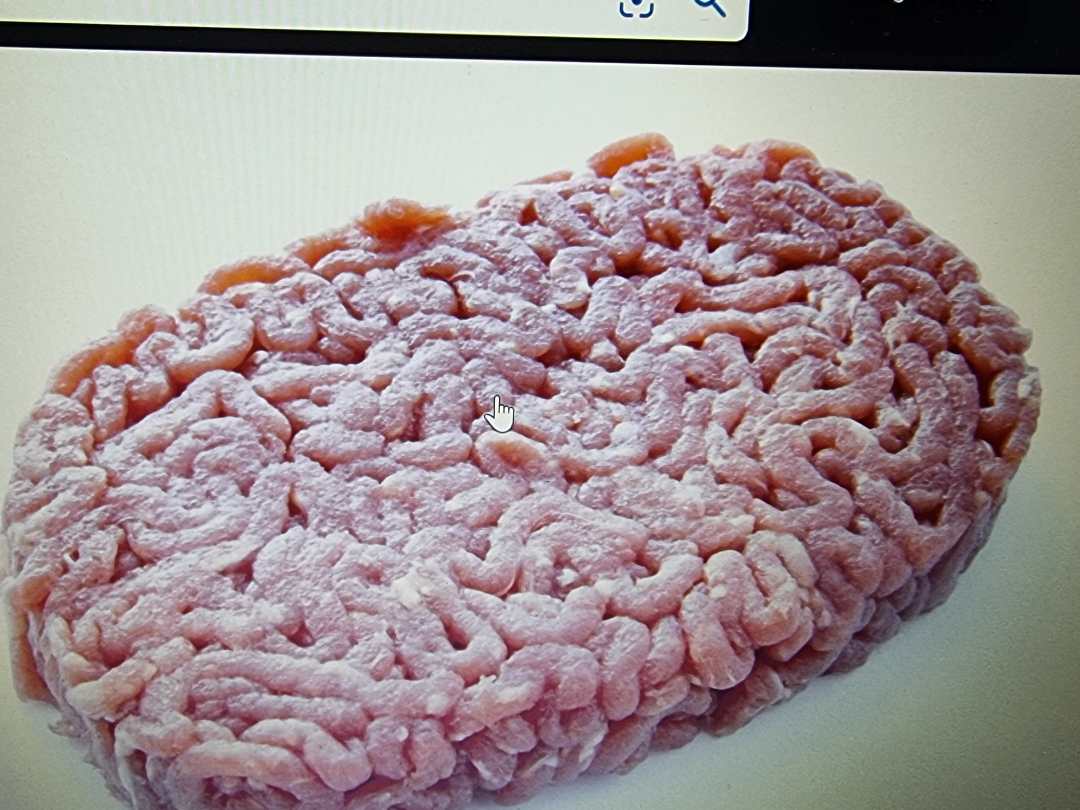
France – STEAK AX BULK – Listeria monocytogenes

Gov france

Identifying information for the recalled product

  • Product category Food
  • Product sub-category Meats
  • Product brand name MEAT
  • Names of models or references STEACK HACHE ON DEMAND
  • Product identification
    GTIN Lot Dated
    02887988000000 STEAK HACHE ON DEMAND 02887988000000 Use-by date 08/01/2022
  • Packaging  BULK RAYON TRADITIONAL BUTCHERY
  • Start date / End of marketing From 01/07/2022 to 01/07/2022
  • Storage temperature Product to be stored in the refrigerator
  • Geographical sales area INTERMARCHE LE MAGNY
  • Distributors INTERMARCHE LA CHATRE

Practical information regarding the recall

  • Reason for recallNon-compliant analyzes on hamburger on demand
  • Risks incurred by the consumerListeria monocytogenes (causative agent of listeriosis)

Canada – Various Food Products recalled due to possible Salmonella contamination from rodent infestation

CFIA

Summary

Product
Various
Issue
Food » Microbial Contamination » Salmonella
What to do

Do not consume, use, sell, serve, or distribute the recalled products.

Bistak Enterprises Inc. and Bistak Groceries Inc. are recalling various products from the marketplace due to possible Salmonella contamination from rodent infestation.

The recalled products have been sold in Alberta, British Columbia, Manitoba, Ontario, Saskatchewan and may have been distributed in other provinces and territories.

Consumers who are unsure if they have purchased the affected products are advised to contact their retailer.

What you should do

  • If you think you became sick from consuming a recalled product, call your doctor
  • Check to see if you have the recalled products in your home or establishment
  • Do not consume the recalled products
  • Do not serve, use, sell, or distribute the recalled products
  • Recalled products should be thrown out or returned to the location where they were purchased

Food contaminated with Salmonella may not look or smell spoiled but can still make you sick. Young children, pregnant women, the elderly and people with weakened immune systems may contract serious and sometimes deadly infections. Healthy people may experience short-term symptoms such as fever, headache, vomiting, nausea, abdominal cramps and diarrhea. Long-term complications may include severe arthritis.

RASFF Alerts – Salmonella – Chicken Products from Poland – Black Pepper – Chillies – Chicken Kebab

RASFF

Salmonella CO in Chicken elements from Poland in the Czech Republic

RASFF

Salmonella spp. in frozen chicken kebab from Poland in Spain and Poland

RASFF

Salmonella (presence /25g) in black pepper from Brazil in the Netherlands

RASFF

Salmonella spp. in chilies from Kenya in Austria and Germany

RASFF

Salmonella Enteritidis in frozen chicken tulip from Poland in France

RASFF

Chicken kebab – Salmonella spp. CO serogroup present in 25 g in 3 out of 5 tested samples in Spain

RASFF

Salmonella enterica ser. Newport (presence /25g) in chilled chicken meat from Poland in the Czech Republic

RASFF

Salmonella (presence /25g) in black pepper from Brazil in the Netherlands

RASFF Alert- Bacillus cereus – Millet Flour

RASFF

Aflatoxins and Bacillus cereus in organic sesame seeds from Togo in Germany, Netherlands and Switzerland