
Category Archives: Food Hygiene

USA – FDA Recall – Salmone and Herring Fillets – Listeria monocyotogenes

FDAFDA

Prime Food USA, 50st & 1st Ave Building # 57, Brooklyn NY 11232, is recalling Latis Brand Herring Fillet “Matiej”, Salmon Fillet Slices and Herring Fillet “Forelka” in Oil due to contamination with listeria monocytogenes. Listeria can cause serious complications for pregnant women, such as stillbirth. Other problems can manifest in people with compromised immune systems. Listeria can also cause serious flu-like symptoms in healthy individuals.

The recalled Latis Brand Herring Fillet “Matiej” is packaged in 17.64oz (500grams) in plastic containers.The 17.64oz (500gram) container has a partial code: 01.14 and UPC Number 7541004076916. Salmon Fillet Slices packaged in 7.5oz plastic container and has a code.15.07.13(17JL), Herring Fillet “Forelka” in Oil 11.64oz (330gram) is packaged in plastic oval type containers. The 11.64oz (330gram) container has a code 07.01.14(09JR) .The products were sold in New York State.They are products of Latvia.

The recall initiated after routine sampling by New York State Department of Agriculture and Markets Food Inspectors and subsequent analysis of the product by Food Laboratory personnel found the product to be positive for Listeria monocytogenes.

No illnesses have been reported to date in connection with this problem. Consumers who have purchased Latis Brand Herring Fillet “Forelka” in Oil, Herring Fillet “Matiej”and Salmon Fillet Slices should not consume it, but should return it to the place of purchase.Consumers with questions may contact the company at 718-439-0376
Research – Antibiotic Resitant Bacteria in Meats in the USA – E.coli Use Flagella as Anchors

Food Poisoning Bulletin

An analysis by the Environmental Working Group has found that antibiotic-resistant bacteria are common on meat for sale in American supermarkets. A government study published on February 5, 2012 without fanfare found that 81% of ground turkey, 69% of pork chops, 55% of ground beef, and 39% of chicken carried antibiotic-resistant bacteria.

The study, published by the National Antimicrobial Resistance Monitoring System (NARMS), which is a joint project by the FDA, CDC and USDA, found that the meat samples collected in 2011 harbored “significant amounts” of superbug versions of Salmonella and Campylobacter. Those two bacteria cause 3.6 million cases of foodborne illness every year in the United States.

In addition, 53% of raw chicken samples carried an antibiotic-resistant strain of E. coli, the bacteria found in feces. And the antibiotic resistance is growing fast. Of all Salmonella bacteria found on raw chicken in 2011, 74% were antibiotic resistant, compared to less than 50% in 2002.

Food Poisoning Bulletin

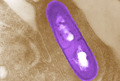
Flagella aren’t just for swimming. For E.coli, these long tails that propel them through liquid, also function as anchors, establishing a hold on surfaces that allow the bacteria to settle in and colonize, according to a new study from Harvard researchers.

“We demonstrate that flagella are able to reach into crevices, access additional surface area, and produce a dense, fibrous network,’” the researchers say in the abstract for the  study which was published in Proceedings of the National Academy of Sciences (PNAS) on March 18. The findings could lead to improved design of surfaces used in health care and food manufacturing settings.

RASFF Alerts – Aflatoxins – Groundnuts – Dried Figs – Pistachios

RASFF – Aflatoxins (B1 = 9.8; Tot. = 11.9 µg/kg – ppb) in groundnut kernels from India, via the Netherlands in Germany

RASFF – Aflatoxins (B1 = 10; Tot. = 10 µg/kg – ppb) in dried figs from Turkey in Denmark

RASFF – Aflatoxins (B1 = 21.0; Tot. = 23.2 / B1 = 8.5; Tot. = 19.5 µg/kg – ppb) in shelled pistachios from Turkey in Spain

RASFF – Aflatoxins (B1 = 4.7 µg/kg – ppb) in groundnuts from China in the Netherlands

RASFF – Aflatoxins (B1 = 12; Tot. = 31 µg/kg – ppb) in pistachios from Turkey in the Netherlands

RASFF – Aflatoxins (B1 = 16 µg/kg – ppb) in groundnuts from China in the Netherlands

RASFF – Aflatoxins (B1 = 5.3 µg/kg – ppb) in groundnuts from the United States in the Netherlands

RASFF – Ochratoxin – Dried Fruits – Sultanas – Nutmeg – Raisins – Paprika

RASFF – Ochratoxin A (99 µg/kg – ppb) in dried fruits from Afghanistan in Bulgaria

RASFF – Ochratoxin A (150 µg/kg – ppb) in sultanas from Afghanistan in Spain

RASFF – Ochratoxin A (105 µg/kg – ppb) in ground nutmeg from the Netherlands in Germany

RASFF – Ochratoxin A (12.9 µg/kg – ppb) in raisins from Turkey in Germany

RASFF – Ochratoxin A (49.44 µg/kg – ppb) in paprika powder from the Czech Republic, with raw material from Spain in Czech Republic


RASFF Alert – Norovirus – Oysters

RASFF – Norovirus (GII) in oysters from France in Italy

RASFF Alerts – Salmonella – Chicken – Sausages – Beef – Red Onions – Paan Leaves

RASFF – Salmonella (presence /25g) in frozen salted chicken breast fillets from Brazil in the Netherlands

RASFF – Salmonella typhimurium (presence /25g) in frozen beef trimmings from Poland, via Germany in Sweden

RASFF – Salmonella Minnesota (presence /25g) in frozen chicken (Gallus gallus) from Brazil in Spain

RASFF – Salmonella Derby (presence /25g) in sausages from Italy

RASFF – Salmonella (presence /25g) in dehydrated red onions from the United Kingdom in Belgium

RASFF – Salmonella spp. (present /25g) in paan leaves from Sri Lanka in the UK

RASFF Alerts – E.coli and STEC E.coli – Beef – Basil – Mussels

RASFF – Shigatoxin-producing Escherichia coli in beef fillets from Argentina in Germany

RASFF – High count of Escherichia coli (30000/9000/24000/10000/33000 CFU/g) in fresh sweet basil from Cambodia in Norway

RASFF – Too high count of Escherichia coli (7000/8000/10000/>150000/43000 CFU/g) in fresh sweet basil from Cambodia in Norway

RASFF – High count of Escherichia coli (>15000; >15000; 800; >15000; >15000 CFU/g) in fresh sweet basil from Cambodia in Norway

RASFF – Shigatoxin-producing Escherichia coli (presence /25g) in chilled boneless bovine meat from Brazil in tne Netherlands

RASFF – Shigatoxin-producing Escherichia coli (presence /25g) in chilled boneless beef meat from Argentina, via Germany in the Netherlands

RASFF – High count of Escherichia coli (1700 MPN/100g) in Mediterranean mussels (Mytilus galloprovincialis) from Spain in Italy

RASFF – Shigatoxin-producing Escherichia coli in chilled boneless beef from Uruguay in Germany

RASFF – High count of Escherichia coli (620<=>4400 CFU/g) in basil leaves from Cambodia in Norway

USA – Extended Recall of Meats – Listeria monocytogenes

Food Poisoning Journallisteria-hp

Manda Packing Company, a Baker, La., establishment, is expanding its recall to include approximately 468,000 pounds of roast beef, ham, turkey breast, tasso pork, ham shanks, hog head cheese, corned beef, and pastrami due to possible contamination with Listeria monocytogenes, the U.S. Department of Agriculture’s Food Safety and Inspection Service (FSIS) announced today.

Canada – Extended Recall – Smoked Fish – Seafood- Clostridium botulinum –

CFIACIFA

The public warning issued earlier today has been expanded to include additional products and codes.

The Canadian Food Inspection Agency (CFIA) is warning the public not to consume the smoked fish products described below because they may be contaminated with Clostridium botulinum.  Toxins produced by these bacteria may cause botulism, a life-threatening illness.

There have been no reported illnesses associated with the consumption of these products.

The manufacturer, Hooked Inc., Toronto, ON, is voluntarily recalling the affected products from the marketplace. The CFIA is monitoring the effectiveness of the recall.

CFIA

The public warning issued on April 6, 2013 has been updated to include additional products because they may be contaminated with Clostridium botulinum. Previously identified products included in this recall can be found on the Canadian Food Inspection Agency (CFIA) website.

The Canadian Food Inspection Agency (CFIA) is warning the public not to consume the St. Thomas brand bottled seafood products described below because they may be contaminated with Clostridium botulinum. Toxins produced by these bacteria may cause botulism, a life-threatening illness.

There have been no reported illnesses associated with the consumption of these products.

These products have been distributed in New Brunswick and may have been distributed in other provinces.

The CFIA is monitoring the effectiveness of the recall.

Canada – Recall – Clostridium botulinum – Smoked Fish

CFIAClost

The Canadian Food Inspection Agency (CFIA) is warning the public not to consume the smoked fish products described in the link above because they may be contaminated with Clostridium botulinum.  Toxins produced by these bacteria may cause botulism, a life-threatening illness.

There have been no reported illnesses associated with the consumption of these products.