Category Archives: Food Hygiene

USA -Outbreak of Multidrug-Resistant Salmonella Infections Linked to Raw Turkey Products – Investigation Notice

CDC

  • Since the last update on November 8, 2018, 52 ill people from 26 states and the District of Columbia have been added to this investigation.
  • As of December 18, 2018, 216 people infected with the outbreak strain of Salmonella Reading have been reported from 38 states and the District of Columbia.
    • 84 people have been hospitalized, and one death has been reported from California.
  • Epidemiologic and laboratory evidence(https://www.cdc.gov/foodsafety/outbreaks/investigating-outbreaks/index.html) indicates that raw turkey products from a variety of sources are contaminated with Salmonella Reading and are making people sick.
  • In interviews, ill people report eating different types and brands of turkey products purchased from many different locations. Three ill people lived in households where raw turkey pet food was fed to pets.
  • The outbreak strain has been identified in samples taken from raw turkey pet food, raw turkey products, and live turkeys.
    • On November 15, 2018, Jennie-O Turkey Store Sales in Barron, Wisconsin recalled approximately 91,388 pounds of raw ground turkey products.
    • On December 21, 2018, Jennie-O Turkey Store Sales, LLC, in Faribault, Minnesota recalled approximately 164,210 pounds of raw ground turkey products.
    • A single, common supplier of raw turkey products or of live turkeys has not been identified that could account for the whole outbreak.
  • The Public Health Agency of Canada has identified ill people infected with the same DNA fingerprint of Salmonella Reading bacteria in Canada.
  • The outbreak strain of Salmonella Reading is present in live turkeys and in many types of raw turkey products, indicating it might be widespread in the turkey industry. CDC and USDA-FSIS have shared this information with representatives from the turkey industry and asked about steps that they may be taking to reduce Salmonella contamination.


Norway – Reports increase in Listeriosis in December

Outbreak News Today

Officials with the Norwegian Institute of Public Health report seeing an increase in listeriosis cases in December, prompting a warning for high-risk groups.

According to an official notice Friday (computer translated), six cases were reported this month when the country typically sees 1-2 cases a month.

Four of the six patients reported in December are from Hedmark and Oppland.

Health officials are working to identify if their is a common food source linked to the increase in cases.

Research – Growth potential of Listeria monocytogenes in ready‐to‐eat Feta cheese‐based sauce stored at 4°C

Wiley Online Library

Abstract

Listeria monocytogenes is now a well‐known foodborne pathogen of particular importance in ready‐to‐eat (RTE) refrigerated foods given the psychrotrophic character and ubiquitous nature of the bacterium. The objective of the current research was to assess the growth potential of L. monocytogenes in RTE cheese‐based (Feta) sauce. For this to occur, samples of Feta cheese‐based sauce (ca. 1% NaCl, pH = 4.6, 900 ppm sorbic acid) were artificially contaminated with a mixture of two L. monocytogenes strains and were stored aerobically at 4°C for 30 days. Growth potential (δ) of L. monocytogenes in Feta cheese‐based sauce was calculated at −1.2 log CFU/g for the 30‐day shelf‐life (i.e., δ < 0.5 log CFU/g). Findings of this study indicate that Feta cheese‐based sauce containing 900 ppm of sorbic acid as preservative is unable to support the growth of L. monocytogenes, thus the food safety criterion for pathogen enumeration not exceeding the limit of 100 CFU/g should apply during the shelf‐life of the product, as stated by Commission Regulation (EC) No. 2073/2005.

Practical applications

Contamination of acidic cheese‐based spreadable products, with pH ≤ 4.6 and/or water activity (i.e., Aw) > 0.94, with different bacterial species during the manufacturing process, could limit considerably the shelf‐life of these RTE products. Moreover, among other possible contaminants, the ubiquitous psychrotrophic pathogen L. monocytogenes may pose a serious threat for the microbiological safety of such products, like a Feta cheese‐based sauce with the aforementioned characteristics. Challenge testing for assessing the risk from L. monocytogenes presence during shelf‐life of this product is, therefore, deemed necessary and can provide us with useful information regarding possible pathogen containment due to product’s composition and characteristics. Conclusively, even if the Feta cheese‐based sauce described in this study is contaminated with low numbers of L. monocytogenes at levels below the limit of detection (i.e., absence in 25 g), then the organism will not exceed 100 CFU/g by the end of product’s shelf‐life.

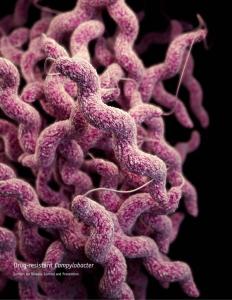
Research -Prevalence, antimicrobial susceptibility, and virulence of Campylobacter jejuni isolated from chicken meat

Wiley Online Library

campy2

Abstract

The aim of this study was to determine the prevalence and antimicrobial resistance of Campylobacter jejuni isolated from retail chicken meat. The identification of Campylobacter isolates and the presence of virulence factor were evaluated by polymerase chain reaction (PCR). Furthermore, clove oil, cinnamon, and turmeric extracts were evaluated for the antimicrobial potential against Campylobacter isolates. Out of 200 chicken meat samples, 80 (40%) samples were found contaminated with Campylobacter jejuni. Antibacterial susceptibility testing indicated that out of 80 isolates 60 (75%) were resistant to tetracycline followed by 31 (38.75%) to ciprofloxacin, 12 (15%) to ampicillin, 8 (10%) to erythromycin, and 2 (2.5%) were resistant to chloramphenicol. Clove oil and cinnamon extract showed antibacterial potential against Campylobacter isolates. Furthermore, all the 80 isolates (100%) were found positive for virulence genes (cadF, flaA, and dnaJ). The presence of antibacterial resistance and virulence factors in C. jejuni highlighted the risk associated with retail poultry meat.

Practical applications

Campylobacter jejuni is associated with foodborne illnesses such as gastrointestinal intestinal complications. This study demonstrated that raw chicken meat should be subjected to pretreatment to avoid the foodborne illnesses associated with multidrug‐resistant (MDR) Campylobacter jejuni. Moreover, the use of antibiotics should be strictly monitored in developing countries to avoid the emergence of multidrug‐resistant pathogens.


USA -Jennie-O – 216 with Salmonella, 175 Hospitalized with 1 Death from Ground Turkey

Food Poisoning Journal 

Since the last update on November 8, 2018, 52 ill people from 26 states and the District of Columbia have been added to this investigation. As of December 18, 2018, 216 people infected with the outbreak strain of Salmonella Reading have been reported from 38 states and the District of Columbia. A list of the states and the number of cases in each can be found on the Map of Reported Cases page.

Illnesses started on dates from November 20, 2017, to December 6, 2018. Ill people range in age from less than 1 year to 99, with a median age of 40. Fifty-five percent of ill people are female. Of 175 people with information available, 84 (48%) have been hospitalized. One death has been reported from California.

USA – Final Update – Burien Fresh Smoothies Salmonella Outbreak

Food Poison Journal

SummaryPublic Health investigated an outbreak of salmonellosis (caused by Salmonella bacteria) associated with Burien Fresh Smoothies in Burien. The exact food or drink item that caused the illnesses has not been identified.

Since August 15, 2018, eleven people from six separate meal parties reported becoming ill after consuming food and beverage from Burien Fresh Smoothies from August 6–8, 2018. Two of the ill people were hospitalized and have since recovered. There is no indication that any employees of the restaurant have had any symptoms consistent with salmonellosis.

Eight of the eleven people who got sick tested positive for Salmonella Braenderup with the same genetic fingerprint, suggesting that they have a common source of infection.

Food samples collected from the establishment tested negative for salmonella. We were not able to confirm which food or beverage caused these illnesses.

UK – 9 sick: Salmonella linked to Dr Zak’s Barn Farmed Liquid Egg White

Barf Blog

Dr Zak’s Barn Farmed Liquid Egg White sounds like 19th century hucksterism or medicine man.

According to Tony Gussin of the North Devon Gazette, nine people in the UK including one in North Devon are thought to have caught the disease after consuming Dr Zak’s Barn Farmed Liquid Egg White bottles.

Australia – Recall: Vic’s Meat BONE-IN HAM HALF LEG – Listeria monocytogenes

Food Authority NSW kswfoodworld Listeria monocytogenes 

The NSW Food Authority advises:

Vic’s Premium Quality Meat is conducting a recall of the above product. The product has been available for sale at Simon Johnson, Victor Churchill and Vic’s Meat Brisbane in NSW, QLD and WA.

Product details:

  • Vic’s Meat BONE-IN HAM HALF LEG 4.5kg, cardboard box (2 types used) – Brown cardboard box with Victor Churchill illustration, White cardboard box with Vic’s meat illustration
  • Best Before 29/01/2019

Problem: The recall is due to microbial (Listeria monocytogenes) contamination.

Food safety hazard: Listeria may cause illness in pregnant women and their unborn babies, the elderly and people with low immune systems.

Country of origin: Australia

What to do: Any consumers concerned about their health should seek medical advice and should return the product to the place of purchase for a full refund.

For further information please contact Vic’s Premium Quality Meat on (02) 9317 6900 or via www.vicsmeat.com.au

RASFF Alert – Aflatoxin – Fig Paste – Dried Figs – Groundnuts – Pistachios – Hazlenuts – Pepper Powder –

RASFF-Logo

RASFF-aflatoxins (B1 = 8.7; Tot. = 14.8 µg/kg – ppb) in figs paste from Turkey in France

RASFF-aflatoxins (B1 = 6.6; Tot. = 14.3 µg/kg – ppb) in diced dried figs from Turkey in France

RASFF-aflatoxins (B1 = 6.6 µg/kg – ppb) in organic sweet pepper powder from Spain in France

RASFF-aflatoxins (B1 = 20.8; Tot. = 22.7 µg/kg – ppb) in shelled pistachios from Turkey in Italy

RASFF-aflatoxins (B1 = 5.5; Tot. = 12 µg/kg – ppb) in groundnuts from Argentina in the Netherlands

RASFF-aflatoxins (B1 = 47.6; Tot. = 54.8 µg/kg – ppb) in hazelnut kernels from Georgia in Bulgaria

RASFF-aflatoxins (B1 = 10.59; Tot. = 18.66 µg/kg – ppb) in groundnuts from Argentina in Poland

RASFF-aflatoxins (B1 = 6.3; Tot. = 9.1 µg/kg – ppb) in groundnuts from Argentina in the Netherlands

RASFF-aflatoxins (B1 = 4.7 µg/kg – ppb) in shelled groudnuts from Egypt in the Netherlands

RASFF-aflatoxins (B1 = 13; Tot. = 17 µg/kg – ppb) in groundnuts from Argentina in the Netherlands

RASFF-aflatoxins (B1 = 13.7; Tot. = 22.7 µg/kg – ppb) in groundnut kernels from Argentina  in the Czech Republic

RASFF-aflatoxins (B1 = 52.2; Tot. = 59.4 µg/kg – ppb) in pistachios from Turkey in Belgium

RASFF-aflatoxins (B1 = 199; Tot. = 209 µg/kg – ppb) in pistachios from Turkey in Belgium

RASFF Alerts – Listeria monocytogenes – Blood Sausages – Smoked Salmon -Graved Salmon – Salted Salmon – VP Black Angus Steak Tartare

RASFF-Logo

RASFF -Listeria monocytogenes (<100 CFU/g) in blood sausages from France in France

RASFF-Listeria monocytogenes (<10 CFU/g) in Norwegian thawed smoked salmon from Estonia in Italy

RASFF-Listeria monocytogenes (170 CFU/g) in chilled graved salmon from Poland in Germany

RASFF-Listeria monocytogenes (18000 CFU/100g) in chilled salted salmon from Belarus in Poland

RASFF-Listeria monocytogenes (presence /25g) in chilled vacuum-packed black angus steak tartare meat from the United Kingdom in the Netherlands