Category Archives: Decontamination Microbial

Research – Washing or rinsing chicken increases Microbial risk.

Fight Bac

Don't Wash Your Chicken Text block

Research – Virulence Characteristics and Distribution of the Pathogen Listeria ivanovii in the Environment and in Food

MDPI

Listeria ivanovii and L. monocytogenes, are the only pathogenic species of the genus Listeria and share many virulence factors and mechanisms of pathogenicity. L. ivanovii shows host tropism towards small ruminants and rodents and much lower virulence for humans compared to L. monocytogenes. However, severe infections caused by L. ivanovii, resulting in bacteremia, abortion and stillbirth, occasionally occurred in immunocompromised persons and in pregnant women, while in immunocompetent hosts L. ivanovii can cause gastroenteritis. In this review, the updated knowledge on virulence aspects and distribution of L. ivanovii in the environment and in food is summarized. Recent research on its virulence characters at genome level gave indications on how pathogenicity evolved in this bacterial species. As for L. monocytogenesL. ivanovii infections occurred after the ingestion of contaminated food, so an overview of reports regarding its distribution in food products was carried out to obtain indications on the categories of foods exposed to contamination by L. ivanovii. It was found that a wide variety of food products can be a source of this microorganism and that, like L. monocytogenesL. ivanovii is able to persist in the food production environment. Studies on its ability to grow in enrichment and isolation media suggested that its occurrence in nature might be underestimated. Moreover, virulence varies among strains for differences in virulence character regulation, presence/absence of genetic regions and the possible instability of a Listeria pathogenicity genomic island, LIPI-2, which is unique to L. ivanovii. We can conclude that L. ivanovii, as a possible pathogen for animals and humans, requires more focused investigations regarding its occurrence in the environment and in food and on intra-species variability of pathogenic potential. View Full-Text

Research – Eco-Friendly Edible Packaging Systems Based on Live-Lactobacillus kefiri MM5 for the Control of Listeria monocytogenes in Fresh Vegetables

MDPI

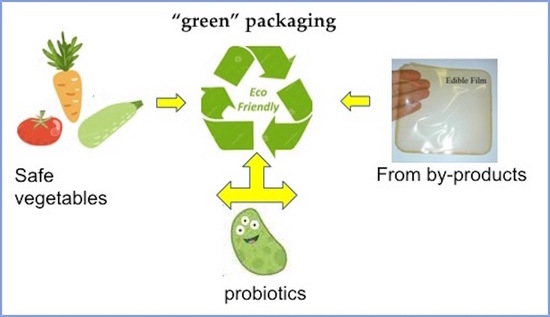
To meet consumer requirements for high quality food free of chemical additives, according to the principles of sustainability and respect for the environment, new “green” packaging solutions have been explored. The antibacterial activity of edible bioactive films and coatings, based on biomolecules from processing by-products and biomasses, added with the bacteriocin producer Lactobacillus kefiri MM5, has been determined in vegetables against L. monocytogenes NCTC 10888 (i) “in vitro” by a modified agar diffusion assay and (ii) “on food” during storage of artificially contaminated raw vegetable samples, after application of active films and coatings. Both polysaccharides-based and proteins-based films and coatings showed excellent antilisterial activity, especially at 10 and 20 days. Protein-based films displayed a strong activity against L. monocytogenes in carrots and zucchini samples (p < 0.0001). After 10 days, both polysaccharide-based and protein-based films demonstrated more enhanced activity than coatings towards the pathogen. These edible active packagings containing live probiotics can be used both to preserve the safety of fresh vegetables and to deliver a beneficial probiotic bacterial strain. The edible ingredients used for the formulation of both films and coatings are easily available, at low cost and environmental impact.

Research – Whole-Genome Analysis of Staphylococcus aureus Isolates from Ready-to-Eat Food in Russia

MDPI

This study provides a thorough investigation of a diverse set of antimicrobial resistant (AMR) Staphylococcus aureus isolates collected from a broad range of ready-to-eat (RTE) food in various geographic regions of Russia ranging from Pskov to Kamchatka. Thirty-five isolates were characterized using the whole genome sequencing (WGS) analysis in terms of clonal structure, the presence of resistance and virulence determinants, as well as plasmid replicon sequences and CRISPR/Cas systems. To the best of our knowledge, this is the first WGS-based surveillance of Russian RTE food-associated S. aureus isolates. The isolates belonged to fifteen different multilocus sequence typing (MLST)-based types with a predominant being the ones of clonal complex (CC) 22. The isolates studied can pose a threat to public health since about 40% of the isolates carried at least one enterotoxin gene, and 70% of methicillin-resistant (MRSA) isolates carried a tsst1 gene encoding a toxin that may cause severe acute disease. In addition, plasmid analysis revealed some important characteristics, e.g., Rep5 and Rep20 plasmid replicons were a “signature” of MRSA CC22. By analyzing the isolates belonging to the same/single strain based on cgMLST analysis, we were able to identify the differences in their accessory genomes marking their dynamics and plasticity. This data is very important since S. aureus isolates studied and RTE food, in general, represent an important route of transmission and dissemination of multiple pathogenic determinants. We believe that the results obtained will facilitate performing epidemiological surveillance and developing protection measures against this important pathogen in community settings. View Full-Text

Research – Insights into the Bacterial Diversity and Detection of Opportunistic Pathogens in Mexican Chili Powder

MDPI

Chili powder is the most frequently consumed spice in Mexican diets. Thus, the dissemination of microorganisms associated with chili powder derived from Capsicum annuum L. is significant during microbial quality analysis, with special attention on detection of potential pathogens. The results presented here describe the initial characterization of bacterial community structure in commercial chili powder samples. Our results demonstrate that, within the domain Bacteria, the most abundant family was Bacillaceae, with a relative abundance of 99% in 71.4% of chili powder samples, while 28.6% of samples showed an average relative abundance of 60% for the Enterobacteriaceae family. Bacterial load for aerobic mesophilic bacteria (AMB) ranged from 104 to 106 cfu/g, while for sporulated mesophilic bacteria (SMB), the count ranged from 102 to 105 cfu/g. Bacillus cereus sensu lato (s.l.) was observed at ca. ˂600 cfu/g, while the count for Enterobacteriaceae ranged from 103 to 106 cfu/g, Escherichia coli and Salmonella were not detected. Fungal and yeast counts ranged from 102 to 105 cfu/g. Further analysis of the opportunistic pathogens isolated, such as B. cereus s.l. and Kosakonia cowanii, using antibiotic-resistance profiles and toxinogenic characteristics, revealed the presence of extended-spectrum β-lactamases (ESBLs) and Metallo-β-lactamases (MBLs) in these organisms. These results extend our knowledge of bacterial diversity and the presence of opportunistic pathogens associated with Mexican chili powder and highlight the potential health risks posed by its use through the spread of antibiotic-resistance and the production of various toxins. Our findings may be useful in developing procedures for microbial control during chili powder production. View Full-Text

Research – Bacteriocin Production by Escherichia coli during Biofilm Development

MDPI

Escherichia coli is a highly versatile bacterium ranging from commensal to intestinal pathogen, and is an important foodborne pathogen. E. coli species are able to prosper in multispecies biofilms and secrete bacteriocins that are only toxic to species/strains closely related to the producer strain. In this study, 20 distinct E. coli strains were characterized for several properties that confer competitive advantages against closer microorganisms by assessing the biofilm-forming capacity, the production of antimicrobial molecules, and the production of siderophores. Furthermore, primer sets for E. coli bacteriocins–colicins were designed and genes were amplified, allowing us to observe that colicins were widely distributed among the pathogenic E. coli strains. Their production in the planktonic phase or single-species biofilms was uncommon. Only two E. coli strains out of nine biofilm-forming were able to inhibit the growth of other E. coli strains. There is evidence of larger amounts of colicin being produced in the late stages of E. coli biofilm growth. The decrease in bacterial biomass after 12 h of incubation indicates active type I colicin production, whose release normally requires E. coli cell lysis. Almost all E. coli strains were siderophore-producing, which may be related to the resistance to colicin as these two molecules may use the same transporter system. Moreover, E. coli CECT 504 was able to coexist with Salmonella enterica in dual-species biofilms, but Shigella dysenteriae was selectively excluded, correlating with high expression levels of colicin (E, B, and M) genes observed by real-time PCR. View Full-Text

Research – Sporadic Occurrence of Enteroaggregative Shiga Toxin–Producing Escherichia coli O104:H4 Similar to 2011 Outbreak Strain

CDC

Abstract
We describe the recent detection of 3 Shiga toxin–producing enteroaggregative Escherichia coli O104:H4 isolates from patients and 1 from pork in the Netherlands that were genetically highly similar to isolates from the 2011 large-scale outbreak in Europe. Our findings stress the importance of safeguarding food supply production chains to prevent future outbreaks.

Shiga toxin–producing Escherichia coli (STEC) is a zoonotic pathogen that causes illness ranging from mild diarrhea to haemolytic uremic syndrome and death. During 2011, an exceptionally large outbreak caused by serotype O104:H4 STEC occurred in Europe, mainly in Germany and France, that was associated with sprouts grown from imported fenugreek seeds (1). Besides the ability to produce Shiga toxin, specifically stx2a, the strain had the genetic characteristics and phylogenetic backbone of an enteroaggregative E. coli (EAEC) pathotype (2) but lacked other classical STEC virulence markers eae and hlyA (3). In addition, the outbreak strain carried plasmid-borne blaCTX-M-15 and blaTEM-1 genes. The epidemiologic investigation revealed that a contaminated batch of fenugreek seeds imported into the European Union from Egypt was the most probable source of the pathogen causing the outbreak (4).

After the 2011 outbreak in Germany and France, only a few sporadic cases of infection with Shiga toxin–producing EAEC O104:H4 were reported, most related to travel to Turkey or North Africa (5–8). We describe the sporadic occurrence of Shiga toxin–producing EAEC O104:H4 isolates in the Netherlands, originating from 2 clinical cases from 2019 and 2020 and 1 food isolate from 2017. In addition, we report a clinical case from Austria in 2021.

Research – An outbreak of cryptosporidiosis associated with drinking water in north-eastern Italy, August 2019: microbiological and environmental investigations

Eurosurveillance

crypto

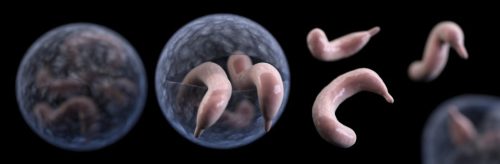
The enteric parasite , along with norovirus,  and rotavirus, is among the most frequent causes of waterborne disease [1,2]. In humans, transmission of  occurs via the faecal-oral route, either through direct exposure to infected people (person-to-person infection) or animals (animal-to-person infection), or through ingestion of water (drinking water, recreational water such as swimming pools, water parks, lakes, rivers) or consumption of raw or undercooked food contaminated with infectious oocysts [3]. Infection may remain asymptomatic or manifest as acute gastroenteritis (> 80% of infected individuals). Symptoms occur 1 to 12 days (mean: 7 days) after exposure and usually last 6 to 9 days. The severity and duration of symptoms are linked to the immune status of the host, and cryptosporidiosis can be life threatening in immunosuppressed individuals [4].

There are many  species that can infect humans, but the vast majority of cases are due to , a zoonotic species that also infects young ruminants, and , which is essentially only a human pathogen [5]. The environmental route of transmission is of high relevance for  [6]. This is due to several factors including: (i) the high survival rate of oocysts in water (more than 24 months at 20°C), (ii) high resistance to disinfection (30 mg/L of free chlorine are needed to achieve 99% inactivation at pH 7, with a recommended value of 0.2 mg/L for drinking water) [6], (iii) low infectious dose (10–132 oocysts in healthy adults [7]) and (iv) low host specificity [5]. Oocysts lose their infectivity when frozen, boiled or heated over 60°C [6].

The ability of  to survive at high chlorine concentrations [8] and, consequently, at the disinfectant concentrations commonly used in water treatment, has always been a challenge for water treatment plant operators. However, other disinfectants, such as chlorine dioxide, ozone, UV rays and filtration have proved to be rather effective in removing . Water safety mainly depends on the combination of different treatment stages, and a multi-barrier approach is a key paradigm for ensuring safe drinking water [6]. Nonetheless, in small water supplies managed by local communities that serve only few thousand people, multi-barrier treatment systems are usually not implemented. Thus, in order to ensure the safety of drinking water, more traditional treatments, e.g. disinfection, are used and water quality is checked against certain regulatory parameters.

During 2017–20, 60 waterborne outbreaks of cryptosporidiosis have been detected in Europe, the majority of which involving treated recreational water (swimming pools) as the vehicle of infection [9]. The number of outbreaks linked to contaminated drinking water has shown a notable decrease in the past decades, although, when occurring, large numbers of individuals may be involved, as exemplified by the outbreaks reported in 2010–11 in Sweden [10,11].


Israel – Strauss gets approval to reopen chocolate plant after Salmonella closure

Food Safety News

Strauss Group has been given permission to restart a factory in Israel that was shut months because of Salmonella findings.

The confectionery manufacturing site in Nof Hagalil will gradually return to production following a thorough clean-up of the plant and investments in infrastructure.

Food inspectors from the Israeli Ministry of Health allowed the resumption of operations after an audit. Agency officials will continue inspections of the plant as part of the return to full production. Strauss Group said this ramp up may take several months.

Approval was suspended in April after a recall of Elite brand products and link to an outbreak prompted an audit which found a number of issues at the factory including Salmonella on a production line and in the liquid chocolate used to make finished products. Elite products were recalled from United States, Canada, Australia, Brazil, Europe and the United Kingdom.

Research – Persistence of Listeria monocytogenes ST5 in Ready-to-Eat Food Processing Environment

MDPI

Most human listeriosis is foodborne, and ready-to-eat (RET) foods contaminated by Listeria monocytogenes during processing are found to be common vehicles. In this study, a total of four L. monocytogens STs (ST5, ST121, ST120, and ST2) have been identified in two RTE food plants from 2019 to 2020 in Shanghai, China. The L. monocytogenes ST5 was predominant in one RTE food processing plant, and it persists in the RTE meat processing plant with continued clone transmission. The genetic features of the four STs isolates were different. ST5 and ST121 had the three genes clpLmdrL, and lde; however, ST120 and ST2 had two genes except for clpL. SSI-1was present in ST5, ST121, and ST120. Additionally, SSI-2 was present only in the ST121 isolates. ST120 had all six biofilm-forming associated genes (actAprfAlmo0673recOlmo2504 and luxS). The ST2 isolate had only three biofilm-forming associated genes, which were prfAlmo0673, and recO. The four ST isolates had different biofilm formation abilities at different stages. The biofilm formation ability of ST120 was significantly higher when grown for one day. However, the biofilm formation ability of ST120 reduced significantly after growing for four days. In contrast, the biofilm formation ability of ST5 and ST121 increased significantly. These results suggested that ST5 and ST121 had stronger ability to adapt to stressful environments. Biofilms formed by all four STs grown over four days can be sanitized entirely by a disinfectant concentration of 500 mg/L. Additionally, only ST5 and ST121 biofilm cells survived in sub-lethal concentrations of chlorine-containing disinfectant. These results suggested that ST5 and ST121 were more resistant to chlorine-containing disinfectants. These results indicated that the biofilm formation ability of L. monocytogenes isolates changed at different stages. Additionally, the persistence in food processing environments might be verified by the biofilm formation, stress resistance, etc. Alternatively, these results underlined that disinfectants should be used at lethal concentrations. More attention should be paid to ST5 and ST121, and stronger surveillance should be taken to prevent and control the clonal spread of L. monocytogenes isolates in food processing plants in Shanghai. View Full-Text