Category Archives: Campylobacter

Finland – Decline in foodborne outbreaks likely due to COVID-19 measures

Food Safety News

More than four times fewer suspected food and waterborne epidemics have been reported in Finland in the past few months.

Between March and May, four suspected foodborne outbreaks were reported, compared with an average of 18 in previous years, according to the Finnish Institute for Health and Welfare (THL).

The agency believes this is because of the coronavirus pandemic and associated limitations and recommendations. When hands are washed diligently and food is prepared for smaller groups, there are fewer epidemics, the THL reported.

Suspected pathogens in the four outbreaks are Campylobacter, Yersinia, and norovirus.


Research – The European Union control strategy for Campylobacter spp. in the broiler meat chain

Wiley Online

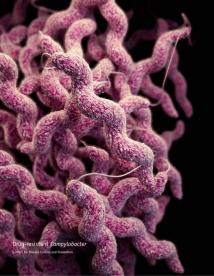
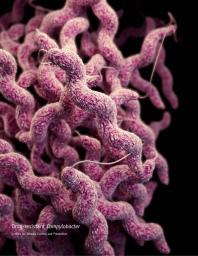
Campylobacter

Image CDC


Campylobacter is the most common cause of bacterial gastroenteritis worldwide and the most frequently reported foodborne pathogen in the European Union (EU). While campylobacteriosis is generally self‐limiting, some patients could develop severe sequelae. The predominant source of infection is poultry. This review addresses the most relevant factors influencing the prevalence and contamination level of Campylobacter spp. in the poultry chain continuum. The emphasis was put on the novel control strategy for Campylobacter that is based on evidence‐based risk assessment and the introduction of process hygiene criterion intended for monitoring the prevalence and counts of Campylobacter spp. on broiler carcasses at slaughter level. The reduction of Campylobacter spp. in the poultry meat chain in the EU can only be achieved with an integrated meat safety assurance approach. This includes primary interventions at the level of the poultry farm, implementation of effective control measures at slaughterhouses, and fostering awareness campaigns aimed at consumers.

Research – Campylobacter infection major cause of child stunting

Medical Express

campy2

Image CDC

Gastrointestinal infection with Campylobacter plays a major role in the stunting of children in urban Bangladesh, say the authors of a new study.

The bacteria Campylobacter, which people get from contaminated food and drinks, can lead to severe diarrhoea. Infections of Campylobacter in children under the age of two years are especially frequent in developing countries. According to a WHO factsheet, Campylobacter diarrhoea’s duration and possible complications makes it highly important from a socio-economic perspective.

Stunting may result in neurodevelopmental delays and metabolic disorders later in life. It is a major global health challenge particularly in South Asia where 35 percent of all children are stunted. Worldwide, approximately 144 million children are stunted, according to the UN Children’s Fund.

Research -The European Union control strategy for Campylobacter spp. in the broiler meat chain

Wiley Online

Campylobacter is the most common cause of bacterial gastroenteritis worldwide and the most frequently reported foodborne pathogen in the European Union (EU). While campylobacteriosis is generally self‐limiting, some patients could develop severe sequelae. The predominant source of infection is poultry. This review addresses the most relevant factors influencing the prevalence and contamination level of Campylobacter spp. in the poultry chain continuum. The emphasis was put on the novel control strategy for Campylobacter that is based on evidence‐based risk assessment and the introduction of process hygiene criterion intended for monitoring the prevalence and counts of Campylobacter spp. on broiler carcasses at slaughter level. The reduction of Campylobacter spp. in the poultry meat chain in the EU can only be achieved with an integrated meat safety assurance approach. This includes primary interventions at the level of the poultry farm, implementation of effective control measures at slaughterhouses, and fostering awareness campaigns aimed at consumers.


UK – Tesco’s chicken Campylobacter results above FSA target

Food Safety News


The mega-supermarket chain Tesco has reported 9 percent of chickens tested in the first quarter this year had the highest level of Campylobacter contamination.

This is above the Food Standards Agency (FSA) target of 7 percent and Tesco’s own benchmark of 5 percent of birds with more than 1,000 colony forming units per gram (cfu/g) of Campylobacter.

Tesco data shows 9 percent of 132 samples from January to March had the top level of contamination. It is double the percentage reported in the previous quarter.

“The safety and quality of the food we sell remains our top priority. The results this quarter were affected by a reduced sample size compared to previous tests, and we believe we’ll see levels return to within our expected range in future,” said a Tesco spokesperson.

Another large retailer Asda has not yet provided 1Q figures for 2020 and did not respond to a request for comment.

Denmark – Campylobacter outbreak linked to milk sickens more than 100

Food Safety News

More than 100 people are sick in a Campylobacter outbreak in Denmark linked to a local dairy.

The Danish Veterinary and Food Administration (Fødevarestyrelsen), DTU Food Institute and Statens Serum Institut (SSI) are investigating illnesses that began in Bornholm in late May.

Patient interviews point toward pasteurized milk from Bornholms Andelsmejeri (Bornholm Dairy) as the source of infection but product testing has been negative for Campylobacter. Bornholm Dairy is a cooperative owned by Bornholm milk producers.

Research – Australia sees decline in Campylobacter and Salmonella

Food Safety News

Rates of Campylobacter and Salmonella infections in Australia have almost halved since the lockdown because of the Coronavirus pandemic that began in March.

The Food Safety Information Council revealed that since the COVID-19 shutdown started, reported rates of these infections per 100,000 people have declined compared to the past two years.

This shows the effectiveness of good handwashing, and that there has been less bulk catering as fewer people have been eating out or entertaining, according to the health promotion charity.

In April, 839 Salmonella infections were recorded compared to 1,383 in 2019. For May, 818 cases were reported versus 1,172 in the same period the year before, according to the Australian Department of Health’s National Notifiable Diseases Surveillance System. These figures convert to a reporting rate of 3.4 in April compared to 5.5 in April 2019 and 3.3 in May versus 4.7 in May 2019.

Denmark -DTU is helping to investigate outbreaks of disease on Bornholm – Campylobacter

DTU

The Danish Veterinary and Food Administration, DTU The Danish Food Institute and the Swedish Serum Institute, SSI, have jointly investigated an ongoing disease outbreak on Bornholm since June 2, 2020. Currently, there are reports of up to 100 people with symptoms similar to a campylobacter infection.

So far, 54 people aged 9 months to 97 years have tested positive for campylobacter and several patient samples are being investigated. The sick live on Bornholm or have visited the island recently. SSI is also investigating whether it is the same type of campylobacter that has made patients sick.

The goal of the collaboration is to identify the source of infection. At present, there is no trace of a particular source, but one suspects a locally produced food – presumably a ready-to-eat product.

Read more

The details of the outbreak and the work on finding the source of infection are described in more detail in a news from the Danish Veterinary and Food Administration: Several sufferers of campylobacter on Bornholm . The news also provides good advice on how consumers best avoid getting infected with campylobacter.

Iceland – Monitoring of Sunu 2019

Monitoring of Sunu 2019

Salmonella increased in poultry and pigs in 2019 compared to the year before there was an increase in salmonella infections in humans. The rapid increase in the illness caused by toxin producing E. coli (STEC) in people when the cycle of infection occurred last summer in the south . Food has published a report on the monitoring agents exhibit and antibiotic resistance in 2019 on the website of the Agency.

Sununu are diseases or pathogens (súnuvaldar) transmitted between humans and animals. Control of salmonella (Salmonella spp.) And Campylobacter (Campylobacter spp.) In the first stages of the food chain is powerful in the country and deliver increased consumer food safety. Other food-borne bacteria cause disease in people less than in the light of the very serious illnesses may include monitoring of the bacteria no less important.

The incidence of salmonella in poultry, the products of poultry and pigs increased from the previous year. The increase was due to repeated infected a few farms where it has been difficult to get rid of certain strains of bacteria. A similar increase was not found in people and it indicates that the monitoring of fire and slaughterhouses, in accordance with national programs, minimize the risk of contamination of poultry and pork in people. Whole Gene Research conducted in support that conclusion. While salmonella was found in one sample from the domestic pork market reminiscent of the constant need to be alert and to encourage proper treatment of food with consumers.

No significant changes were observed in the prevalence of Campylobacter in people or poultry and their products. Campylobacter was detected in three samples of frozen chicken meat market (2.1% of samples), samples from both domestic and foreign meat. In all cases, this was a very little bacterial contamination or below the detection limit (<10 cfu / g) counting method which dies Campylobacter mostly frozen.

The rapid increases in illness in people due to infections caused by toxin producing E. coli (STEC), which is explained primarily by a rally in the summer of 2019 in which 22 children and two adults became ill. So far, the incidence of this infection have been very low in people in this country, one to three cases a year. Epidemiological evidence regarding the cycle and screening conducted in 2018 and 2019 for STEC in meat market suggest that the bacteria are part of the microflora of Icelandic cattle and sheep. Research is needed, however, better prevalence of STEC in livestock and focus on preventive measures in slaughterhouses and meat processors to reduce the risk of spreading STEC in meat. Moreover, it must avoid the unclean artifacts present at the slaughterhouse.

Listeria (Listeria monocytogenes) found regularly in the known risks and production environment. That year the initiatives contained in the monitoring of food businesses that produce food ready for consumption, with an emphasis on smoke and buried fishery products, cheeses and meats. Go particular the sampling plan companies and their preventive measures against listeria.

We import control of animal products from third countries are regularly sampled for analysis of Salmonella, Listeria (L. monocytogenes) and E. coli. In 2019 were sampled consignments of eggs, cooked shrimp, mysudufti, meat products (prepared chicken dishes) and pet food. The samples were all negative.

Click to access sunur-syklalyfjaonaemi-2019.pdf

Research – Quantitative Risk Assessment of Human Campylobacteriosis Associated With Thermophilic Campylobacter Species in Chickens

PubMed

campy2

Image CDC

A quantitative risk assessment comprising the elements hazard identification, hazard characterization, exposure assessment, and risk characterization has been prepared to assess the effect of different mitigation strategies on the number of human cases in Denmark associated with thermophilic Campylobacter spp. in chickens. To estimate the human exposure to Campylobacter from a chicken meal and the number of human cases associated with this exposure, a mathematical risk model was developed. The model details the spread and transfer of Campylobacter in chickens from slaughter to consumption and the relationship between ingested dose and the probability of developing campylobacteriosis. Human exposure was estimated in two successive mathematical modules. Module 1 addresses changes in prevalence and numbers of Campylobacter on chicken carcasses throughout the processing steps of a slaughterhouse. Module 2 covers the transfer of Campylobacter during food handling in private kitchens. The age and sex of consumers were included in this module to introduce variable hygiene levels during food preparation and variable sizes and compositions of meals. Finally, the outcome of the exposure assessment modules was integrated with a Beta-Poisson dose-response model to provide a risk estimate. Simulations designed to predict the effect of different mitigation strategies showed that the incidence of campylobacteriosis associated with consumption of chicken meals could be reduced 30 times by introducing a 2 log reduction of the number of Campylobacter on the chicken carcasses. To obtain a similar reduction of the incidence, the flock prevalence should be reduced approximately 30 times or the kitchen hygiene improved approximately 30 times. Cross-contamination from positive to negative flocks during slaughter had almost no effect on the human Campylobacter incidence, which indicates that implementation of logistic slaughter will only have a minor influence on the risk. Finally, the simulations showed that people in the age of 18-29 years had the highest risk of developing campylobacteriosis.