Category Archives: Bacteria

Austria – „Meine Käserei“ Brie de Nangis, ca. 100 g – STEC E.coli

AGES

Recall reason Verotoxin-producing Escherichia coli
Marketed by Lidl Austria
Manufacturer JERMI Käsewerk GmbH
Expiry Date 01/11/2020
Batch number 403

Product recall: “My cheese dairy” Brie de Nangis, approx. 100 g from the manufacturer JERMI Käsewerk GmbH

Salzburg (OTS) – The manufacturer JERMI Käsewerk GmbH is currently calling out the product “MY CHEESERY, BRIE DE NANGIS, CA. 100 G “with the best before date 11/01/2020, lot number 403 and the identification number DE BW 331 EG.

Verotoxin-producing Escherichia (E.) coli (VTEC) were detected in the affected product. VTEC bacteria can cause diarrhea. Certain groups of people (infants, toddlers, senior citizens, pregnant women and people with a weakened immune system) can develop severe disease. Because of this health risk, customers should pay attention to the recall and avoid consuming the cheese. This warning does not mean that the endangerment was caused by Lidl Austria.

The affected product “My Käserei, Brie de Nangis, approx. 100g” with the best before date 01.11.2020, the lot number 403 and the ID number DE BW 331 EG from the manufacturer JERMI Käsewerk GmbH was sold at Lidl Austria.

For reasons of consistent consumer protection, Lidl Austria reacted immediately and removed the affected product from sale. The product can be returned in all Lidl branches. The purchase price will of course be reimbursed, even without presenting the receipt.
Other products sold at Lidl Austria, in particular other “Meine Käserei” products, are not affected by the recall.
The manufacturer JERMI Käsewerk GmbH apologizes to all concerned for the inconvenience.

Customer service

If you have any questions on the subject, Lidl Austria customer service is available on the toll-free number 0800/500 810 from Monday to Friday from 8:00 a.m. to 6:00 p.m. and on Saturday from 8:00 a.m. to 5:00 p.m.

Original recall

Austria – Hola Serrano Ham, 100 g: – Listeria monocytogenes

AGES

Hola Serrano ham, 100 g
Recall reason Listeria
Marketed by HOFER
Manufacturer Principe di San Daniele Spa
Expiry Date 02.12.2020
Batch number G203641300

Product recall: Hola Serrano ham, 100 g

HOFER and its supplier Principe di San Daniele Spa are recalling the item “Hola Serrano ham, 100 g” with a best before date of 02.12.2020.

(Sattledt, October 29, 2020; HOFER) The article “Hola Serrano ham, 100 g” with the batch number G203641300 and the best before date 02.12.2020 from the supplier Principe di San Daniele Spa is sold for reasons of precautionary consumer protection by Principe di San Daniele Spa and the HOFER KG called back.

Listeria were detected in a sample of the article mentioned. Listeria can cause stomach / intestinal diseases and flu-like symptoms. In particular, pregnant women, small children and people with a weakened immune system can cause serious illnesses as a result of consumption.

The product was available in all HOFER KG branches in Austria. The sale of the product was stopped immediately. The product must not be consumed and can be returned in all HOFER branches. The purchase price will of course be reimbursed to customers even without proof of purchase. This warning does not mean that the hazard was caused by the producer, manufacturer or distributor.

If you have any questions, the HOFER customer service center can be reached by phone at (+43) 5 70 30 355 00 (Mon-Fri 7:15 a.m. to 8:00 p.m. and Sat 7:15 a.m. to 6:00 p.m.).

Original recall

Research – Evaluation of Listeria monocytogenes and Staphylococcus aureus survival and growth during cooling of hams cured with natural-source nitrite

Journal of Food Protection

Growing consumer desires for clean label, “natural” products drives more meat processors to cure meat products with natural sources of nitrate or nitrite such as celery juice powder (CJP). One particular challenge for these producers is to identify safe cooling rates in CJP-cured products where extended cooling could allow growth of pathogens. USDA FSIS recently added guidelines for stabilization of meat products cured using naturally occurring nitrites, based on control of Clostridium spp . Currently a gap exists in knowledge associated with safe cooling rates of naturally cured ham that prevent the growth of Listeria monocytogenes and Staphylococcus aureus that are potential post-lethality contaminants. The study aims to investigate the temperature profiles of naturally cured hams of typical sizes during refrigerator cooling and determine the survival behavior of S. aureus and L. monocytogenes on ham during these cooling periods. Whole (14 lbs / 6300 g), half (6 lbs / 2700 g) and quarter hams (3 lbs / 1400 g) were slowly cooked in Alkar Ò 1000 smokehouse until internal temperatures reached a minimum of 140 ° F / 60°C and were immediately transferred into walk-in cooler (38 ° F / 3.3°C). Cooling times for all sizes were within the requirements for cured products but not for uncured products. Worst-case scenarios of post-processing surface contamination were simulated by inoculating small, naturally cured ham samples with S. aureus or L. monocytogenes , which were cooled in controlled processes (130-45 ° F / 54.4-7.2 ° C in 720-900 min). B y the end of cooling, each inoculum had a small decrease of 0.5-0.6 log CFU/g. This study helps small processors identify if recommended concentrations of natural cure agents that prevent growth of Clostridium pathogens may also prevent growth of other pathogens during cooling, which aids small meat processors in production and quality control.

Research – Do as I say or as I do? Food handler’s knowledge on good handling practices and evaluation of hygienic–sanitary conditions in hospital foodservices

Wiley Online

The aim of the study was to evaluate the overall hygienic–sanitary conditions of university hospitals foodservices and assess food safety knowledge and self‐reported practices of food handlers. A self‐administered questionnaire based on sanitary standards for foodservices was given to 123 food handlers from three public hospitals. Microbiological analysis of food handling surfaces and food hygiene inspections were also performed. Food handlers’ self‐reported knowledge and practices reached satisfactory levels (77.2% and 78.1%, respectively), and showed a significant positive intercorrelation (p < .05). Food hygiene inspections in the hospitals foodservices presented a 60.9% average of adequacy and microbiological analysis results showed that 66.7% of the evaluated surfaces presented significant contamination by mesophilic bacteria. The presence of coliforms at 45°C above the safety limit was identified in 47.9% of the surfaces. The results showed a need for motivating hospital food handlers to practice the safe handling knowledge that they have demonstrated in theory.

Research – Alternative approaches to the risk management of Listeria monocytogenes in low risk foods

Science Direct

Abstract

Listeria monocytogenes is an important foodborne pathogen, which is associated with high hospitalization and case-fatality rates. Outbreaks due to food contaminated with this pathogen continue to occur globally. In terms of risk management, major food trade associations have come together in a non-competitive manner to develop excellent guidance documents on the control of this pathogen. In addition, regulatory agencies responsible for food safety have made significant advances to help control L. monocytogenes.

Many countries around the world have established microbiological criteria for L. monocytogenes of 100 cfu/g for low-risk foods that do not support the growth of the organism. In contrast, the US currently has a “zero-tolerance” approach for all ready-to-eat (RTE) foods, regardless of their risk profile, therefore all positive test results lead to a recall. A blanket “zero-tolerance” policy for all RTE foods provides a very strong disincentive for zone 1 (product contact surface) testing, as well as a significant disincentive for finished product testing. More specifically, the challenge with a “zero-tolerance” approach for all foods is that all positive test results will lead to a recall, therefore potentially limiting the willingness to frequently sample. To compensate for moving away from a zero-tolerance approach for low-risk foods, industry would likely be willing to do a higher frequency of testing, which would enable them to generate and use more data, including next generation tools, to inform risk-based decision-making, long before committing products to commerce. Moreover, analysis of various alternate sampling approaches demonstrates that using a 3-class sampling plan can even be more stringent than the current 2-class presence-absence zero-tolerance approach. In addition to more stringent testing, the benefits of not doing a recall on low-risk foods that do not support the growth of L. monocytogenes and that contain only low levels of the pathogen include i) not wasting limited industry and regulator resources; ii) not losing consumer confidence, iii) maintaining a secure and sufficient food supply, iv) decreased food waste, v) avoiding negative effects on the environment, and vi) avoiding unnecessary costly food recalls.

In this review, we provide for an alternative approach to “zero-tolerance” and argue that some of the actions that could be undertaken as part of a country’s policy and/or regulatory approach to enhance the control of L. monocytogenes include: i) using alternate sampling approaches to the current 2-class sampling plans for low-risk foods that do not support the growth of the organism; ii) using big data to better inform microbial risk assessments; iii) performing a risk-benefit assessment; and iv) developing novel consumer food handling/risk communication strategies.

As evidenced by many years of studying this foodborne pathogen, a multi-pronged approach to the control of L. monocytogenes in high-risk RTE foods is necessary to reduce risk. This approach should include evidence-based, globally harmonized definitions for RTE and non-RTE foods, along with guidance on how these definitions should be applied in any policy on L. monocytogenes.

USA – Mystery surrounds two new E. coli outbreaks with genetic links to past Romaine events

Food Safety News

With Halloween only hours away,  two new E. coli outbreaks have shown up to haunt the nation’s Romaine growers because genetic links to the past have been discovered.

The two outbreaks of Shiga toxin-producing E. coli O157: H7 (STEC) illnesses are under investigation by the Food and Drug Administration (FDA), Centers for Disease Control, and Prevention (CDC), along with various state and local health departments.

“We do not know what food is causing people to get sick or whether it involves an FDA-regulated food product,” said  Frank Yiannas, FDA Deputy Commissioner for Food Policy and Response.  “However, we have seen similar recurring, emerging, or persistent strains of E. coli in recent outbreaks. E. coli O157: H7 can contaminate many foods, and we cannot assume that the current outbreaks are linked to historically associated foods like romaine and other leafy greens. There is no information currently to indicate that people should avoid any specific food.”

Ireland – Additional Batch of Baily and Kish Salmon Simply Smoked Recalled Due to the Detection of Listeria monocytogenes

FSAI

Baily and Kish 200g

Friday, 30 October 2020

Summary
Category 1: For Action
Alert Notification: 2020.74 (Update 1)
Product: Baily & Kish Salmon Simply Smoked; pack size 200g; approval number: IE DN 0004 EC
Batch Code: L2540; Use by Date: 08/10/2020
Country Of Origin: Ireland

Message:

Further to FSAI Food Alert 2020.74 an additional batch of Baily & Kish Salmon Simply Smoked  is being recalled due to the detection of Listeria monocytogenes. Consumers are advised to check their freezers for the implicated batch. Point-of-sale recall notices will be displayed in stores supplied with the affected batch.

Denmark – Risk of Listeria in Milbona Selection Goat Cheese, approx. 100 g.

DVFA

Lidl Danmark K / S recalls Milbona Selection Goat Cheese, approx. 100 g due to the risk of Listeria in the product

Recalled Foods , Published: October 30, 2020

What food:
Milbona Selection Goat Cheese ( see photo )
Shelf life: all dates
Net content: approx. 100 g
Sold in:
Lidl Denmark’s stores across the country.
Producer:
Jermi Käsewerk GmbH, Ritter-Heinrich-Straße 2, 88471 Laupheim, Germany
Company recalling:
Lidl Danmark K / S
Cause:
Listeria has been detected in the product
Risk:
Infection with listeria bacteria, where the symptoms can include flu-like symptoms, fever and headaches and in rare cases gastrointestinal problems.
Advice for consumers:
The Danish Veterinary and Food Administration advises consumers to deliver the product back to the store where it was purchased or to discard it.

Italy – SPECIALITA ‘DEL CASARO – BRIE CREMOSO – STEC E.coli

Salute

Brand : SPECIALITA ‘DEL CASARO

Name : BRIE CREMOSO

Reason for reporting : Recall due to microbiological risk

Publication date : 30 October 2020

Documentation

Documentation

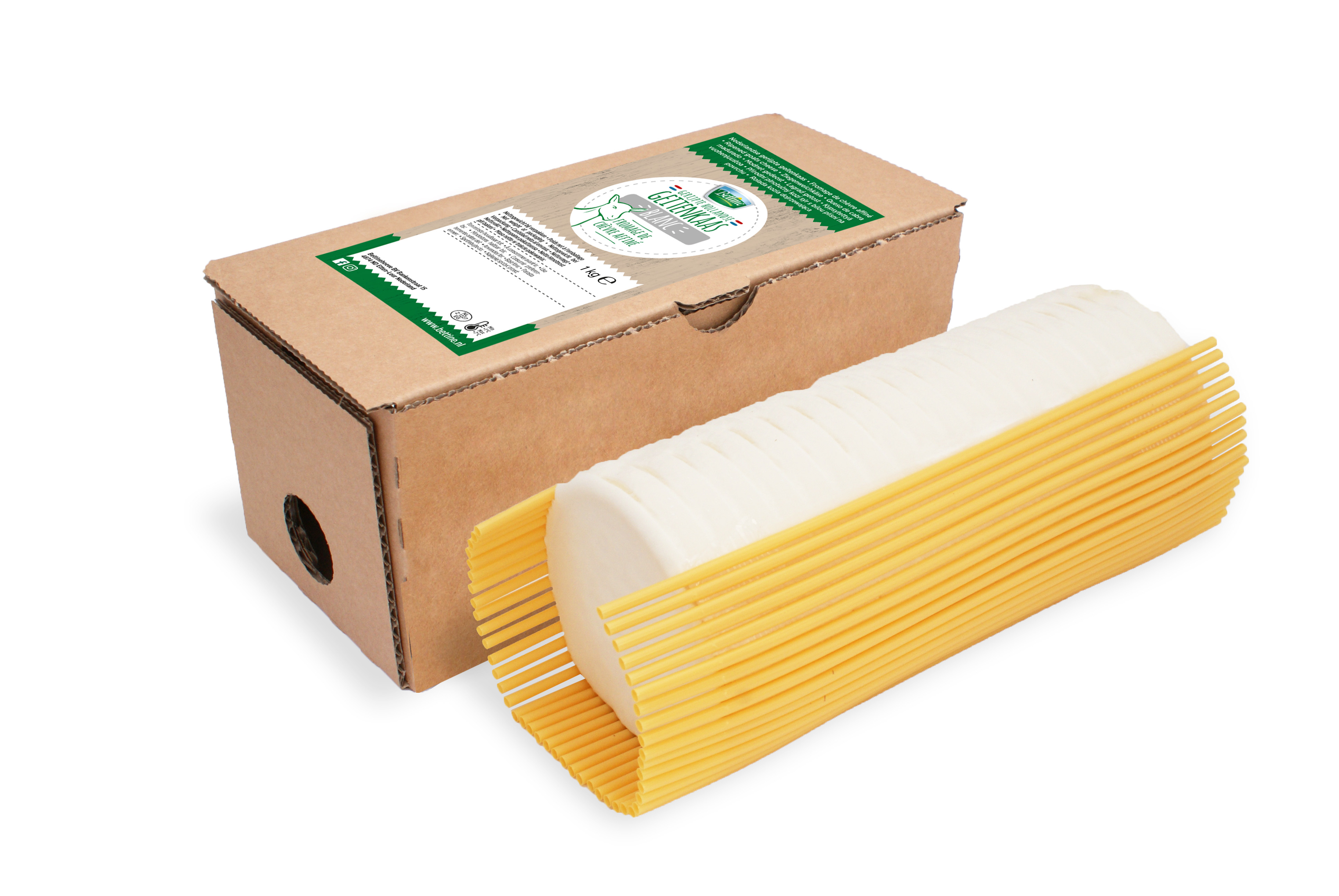
Germany – Bettinehoeve Geitenkaas soft goat cheese 200g – Bettinehoeve Geitenkaas soft goat cheese 1 kg – Listeria monocytogenes

LMW

Warning type:

Food

Date of first publication:

October 29, 2020

Product name:

– Bettinehoeve Geitenkaas soft goat cheese 200g – Bettinehoeve Geitenkaas soft goat cheese 1 kg

Product pictures:

37380 Bettine soft goat cheese roll 200g frontal.jpg

Uplegger

20075 Bettine ZWK roll 1kg with carton.jpg

Uplegger

Manufacturer (distributor):

Bettinehoeve, Netherlands

Reason for warning:

Suspected Listeria monocytogenes

Packaging Unit:

– 1 kg service goods – 200g self-service goods

Durability:

all best before dates

Lot identification:

all batches

Additional Information:

Listeria

Listeria disease usually manifests itself within 14 days of infection with diarrhea and fever. Pregnant women, the elderly and people with a weakened immune system, in particular, can develop more severe disease processes with blood poisoning and meningitis. In pregnant women, the unborn child can be harmed, even without symptoms.

People who have eaten this food and develop severe or persistent symptoms should seek medical attention and advise them of possible Listeria infection.

Pregnant women who have eaten this food should seek medical treatment and seek advice even without symptoms. This is not useful for other people with no symptoms.

Homepage of the manufacturer:

Contact to the responsible authorities:

Baden-Württemberg:

poststelle@mlr.bwl.de

Bavaria:

poststelle@lgl.bayern.de

Berlin:

poststelle@senjustva.berlin.de

Brandenburg:

Konsumenterschutz@Msgiv.Brandenburg.de

Bremen:

Schnellwarnung@gesundheit.bremen.de

Hamburg:

poststelle@bgv.hamburg.de

Hesse:

Schnellwarnung@rpda.hessen.de

Mecklenburg-Western Pomerania:

poststelle@lm.mv-regierung.de

Lower Saxony:

poststelle@ml.niedersachsen.de

North Rhine-Westphalia:

poststelle@mulnv.nrw.de

Rhineland-Palatinate:

Poststelle.Referat22@lua.rlp.de

Saarland:

poststelle-luv@lav.saarland.de

Saxony:

poststelle@sms.sachsen.de

Saxony-Anhalt:

poststelle@ms.sachsen-anhalt.de

Schleswig-Holstein:

poststelle@jumi.landsh.de

Thuringia:

LM-Ueberendung@tlv.thueringen.de