Category Archives: Antimicrobials

Research – Prevalence and antimicrobial resistance of Listeria species and subtyping and virulence factors of Listeria monocytogenes from retail meat

Wiley Online

Abstract

In this study, of 124 samples of ground beef and chicken meat, 101 (81.5%) were positive for Listeria spp. Listeria innocua (35.5%) and Listeria monocytogenes (26.6%) were the most frequently isolated species. All 33 (100%) L. monocytogenes isolates were positive for the virulence genes hlyA, actA, inlA, inlB, inlC, inlJ, prfA, plcA, and iap. Serotype 1/2a, which is one of the listeriosis‐associated serotypes, was the most predominant serotype (57.6%), followed by 1/2c (39.4%) and 3c (3%). In polymerase chain reaction‐restriction fragment length polymorphism (PCR‐RFLP) analysis of inlA for subtyping of the L. monocytogenes strains, the AluI and MluCI enzymes generated two different profiles. Almost all chicken strains were grouped in similar PCR‐RFLP profiles with both restriction enzymes. Most Listeria isolates were resistant to ceftriaxone (79.7%), fusidic acid (63.3%), and clindamycin (47.7%). Resistance to penicillin and ampicillin occurred in 1.6 and 17.9% of the isolates, respectively. The percentage of resistance to three or more agents was 48.1%.

Practical application

The presence of Listeria spp., especially L. monocytogenes, in foods is inevitable because of the ubiquitous nature of Listeria spp. Illnesses resulting from the consumption of contaminated food severely affect sensitive groups, especially pregnant women, unborn fetuses and newborns as a result of transmission across the placenta or during delivery. Immunosuppressed adults are also sensitive to infection. Listeria grows well at cold temperatures, so storage of contaminated food in the refrigerator can also increase the risk of infections for consumers. In particular, limiting the exposure of pregnant women and immunosuppressed patients to potential sources of Listeria such as raw and undercooked meats is recommended.
Research – Dodging antibiotic resistance by curbing bacterial evolution

Science Daily

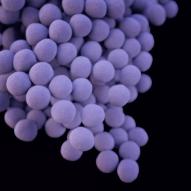
Lowering mutation rates in harmful bacteria might be an as yet untried way to hinder the emergence of antimicrobial pathogens. One target for drug development might be a protein factor, DNA translocase Mfd, that enables bacteria to evolve rapidly by promoting mutations in many different bacterial species. This action speeds antibiotic resistance, including multi-drug resistance. Working on drugs to block Mfd and similar factors could be a revolutionary strategy to address the worldwide crisis of treatment-resistant infectious diseases

Research – Levels of AMR E. coli in UK retail meat remain low

FSA

Levels of AMR E. coli in UK retail meat remain low

We have published the Year 3 results of an EU survey commissioned to assess the frequency of certain types of antimicrobial resistant (AMR) E. coli in raw UK retail pork and beef. Results show that these AMR levels remain consistently low, similar to those from the previous survey on beef and pork in Year 1.

Year 3 of the survey was carried out between January and December 2017 during which 314 beef and 310 pork samples were purchased from retail premises in England, Scotland, Wales and Northern Ireland and tested for specific types of AMR E. coli.

The survey generates baseline data on certain types of AMR E. coli found on retail meat in the UK, which will subsequently inform our assessment of the risks and our next steps to reducing exposure to AMR.

Overall, results showed that less than 1% of the samples were positive for ESBL or AmpC E. coli, which are specific types of AMR. These results are similar to what was found in Year 1 of the survey. However, one beef sample was found to be contaminated with an E. coli containing the mcr-1 gene which confers resistance to the antibiotic colistin.

FSA’s Head of Microbiological Risk Assessment, Paul Cook said:

‘This is thought to be the first discovery of an mcr-1 positive E. coli from retail beef in the UK. Although the meat came from outside the UK, further testing indicated no contamination with this E.coli on other samples and at this stage we have not been able to pinpoint the source of the contamination. However, a risk assessment has been carried out and we want to make it clear that the risk to public health is very low.

‘Tackling AMR is a significant priority for the FSA and across UK Government. This survey allows us to monitor certain AMR E. coli trends over time, but also compares the UK situation with that of other EU Member States. In the recently published 2015 EU report, the UK compared favourably to results from other European countries.’

These findings have been collected on behalf of the European Commission as part of an EU-wide seven-year surveillance study. The data is fed back to the European Commission on a yearly basis and reported in the EU Summary Report on Antimicrobial Resistance.

Research – Pathogenic Staphylococcus aureus in hospital food samples; prevalence and antimicrobial resistance properties

Wiley Online Staph

Abstract

The present investigation was done to study the prevalence and antibiotic resistance properties of S. aureus strains isolated from hospitals foods. Four‐hundred and fifty‐seven raw and cooked hospital food samples were collected and transferred to laboratory. Samples were cultured and S. aureus isolates were subjected to disk diffusion method. Forty‐seven out of 457 (10.28%) hospital food samples harbored S. aureus. Chicken meat (27.02%), meat barbecue (16.12%) and salad (7.14%) were the most commonly contaminated samples. S. aureus strains exhibited the highest levels of resistance against penicillin (70.21%), tetracycline (59.57%) and trimethoprim‐sulfamethoxazole (51.06%). Prevalence of resistance against ceftaroline (25.53%) and chloramphenicol (27.65%) were low. High prevalence of S. aureus in raw and cooked hospital food samples showed insufficiency of cooking time and temperature in the kitchens of hospitals as well as lack of personal hygiene. Further studies are essential to assess other microbiological and epidemiological aspects of the S. aureus.

Practical applications

Due to the general weakness of hospitalized patients, hospital food samples should have a high microbial quality. Staphylococcus aureus is common foodborne bacteria with an emergence of antibiotic resistance. This study emphasizes the importance of multidrug resistant S. aureus in hospital food sample. Results represented that hospital food samples may act as a reservoir of S. aureus with ability to transfer antibiotic resistance.

Research – Extended antibiotic treatment in salmon farms select multiresistant gut bacteria with a high prevalence of antibiotic resistance genes

PLOS One

The high use of antibiotics for the treatment of bacterial diseases is one of the main problems in the mass production of animal protein. Salmon farming in Chile is a clear example of the above statement, where more than 5,500 tonnes of antibiotics have been used over the last 10 years. This has caused a great impact both at the production level and on the environment; however, there are still few works in relation to it. In order to demonstrate the impact of the high use of antibiotics on fish gut microbiota, we have selected four salmon farms presenting a similar amount of fish of the Atlantic salmon species (Salmo salar), ranging from 4,500 to 6,000 tonnes. All of these farms used treatments with high doses of antibiotics. Thus, 15 healthy fish were selected and euthanised in order to isolate the bacteria resistant to the antibiotics oxytetracycline and florfenicol from the gut microbiota. In total, 47 bacterial isolates resistant to florfenicol and 44 resistant to oxytetracycline were isolated, among which isolates with Minimum Inhibitory Concentrations (MIC) exceeding 2048 μg/mL for florfenicol and 1024 μg/mL for oxytetracycline were found. In addition, another six different antibiotics were tested in order to demonstrate the multiresistance phenomenon. In this regard, six isolates of 91 showed elevated resistance values for the eight tested antibiotics, including florfenicol and oxytetracycline, were found. These bacteria were called “super-resistant” bacteria. This phenotypic resistance was verified at a genotypic level since most isolates showed antibiotic resistance genes (ARGs) to florfenicol and oxytetracycline. Specifically, 77% of antibiotic resistant bacteria showed at least one gene resistant to florfenicol and 89% showed at least one gene resistant to oxytetracycline. In the present study, it was demonstrated that the high use of the antibiotics florfenicol and oxytetracycline has, as a consequence, the selection of multiresistant bacteria in the gut microbiota of farmed fish of the Salmo salar species at the seawater stage. Also, the phenotypic resistance of these bacteria can be correlated with the presence of antibiotic resistance genes.

Research – Routine antibiotic therapy in dogs increases the detection of antimicrobial-resistant faecal Escherichia coli

Academic Oup

Abstract

Background

Antimicrobial resistance (AMR) is a critical health problem, with systemic antimicrobial therapy driving development of AMR across the host spectrum.

Objectives

This study compares longitudinal carriage, at multiple timepoints, of AMR faecal Escherichia coli in dogs undergoing routine antimicrobial treatment.

Methods

Faecal samples (n =457) from dogs (n =127) were examined pretreatment, immediately after treatment and 1 month and 3 months post-treatment with one of five antimicrobials. Isolates were tested for susceptibility to a range of antimicrobials using disc diffusion for each treatment group at different timepoints; the presence/absence of corresponding resistance genes was investigated using PCR assays. The impact of treatment group/timepoint and other risk factors on the presence of resistance [MDR, fluoroquinolone resistance, third-generation cephalosporin resistance (3GCR) and ESBL and AmpC production] was investigated using multilevel modelling. Samples with at least one AMR E. coli from selective/non-selective agar were classed as positive. Resistance was also assessed at the isolate level, determining the abundance of AMR from non-selective culture.

Results

Treatment with β-lactams or fluoroquinolones was significantly associated with the detection of 3GCR, AmpC-producing, MDR and/or fluoroquinolone-resistant E. coli, but not ESBL-producing E. coli, immediately after treatment. However, 1 month post-treatment, only amoxicillin/clavulanate was significantly associated with the detection of 3GCR; there was no significant difference at 3 months post-treatment for any antimicrobial compared with pretreatment samples.

Conclusions

Our findings demonstrated that β-lactam and fluoroquinolone antibiotic usage is associated with increased detection of important phenotypic and genotypic AMR faecal E. coli following routine therapy in vet-visiting dogs. This has important implications for veterinary and public health in terms of antimicrobial prescribing and biosecurity protocols, and dog waste disposal.

Research – Rising antibiotic resistance caused by pollutants needs action

Chemistry World

Our environment is contaminated with antibiotics. While this is often at a dilute level, sometimes the concentrations are surprisingly high. There is a growing recognition that this is a public health issue.

Antibiotic resistance accounts for hundreds of thousands of deaths each year and is a major global health threat. While attention has focused on antibiotic overuse, hospital outbreaks and new drug-resistant superbugs, antibiotics in waterways and soils is now viewed as stoking a rise of antibiotic resistance.

How do bacteria become resistant to antibiotics?

Mutation and evolution. Much of the resistance in disease-causing bacteria originate from existing genes. Antibiotics are part of many microorganisms’ natural armoury, so all sorts of resistance genes have always existed. What has changed is that these genes, one by one, jump from harmless bacteria to those that cause disease.

A bacterium may mutate and gain a small advantage in the presence of an antibiotic. And a gene that confers a competitive advantage can spread fast amongst bacteria because of their high rate of replication.

Having locations where bacteria can mingle in a thin soup of antibiotics and resistance genes is a recipe for resistance transferring between different species… and potentially creating new superbugs.

Research – Antibiotic resistance increases with local temperature

Nature

Bacteria that cause infections in humans can develop or acquire resistance to antibiotics commonly used against them1,2. Antimicrobial resistance (in bacteria and other microbes) causes significant morbidity worldwide, and some estimates indicate the attributable mortality could reach up to 10 million by 20502,3,4. Antibiotic resistance in bacteria is believed to develop largely under the selective pressure of antibiotic use; however, other factors may contribute to population level increases in antibiotic resistance1,2. We explored the role of climate (temperature) and additional factors on the distribution of antibiotic resistance across the United States, and here we show that increasing local temperature as well as population density are associated with increasing antibiotic resistance (percent resistant) in common pathogens. We found that an increase in temperature of 10 °C across regions was associated with an increases in antibiotic resistance of 4.2%, 2.2%, and 2.7% for the common pathogens Escherichia coli, Klebsiella pneumoniae and Staphylococcus aureus. The associations between temperature and antibiotic resistance in this ecological study are consistent across most classes of antibiotics and pathogens and may be strengthening over time. These findings suggest that current forecasts of the burden of antibiotic resistance could be significant underestimates in the face of a growing population and climate change4.

Research – How Bacteria Survive Antibacterial Treatment

Science Directpseud
The mechanism by which some bacteria are able to survive antibacterial treatment has been revealed for the first time by Hebrew University of Jerusalem researchers. Their work could pave the way for new ways to control such bacteria.

The research on persistent bacteria has been conducted in Prof. Balaban’s lab for several years, focusing on the development of a biophysical understanding of the phenomenon. It will be combined with other work being done in Prof. Glaser’s laboratory focusing on combating persistent bacteria, in the hope of leading to more effective treatment for bacterial infections.


Research – Blackberry Juice Anitmicrobial

Science DirectBlack_Butte_blackberry

Berries such as blueberry, blackberry and raspberry possess several biological activities including antimicrobial and nutritional effects. In this study, the antimicrobial activities of blackberry (Rubus fruticosus) juice against foodborne pathogens including Listeria monocytogenes, Salmonella Typhimurium and Escherichia coli O157:H7 were investigated. Inhibition of growth of these foodborne pathogens was measured in broth (Luria–Bertani broth for E. coli O157:H7 and S. Typhimurium, and brain heart infusion broth for L. monocytogenes), skim milk and whole milk supplemented with 10% blackberry juice at different time points (0, 24, 48 and 72 h). The effects of blackberry juice on the growth of Lactobacillus casei, Lactobacillus plantarum and Lactobacillus rhamnosus were also investigated in Man–Rogosa–Sharpe (MRS) broth and skim and whole milk supplemented with blackberry juice. The growth of L. monocytogenes, S. Typhimurium and E. coli O157:H7 were significantly inhibited by blackberry juice by 1–3 logs in both milk and broth. We also observed that the growths of Lactobacillus strains were significantly stimulated (1–4 logs CFU/mL) by blackberry juice in both milk and MRS broth. These data clearly demonstrate that diluted blackberry juice can be used as a preservative in food processing and a preventive in foodborne infections as a natural antimicrobial.