Category Archives: antimicrobial resistance

Research – Multidrug resistance of Escherichia coli in fish supply chain: A preliminary investigation

Wiley Online

Abstract

Ninety-five Escherichia coli isolates recovered from different supply points of freshwater fish namely fish pond (W1, n = 16), wholesale fish market (W2, n = 14), retail fish market (R1, n = 29), street fish vending unit (R2, n = 30), and modern fish vending unit (R3, n = 6) were investigated for antimicrobial-resistant profile and prevalence of antibiotic-resistant genes. Overall, multidrug-resistant (MDR) E. coli in the fish supply chain was 21% with higher MDR incidence in the downstream fish supply points. MDR was relatively higher in the tertiary fish supply points viz., retail fish market (45%), street fish vending unit (30%), and modern fish vending unit (15%) compared to the secondary fish supply point, that is, wholesale fish market (5%) and primary fish supply point, that is, fish pond (5%). All the ampicillin-resistant isolates carried ampC gene, whereas only 21% of the β-lactam resistant isolates carried blaCTX-M-gp1. The tetracycline resistance determinant, tetA (89%) was predominant in the tetracycline-resistant isolates compared to tetB and tetD (11%). The trimethoprim resistance gene, dfrA and sulfonamide-resistance gene, Sul1 were detected in 9% of the trimethoprim-resistant isolates and 9% of the sulfonamide-resistant isolates, respectively. Enterobacterial repetitive intergeneric consensus-PCR has delineated the MDR isolates from the different fish supply points into three major clusters but all the MDR isolates from the street fish vending point are grouped into a single cluster. The results indicate an increase in the proportion of MDR E. coli and the occurrence of diverse MDR profiles in the downstream points of the fish supply chain that needs to be addressed to avoid fish-food-borne antimicrobial resistance.

Research – Strategies for Biocontrol of Listeria monocytogenes Using Lactic Acid Bacteria and Their Metabolites in Ready-To-Eat Meat- and Dairy-Ripened Products

MDPI

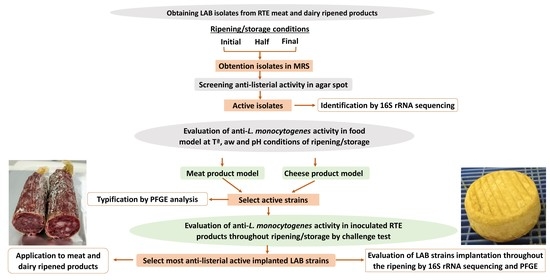
Listeria monocytogenes is one of the most important foodborne pathogens. This microorganism is a serious concern in the ready-to-eat (RTE) meat and dairy-ripened products industries. The use of lactic acid bacteria (LAB)-producing anti-L. monocytogenes peptides (bacteriocins) and/or lactic acid and/or other antimicrobial system could be a promising tool to control this pathogen in RTE meat and dairy products. This review provides an up to date about the strategies of use of LAB and their metabolites in RTE meat products and dairy foods by selecting the most appropriate strains, by analysing the mechanism by which they inhibit L. monocytogenes and methods of effective application of LAB, and their metabolites in these kinds of products to control this pathogen throughout the processing and storage. The selection of LAB with anti-L. monocytogenes activity allows to dispose of effective strains in meat and dairy-ripened products, achieving reductions form 2–5 logarithmic cycles of this pathogen throughout the ripening process. The combination of selected LAB strains with antimicrobial compounds, such as acid/sodium lactate and other strategies, as the active packaging could be the next future innovation for eliminating risk of L. monocytogenes in meat and dairy-ripened products.

Research – Comparative efficiency of carbohydrates on the biofilm-forming ability of enteroaggregative Escherichia coli

Wiley Online

The biofilm-forming ability of microbes is often correlated with drug resistance; however, this association among enteroaggregative Escherichia coli (EAEC) strains remains naïve. Moreover, the investigations exploring uptake and assimilation of sugars either qualitatively or quantitatively by the biofilm-forming EAEC strains have not yet been documented. Hence, this study investigated the role of various categories of sugars (monosaccharides, disaccharides, and polysaccharide) on the biofilm-forming ability of three each of multi-drug-resistant (MDR) as well as non-MDR typical EAEC strains. The EAEC strains exhibited black colonies on congo red agar (CRA) with monosaccharides and disaccharides, whereas all the strains exhibited red colonies on CRA with the polysaccharide. Although significant (p < 0.001) biofilm-forming ability was observed by all the EAEC strains in sugar-dependent microtiter plate assay, color change from pink to orange and yellow was noticed in presence of monosaccharides and disaccharide, while absent in polysaccharides. Besides, significantly higher bacterial counts were observed in presence of monosaccharides and disaccharides (p < 0.01); however, such significant bacterial counts were not noticed with the polysaccharide. Further, the real-time PCR data exhibited comparatively higher relative expression of biofilm-associated fis gene among EAEC strains grown in presence of monosaccharides, followed by disaccharide and polysaccharide, respectively that concurred with the flow cytometry data. No significant (p > 0.05) difference was observed in the biofilm-forming ability between MDR- and non-MDR EAEC strains. This study illustrated the role of carbohydrates on the biofilm-forming ability of EAEC and warranted utmost attention concerning the usage of carbohydrates in food processing industries, for its incorporation as functional food additives.

Research – EU Harmonised Surveillance of Antimicrobial Resistance (AMR) in E. coli from Retail Meats in UK (2020 -Year 6, chicken)

Gov UK

Lay person’s summary
This report presents results of the EU harmonised surveillance of antimicrobial resistance (AMR) in E. coliform retail chicken meats in the UK in 2020.
In accordance with European Directive 2003/99/E Con the monitoring of bacteria that can pass from animals to humans and causes disease (zoonoses and zoonotic agents), Member States (MS) are obliged to ensure that procedures are in place to monitor and report on the occurrence of antimicrobial resistance(AMR) in such bacteria.
The UK continued to be subject to EU rules during the transition period up to the end of December 2020.Further testing of retail beef, chicken and pork is being considered based on surveillance priorities. The requirements (with additional detailed guidance from the EU Reference Laboratory for Antimicrobial Resistance) state that 300 retail chicken meats should be tested by culture for the bacterium Escherichia coli. E. coli bacteria are a normal part of the gut flora of mammals and as such can be useful “indicators” of AMR in gut bacteria.
Whilst some strains of E. coli can cause disease, most strains of E. coli do not cause observable disease in healthy animals and humans. The EU requirements state that samples should be tested on an agar (growth medium) supplemented with a third generation cephalosporin. Third generation cephalosporins area group of antimicrobials which are important for treating infections in humans. E. coligrowth on this agar suggests antimicrobial resistance known as Extended Spectrum β-lactamase (ESBL) resistance and/or Amp C resistance.
ESBL resistance is also referred to as ESBL-phenotype, Amp C resistance is also referred to as Amp C-phenotype. The degrees of susceptibility/resistance of E. coli recovered from this agar must then be determined to a pre-defined panel of antimicrobials by Minimum Inhibitory Concentrations (MICs) tests. EU requirements also state that samples should be tested on two other supplemented agars which select bacteria which are resistant to carbapenems.
Carbapeems are another a group of antimicrobials which are very important in human medicine. Carbapenems are termed “last resort” antimicrobials because they are used to treat severe infections when all or almost all other treatment options have failed, because the infecting bacteria are resistant to most / all other relevant antimicrobials. Additionally, each meat sample is tested for counts of the number of background and AMR(Amp C and ESBL type resistance only) E. coli in each meat sample according to an EU protocol.
At the request of the FSA, other agar culture media used to test samples included an agar to specifically isolate E. coli with ESBL-only type resistance only (rather than for E. coli with both an AmpC and an ESBL type resistance as per one of the EU specified agars), and an agar to isolate colistin resistant E. coli. Colistin is another “last resort” antimicrobial, so it is important to monitor if resistance in E. coli to colistin is occurring in food samples.
Colistin resistance in E. coli isolates may involve a number of resistance genes such as mcr-1, mcr-2 andmcr-3. These mcr genes are considered particularly important as they are usually carried on genetic elements known as plasmids. As plasmids are “mobile” (can pass from one bacterium to another), the resistance genes located on them can potentially be shared with other bacteria within the gut. In total during 2020, 327 samples of fresh chicken were collected of which 315 were eligible for testing. The 315 eligible retail chicken meat samples were collected from England (n=274), Scotland (n=20), Wales (n=11), and Northern Ireland (n=10) from ten different supermarket chains. Sample collection was impacted by the coronavirus pandemic.
Monthly sampling was suspended for 3 months from April to June2020, resuming in July. Sample numbers were adjusted in subsequent months to reach the target of 300 samples. The types of chicken meat collected were whole chicken (n=127), chicken breast (n=113) and other cuts, including quarters, legs, thighs & drumsticks (n=75). Of the samples collected, 58.7% and 41.2% had skin on or off respectively.
Breast samples were the main sample type from which skin was removed. Of the 315 samples, 309 were stated as originating from the UK, five from Poland and one from Ireland. No growth was observed from any of the samples(meaning the test results were negative and the bacteria were therefore not resistant to carbapenem antimicrobials) on the two agars that selected for carbapenem-resistant E. coli.
Forty-one(13.0%) of the samples gave rise to E. coli on MacConkey agar + 1mg/L cefotaxime. These positive results imply the E. coli were resistant to cefotaxime. MIC analysis of these 41isolatesfound that39 of the total number of samples tested (12.4%) expressed an ESBL-phenotype resistance (including two isolates additionally expressed the Amp C phenotype resistance).
The remaining two of these 41 E. coli isolates(0.63%) expressed an Amp C-phenotype resistance but not ESBL-phenotype resistance. The observed frequencies of recovery of ESBL-phenotype E. coli from samples from individual supermarkets ranged from 0% to and 22.1% of the samples tested per supermarket, including those with an Amp C+ESBL-phenotype. A total of 54 of all the samples tested, representing 17.1%,gave rise to growth on the ESBL-only specific agar and a total of 3 (0.95%)of all the samples tested were positive for the mcr-1 transferable colistin resistance gene. These three samples all originated from Poland.
A further two samples were also originally positive for mcr-3 when multiple suspect colonies was tested. However, it was not possible to isolate individual mcr-3positive E. coli from the mix, so these results must be considered equivocal. Using MIC tests, the isolates from the Amp C/ESBL specific agar were tested for the degree of resistance to a total of 19 antimicrobials. Based on the MIC results, isolates were determined as resistant or sensitive to a particular antimicrobial using cut-offs known as ECOFFs (Epidemiological Cut Offs published by EUCAST). The ECOFF distinguishes between organisms without and with phenotypically expressed resistance mechanisms for a bacterial species to an antimicrobial. None of the 41 isolates from the Amp C/ESBL specific agar were microbiologically resistant to the ‘last resort’ carbapenem antimicrobials imipenem and meropenem or to colistin. The MIC of ertapenem against one Amp C+ESBL-phenotype isolate was just above the previous EUCAST ECOFF(currently there is only a tentative ECOFF for ertapenem), and as such was microbiologically resistant. This isolate was not clinically resistant though, using EUCAST clinical break point..None of the E. coli were resistant to the antibiotics temocillin or tigecycline.
Only one isolate was resistant to the antibiotic’s azithromycin or gentamicin, whilst about 60% of isolates were resistant to the quinolone antibiotics (ciprofloxacin or nalidixic acid)or to chloramphenicol. Isolates obtained from agar with 1 mg/L cefotaxime were all resistant to cefotaxime andto antibiotics of a similar type, such as ampicillin and ceftazidime and most were also resistant to cefepime. Most of the isolates were resistant to the older antibiotics’ sulfamethoxazole and tetracyclines, and approximately 50% were resistant to trimethoprim.
Genetic tests (whole genome sequencing) showed that most of the E. coli isolates from the ESBL agar carried the bla CTX-Mgene which confers resistance to third generation cephalosporin antimicrobials, and has been frequently detected in E. coli from chickens and chicken meat in previous studies, including the 2016 and 2018 surveys. None of the meat samples had bacterial counts of background E. coli (isolates obtained from agar without antibiotics) or presumptive Amp C/ESBL-producing E. coli above the detection limit (when using the EU method) of 3,000 E. coli colony forming units (cfu) per gram of meat. In summary, the results in 2020 showed that 12.4% and 1.6% of retail chicken meat samples were positive for ESBL or Amp C-phenotype E. coli, respectively (including the three isolates with the combined Amp C/ESBL-phenotype in both the ESBL or Amp C-phenotype groups) on the Amp C/ESBL specific agar. Whilst there was an increase in the percentage of isolates with an ESBL-phenotype there was a decrease in the percentage of isolates with an Amp C-phenotype between 2018 and 2020.
Overall, between 2018 and 2020, the percentages of samples positive on the Amp C/ESBL specific agar remained almost identical at 13.6% and 13.0%,respectively.None of the samples were positive for carbapenem-resistant E. coli on either of the two carbapenem selective agars. Between the 2016 and 2018 EUsurveys1there was a significant reduction in the proportion of chicken samples positive on the Amp C/ESBL specific agar and the ESBL agar.
Comparison with a paper on UK samples tested in 2013/142 also showed a significant reduction in samples positive for ESBL-producing E. coli between 2013/14 and the 2016 EU survey (65.4% to 29.7%), albeit sampling and isolation methods were similar, but not identical for the two studies.The2018 report for chicken meat samples1 suggests that these drops in the level of antimicrobial-resistant E. coli on retail chicken meat since 2013/14 may be linked to the restriction by the British Poultry Council to the use of third-and fourth-generation cephalosporins in flocks used for poultry meat production in the UK in 2012 as part of antimicrobial stewardship.
The 2020 survey results suggest that the proportions of Amp C or ESBL-phenotype E. coli in retail chicken have not changed since 2018. There was a slight increase in the proportions of samples that were positive on the ESBL-specific agar compared to the 2018. This was the first year that retail chicken samples were found to be positive for mcr plasmid-mediated colistin resistant E. coli. It should be considered that 2020 was an unusual year due to the impact of the coronavirus pandemic, although there is no reason to suppose this affected the proportions of retail chicken meat positive for AMR E. coli.

Research – Keep food fresh with this bacteria-killing packaging

NTU Singapore

Hepatitis A kswfoodworld

A team of scientists from NTU Singapore and Harvard T.H. Chan School of Public Health, US, has developed a ‘smart’ food packaging material that is biodegradable, sustainable and kills microbes that are harmful to humans. It could also extend the shelf-life of fresh fruit by two to three days.

The natural food packaging is made from a type of corn protein called zein, starch and other naturally derived biopolymers, infused with a cocktail of natural antimicrobial compounds (see video at the link above). These include oil from thyme, a common herb used in cooking, and citric acid, which is commonly found in citrus fruits.

In lab experiments, when exposed to an increase in humidity or enzymes from harmful bacteria, the fibres in the packaging have been shown to release the natural antimicrobial compounds, killing common dangerous bacteria that contaminate food, such as E. coli and Listeria, as well as fungi.

The packaging is designed to release the necessary miniscule amounts of antimicrobial compounds only in response to the presence of additional humidity or bacteria. This ensures that the packaging can endure several exposures, and last for months.

As the compounds combat any bacteria that grow on the surface of the packaging as well as on the food product itself, it has the potential to be used for a large variety of products, including ready-to-eat foods, raw meat, fruits, and vegetables.

In an experiment, strawberries that were wrapped in the packaging stayed fresh for seven days before developing mould, compared to counterparts that were kept in mainstream fruit plastic boxes, which only stayed fresh for four days.

The invention is the result of the collaboration by scientists from the NTU-Harvard T. H. Chan School of Public Health Initiative for Sustainable Nanotechnology (NTU-Harvard SusNano), which brings together NTU and Harvard Chan School researchers to work on cutting edge applications in agriculture and food, with an emphasis on developing non-toxic and environmentally safe nanomaterials.

The development of this advanced food packaging material is part of the University’s efforts to promote sustainable food tech solutions, that is aligned with the NTU 2025 strategic plan, which aims to develop sustainable solutions to address some of humanity’s pressing grand challenges.

Research – Wildlife Waterfowl as a Source of Pathogenic Campylobacter Strains

MDPI

Background: The aim of the study was to determine whether free-living birds belonging to game species whose meat is used for human consumption can constitute a reservoir of pathogenic Campylobacter strains, spreading these bacteria to other hosts or directly contributing to human infection. Methods: A total of 91 cloacal swabs were taken from different species of wildlife waterfowl to estimate the Campylobacter prevalence, the genetic diversity of the isolates, and the presence of virulence genes and to evaluate the antimicrobial resistance. Results: The presence of Campylobacter spp. was confirmed in 32.9% of samples. Based on flaA-SVR sequencing, a total of 19 different alleles among the tested Campylobacter isolates were revealed. The virulence genes involved in adhesion were detected at high frequencies among Campylobacter isolates regardless of the host species. The highest resistance was observed for ciprofloxacin. The resistance rates to erythromycin and tetracycline were observed at the same level. Conclusions: These results suggest that wildlife waterfowl belonging to game species may constitute a reservoir of Campylobacter, spreading these bacteria to other hosts or directly contributing to human disease. The high distribution of virulence-associated genes among wildlife waterfowl Campylobacter isolates make them potentially able to induce infection in humans.

Research – Effects of sodium alginate edible coating with cinnamon essential oil nanocapsules and Nisin on quality and shelf life of beef slices during refrigeration

Journal of Food Protection

The effects of the sodium alginate (SA) coating incorporated with cinnamon essential oil nanocapsules (CEO-NPs) and Nisin, as a new edible coating, were investigated on the preservation of beef slices in the refrigerated storage for 15 days. All beef samples were analyzed for physicochemical properties (pH value, weight loss, the total volatile base nitrogen (TVB-N)) and antimicrobial activity against total bacterial count (TBC). Besides, the changes in color parameters and sensory attributes of all beef samples were evaluated. The results revealed that the incorporation of the complex of CEO-NPs and Nisin retarded the growth of the microorganism and reduced lipid oxidation, as determined by pH, TVB-N, and TBC. This can extend the shelf life of beef slices to 15 days. Moreover, the treatment with the SA coating, incorporating CEO-NPs and Nisin, significantly improved the weight loss, color, odor, textural, and broth attributes of the beef samples. The results suggest that the coating treatment enriched with CEO-NPs and Nisin could significantly inhibit quality deterioration of beef slices, and the complex of CEO-NPs and Nisin can improve antioxidant, antibacterial and sensory properties of the SA coating. Thus, the new edible coating could be regarded as a potential material to preserve beef slices.

Research – Lactic Acid Bacteria as Antimicrobial Agents: Food Safety and Microbial Food Spoilage Prevention

MDPI

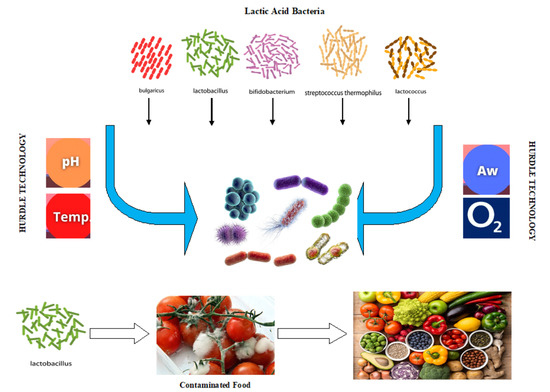
In the wake of continual foodborne disease outbreaks in recent years, it is critical to focus on strategies that protect public health and reduce the incidence of foodborne pathogens and spoilage microorganisms. Currently, there are limitations associated with conventional microbial control methods, such as the use of chemical preservatives and heat treatments. For example, such conventional treatments adversely impact the sensorial properties of food, resulting in undesirable organoleptic characteristics. Moreover, the growing consumer advocacy for safe and healthy food products, and the resultant paradigm shift toward clean labels, have caused an increased interest in natural and effective antimicrobial alternatives. For instance, natural antimicrobial elements synthesized by lactic acid bacteria (LAB) are generally inhibitory to pathogens and significantly impede the action of food spoilage organisms. Bacteriocins and other LAB metabolites have been commercially exploited for their antimicrobial properties and used in many applications in the dairy industry to prevent the growth of undesirable microorganisms. In this review, we summarized the natural antimicrobial compounds produced by LAB, with a specific focus on the mechanisms of action and applications for microbial food spoilage prevention and disease control. In addition, we provide support in the review for our recommendation for the application of LAB as a potential alternative antimicrobial strategy for addressing the challenges posed by antibiotic resistance among pathogens. View Full-Text

Research – Predicting the growth of Listeria monocytogenes in cooked sliced deli turkey breast as function of clean label antimicrobial, pH, moisture and salt

Journal of Food Protection

The use of antimicrobials in formulations of ready-to-eat meat and poultry products has been identified as a major strategy to control Listeria monocytogenes . The USDA-FSIS recommends no more than 2-logs of Listeria outgrowth over the stated shelf life if antimicrobials are used as a control measure for a product with post-lethality environmental exposure. This study was designed to understand the efficacy of a clean label antimicrobial against the growth of L. monocytogenes as affected by the product attributes. A response surface method-central composite design was used to investigate the effects of product pH, moisture, salt content, and a commercial “clean-label” antimicrobial on the growth of L. monocytogenes in a model turkey deli meat formulation. Thirty treatment combinations of pH (6.3, 6.5, and 6.7), moisture (72, 75, and 78%), salt (1.0, 1.5, and 2.0%), and antimicrobial (0.75, 1.375, and 2.0%) with six replicated center points and eight design star points were evaluated. Treatments were surface inoculated with a 3 log 10 CFU/g target of a five-strain L. monocytogenes cocktail, vacuum packaged, and stored at 5°C for up to 16 weeks. Populations of L. monocytogenes were enumerated from triplicate samples every week until the stationary growth phase was reached. The enumeration data was fitted to a Baranyi and Roberts growth curve to calculate the lag time and maximum growth rate for each treatment.  Linear least-squares regression of the lag-time and growth-rate against the full quadratic, including the second order interaction terms, design matrix was performed. Both lag time and maximum growth rate were significantly affected ( p <0.01) by the antimicrobial concentration and product pH. Product moisture and salt content affected ( p <0.05) lag phase and maximum growth rate, respectively. The availability of a validated growth model assists meat scientists and processors with faster product development and commercialization.

Research – Super bugs bedevil food safety

Food Safety News

“Super bugs” and “food safety.” You can say the two in one breath simply because they are so closely connected.

“Super bugs” is a popularized term for “antibiotic resistance,” or “antimicrobial resistance.” They don’t go by that name for nothing. According to the federal Centers for Disease Control and Prevention, each year in the United States, at least 2.8 million people are infected with antibiotic-resistant bacteria or fungi. More than 35,000 people die as a result. Antibiotic resistant bacteria frequently show up in outbreak strains of pathogens such as E. Coli, Salmonella and Listeria monocytogenes.

When looking ahead, the picture only gets more daunting. Some medical experts predict that worldwide by 2050 the number of deaths attributed to antibiotic resistance could reach 10 million and cost trillions of dollars — unless collective action is taken on a global scale.

No wonder then that some human and animal health experts are referring to this as a “slow moving pandemic.”