Monthly Archives: August 2019

Spain – Over 500 suspected Listeria cases in Spain linked to La Mechá – 2 Dead

Food Poison Journal

Spanish health authorities announced a second person has died in an outbreak of Listeria from pork meat. The health spokesman for the southern Andalusia region, José Miguel Cisneros, said Friday a 72-year-old man who was in a terminal phase of pancreatic cancer died from the bacteria.

The first victim was a 90-year-old woman earlier this week. The outbreak started Aug. 15 in Andalusia and has sickened at least 186 people. The Spanish Health Ministry said it was looking into another 523 suspected cases. Of the 50 people currently hospitalized, 23 of them are pregnant women. Sevilla is the most affected region (with 153 cases), followed by Huelva (16), Cádiz (8), Malaga (5), and Granada (4). Other regions with confirmed cases are Asturias, Aragón, and Extremadura.

The packaged meat plant to the outbreak is being inspected by Spanish officials after lab tests showed the presence of Listeria. The product blamed for the outbreak is a stringy cooked meat sold under the brand “La Mechá.”

France – E. Coli Bacteria: Chaource Lincet and Gaugry Raw Milk Cheeses Recalled – STEC E.coli O111:H8

Teller Report

A few hundred Chaource raw milk cheese brands Lincet and Gaugry, sold throughout France, are subject to a recall procedure after the demonstration of the presence of Escherichia coli. A check has highlighted in these products, manufactured by the Lincet cheese factory in Vaudes in the Aube, the presence of Escherichia coli O111: H8, indicates the cheese Friday in a statement.

Australia – Logan Farm Pty Ltd — Talley’s Mussels Garlic 375g – Microbial Contamination

Australia

Photograph of Talley's Mussels Garlic 375g

Identifying features

Best before date
19 December 2019
Other
APN/EAN 9414897011796

What are the defects?

The recall is due to the potential for microbial contamination.

What are the hazards?

Potentially contaminated food products may cause illness if consumed.

What should consumers do?

Consumers concerned about their health should seek medical advice and should return the products to the place of purchase for a full refund.

For further information, please contact Logan Farm Pty Ltd on 1800 651 276 or at www.loganfarm.com.au

Traders who sold this product

Coles
IGA
Independent stores
Woolworths

Where the product was sold
Western Australia
Dates available for sale
  • 12 July 2019 – 23 August 2019

Canada -Updated Food Recall Warning – Rosemount brand cooked diced chicken recalled due to Listeria monocytogenes

CFIA

Recall details

Ottawa, August 23, 2019 – The food recall warning issued on August, 21, 2019 has been updated to include additional product information. This additional information was identified during the Canadian Food Inspection Agency’s (CFIA) food safety investigation.

Rosemount Sales and Marketing is recalling Rosemount brand cooked diced chicken mostly dark from the marketplace due to possible Listeria monocytogenes contamination. Consumers should not consume and distributors, retailers and food service establishments such as hotels, restaurants, cafeterias, hospitals and nursing homes should not sell or use the recalled products described below.

Recalled products

Brand Name Common Name Size UPC Code(s) on Product
Rosemount Cooked diced chicken mostly dark 13 mm – ½” (#18305) 4.54 kg 2 06 20263 12002 0 PACKDATE:
01/21/19

USA – Food fraud: Connecticut meat supplier pleads guilty to fabricating E. coli test results

Barf Blog

Stafford Springs meat supplier who pled guilty to fabricating E. coli test results in federal court.

Officials told Doug Stewart of Fox 61 Memet Beqiri, also known as Matt Beqiri, 32, of Tolland, waived his right to be indicted and pleaded guilty Tuesday in Hartford federal court to a charge related to his meat processing business’s falsification of numerous E. coli test results.

Beqiri pleaded guilty to one count of making and using a false document and aiding and abetting, a charge that carries a maximum term of imprisonment of five years.  He is scheduled to be sentenced on November 12, 2019.  Beqiri was released on a $25,000 bond.

Ryan J. Woolf, the attorney for Matt Beqiri, said his client was made aware of the issue and worked to rectify the situation. He also said this will “never happen again,” and that “no injuries, illness resulted from this issue.”

Research – Preparing Chicken Safely – Moy Park

Research – Microbes have adapted to live on food that is hundreds of years old

Science Daily

Microbial communities living in deep aquatic sediments have adapted to survive on degraded organic matter, according to a study published in Applied and Environmental Microbiology and coauthored by professors at the University of Tennessee, Knoxville.

“There are microbes living in deep ocean sediments eating carbon, like proteins and carbohydrates, that is hundreds of years old,” said Andrew Steen, lead author of the study and assistant professor of environmental geology at UT. “However, we don’t know much about how those microbes eat that old, poor-quality food.”

Understanding how these microorganisms function on low-quality foods at a very slow pace could have future uses in biomedical applications such as a technology that could slow down cell metabolism in human organs so they can survive longer during a transplant process.

“It could also aid in preserving underground microbes that play a role in carbon sequestration, a key process in the fight against climate change,” said Steen.

To better understand how these microorganisms access this food, researchers tested different types of peptidases — digestive enzymes that work to degrade proteins — in sediment cores from the White Oak River estuary in North Carolina.

“These microbes live incredibly slow lives, with cells multiplying somewhere between every 10 years and every 10,000 years, but we aren’t sure how,” said Steen. “Our work shows that those microbes are living the same way any other microbe does, just way more slowly and with some improved ability to eat the low-quality food in their environment.”

The data collected by the researchers represented about 275 years of sediment deposition from the White Oak River estuary. Using DNA analysis of the microbes in these sediments, and by measuring peptidases, researchers evaluated how these microorganisms metabolize with little access to fresh organic matter.

Organic carbon buried in aquatic sediments is a long-term sink for atmospheric carbon dioxide, and about 40 percent of organic carbon burial occurs in estuaries and deltaic systems. Steen’s study gives insight into how these subsurface microbial communities begin the process of degrading organic carbon in such environments.

“Our study shows that, in some sense, subsurface microbes are happy to be where they are — or at least they’re well adapted to a terrible environment,” said Steen.

Research – How E. coli knows how to cause the worst possible infection

Science Daily

A pair of University of Virginia School of Medicine scientists have revealed how E. coli seeks out the most oxygen-free crevices of your colon to cause the worst infection possible. The discovery could one day let doctors prevent the infection by allowing E. coli to pass harmlessly through the body.

The new discovery shows just how the foodborne pathogen knows where and when to begin colonizing the colon on its way to making you sick. By recognizing the low-oxygen environment of the large intestine, the dangerous bacterium gives itself the best odds of establishing a robust infection — one that is punishing for the host.

“Bacterial pathogens typically colonize a specific tissue in the host. Therefore, as part of their infection strategies, bacterial pathogens precisely time deployment of proteins and toxins to these specific colonization niches in the human host. This allows the pathogens to save energy and avoid detection by our immune systems and ultimately cause disease,” said researcher Melissa Kendall, PhD, of UVA’s Department of Microbiology, Immunology and Cancer Biology. “By knowing how bacterial pathogens sense where they are in the body, we may one day be able to prevent E. coli, as well as other pathogens, from knowing where it is inside a human host and allow it to pass through the body without causing an infection.”

Research – Perception Problems for Multidrug-Resistant Organisms

Contagion Live

We’ve all seen the statistics—each year in the United States, 2 million people will get an antibiotic-resistant infection and at least 23,000 will die as a result of them. Moreover, multidrug-resistant organisms (MDROs) represent an increasing threat to global health as it’s estimated that their mortality rates will exceed those of cancer by 2050. It’s easy to see such data and focus on how to cut down the rates or how to increase antimicrobial stewardship without thinking about the perceptions or emotional impact of these infections.

How do health care workers experience MDROs? What about patients? These types of questions are rarely discussed in infection prevention or antimicrobial resistance efforts but, nonetheless, play a critical role. A new study from a research team in Germany sought to truly understand how these perceptions affect efforts such as hand hygiene, disinfection, and isolation. We all too often focus on the isolation and rapid identification of patients with MDROs but rarely discuss the social and psychological implications of such infections.

Investigators used a socio-constructivist focus and a mixed-method approach to conduct the study, which was broken into sections that included discussions, peer-assisted objective-structured clinical examination, and constructive efforts like card surveys and papers. Topics included infectious diseases and microbiology, basic hygiene procedures, communication techniques, and special protective hazardous material equipment. The research team had 51 health care workers from 13 professions across 5 hospitals participate in this training and data collection. Overall, they found that there are significant barriers both in educating clinicians and then informing patients and family members, and also in handling emotional responses in patients diagnosed and isolated with an MDRO infection.

Research – New insight into bacterial infections found in the noses of healthy cattle

Science Daily 19243

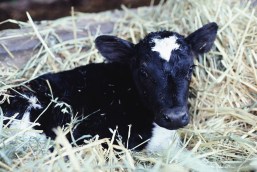
New research led by academics at the University of Bristol Veterinary and Medical Schools used the ‘One Health’ approach to study three bacterial species in the noses of young cattle and found the carriage of the bacteria was surprisingly different. The findings which combined ideas and methods from both animal and human health research could help prevent and control respiratory diseases.

Cattle, like humans, harbour a wide range of bacteria in their noses, microbes which are normally present and probably necessary for health like those that live in the gut. However, some species of these bacteria do cause serious illness at times, particularly when infection becomes established in the lower respiratory tract within the lungs.

In an open access paper published in Scientific Reports today [Friday 16 August], the researchers investigated the patterns of acquiring and clearing these microbes in healthy young cattle, which have not previously been studied in detail.

The research team took nasal swabs at intervals during the first year of life, to detect their presence and measure their abundance using a DNA-detection technique called quantitative polymerase chain reaction (qPCR) that targeted genes found in three bacterial species well-known for their ability to cause respiratory disease in cattle: Histophilus somni, Mannheimia haemolytica and Pasteurella multocida.