Monthly Archives: August 2019

Research – How hygienic is the cutting Board – and it can make you sick?

Oracle Record

Cutting boards to withstand quite a lot: they are not intended to withstand sharp knives, in the ideal case of discolour, no undesirable smell and germ-free as possible remain. The least well know, that cutting boards are the ideal breeding do can be place for sick germs. The a swear, therefore, on plastic boards, the other on wood. How to get germs in or on the Board? This can have various reasons.

Research -Prevalence and identification of Aspergillus and Penicillium species isolated from peanut kernels in central Myanmar

Wiley Online

Abstract

The objective of the present study was to conduct a survey to evaluate the postharvest handling of peanuts at farm level and to screen and identify the strains of Aspergillus and Penicillium species from peanut kernels in central Myanmar. A total of 640 samples from the stores of farmers, collectors, and wholesalers were collected and seeded for growth, isolation, and characterization of fungi. Out of 85 isolates, Aspergillus flavus (38), A. niger(20), A. terreus (15), and Penicillium citrinum (12) were identified and confirmed by molecular techniques including DNA sequencing using internal transcribed spacer (ITS5/4) and beta‐tubulin (Bt2a/2b) primer sets. The study indicates different factors associated with fungal contamination at farm level peanut storage and warrants an immediate attention of food safety regulatory authorities to design and implement strategies for postharvest handling and storage practice in developing countries to minimize fungal contamination.

Practical applications

In developing countries like Myanmar, there are lack of food safety practices and policies regarding the food storage, handling, and farmer education. The current study indicates the different storage methods for peanut kernels at farm level and their influence on prevalence of fungi. The study will give a deep insight to the policy makers to design food safety practices at farm level and educate the farmers to adopt the better practices to assure the consumer health and satisfaction in developing countries.

Research -Slow growth determines nonheritable antibiotic resistance in Salmonella enterica

Science Mag

kswfoodworld Salmonella

Image CDC

Slow growth for bacterial persistence

Even bacteria that do not carry mutations or genes that confer resistance to specific antibiotics can survive antibiotic treatment, a phenomenon known as persistence (see the Focus by Kaldalu and Tenson). Several models have been proposed to account for bacterial persistence, including the activation of toxins in toxin-antitoxin modules, the production of the alarmone guanosine (penta) tetraphosphate [(p)ppGpp], and a reduction in intracellular adenosine triphosphate (ATP) abundance. Pontes and Groisman demonstrated that Salmonella exhibited persistence even in the absence of toxin-antitoxin modules or (p)ppGpp production and under conditions that increased intracellular ATP. These and additional findings show that slow growth alone is sufficient for persistence and may contribute to the difficulty in treating some bacterial infections.

Abstract

Bacteria can withstand killing by bactericidal antibiotics through phenotypic changes mediated by their preexisting genetic repertoire. These changes can be exhibited transiently by a large fraction of the bacterial population, giving rise to tolerance, or displayed by a small subpopulation, giving rise to persistence. Apart from undermining the use of antibiotics, tolerant and persistent bacteria foster the emergence of antibiotic-resistant mutants. Persister formation has been attributed to alterations in the abundance of particular proteins, metabolites, and signaling molecules, including toxin-antitoxin modules, adenosine triphosphate, and guanosine (penta) tetraphosphate, respectively. Here, we report that persistent bacteria form as a result of slow growth alone, despite opposite changes in the abundance of such proteins, metabolites, and signaling molecules. Our findings argue that transitory disturbances to core activities, which are often linked to cell growth, promote a persister state regardless of the underlying physiological process responsible for the change in growth.

Research – Detection of Virulence Plasmid–Encoded Genes in Salmonella Typhimurium and Salmonella Kentucky Isolates Recovered from Commercially Processed Chicken Carcasses

Journal of Food Protection

ABSTRACT

Salmonella enterica serovar Typhimurium is one of the leading causes of nontyphoidal gastroenteritis of humans in the United States. Commercially processed poultry carcasses are frequently contaminated with Salmonella serovar Kentucky in the United States. The aim of the study was to detect the Salmonella virulence plasmid containing the spv genes from Salmonellaisolates recovered from commercially processed chicken carcasses. A total of 144 Salmonella isolates (SalmonellaTyphimurium, n = 72 and Salmonella Kentucky, n = 72) were used for isolation of plasmids and detection of corresponding virulence genes (spvA, spvB, and spvC). Only four (5.5%) Salmonella Typhimurium isolates tested positive for all three virulence genes and hence were classified as possessing the virulence plasmid. All isolates of Salmonella Kentucky were negative for the virulence plasmid and genes. These results indicate that the virulence plasmid, which is very common among clinical isolates of Typhimurium and other Salmonella serovars (e.g., Enteritidis, Dublin, Choleraesuis, Gallinarum, Pullorum, and Abortusovis), may not be present in a significant portion of commercially processed chicken carcass isolates.

HIGHLIGHTS
  • Virulence plasmid was detected only in 5.5% of Salmonella Typhimurium isolates.

  • All virulence plasmid–positive Salmonella isolates were positive for spvA, spvB, and spvC genes.

  • No Salmonella Kentucky isolates were positive for the virulence plasmid and genes.

Research – Deoxynivalenol and ochratoxin A in North Carolina grown organic wheat grains

Wiley Online

Abstract

The main safety issue of cereal grains is mycotoxin contamination. There is no published information about mycotoxin contamination of organic wheat in the United States. This study quantified the contents of deoxynivalenol (DON) and ochratoxin A (OTA), two frequently occurring mycotoxins, in organic wheat samples collected from six counties in North Carolina by enzyme‐linked immunosorbent assay (ELISA) and high‐performance liquid chromatography (HPLC). By ELISA, all samples were DON and OTA positive, and the DON contents in the flour and bran samples were 0.7–2.35 ppm and 5–8 ppm, respectively, while OTA in the flour and bran samples were 9.54–25.55 ppb and 21.67–32.55 ppb, respectively. By HPLC, the DON detected in flour and bran were 0.24–0.47 ppm and 0.35–0.83 ppm, respectively; all flour samples were OTA negative, but 5 out of 6 bran samples were OTA positive (0.48–1.28 ppb). More studies with larger sample number are needed to obtain representative results.

Practical applications

This study provides preliminary results about the DON and OTA in organic wheat grains. The results indicate that the organic wheat produced in North Carolina during 2018 season were contaminated by DON and OTA to various degrees. However, the concentrations of these two mycotoxins determined by ELISA were significantly higher than those determined by HPLC. Therefore, to avoid overestimation or underestimation, it is important for researchers and regulatory agencies to conduct multi‐lab studies to develop and standardize analytical methods and detailed procedures for accurate DON and OTA quantification. Regardless of analytical methods, all bran samples showed higher DON and OTA concentrations than flour samples. Thus, when using organic wheat bran or whole wheat as food or feed ingredients, the level of bran inclusion should be controlled to protect consumers and animals from mycotoxicosis.

Research – Preservation of ready-to-eat salad: A study with combination of sanitizers, ultrasound, and essential oil-containing β-cyclodextrin inclusion complex

Science Direct

Highlights

Peracetic acid is a good alternative to chlorine for fresh produce sanitization.

Ultrasound enhanced peracetic acid efficiency.

Sachet with essential oil did not contribute to salad preservation.

Complexation with β-CD did not attenuate EO odor.

EO in vitro antimicrobial activity does not imply preservative property in food.

Abstract

The microbiological quality of a ready-to-eat salad treated with different sanitizers (sodium dichloroisocyanurate (SD), peracetic acid (PA) or isolated or combined with ultrasound (US)), and packaged alongside sachets containing β-cyclodextrin/Pimenta dioica essential oil inclusion complex was evaluated. Consumer acceptability was also assessed. Furthermore, treatments were investigated against Listeria monocytogenes intentionally inoculated. SD, SD + US, and PA treatments showed similar efficiency against psychrotrophic (log reduction < 1) and lactic acid bacteria (log reductions of 1.18 ± 0.25, 1.28 ± 0.19 and 1.03 ± 0.22 for SD, SD + US, and PA, respectively). Concerning yeasts and molds, SD and SD + US reached the greatest log reduction (counts < 4 log CFU g−1), whereas PA + US was more efficient than PA. Against L. monocytogenes, SD, SD + US and PA + US led to the best results. The presence of sachet, however, did not contribute to salad preservation. Sensory evaluation showed that salads stored alongside sachets were the least accepted by consumers with scores between 5 and 6 for overall impression attribute, while samples without sachets received average scores >7. These findings are of great importance since they demonstrate the need for studies that evaluate the properties of EO when applied in a food system.

Research – These gut bacteria prevent mice from becoming obese — what could that mean for us?

Science Daily

Researchers at University of Utah Health have identified a specific class of bacteria from the gut that prevents mice from becoming obese, suggesting these same microbes may similarly control weight in people. The beneficial bacteria, called Clostridia, are part of the microbiome — collectively trillions of bacteria and other microorganisms that inhabit the intestine.

Published online in the journal Science on July 25, the study shows that healthy mice have plenty of Clostridia — a class of 20 to 30 bacteria — but those with an impaired immune system lose these microbes from their gut as they age. Even when fed a healthy diet, the mice inevitably become obese. Giving this class of microbes back to these animals allowed them to stay slim.

Research – Harnessing the power of microbes for mining in space

Science Daily

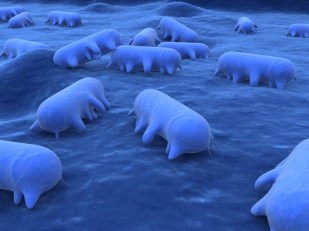
For centuries, people have done the hard work of mining useful minerals and metals from solid rock. Then, scientists learned how to harness the power of tiny microbes to do some of this labor. This process, called biomining, has become common on Earth.

As humans plan expeditions to places such as the Moon and Mars, biomining offers a way to obtain needed materials on other planetary bodies rather than bringing them from Earth. This approach is called in-situ resource utilization. However, microbes and rocks interact differently outside of Earth’s gravity, potentially affecting output from extraterrestrial biomining.

Research – Moving Away from Population-Based Case-Control Studies during Outbreak Investigations

Journal of Food Protection

ABSTRACT

Population-based case-control studies are a time- and labor-intensive component of foodborne outbreak investigations. One alternative is a binomial trial that asks the question “if the likelihood of each case’s having eaten a given food is no different from that of the average person in the population, how often would we find, by chance alone, that x of n (or more) cases would have eaten this food?” Calculating a binomial trial requires background exposure data. We conducted case-control studies and binomial trials in two foodborne outbreaks and compared results. In both outbreaks, using binomial trials we found much less than a 5% probability that the number of cases eating the suspected food vehicle would have occurred by chance. These results were comparable with results of the case-control studies, but with considerably less effort. When background exposure data are available, binomial trials are an efficient way to explore hypotheses that can be further tested by traceback efforts to identify a common source.

HIGHLIGHTS
  • Population-based case-control studies are time- and labor-intensive.

  • Binomial trials of case exposures produce similar results with less effort.

  • Calculating a binomial trial requires background exposure data.

  • Binomial associations require product tracebacks to identify a common source.

Research – Chitosan and Oregano Oil Treatments, Individually or in Combination, Used To Increase the Shelf Life of Vacuum-Packaged, Refrigerated European Eel (Anguilla anguilla) Fillets

Journal of Food Protection

ABSTRACT

We investigated the impact of chitosan and oregano essential oil (EO) individually or in combination on the quality of eel fillets in vacuum packaging (VP) and stored under refrigeration (4°C). Treatments studied were (i) control eel fillets stored in VP (E), (ii) eel fillets treated with 0.3% (v/w) oregano EO and stored in VP (E-OR), (iii) eel fillets treated with 2.0% (w/v) chitosan and stored in VP (E-CH), and (iv) eel fillets treated with 2.0% (w/v) chitosan and 0.3% (v/w) oregano EO and stored in VP (E-CH-OR). Treatments E-CH-OR and E-CH significantly reduced counts of mesophilic bacteria, Pseudomonas, Shewanella, and yeasts and molds during storage. Use of chitosan alone or in combination with oregano EO led to a significant reduction in concentrations of trimethylamine nitrogen and total volatile basic nitrogen in fillets, which led to lower concentrations of thiobarbituric acid reactive substances compared with the control samples. The eel samples in the E-CH and E-CH-OR groups were sensorially acceptable during the entire refrigerated storage period of 18 days. Presence of chitosan in the E-CH and E-CH-OR fillets did not negatively affect the taste of the fillets. E-CH fillets received a higher taste score than did E-CH-OR fillets probably because of the distinct and “spicy” lemon taste of chitosan, which was well received by the sensory panel. Based on overall sensory data (based on mean sensory scores of odor and taste), the shelf life was 6 days for the control fillets, 10 days for the E-OR fillets, and >18 days for the E-CH and E-CH-OR fillets stored in VP at 4°C. Overall, chitosan-treated eel fillets had lower microbial loads and a longer shelf life compared with the controls. Chitosan-treated eel fillets were preferred over oregano-treated fillets. Chitosan alone or in combination with oregano could be used as a preservative treatment and shelf-life extender for other seafoods.

HIGHLIGHTS
  • Chitosan and oregano oil reduced microbial loads in treated eel fillets.

  • Eel fillets treated with chitosan and oregano oil had less lipid oxidation and longer shelf life.

  • Chitosan-treated fillets had higher sensory scores than did control fillets.