Monthly Archives: March 2019

Research – Listeria Species – 20 Members! Welcome – Listeria thailandensis

IJS Microbiology Research

During a screening of Listeria species in food samples in Thailand, a Listeria -like bacterium was recovered from fried chicken and could not be assigned to any known species. Phylogenetic analysis based on the 16S rRNA gene and on 243 Listeria core genes placed the novel taxon within the Listeria aquatica Listeria floridensis Listeria fleishmannii and Listeria costaricensisclade ( Listeria sensu lato), with highest similarity to L. floridensis (98.9 %) and L. costaricensis (98.8 %). Whole-genome sequence analyses based on the average nucleotide blast identity (ANI<86 %), the pairwise amino acid identity (AAI>64 %) and on the percentage of conserved proteins (POCP>77 %) with currently known Listeria species confirmed that the strain constituted a new taxon within the genus Listeria . At the phenotypical level, it differs from other Listeria species by the production of acid from d-tagatose and inositol. The name Listeria thailandensis sp. nov. is proposed for the novel species, and is represented by the type strain CLIP 2015/00305 (=CIP 111635=DSM 107638).

South Africa – One Year Ago – Tiger Brands polony linked to South Africa Listeria outbreak

Food Safety News

Food Safety News Article on the outbreak.


USA – Gravel Ridge Farms Egg Salmonella Outbreak Details in FDA Warning Letter

Food Poisoning Bulletin Salmonella Eggs Food Poisoning Food Safety

The Gravel Ridge Farms shell egg Salmonella outbreak sickened 45 people in 12 states last year. The FDA sent the owners of that facility a warning letter on February 12, 2019, that gives us more information about the issues at the farm. Gravel Ridge Farms recalled more than 600,000 shell eggs in response to this outbreak.

Research – Listeria monocytogenes Associated with Pasteurised Chocolate Milk, Ontario, Canada 2015- 2016

CDC Listeria cdc

n an investigation of a listeriosis outbreak in Ontario, Canada, during November 2015–June 2016, pasteurised chocolate milk was identified as the source. Because listeriosis outbreaks associated with pasteurised milk are rare in North America, these findings highlight that dairy products can be contaminated after pasteurisation.

Listeria monocytogenes is a formidable pathogen acquired primarily through contaminated food. Invasive listeriosis is a reportable disease in Ontario, Canada; ≈50 case-patients (0.4 cases/100,000 persons) have been reported annually since 2005 (1). Recent outbreaks of listeriosis in North America have been associated with delicatessen meats, soft cheeses, raw produce, and unpasteurised dairy products (24). However, listeriosis outbreaks linked to pasteurised fluid milk are rare.

A study in the United States reviewed 83 fluid milk–associated disease outbreaks during 1990–2006; however, only 1 outbreak was attributed to L. monocytogenes (5). We report an outbreak of listeriosis associated with pasteurised chocolate milk in Ontario, Canada.

Research – World Mycotoxin Study 2018

Biomin

The new Mycotoxin Survey Report of the year 2018 reveals impacts of the main mycotoxins in 2019. In the last years, Fumonisins were the most prevalent mycotoxins globally. Also in 2018, they claim their position and are highly abundant at high concentrations in raw commodities. Get the full BIOMIN Mycotoxin Survey Report now!


Research – Food additives – Protection against microorganisms, extension to shelf life

FNB News

Food additives have been used in food preparations from prehistoric times to perform various functions. Processing of food into variety of products involves use of various food ingredients called as additives. Technological developments in food processing have greatly encouraged the use of these additives but most of these additives and colourants are synthetic in nature.

Food additives are used to provide protection against microorganisms, increase quality and extend shelf life in many stages, from production to consumption of food (Branen et al. 2001). The use of these additives is a well-acquired practice but may be associated with certain risks. Used judiciously, food additives promote food safety, maintain nutritional quality and improve the texture, taste and appearance of foods.
Every food additive has been allotted a unique number in the International Numbering System (INS), adopted and extended by the Codex Alimentarius used to uniquely identify a food additive in legislation and for labelling purposes. Number ranges have been pre-assigned to food additive classifications, so as to give information about the main purpose of the additive, even without knowing the name of the additive (Tomaska & Taylor 2014).

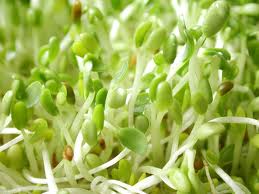
Research – Effects of Lactobacillus plantarum, Pediococcus acidilactici, and Pediococcus pentosaceus on the Growth of Listeria monocytogenes and Salmonella on Alfalfa Sprouts

Journal of Food Protection alfalfa

ABSTRACT

The germination conditions of sprouted vegetables consisting of relatively high temperatures and humidity, low light, and abundance of nutrients are ideal for pathogen survival and growth. The continual occurrence of outbreaks and recalls associated with sprout vegetables indicate additional measures are needed to improve product safety. The objective of this study was to evaluate the efficacy of a mixture of Lactobacillus plantarum, Pediococcus acidilactici, and Pediococcus pentosaceus (LPP) against Listeria monocytogenes and Salmonella on alfalfa sprouts during 5 days of sprouting at 20°C and its influence on sprout quality. Alfalfa seeds were inoculated with L. monocytogenes or Salmonella (each at 1 and 3 log CFU/g) and LPP (7 log CFU/g). Populations of LPP were maintained at 7.5 to 8.0 log CFU/g throughout sprouting. LPP had a significant effect on the growth of L. monocytogenes and Salmonella (P < 0.05). After 5 days of sprouting, populations of L. monocytogenes at an initial concentration of 1 and 3 log CFU/g of seeds treated with LPP were approximately 4.5 and 1.0 log CFU/g less than the untreated seeds, respectively. Populations of Salmonella at an initial concentration of 1 and 3 log CFU/g were 1.0 log CFU/g less than the control. LPP did not compromise the yield, seedling length, or pH of the sprouts.

HIGHLIGHTS
  • Listeria populations on LPP-treated sprouts were 4.5 log less than untreated seeds.

  • LPP treatment reduced Salmonella populations by 1 log compared with controls.

  • LPP did not influence sprout quality.

Australia -Did health-types get it wrong or a Canberra court: Ricardo’s Café cleared of Salmonella charges

Barf Blog

The owner of a popular Canberra cafe has had charges against him dropped, relating to a salmonella outbreak that saw more than 100 people fall ill in 2017, and has also escaped conviction on an unrelated charge.

The owner of Ricardo’s, Rick DeMarco, 32, was cleared of the most serious charges spanning from an investigation in February 2017, which began after customers complained of food poisoning on social media.

The restaurant in Jamison was immediately closed after the reports and, in a statement at the time, Mr DeMarco admitted salmonella was found on a used dishcloth and tea towel, but nothing was found in any food or on any cafe equipment.

USA -Sunstone Organics Issues Voluntary Nationwide Recall of Select Kratom Products Due to Potential Contamination by Salmonella

FDA

Sunstone Organics is voluntarily recalling two lots of Sunstone Organics Kratom. These two lots include Sunstone Organics White Vein Kratom Lot 119 and Sunstone Organics Maeng Da Kratom Lot 124A in both capsules and powder form and in all sizes. The products have been found to potentially be contaminated with salmonella.

Risk Statement: The product potentially could result in contracting salmonella. Symptoms of salmonella can include illness, vomiting, and some cases even death. This risk is higher for users a compromised or weak immune system, including elderly and young children. Sunstone Organics has not received any reports of adverse events to date related to this recall.

The product is used as a tea or supplement and is packaged in kraft stand-up pouches in both capsule form and powder form, in 3 different size bags, for a total of 12 products. The affected Sunstone Organics Kratom lots include the following lot numbers: Sunstone Organics White Vein Lot 119 and Sunstone Organics Maeng Da Lot 124A in Powder form and package sizes 25 grams, 50 grams, and 100 grams, and in capsule form in sizes 20 count, 60 count, and 150 count.

Research – Study: Food-borne diseases cost India $15 billion a year

Times of India

NEW DELHI: Unsafe food still costs India as high as $15 billion annually, even though it has almost halved from $28  billion estimated last year, a recent World Bank report says underlining the “unnecessarily high” economic burden caused by food borne diseases.