Monthly Archives: May 2018

Research – Canada – Veal Liver as Food Vehicle for Human Campylobacter Infections

CDC  


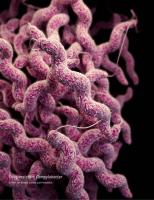
A matched case–control study in Quebec, Canada, evaluated consumption of veal liver as a risk factor for campylobacteriosis. Campylobacter was identified in 28 of 97 veal livers collected concurrently from slaughterhouses and retailers. Veal liver was associated with human Campylobacter infection, particularly when consumed undercooked.

Recent investigations conducted in Quebec, Canada, after an increased number of sporadic campylobacteriosis illnesses suggested that consumption of veal liver may be a risk factor for campylobacteriosis. Many of the persons infected reported eating veal liver, and many of those had eaten it pink or undercooked. The association between campylobacteriosis and the consumption of meat products, including chicken liver and offal from different animal species, has been previously described (15). We designed an epidemiologic study to examine the relationship between veal liver consumption and campylobacteriosis.

Switzerland – Switzerland: the cost of food poisoning

Poultry Med 

More than 10,000 cases of food poisoning are reported each year in Switzerland. Most cases are caused by campylobacter or salmonella-type bacteria with the former costing CHF50 million ($49.9 million) in medical costs last year.
The Food Safety and Veterinary Office (FSVO) wants to see a durable decline in the number of food poisoning cases, especially campylobacter infections which cause diarrhoea, it said at a press conference. A study by Professor Michael Siegrist of the Federal Institute of Technology in Zurich (ETHZ) shows that this kind of infection affects mainly men aged 18 to 30.
A website external link is central to the “Savour in Safety” campaign that targets young men.  The campaign was first launched in 2016, and the number of campylobacter-type infections dropped slightly in 2017, according to the FSVO. However, there are still many cases especially during the barbecue season and during end of year celebrations.
Correct handling of poultry, which is the cause of many infections, is especially important, says the FSVO.

Research – Good hygiene practices and microbiological contamination in commercial restaurants

Academic Journals

Food services and commercial restaurants have gained more space in people’s lives. Thus, people are more concerned about food security and sanitary hygiene. The present study evaluated practices of manipulation and contamination of environments and the preparation of surfaces in commercial restaurants in Vitória-ES, Brazil. Data on good practices were collected through a checklist proposal based on the RDC 216/2004; air samples were collected via the simple sedimentation technique, while surfaces (countertops and utensils) were sampled via the swab technique to analyze the presence of microbial indicators (n = 12). Regarding buildings, facilities and utensils block, 50% of the restaurants were classified as unsatisfactory. In food handlers and storage and transport of prepared food blocks, 58 and 100% of the restaurants, respectively, were classified as unsatisfactory. 83% of the restaurants being classified as unsatisfactory in documentation and registration block, with emphasis on the lack of or inadequacy of the Good Practice Manual. The hygienic and sanitary conditions were considered unsatisfactory in most restaurants evaluated, representing a low agreement with the legislation. Air contamination levels were above the recommendations, which indicates inadequate practices in some of the establishments. All establishments were unsatisfactory when mesophilic bacteria were analyzed on countertops surfaces. Values of the order of 105 of aerobic mesophiles for knifes were observed. These results, together with the high percentage of inadequations, indicate the need for immediate action for control and prevention as well as a greater supervision by the competent organizations. Actions to reduce the risks of contamination and to ensure greater consumer safety are crucial.

USA – More Ill with Salmonella Linked to Rose Acre Farms’ Eggs

Food Poison Journal 

Consumers, restaurants, and retailers should not eat, serve, or sell recalled eggs produced by Rose Acre Farms’ Hyde County farm. Throw them away or return them to the place of purchase for a refund.

  • These eggs were sold under multiple brand names, including Coburn Farms, Country Daybreak, Food Lion, Glenview, Great Value, Nelms, Publix, Sunshine Farms, and Sunups.
  • Check egg cartons for the following numbers: P-1065 (the plant number) and another set of numbers between 011 and 102 (the Julian date), or, for Publix and Sunups egg cartons, plant number P-1359D and Julian date 048A or 049A with Best By dates of APR 02 and APR 03.
  • Visit the FDA website for a list of recalled products.
  • Wash and sanitize drawers or shelves in refrigerators where recalled eggs were stored. Follow these five steps to clean your refrigerator.

RASFF Alerts – Norovirus – Live Oysters

kswfoodworld food safety poisoning

RASFF-norovirus (GI /g) in live oysters (Crassostrea gigas) from the Netherlands in Italy


RASFF Alert- STEC E.coli – Kangaroo Striploin

kswfoodworld food safety poisoning

RASFF-shigatoxin-producing Escherichia coli (stx1+ /25g) in frozen kangaroo striploin from Australia, via Belgium in the Netherlands

RASFF Alert – Bacillus cereus – Spice Mix

kswfoodworld food safety poisoning

RASFF-Bacillus cereus (14000 CFU/g) and unauthorised colour auramine O in spice mix from Bangladesh in Finland

RASFF Alerts – Listeria monocyotgenes – Salmonella – Frozen Fruits Mix

kswfoodworld food safety poisoning

RASFF-Listeria monocytogenes (<10 CFU/g) and Salmonella enterica ser. Orion (presence /25g) in frozen fruits mix from Belgium

RASFF Alert- Ochratoxin – Roasted Coffee

kswfoodworld food safety poisoning

RASFF-ochratoxin A (9 µg/kg – ppb) in roasted coffee from Turkey in Switzerland

RASFF Alerts – Salmonella – Sesame Seeds – Black Pepper – Chilled Salami – Raw Chicken Fillets

kswfoodworld food safety poisoning

RASFF-Salmonella (in 3 out of 5 samples /25g) in sesame seeds from Nigeria in Grrece

RASFF-Salmonella (presence /25g) in black pepper from Brazil in Spain

RASFF-Salmonella (in 1 out of 5 samples /25g) in chilled salami from Italy in Italy

RASFF-Salmonella enterica ser. Paratyphi B (presence /25g) in chilled raw chicken fillets from Ireland in Ireland

RASFF-Salmonella enterica ser. Enteritidis (presence /25g) in sesame seeds from Sudan in Greece