Category Archives: Water Safety

USA – Welcome to the Agricultural Water Assessment Builder!

FDA

Thank you for choosing to use the Agricultural Water Assessment Builder. The Agricultural Water Assessment Builder v. 1.0 is a user-friendly tool designed to help farms understand the proposed requirements for an agricultural water assessment in the “Standards for the Growing, Harvesting, Packing, and Holding of Produce for Human Consumption Relating to Agricultural Water” proposed rule (agricultural water proposed rule). If finalized, the rule would replace the microbial criteria and testing requirements for pre-harvest agricultural water for covered produce (other than sprouts) in the 2015 Produce Safety Final Rule with provisions for systems-based agricultural water assessments. Relevant definitions and resources can be viewed by clicking the icon next to the title of this page.
We welcome feedback on v1.0 of this optional tool, such as suggestions related to the tool’s functionality and useability. Feedback on the tool can be sent to agwaterbuilder@fda.hhs.gov.
Use of this tool is not required by law (see legal disclaimer) and would not be required. If the agricultural water proposed rule is finalized, FDA expects this tool to supplement and not replace other education, training, and experience that would be needed to understand and implement the requirements of the rule.
The information entered into this page will not be shared with FDA and will not be saved. If you need to pause while entering information, we recommend that you export a copy of your data and save it to your local machine. Once the document is saved, you may resume at a later time, and upload the file to begin from where you paused. Once you have reached the end of this tool, you will be given the opportunity to print out a summary of the information entered. Remember, the data that is entered here is not saved unless your export a file to save on your computer.
This tool is being provided for illustrative purposes only because the requirements for agricultural water assessments under proposed § 112.43 have not been finalized.
Legal disclaimer: Use of the Agricultural Water Assessment Builder v. 1.0 does not constitute FDA approval of an agricultural water assessment or guarantee compliance with FDA’s requirements, if finalized. FDA has taken all reasonable precautions in creating the Agricultural Water Assessment Builder v. 1.0. However, FDA is not responsible for errors, omissions or deficiencies regarding the tool. The Agricultural Water Assessment Builder v. 1.0 is available “as is” and without warranties of any kind, either expressed or implied, including, but not limited to, warranties of performance, merchantability, and fitness for a particular purpose. FDA is not making a commitment in any way to regularly update the tool. Responsibility for the interpretation and use of the Agricultural Water Assessment Builder v. 1.0 lies solely with the user. Third parties’ use of or acknowledgment of the tool does not in any way represent that FDA endorses such third parties or expresses any opinion with respect to their statements.
Australia – Don’t take a risk with food safety during and after floods (4 March 2022)

Food Safety Council

Following extensive flooding in eastern Australia the Food Safety Information Council is warning people not to take food safety risks during and after flood.

Lydia Buchtmann, the Council’s Communication Director, said that floodwater can be contaminated with sewage, agricultural and industrial waste, and other substances that can cause illness so there is a danger that any food, surfaces and cooking utensils that have come into contact with floodwater might be contaminated.

‘Spills and sewage discharges can also contaminate water supplies and food gardens. If in doubt throw out any food that might not be safe to eat and follow these simple steps:

  1. Throw out food that has come into contact with floodwater or has an unusual odour, colour or texture. Do not taste or cook it.
  2. Check canned and unopened bottled food and throw out any cans that are dented, swollen or damaged. For cans that appear useable remove the label and thoroughly wash the outside of the can with drinking-quality water, sanitise the can in bleach for 1 minute, then rinse in drinking-quality water re-label the can with a waterproof pen.
  3. Carefully check dishes, pots, pans, cutlery and kitchen equipment that might have been in contact with floodwater. Throw away damaged or cracked items, items made from porous material such as wood, plastic or rubber including wooden chopping boards as they cannot be adequately sanitised.
  4. Wash utensils and surfaces in hot, soapy, drinking-quality water. Take apart and clean the non-electrical pieces of any kitchen equipment that can be safety taken apart and then rinse in clean, hot water.
  5. Sanitise silverware, metal utensils, pots, pans and kitchen equipment in pieces by boiling in water for 10 minutes. Sanitise dishes by immersing glass, porcelain, china and enamel-ware for 10 minutes in a disinfecting solution of 1 tablespoon of chlorine bleach per 2 litres of warm water. Clean cupboards and counters with hot soapy water then rinse with a chlorine bleach solution before storing dishes or food.
  6. Air dry items because towels might have been splashed with contaminated water.
  7. Commercial and most domestic dishwashers are capable of sanitising all eating and cooking utensils as part of their normal cycle
  8. Vegetable gardens can take a month to become suitable for harvest after flood or sewage discharge. Discard all leafy green produce or damaged vine or dropped tree fruits. After 1 month, wash other vegetables then sanitise in a weak bleach solution of 1 tablespoons bleach to 2 litres of water. Then rinse in drinking-quality water, peel and use.

‘Finally, after a flood tap water and private water supplies such as from tanks, wells and bores sometimes might not be safe to drink and use for cooking and cleaning so monitor public announcements and those from the local water supplier to know if tap water is safe to use. If the water is unsafe, use only bottled, boiled or treated water – in that order of preference – for drinking, cooking or preparing food, washing utensils and surfaces, brushing teeth, hand washing, making ice, and bathing, Ms Buchtmann concluded.

Research – Rainfall strongly affects infectious Vibrio bacteria in Ala Wai Canal

Science Daily

Food Illness

Study authors Olivia Nigro, then a graduate student in the oceanography at UHM and now an assistant professor at HPU, and Grieg Steward, professor in the UHM School of Ocean and Earth Science and Technology (SOEST), first assessed Vibrio in 2006 when Oliver Johnson died from a V. vulnificus infection after having cuts and scrapes exposed to Ala Wai Harbor water.

“His exposure occurred after many days of heavy rainfall, which, given our results, suggests this may have been an exacerbating factor,” said Steward. “At the time, we realized there was almost no data on the ecology of V. vulnificus in the canal, or in Hawai’i generally, and remarkably, very little in tropical waters anywhere.”

After a quick pilot study in 2006 that showed the bacteria are present in high, but not unexpected numbers, the team geared up for a year-long study in 2008-2009 with better methods to understand the variability in abundance over a seasonal cycle.

At higher latitudes, the abundance of V. vulnificus shows a very strong seasonal cycle — nearly disappearing in winter when temperatures are cold. In Hawai’i, temperatures are warm year-round, so freshwater input becomes a more important control.

V. vulnificus occurs naturally in warm, brackish waters,” said Nigro. “So we expect to find this bacterium anywhere that temperatures are warm and freshwater and seawater mix in about equal proportions. When conditions are right, the Ala Wai Canal can be a great incubator for this bacterium!”

Research – Don’t take a risk with food safety during and after floods

Medical Express

Following extensive flooding in eastern Australia the Food Safety Information Council is warning people not to take food safety risks during and after flood.

Lydia Buchtmann, the Council’s Communication Director, said that floodwater can be contaminated with sewage, agricultural and , and other substances that can cause illness so there is a danger that any food, surfaces and cooking utensils that have come into contact with floodwater might be contaminated.

“Spills and sewage discharges can also contaminate  and food gardens. If in doubt throw out any food that might not be safe to eat and follow these simple steps:

  1. Throw out food that has come into contact with floodwater or has an unusual odor, color or texture. Do not taste or cook it.
  2. Check canned and unopened bottled food and throw out any cans that are dented, swollen or damaged. For  that appear useable remove the label and thoroughly wash the outside of the can with drinking-quality water, sanitize the can in bleach for 1 minute, then rinse in drinking-quality water re-label the can with a waterproof pen.
  3. Carefully check dishes, pots, pans, cutlery and kitchen equipment that might have been in contact with floodwater. Throw away damaged or cracked items, items made from porous material such as wood, plastic or rubber including wooden chopping boards as they cannot be adequately sanitized.
  4. Wash utensils and surfaces in hot, soapy, drinking-quality water. Take apart and clean the non-electrical pieces of any kitchen equipment that can be safety taken apart and then rinse in clean, hot water.
  5. Sanitize silverware, metal utensils, pots, pans and kitchen equipment in pieces by boiling in water for 10 minutes. Sanitize dishes by immersing glass, porcelain, china and enamel-ware for 10 minutes in a disinfecting solution of 1 tablespoon of chlorine bleach per 2 liters of warm water. Clean cupboards and counters with hot soapy water then rinse with a chlorine bleach solution before storing dishes or food.
  6. Air dry items because towels might have been splashed with contaminated water.
  7. Commercial and most domestic dishwashers are capable of sanitizing all eating and cooking utensils as part of their normal cycle
  8. Vegetable gardens can take a month to become suitable for harvest after flood or sewage discharge. Discard all leafy green produce or damaged vine or dropped tree fruits. After 1 month, wash other vegetables then sanitize in a weak bleach solution of 1 tablespoons bleach to 2 liters of water. Then rinse in drinking-quality water, peel and use.

“Finally, after a flood tap water and private water supplies such as from tanks, wells and bores sometimes might not be safe to drink and use for cooking and cleaning so monitor public announcements and those from the local water supplier to know if tap water is safe to use. If the water is unsafe, use only bottled, boiled or treated —in that order of preference—for drinking, cooking or preparing , washing utensils and surfaces, brushing teeth, hand washing, making ice, and bathing,” Ms Buchtmann concluded.


Explore further

Proper handling of fresh produce can reduce risk of foodborne illness

Research – Rising Incidence of Legionnaires’ Disease and Associated Epidemiologic Patterns, United States, 1992–2018

CDC

Abstract

Reported Legionnaires’ disease (LD) cases began increasing in the United States in 2003 after relatively stable numbers for >10 years; reasons for the rise are unclear. We compared epidemiologic patterns associated with cases reported to the Centers for Disease Control and Prevention before and during the rise. The age-standardized average incidence was 0.48 cases/100,000 population during 1992–2002 compared with 2.71 cases/100,000 in 2018. Reported LD incidence increased in nearly every demographic, but increases tended to be larger in demographic groups with higher incidence. During both periods, the largest number of cases occurred among White persons, but the highest incidence was in Black or African American persons. Incidence and increases in incidence were generally largest in the East North Central, Middle Atlantic, and New England divisions. Seasonality was more pronounced during 2003–2018, especially in the Northeast and Midwest. Rising incidence was most notably associated with increasing racial disparities, geographic focus, and seasonality.

Research – Contamination of Soil, Water, Fresh Produce, and Bivalve Mollusks with Toxoplasma gondii Oocysts: A Systematic Review

MDPI

Toxoplas

Toxoplasma gondii is a major foodborne pathogen capable of infecting all warm-blooded animals, including humans. Although oocyst-associated toxoplasmosis outbreaks have been documented, the relevance of the environmental transmission route remains poorly investigated. Thus, we carried out an extensive systematic review on T. gondii oocyst contamination of soil, water, fresh produce, and mollusk bivalves, following the PRISMA guidelines. Studies published up to the end of 2020 were searched for in public databases and screened. The reference sections of the selected articles were examined to identify additional studies. A total of 102 out of 3201 articles were selected: 34 articles focused on soil, 40 focused on water, 23 focused on fresh produce (vegetables/fruits), and 21 focused on bivalve mollusks. Toxoplasma gondii oocysts were found in all matrices worldwide, with detection rates ranging from 0.09% (1/1109) to 100% (8/8) using bioassay or PCR-based detection methods. There was a high heterogeneity (I= 98.9%), which was influenced by both the sampling strategy (e.g., sampling site and sample type, sample composition, sample origin, season, number of samples, cat presence) and methodology (recovery and detection methods). Harmonized approaches are needed for the detection of T. gondii in different environmental matrices in order to obtain robust and comparable results.

Research – Legionellosis: A novel mechanism by which the bacterium Legionella pneumophila regulates the immune response of its host cells

Science Daily

Legionellosis or Legionnaires’ disease affected more than 1 800 people in France in 2019 and caused 160 deaths. This emerging disease is caused by Legionella pneumophila, an environmental bacterium that thrives in hot water systems. Researchers have discovered a mechanism that allows Legionella pneumophila to target the immune response of the cells it infects by secreting a small regulatory RNA. This mechanism, not described before, facilitates the survival and proliferation of Legionella pneumophila during infection. The work provides precious information on the strategies used by bacteria to manipulate their host cells.

Research – Emergence of non-choleragenic Vibrio infections in Australia

1 Health

Vibrio_vulnificus_01a

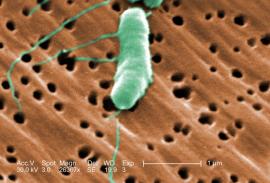
Vibrio infection was rarely reported in Tasmania prior to 2016, when a multistate outbreak of Vibrio parahaemolyticus associated with Tasmanian oysters was identified and 11 people reported ill. Since then, sporadic foodborne cases have been identified following consumption of commercially- and recreationally-harvested oysters. The increases in both foodborne and non-foodborne Vibrio infec-tions in Tasmania are likely associated with increased sea water temperatures. As oyster production increases and climate change raises the sea surface temperature of our coastline, Tasmania expects to see more vibriosis cases. Vibriosis due to oyster consumption has been reported in other Australian states, but the variability in notification requirements between jurisdictions makes case and outbreak detection difficult and potentially hampers any public health response to prevent further illness.

Ireland – EPA – Drinking Water Quality in Private Group Schemes and Small Private Supplies in 2020 – E.coli

EPA

Click to access DWQinPrivateGroupWaterSupplies-2022-02-21.pdf

Key Findings for 2020

➤The quality of drinking water in private supplies was not as good as it should be: one in 20 private water supplies were contaminated with E. coli.

➤93% of Private Group Schemes complied with the Trihalomethanes standard. However, 13 supplies are cited on EU infringement proceedings against Ireland for failing to take the measures necessary to ensure compliance.

➤Over a quarter of Small Private Supplies were not monitored by Local Authorities.

USA – FDA, growers agree on many points of water safety; consumer group has concerns

Food Safety News

The public and industry had the opportunity this week to hear FDA representatives talk about a proposed rule regarding how to make water used in the growing of fresh produce safer.

The session with the Food and Drug Administration officials included about 30 minutes for comments from the audience, which consisted of three-minutes each from industry spokespeople.

During one portion of the five-hour session a representative from the Center for Science in the Public Interest provided comments about public welfare issues concerning the proposed water safety rule. That portion of the session also included a presentation by a representative of Western Growers, which is a group of produce growers in western states. 

One thing the government speakers and other commenters had in common was the fact that the ag water rule is complicated. They all also said the proposed rule is more flexible than the one-size-fits-all proposal previously put forward by the Food and Drug Administration.

The agency has been working on the rule regarding agricultural water requirements under the Produce Rule since 2013. The rule is one of the mandates included in the federal Food Safety and Modernization Act of 2011. It covers water safety issues for fresh fruits and vegetables. It has a special section for the production of sprouts that is already in place.

Provisions of the proposed water rule do not include most small farmers, if their annual income generated by their sales of fresh produce is less than $25,000. Many of those growers use organic methods.