Category Archives: Vibrio vulnificans

South Korea – Man, 71, had hand amputated when skin started rotting 12 hours after eating sushi – Vibrio vulnificans

New England Journal of Medicine 

71-year-old man presented to the emergency department with a 2-day history of fever and excruciating pain in his left hand that had developed 12 hours after eating raw seafood. He had a history of type 2 diabetes mellitus and hypertension and was undergoing hemodialysis for end-stage renal disease. At the time of presentation, hemorrhagic bullae measuring 3.5 by 4.5 cm had developed on the palm of his left hand (Panel A), and erythematous swelling with confluent tense bullae and ecchymoses had developed on the dorsum of the hand and forearm (Panel B). Surgical intervention was performed urgently, and Vibrio vulnificus was isolated from the bullae. Postoperatively, the patient received intravenous ceftazidime and ciprofloxacin. V. vulnificus can cause skin infections after wound exposure to contaminated seawater, as well as primary septicemia through the consumption of contaminated raw or undercooked seafood. Patients with immunocompromising conditions, including chronic liver disease and cancer, are at increased risk for infection and complications. Despite treatment, the skin lesions progressed to deep necrotic ulcers, and amputation of the left forearm was performed 25 days after presentation. The patient did well after the surgery and was discharged home.
USA – Third case of Vibrio confirmed in Mobile County

WKRG 

MOBILE, Ala. (WKRG) — The third case of Vibrio in 2018 has been reported to the Mobile County Health Department (MCHD). The case is currently under investigation by MCHD’s Infectious Diseases & Outbreak division.

MCHD says the exposure took place while cleaning crabs in the coastal waters of Mobile Bay. The species has been identified as Vibrio vulnificus. Necrotizing fasciitis — an infection that results in the death of the body’s soft tissue — was present in this case.

Vibrio bacteria naturally live in certain coastal waters and are present in higher concentrations between May and October when water temperatures are warmer. However, the bacteria can be present throughout the year in some areas. While Vibrio bacteria can enter the body through a break in the skin, it can also come from consuming contaminated seafood.

The Alabama Department of Public Health has issued a news release titled “Do not enter bodies of water if you have cuts or abrasions; if injured, clean wound at once to reduce risk of infection.” Here is the link: http://www.alabamapublichealth.gov/news/2018/06/15.html/

Of the more than 70 species of Vibrio that exist, about a dozen can cause human illness — known as Vibriosis. The Centers for Disease Control and Prevention estimates that each year in the United States 80,000 individuals become sick with Vibriosis, and 100 people die from their infection. About 52,000 of these illnesses are estimated to be the result of eating contaminated food.

USA- Alabama: Mobile County reports 2nd Vibrio case

Outbreak News Today 


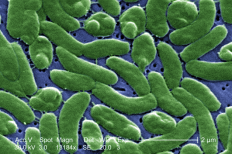
Vibrio_vulnificus_01

Image CDC Enter a caption

The Mobile County Health Department (MCHD) reported Monday on the second case of Vibrio in 2018.  The species has been identified as Vibrio vulnificus.

The exposure took place while swimming in either Mobile Bay or Gulf of Mexico waters. Necrotizing fasciitis — an infection that results in the death of the body’s soft tissue — was not present in this case. The case is currently under investigation by MCHD’s Infectious Diseases & Outbreak division.

Norway -Vibrio and Shewanella: Norway health officials warn of swimming in the warm waters

Outbreak News Today 

CDC Vibrio

Image CDC Enter a caption

Norwegian health authorities are warning people who are particularly vulnerable to Vibrio infections to take precautions while swimming as a number of serious bacterial infections ave been recorded.

This summer, six people have been severely ill with wound infection due to bacteria in seawater (five Vibrio and one Shewanella). The infection has occurred after swimming in the Oslo Fjord.

All adults over the age of 50 who have had a sore wound or have suffered sores during bathing in the Oslo Fjord in five different municipalities, Bærum, Oslo, Moss, Vestby and Fredrikstad.

In addition to the serious cases we know from earlier, there have been reports of 20 people who have had mild Vibrio infections on August 8th. These are sore infections and ear infections that often do not require treatment.

Research -Occurrence of four pathogenic Vibrios in Chinese freshwater fish farms in 2016

Science Direct

The purpose of this survey was to investigate the distribution of major pathogenic Vibrio spp. (Vibrio parahaemolyticus, Vibrio alginolyticus, Vibrio vulnificus and Vibiro cholerae) in Chinese freshwater fish farms. In total, 4,064 samples of freshwater fish, water and sediment were collected from 12 provinces covering every quarter in 2016. The occurrence of Vibrios was as follows: V. cholerae (10.33%), V. parahaemolyticus (3.89%), V. alginolyticus (1.24%) and V. vulnificus (0.76%). Among 158 confirmed V. parahaemolyticus isolates, 44 isolates (27.85%) had virulence genes (trh/tdh). Among 420 confirmed V. cholerae isolates, 4 were the O1 stains and 4 were the O139 strains. Out of 112 freshwater farms, 58.93% had Vibrios-positive samples. The rates of Vibrios-positive samples from May to October (12.45%∼35.20%) were higher than those in other months (0.00%∼8.07%). Compared the environment factors of Vibrios positive and negative water samples, there was a significantly difference in temperature (P<0.01), while no significant difference in salinity and pH value (P>0.05). In summary, the study presents comprehensive contamination data on the occurrence of four major pathogenic Vibrios in freshwater aquaculture of China for the first time, and the results indicate that Vibrios are widely distributed in aquaculture environment and a further risk assessment is needed to conduct.

USA – Texas warns public of Vibrio risk

Outbreak News Today 

CDC Vibrio

Image Cdc Enter a caption


Texas health officials are warning the public about the increased risk of Vibrio infections naturally found in coastal water.

Most infections occur between May and October, when the warmer water temperatures in the Gulf of Mexico promote the growth of these bacteria.

People can become ill after eating raw or undercooked contaminated seafood, particularly oysters, or when a person has an open wound that is exposed to seawater. Illness due to eating raw or undercooked seafood usually includes gastrointestinal symptoms such as vomiting, diarrhea, abdominal pain, nausea, fever, and chills. These symptoms frequently occur within 24 hours of eating and last approximately three days. Wound infections can cause redness, swelling, large blisters on the skin, skin ulcers, and, in serious cases, may even lead to limb amputation or death. People with a weakened immune system, liver disease, diabetes, cancer, or other chronic diseases or who have decreased gastric acidity are at highest risk for severe illness.

USA – Man dies from bacterial infection after eating raw oysters in Florida – Vibrio vulnificans

CBS News 

CDC Vibrio

EImage CDC


A 71-year-old man died from a bacteria infection after eating raw oysters at a restaurant in Sarasota County, Florida, according to reports.

The Florida Department of Health has not released the man’s identity or the restaurant where he ate, but CBS Miami reported the man died two days after eating the oysters, after contracting a Vibrio vulnificus infection.

“We have an individual that consumed some raw oysters and to the best of our knowledge had no exposure to salt water, became severely ill, and passed away,” said Michael Drennon of the Sarasota County Health Deptartment, WJAX reports.

USA – Father may lose all four limbs after contracting flesh-eating bacteria in NJ – Vibrio vulnificans

News and Tribune

CAMDEN, NJ (RNN) – A 60-year-old father is hospitalized in intensive care after his family says he contracted flesh-eating bacteria while crabbing in a New Jersey river.

Doctors say Angel Perez, 60, developed necrotizing fasciitis, caused by a variety of Vibrio bacteria. The father is now in the ICU at Cooper University Hospital in Camden, NJ, according to NJ Advance Media.

Perez’s daughter, Dilena Perez-Dilan, says her father is an avid crabber. She says hours after he went crabbing near the Maurice River on July 2, his right leg began to swell then quickly got worse.

“It turned brown, blackish color. It was swelling, it was blistered,” Perez-Dilan told WPVI.

According to Perez’s family, it only took a few hours for the infection to spread to all four of his limbs, turning his skin raw and red with blisters and scarring.

“He is in critical condition,” Perez-Dilan told NJ Advance Media. “The infection has spread to his blood…his skin; you can see it spreading from his feet all the way above his kneecap. His forearms are black in color; they have blisters, cuts and sores.”

RASFF Alert -Vibrio vulnificans – Wild Raw Giant Tiger Shrimps

kswfoodworld food safety poisoning

RASFF-Vibrio vulnificus (in 4 out of 5 samples /25g) in frozen wild raw giant tiger shrimps (Penaeus monodon) from Indonesia in France

Research – Increasing Vibrio Prevalence

Food Safety NewsVibrio

With a nearly 50-percent mortality rate, Vibrio vulnificus is the most deadly foodborne pathogen in the world, according to University of North Carolina at Charlotte Biology Professor Jim Oliver. And instances of infection in the U.S., however rare, are rapidly rising.

Fifteen years ago, there were 21 confirmed cases of Vibrio vulnificus and parahaemolyticus infections in the U.S. Last year, there were 193.

While infections from either of the pathogens are still rare compared with, say, Salmonella and Campylobacter, the incidence rate grew faster than any of the other five microbes tracked in the Centers for Disease Control’s 2012 Food Safety Progress Report. The vulnificus strain is responsible for 95 percent of seafood-related illness fatalities in the U.S., according to a 2013 study by Oliver and Joanna Nowakowska. Another Vibrio strain, parahaemolyticus, is milder, causing diarrhea, nausea, fever and chills, according to CDC.