Category Archives: Uncategorized

RASFF Alerts – Salmonella – Polish Chicken Products – Black Pepper – Minced Meat -Salted Chicken Breasts –

RASFF

Salmonella Newport in poultry carcasses, elements of poultry meat, poultry offal from Poland in Bulgaria, Czech Republic, Latvia and Romania

RASFF

Salmonella enterica ser. Enteritidis (in 1 out of 5 samples /25g) and Salmonella enterica ser. Infantis (in 2 out of 5 samples /25g) in chilled chicken meat from Poland in Italy and the Czech Republic

RASFF

Salmonella enterica ser. Enteritidis (present /10g) in frozen chicken tulips from Poland in France

RASFF

Prezenta Salmonella enteritidis in pipote pui congelate din Polonia // Salmonella enteritidis in frozen chicken gizzards from Poland in Romania

RASFF

S.typhimurium in turkey meat from Poland in Italy

RASFF

Salmonella in black pepper from Brazil in Spain

RASFF

Salmonella in frozen salted chicken half breasts from Brazil in the Netherlands

RASFF

Salmonella Enteritidis in chicken neck skin samples from Poland in Poland and Ghana

RASFF

Salmonella enterica ser. Enteritidis in chilled chicken meat from Poland in Hungary, Czech Republic and Latvia

RASFF

Salmonella enteritidis in pipote pui origine Polonia/// salmonella enteritidis in frozen chicken meat from Poland in Romania

RASFF

Salmonella spp., Listeria and labelling deficiencies in minced meat from Bulgaria in Germany

RASFF

Presence of Salmonella Newport in frozen chicken meat from Netherlands origin Poland in Italy, Spain


USA – Biotechnology center finds outbreak strain of Salmonella in 155 cases linked to seafood

Food Safety News

According to the The National Center for Biotechnology Information there are 155 cases now identified as part of a Salmonella Thompson outbreak traced to seafood from a Denver company.

The center has identified the outbreak strain in 155 patient samples. According to the most recent report on Oct. 8 from the CDC there were 102 people spread across 14 states who had been infected. The vast majority of patients at that time lived in the Denver area.

The National Center for Biotechnology Information is also reporting that 13 outbreak isolates have been found in products.

USA – Oregon Lox Company Recalls Wild Cold Smoked Keta Salmon Lox Because of Possible Health Risk – Listeria monocytogenes

FDA


Company Announcement

November 11, 2021, Oregon Lox Company of Eugene, Oregon is issuing a voluntary recall of various brands of Wild Cold Smoked Keta Salmon Lox, specific lot number 22821, because it has the potential to be contaminated with Listeria rnonocytogenes, an organism which can cause serious and sometimes fatal infections in young children, frail or elderly people, and others with weakened immune systems. Although healthy individuals may suffer only short-term symptoms such as high fever, severe headache, stiffness, nausea , abdominal pain and diarrhea, listeria infection can cause miscarriages and stillbirths among pregnant women.

The affected Wild Cold Smoked Keta Salmon product was distributed in Alaska, California, Oregon, and Washington through dis tributors. Product was shipped frozen on common carriers.

The affected Wild Cold Smoked Keta Salmon is packaged in plastic vacuum sealed packages and sold in various brands, sizes, and weights (see attached labels) . The recalled products brands and lot number are indicated in the table below:

Batch Lot
(indicated on label back of product)
Product Description
(indicated on label)
22821 Aqua Nova Sliced Nova Lox 3oz package
22821 Aqua Nova Sliced Nova Lox 1lb pack
22821 Aqua Nova Premium Oregon Nova Lox (Sliced)
22821 North Coast Traditional Nova Lox
22821 North Coast Smoked Salmon Trim 3lb
22821 Aqua Nova Premium Oregon Nova Lox (UnSliced)
22821 Tony’s Smoked Salmon Lox 8oz pack

No illnesses have been reported to date in connection with this product.

The recall was the result of a routine sampling by the Washington State Department of Agriculture. This recall is being made with the knowledge of the U.S. Food and Drug Administration and the Oregon Department of Agriculture.

Consumers who have purchased the recalled product are urged to dispose or return the product to the place of purchase for a full refund. Consumers with questions may contact the company at 800-233-1850, Monday through Friday, 9AM to 4PM PST.


Company Contact Information

Consumers:
Oregon Lox Company
 800-233-1850

Product Photos

Australia – Health warning over oysters after spike in food poisoning cases – Vibrio parahaemolyticus

9News

Food Illness

A warning has been issued over a popular seafood dish after a dramatic increase in cases of food poisoning.
Food Safety bosses in South Australia say they have seen a spike in cases of a gastro infection linked to shellfish after people ate raw oysters.
SA Health’s acting director of Food and Controlled Drugs Branch, Joanne Cammans, said there have been 36 cases of Vibrio parahaemolyticus infections linked to eating raw oysters since September.

Research – Agronomic Factors Influencing the Scale of Fusarium Mycotoxin Contamination of Oats

MDPI

CDC Fusarium

Seven agronomic factors (crop season, farming system, harvest date, moisture, county, oat variety, and previous crop) were recorded for 202 oat crops grown across Ireland, and samples were analysed by LC-MS/MS for four major Fusarium mycotoxins: deoxynivalenol (DON), zearalenone (ZEN), T-2 toxin and HT-2 toxin. Type A trichothecenes were present in 62% of crops, with 7.4% exceeding European regulatory limits. DON (6.4%) and ZEN (9.9%) occurrences were relatively infrequent, though one and three samples were measured over their set limits, respectively. Overall, the type of farming system and the previous crop were the main factors identified as significantly influencing mycotoxin prevalence or concentration. Particularly, the adherence to an organic farming system and growing oats after a previous crop of grass were found to decrease contamination by type A trichothecenes. These are important findings and may provide valuable insights for many other types of cereal crops as Europe moves towards a much greater organic-based food system.

Canada – AlBurj brand Tahina and Halawa recalled due to Salmonella

CFIA

Summary

Product
Tahina and halawa
Issue
Food » Microbial Contamination » Salmonella
What to do

Do not consume, use, sell, serve, or distribute the recalled products

Affected products

Brand Product Size UPC Codes
AlBurj (Arabic characters only) Tahina 800 g 6 217000 020646 All codes up to and including:
P: 06/2021
AlBurj Tahina 18 kg 6 217000 020646 All codes up to and including:
P: 06/2021
AlBurj (Arabic characters only) Halawa Original (Arabic characters only) 800 g 6 217000 020172 All codes up to and including:
P: 06/2021
AlBurj (Arabic characters only) Halawa Pistachio Extra (Arabic characters only) 800 g 6 217000 020677 All codes up to and including:
P: 06/2021
AlBurj (Arabic characters only) Halawa Pistachio (Arabic characters only) 800 g 6 217000 020486 All codes up to and including:
P: 06/2021

Issue

Jabbour Export/Import Ltd. is recalling AlBurj brand Tahina and Halawa from the marketplace due to possible Salmonella contamination.

The recalled products have been sold in Alberta.

What you should do

  • If you think you became sick from consuming a recalled product, call your doctor
  • Check to see if you have the recalled products in your home or establishment
  • Do not consume the recalled products
  • Do not serve, use, sell, or distribute the recalled products
  • Recalled products should be thrown out or returned to the location where they were purchased

Research – Research expands ability to detect, kill harmful biofilms

Food Safety News

Food safety practices evolve as new technology and knowledge of the pathogens that spread foodborne illnesses becomes available.

In recent years, researchers have increasingly focused efforts on biofilm and its ability to thrive in nature and in food production and processing facilities. Biofilm is formed by a pathogen — or more often, a mixture of different pathogens — that builds a protective layer using extracellular polymeric substances (EPS).

A majority of foodborne illnesses can be traced to pathogens housed in biofilms, according to food safety research. Academics and food trade associations have stepped up efforts in recent years to learn more about biofilm, which naturally fights efforts to sanitize food contact surfaces in processing and manufacturing facilities.

Recent studies have looked at products and practices to eradicate or control biofilms in different segments of the food industry, from produce to meat processing and poultry farms.

Research – Vital Surveillances: Characteristics of Settings and Etiologic Agents of Foodborne Disease Outbreaks — China, 2020

China CDC

  • Abstract

    IntroductionFoodborne diseases are a growing public health problem and have caused a large burden of disease in China. This study analyzed epidemiological characteristics of foodborne diseases in China in 2020 to provide a scientific basis for prevention and control measures.

    MethodsData were collected from 30 of 31 provincial-level administrative divisions (PLADs) in the mainland of China, excluding Xizang (Tibet) Autonomous Region, via the National Foodborne Disease Outbreaks Surveillance System. The number and proportion of outbreaks, illnesses, hospitalizations, deaths by setting, pathogen-food category pairs and etiology were calculated.

    ResultsIn 2020, 7,073 foodborne disease outbreaks were reported, resulting in 37,454 illnesses and 143 deaths. Among the identified pathogens, microbial pathogens were the most common confirmed etiology, accounting for 41.7% of illnesses. Poisonous mushrooms caused the largest proportion of outbreaks (58.0%) and deaths (57.6%). For venues where foodborne disease outbreaks occur, household had the highest number of outbreaks (4,140) and deaths (128), and catering service locations caused the largest proportion of illnesses (59.9%). Outbreaks occurring between June and September accounted for 62.8% of total outbreaks.

    ConclusionsFoodborne disease outbreaks mainly occurred in households. Microbial pathogens remained the top cause of outbreak-associated illnesses. Poisonous mushrooms were ranked the top cause of deaths in private homes in China. The supervision and management of food safety and health education should be strengthened to reduce the burden of foodborne diseases. Publicity should be increased to reduce the incidence of mushroom poisonings in families, and supervision and management of food should be strengthened to reduce microbial contamination.

Denmark – Denmark aims to use education to reduce Norovirus risk when dining out

Food Safety News

Norwalk_Caspid

The Danish Veterinary and Food Administration has launched a campaign to lower the risk of exposure to norovirus when dining out.

Ahead of Christmas, the Danish Veterinary and Food Administration (Fødevarestyrelsen) is focusing on how staff in professional kitchens, in cafés, canteens, restaurants and delicatessens can help to curb norovirus infections, which the agency said normally peak toward the end of the year.

Chefs and kitchen staff should stay home from work if they have symptoms of norovirus infection or have just had the disease. People can be infectious before feeling sick and at least 48 hours after having recovered.

Niels Ladefoged Nielsen, a consultant at the Danish Veterinary and Food Administration, said norovirus is extremely contagious, and there have been times when a single mistake in a professional kitchen has affected a large number of guests.

Nielsen said while the message of not cooking for others while feeling unwell is aimed at food professionals, it also applies to people at home in their own kitchen, and when preparing or serving food for family or friends.

Belgium – Boni Selection & Everyday Brand Ham – Listeria monocytogenes

AFSCA

Recall of Colruyt
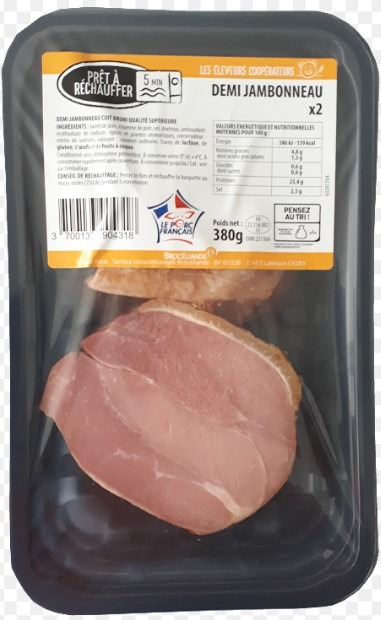
Products: Boni Selection & Everyday brand ham.
Problem: presence of Listeria monocytogenes.

Colruyt and OKay recall the defatted ham ( 200 g and 500 g) and the ham on the bone (200 g) Boni Selection, as well as the ham on the bone Meesterlyck (300 g) Everyday .

During an internal control, the presence of Listeria monocytogenes was observed in the products gluten-free defatted ham ( 200 g and 500 g) and gluten-free ham on the bone (200 g) Boni Selection, as well as ham with Meesterlyck bone (300 g) Everyday .

In consultation with the AFSCA, Colruyt and OKay have therefore decided to withdraw the products concerned from sale.

Customers who have purchased these products are advised not to consume them and to bring them back to the store, where they will be reimbursed. In the meantime, all stores have removed the affected products from the shelves.

Possible symptoms of Listeria monocytogenes poisoning

Listeria monocytogenes infection can be dangerous for young children, pregnant women (risk of miscarriage), immunocompromised people and the elderly. Possible symptoms of Listeria monocytogenes poisoning include nausea and vomiting, abdominal cramps, diarrhea or constipation, headache and persistent fever (feeling like the flu). These symptoms usually appear 2 to 60 days after taking Listeria monocytogenes.

People who have consumed these products and who present this type of symptoms are invited to consult their doctor, notifying him of this consumption.

Product description: 
Boni Selection gluten-free defatted ham 500 g Use-by
date (BBD): 11/11/2021
Sales period: from 10/22/2021 to 10/28/2021 inclusive
Item number: 27244 Defatted

Ham gluten free Boni Selection 200 g Best before
date (BBD): 12-13 /
11/2021 Sales period: from 22/10/2021 to 2/11/2021 inclusive
Item number: 27240

Ham on the bone without gluten Boni Selection 200 g Use-by
date (BBD): 11/11/2021
Sales period: from 10/21/2021 to 11/2/2021 inclusive
Item number: 27770

Ham on the bone Meesterlyck Everyday 300 g Best before
date (BBD): 12/11/2021
Sale period: from 22/10/2021 to 2/11/2021 inclusive
Item number: 27353

These products have been offered on sale in the following stores:
Collect & Go, Colruyt Belgium and OKay.

For more information, customers can contact Colruyt Group Customer Service on 0800 99 124.

Contact person for journalists
Colruyt Group Press Service
Tel. : 0473 92 45 10