Category Archives: STEC

Denmark – E. coli STEC in Sucuk cured sausage

Foedevarestyrelsen

Lidl Denmark is recalling Yayla sucuk whole cured sausage, as E.coli (STEC) has been found in the product. If you have the product, you should discard it or return it to the store where it was purchased.
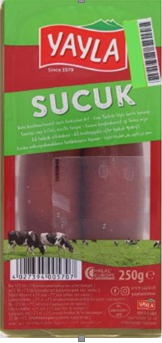
Picture of sucuk sausage

Which food is recalled

Yayla Sucuk

Net weight: 250 g

Best before date: 04/05/2024

Lot number: 10878934 

Where is the product sold

The product is sold in Lidl stores in Jutland and Funen

Why is the product being recalled?

E.coli (STEC) has been detected in the product. The symptoms of infection with E.coli (STEC) are often acute stomach infection with diarrhoea, severe abdominal pain and vomiting. You usually get no or only a mild fever. The disease mostly goes away within 5-10 days. In some cases, the infection can worsen with acute kidney failure, called hemolytic uremic syndrome (HUS).

Read more about E. coli in food here

Read more about STEC in food

Read more about infection with E. coli

What should you do as a consumer?

The Danish Veterinary and Food Administration advises consumers to return the product to the store where it was purchased or to discard it. 

If you experience symptoms in connection with consuming the product, you should contact your own doctor.

Who recalls the product

Lidl Denmark K/S, Carl Blochs Gade 89, 8000 Aarhus
Research – Relationship between Desiccation Tolerance and Biofilm Formation in Shiga Toxin-Producing Escherichia coli

MDPI

Abstract

Shiga toxin-producing Escherichia coli (STEC) is a major concern in the food industry and requires effective control measures to prevent foodborne illnesses. Previous studies have demonstrated increased difficulty in the control of biofilm-forming STEC. Desiccation, achieved through osmotic stress and water removal, has emerged as a potential antimicrobial hurdle. This study focused on 254 genetically diverse E. coli strains collected from cattle, carcass hides, hide-off carcasses, and processing equipment. Of these, 141 (55.51%) were STEC and 113 (44.48%) were generic E. coli. The biofilm-forming capabilities of these isolates were assessed, and their desiccation tolerance was investigated to understand the relationships between growth temperature, relative humidity (RH), and bacterial survival. Only 28% of the STEC isolates had the ability to form biofilms, compared to 60% of the generic E. coli. Stainless steel surfaces were exposed to different combinations of temperature (0 °C or 35 °C) and relative humidity (75% or 100%), and the bacterial attachment and survival rates were measured over 72 h and compared to controls. The results revealed that all the strains exposed to 75% relative humidity (RH) at any temperature had reduced growth (p < 0.001). In contrast, 35 °C and 100% RH supported bacterial proliferation, except for isolates forming the strongest biofilms. The ability of E. coli to form a biofilm did not impact growth reduction at 75% RH. Therefore, desiccation treatment at 75% RH at temperatures of 0 °C or 35 °C holds promise as a novel antimicrobial hurdle for the removal of biofilm-forming E. coli from challenging-to-clean surfaces and equipment within food processing facilities.

Research – Sporadic Shiga Toxin-Producing Escherichia coli-Associated Paediatric Haemolytic Uraemic Syndrome, France, 2012–2021

Sante Publique

Shiga toxin-producing Escherichia coli (STEC) bacteria cause a variety of symptoms, ranging from simple diarrhoea to bloody diarrhoea, and expose patients to an increased risk of serious complications, including haemolytic uraemic syndrome (HUS). HUS due to STEC infection can occur at any age, although it mainly affects children under the age of 5 and the elderly. Over the past decade, several outbreaks of food-borne STEC-HUS have received wide media coverage. For children, this illness remains a significant public health risk in France. Although ruminants (cows, sheep, goats, etc.) are the main reservoir of STEC bacteria, it is difficult to determine the source of contamination in sporadic infections due to the multiple possible modes of contamination (consumption of contaminated food or water, contact with ruminants or their contaminated environment, contact with an infected person, etc.).

Identifying geographic areas where there is a higher risk of sporadic STEC-HUS will help to improve our knowledge of the environmental risk factors associated with the geographic disparities. This was the objective of the study carried out by Santé publique France, in partnership with the National Reference Centre (Centre national de référence, CNR) for E. coli, at the Institut Pasteur, and its associated laboratory at the Robert Debré Teaching Hospital (Centre Hospitalier Universitaire Robert Debré), which was recently published in the journal Emerging Infectious Diseases.

CDC

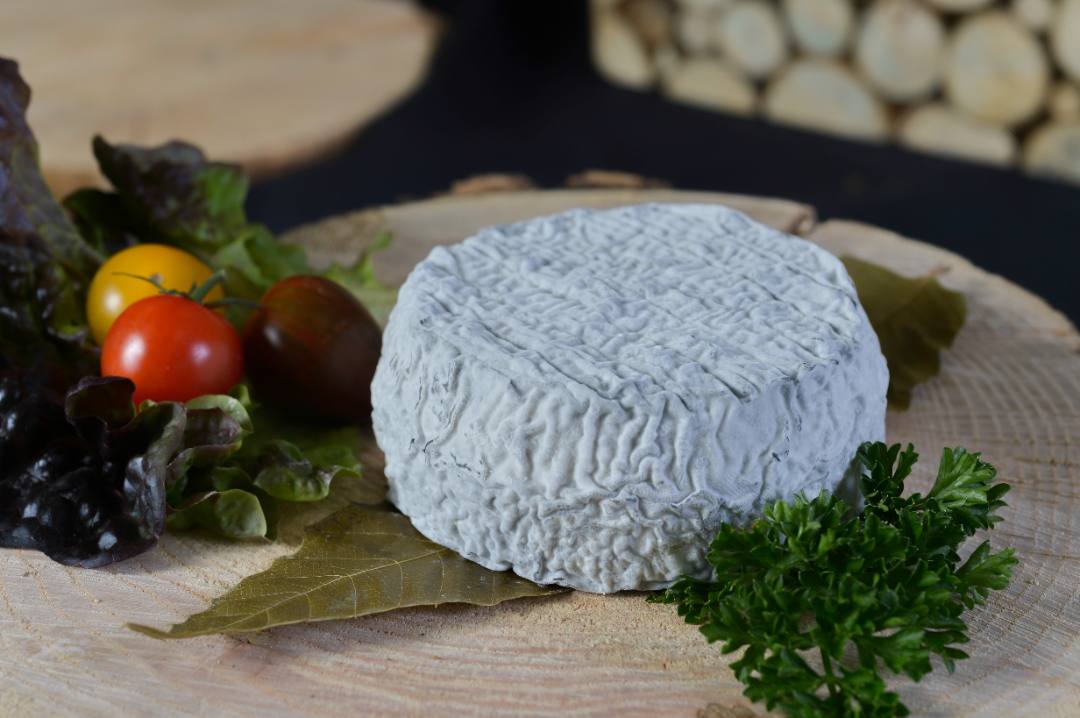
France – Goat cheese -Parthenay ash – STEC E.coli

Gov France

Product category
Food
Product subcategory
Milk and dairy products
Product brand name
White Cheese Shop
Model names or references
Goat cheese – Parthenay ash
Product identification
Batch Date
lot number: 353 Minimum durability date 02/16/2024
Start/end date of marketing
From 12/26/2023 to 01/08/2024
Storage temperature
Product to keep in the refrigerator
Health mark
FR 79-202-024 CE
Geographical sales area
Whole France
Distributors
DISCOUNTS – SAFF – WEST DISTRIBUTION FEES – TEAM WEST

Research – Shiga toxin-producing Escherichia coli (STEC) in meat and leafy greens available in the Swedish retail market – Occurrence and diversity of stx subtypes and serotypes

Science Direct

Abstract

Shiga toxin-producing Escherichia coli (STEC) is a major cause of foodborne illness, ranging from mild diarrhea to permanent kidney failure. This study summarizes the results of four surveys performed at different time periods, which investigated the occurrence and characteristics of STEC in beef, lamb and leafy greens available in the Swedish retail market. Such data is required when assessing the public health risk of varying types of STEC in different foods, and for establishing risk management measures. Samples from domestic and imported products were collected based on their availability in the retail market. The occurrence of STEC was investigated in 477 samples of beef, 330 samples of lamb and 630 samples of leafy greens. The detection of virulence genes (stx1stx2eae) was performed using real-time PCR followed by the isolation of bacteria from stx-positive enriched samples using immunomagnetic separation or an immunoblotting method. All STEC isolated from the food samples was further characterised in terms of stx subtyping and serotyping through whole genome sequencing. STEC was isolated from 2 to 14 % of beef samples and 20 to 61 % of lamb samples, depending on the region of origin. STEC was not isolated from samples of leafy greens, although stx genes were detected in 11 (2 %) of the samples tested. In total, 5 of the 151 sequenced STEC isolates from meat contained stx2 and eae, of which 4 such combinations had the stx2a subtype. The stx2 gene, stx2a in particular, is strongly associated with serious disease in humans, especially in combination with the eae gene. The isolates belonged to 20 different serotypes. Two isolates from beef and one from lamb belonged to the serotype O157:H7 and contained genes for stx2 and eae. Overall, several combinations of stx subtypes were found in isolates from beef, whereas stx1c, either alone or together with stx2b, was the dominant combination found in STEC from lamb. In conclusion, STEC was rare in whole meat samples of domestic beef in the Swedish retail market, whereas such bacteria were frequently found in minced meat and whole meat samples of imported beef and domestic and imported lamb. Although the number of isolates containing genes linked to an increased risk of severe disease was low, beef and lamb in the Swedish retail market is a common source of human exposure to potentially pathogenic STEC.

UK – Mrs Kirkham’s has provided an update on the E.coli situation

Lancashire Telegraph

A Lancashire cheesemaker has provided an update after a number of its cheese products were recalled following an E.coli outbreak last year.

Mrs Kirkham’s, based near Longridge, has told its customers that there has been no trace of E.coli found in its products following extensive testing by the Food Standards Agency, and hopes it won’t be long until the family run firm’s cheeses can be put back on the market.

The Food Standards Agency (FSA) announced a precautionary recall of four products from cheesemaker Mrs Kirkham’s Lancashire Cheese on Christmas Eve because of possible E.coli contamination and added a fifth product on December 27.

UK – Mrs Kirkham’s cheese says tests show no trace of E. coli

BBC

A cheese producer that recalled products after a possible E. coli risk has said tests on 60 batches have shown no evidence of the bacteria.

Four types of Mrs Kirkham’s cheese were withdrawn in December as part of an investigation into cases involving a lesser-known strain of E. coli.

The Lancashire-based company said it had undergone a full dairy inspection.

An investigation to identify the cause of the outbreak by the Food Standards Agency (FSA) continues.

In a statement, Mrs Kirkham’s said the Preston company “closely follow controls to eliminate pathogen contamination and growth”.

RASFF Alert – STEC E.coli – Cheese – Turkish Style Garlic Sausage

RASFF

STEC in cheese from France in the Netherlands

RASFF

Shiga toxin-producing Escherichia coli (STEC) in Turkish-style garlic sausage from Poland in  Austria, Belgium, Denmark, France, Germany, Malta, Poland, Sweden, United Kingdom.

Belgium – Salami “Yayla Sucuk” (200g) from the Yayla brand – STEC E.coli

afsca

Recall by Beyco bv
Product: Salami “Yayla Sucuk” (200g) from the Yayla brand.
Problem: possible presence of STEC bacteria (E. Coli).


In agreement with the FASFC, Beyco bv is withdrawing the Yayla brand “Yayla Sucuk” salami (200g) from sale and recalling it from consumers due to the possible presence of STEC bacteria (E. Coli). Beyco asks its customers not to consume this product and to return it to the point of sale where it was purchased, where they will be refunded.

Product description

– Product name: Yayla Sucuk
– Brand: Yayla
– Consumption dates (DLC = Consume until): 01/14/2024 – 01/26/2024 – 02/23/2024 – 03/01 /2024
– Batch number: 10865984
– Sales period: from 11/30/2023 to 01/15/2024
– Nature of packaging: plastic
– Weight: 200g

Denmark – E. coli (STEC) in sliced ​​sausage

Foedevarestyrelsen

Inter Dairy Food ApS is recalling sliced ​​sausage, Yayla Dilimli Sucuk, as E.coli (STEC) has been found in the product. If you have the product, you should discard it or return it to the store where it was purchased.

Updated on 14.01.2024 with where the product was sold.

Photo of the recalled product

Which food is recalled

Yayla Dilimli Sucuk
Net weight: 200g
Best before dates: 23.02.2024

Where is the product sold

LygtenBazar ApS, Lygten 11, 2400 Copenhagen NV
Asia Bazar ApS, Hamletsgade 4 – 6, 2200 Copenhagen N 
OTTOMAN HVIDOVRE ApS, Immerkær 27, 2650 Hvidovre 
Vestegnens Bazar Albertslund, Stationstorvet 3, 2620 Albertslund
Super Center 1 ApS, Frederikssundsvej 34, 2400 Copenhagen NV

Why is the product being recalled?

E.coli (STEC) has been detected in the product. The symptoms of infection with E.coli (STEC) are often acute stomach infection with diarrhoea, severe abdominal pain and vomiting. You usually get no or only a mild fever. The disease mostly goes away within 5-10 days. In some cases, the infection can worsen with acute kidney failure, called hemolytic uremic syndrome (HUS).

Read more about E.coli here

Read more about E.coli (STEC) here

What should you do as a consumer?

The Danish Veterinary and Food Administration advises consumers to return the product to the store where it was purchased or to discard it. 

If you experience symptoms in connection with consuming the product, you should contact your own doctor.

Who recalls the product

Inter Dairy Food ApS, Dalager 9, 2605 Brøndby