Category Archives: Salmonella

USA – Salmonella Outbreak at Doug Sauls’ Bar-B-Que & Seafood in NC

Food Poisoning Bulletin

There was a Salmonella outbreak at Doug Sauls’ Bar-B-Que & Seafood in Nash County, North Carolina at the end of November 2019 that sickened almost a dozen people, according to the Nash County Health Department. The restaurant, located at 813 Western Avenue in Nashville, North Carolina is re-opening after being closed on November 22, 2019 by public health officials.

Research – Cold plasma enhances the efficacy of aerosolized hydrogen peroxide in reducing populations of Salmonella Typhimurium and Listeria innocua on grape tomatoes, apples, cantaloupe and romaine lettuce

Science Direct

In the present study, we investigated whether cold plasma activation affected the efficacy of aerosolized hydrogen peroxide against S. Typhimurium and L. innocua. Stem scars and smooth surfaces of grape tomatoes, surfaces of Granny Smith apples and Romaine lettuce (both midrib and upper leaves) and cantaloupe rinds were inoculated with two-strain cocktails of S. Typhimurium and 3-strain cocktails of L. innocua. The inoculated samples were treated with 7.8% aerosolized H2O2 with and without cold plasma for various times. For all fresh produce items and surfaces, cold plasma significantly (P < 0.05) improved the efficacy of aerosolized H2O2 against Salmonella and L. innocua. Without cold plasma activation, H2O2 aerosols only reduced populations of Salmonella by 1.54–3.17 log CFU/piece while H2O2 with cold plasma achieved 2.35–5.50 log CFU/piece reductions of SalmonellaL. innocua was more sensitive to the cold plasma-activated H2O2 than Salmonella. Cold plasma activated H2O2 aerosols reduced Listeria populations by more than 5 log CFU/piece on all types and surfaces of fresh produce except for the tomato stem scar area. Without cold plasma, the reductions by H2O2 were only 1.35–3.77 log CFU/piece. Overall, our results demonstrated that cold plasma activation significantly enhanced the efficacy of H2O2 mist against bacteria on fresh produce.

Research -Vertical transmission of Salmonella Enteritidis with heterogeneous antimicrobial resistance from breeding chickens to commercial chickens in China

Science Direct

Human salmonellosis caused by the consumption of eggs and chicken meat contaminated with Salmonella Enteritidis has become a continuing public health concern worldwide. In this study we adopted whole genome sequencing (WGS) to determine the genetic relationship and antimicrobial resistance of S. enterica strains isolated from a poultry breeding enterprise that consists of one breeding chicken farm, one egg hatchery and one commercial chicken farm. A total of 148 S. enterica including 147 S. Enteritidis strains were isolated from 2100 fecal swab samples, with 16 (5.3 %, 16/300) from breeding chicken farm, 38 (4.2 %, 38/900) from egg hatchery and 94 (10.4 %, 94/900) from commercial chicken farm. WGS revealed that all 147 S. Enteritidis strains belonged to ST11, and further divided into 4 different ribosomal STs and 64 core genome STs. Single nucleotide polymorphism typing suggested the presence of the vertical transmission of S. Enteritidis from breeding chicken to commercial chicken. Three different antimicrobial-resistant plasmids including one blaCTX-M-14-carrying plasmid and two virulence-resistance plasmids were characterized, resulting in the heterogeneous antimicrobial resistance of clonally related S. Enteritidis strains. Routine surveillance in breeding chicken farms is conducive to the control of S. Enteritidis from farm to fork.

Research – Salmonella sensitivity to sodium hypochlorite and citric acid in washing water of lettuce residues

Wiley Online Salmonella kswfoodworld

Salmonella spp. is one of the main lettuce pathogens and should be inactivated during the disinfection of these vegetables before consumption. In minimally processed vegetable industries, residues of organic matter can prevent the inactivation of this pathogen by disinfectants. The objective of the present work was to evaluate the inactivation of Salmonella isolated from organic lettuce to sodium hypochlorite (25 and 50 ppm) and citric acid (0.5 and 1%) in washing water added with lettuce residues. To do so, a washing water with lettuce residues was elaborated, and Salmonella was added in the order of 106 CFU/ml. Thereafter, each sanitizer was added separately to evaluate its effect on reducing Salmonella counts. After 1, 2, 3, 4, 5, 10, and 15 min of contact with the sanitizers, serial dilutions using neutralizer (0.5% sodium thiosulfate) were performed and each dilution was sown in Xylose‐Lysine‐Desoxycholate medium. Total aerobic mesophilic counts of wash water with lettuce residues before testing (without Salmonella) and after 15 min of exposure to each sanitizer (with Salmonella) were also performed. In addition, the free chlorine still present in the samples after the contact of sodium hypochlorite with lettuce residues for 15 min. The results demonstrated that 50 and 25 ppm sodium hypochlorite could reduce 6 log CFU/ml of Salmonella in 1 and 3 min of contact, respectively, while 0.5 and 1% citric acid was able to reduce 1.26 and 1.74 log CFU/ml respectively from the same microorganism within 15 min of contact. The total aerobic mesophilic counts of the wash water before being tested were, on average, 1.5 log CFU/ml. After addition of Salmonella, with 15 min of contact with the sanitizer, the results of total counts showed the same magnitude as the Salmonella counts. Organic matter may have reacted with the free chlorine present, reducing chlorine concentrations, since values of 30.4 ppm were observed when the initial concentration should be 50 and 17.1 ppm when the initial concentration should be 25 ppm. Based on the results, sodium hypochlorite demonstrated a greater microbial reduction capacity in wash water with lettuce residues, indicating that it is more appropriate to avoid cross‐contamination between batches during sanitation of lettuce in washing tanks.

Research – Effect of high hydrostatic pressure on Salmonella spp inactivation and meat-quality of frozen chicken breast

Science Direct

The aim of this study was to evaluate the effect of the pressure level and holding time on the Salmonella spp inactivation during HHP processing in frozen chicken breast fillets. Once identified the most effective process, meat quality (color and texture) was evaluated. Results showed that the treatments at 500 MPa for 1 min and 400 MPa for 5 min were enough to guarantee Salmonella spp inactivation in frozen chicken breast fillets. With respect to quality parameters, an extension of shelf life is expected with both treatments, as counts of indigenous microbiota were below the detectable level (<2 logs CFU/g). However, chromatic parameters and texture profile of the fillets treated with HHP suffered significant changes. Even so, the treatment of 500 MPa for 1 min was more effective at preserving chromatic parameters than treatment of 400 MPa for 5 min. The texture profile between fillets treated was not significantly different.

USA -Delaware Children Sickened in Tailor Cut Salmonella Javiana Outbreak

Food Poisoning Bulletin

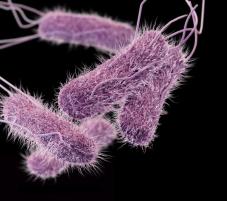
Salmonellaa

Image CDC

Delaware children sickened in Tailor Cut Salmonella Javiana outbreak. The Delaware Division of Public Health has confirmed that 26 schoolchildren in Delaware are ill after eating fruit provided by Tailor Cut Produce. The sick children live in New Castle County, and attended schools served by the Red Clay Consolidated School District, Colonial School District, and the Community Education Building in downtown Wilmington. DPH was not able to confirm school information for seven of these children, except that they live in New Castle County.

USA – Emesa Foods Recalls Premium Sesame Tahini Because of Possible Health Risk

FDA Photo 1, Product labeling

Emesa Foods, Taylor, MI is voluntarily recalling 23 cases and each case 6 containers of 800 gram of “Premium Sesame Tahini” because it has the potential to be contaminated with Salmonella, an organism which can cause serious and sometimes fatal infections in young children, frail or elderly people, and others with weakened immune systems. Healthy persons infected with Salmonella often experience fever, diarrhea, nausea, vomiting, and abdominal pain. In rare circumstances, infection with Salmonella can result in the organism getting into the bloodstream and producing more severe illnesses such as arterial infections (i.e., infected aneurysms), endocarditis, and arthritis.

The product was distributed in states of Michigan and Texas and is sold in 800 grams (28.2 Oz). Expiration dates (2/25/2021) are printed on the side of the container.

Product code, product description, UPC and expiration dates information:

Product Code

Product Description

UPC

Expiration Dates

29826 Premium Sesame Tahini 850005298267 02/25/2021

No illnesses have been reported to-date in connection with the Emesa Foods Tahini.

Research – Environmental persistence and virulence of Salmonella spp. isolated from a poultry slaughterhouse

Science Direct

Salmonella spp. is responsible for severe foodborne disease, and is one of the main agents involved in foodborne outbreaks worldwide. Contamination occurs mainly as a result of poultry and egg consumption since they can carry some serotypes pathogenic to humans. The aim of the study was to evaluate the persistence and pathogenic potential of Salmonella spp. (n = 40) isolated from poultry slaughterhouse mats, using adhesion and invasion assays, antimicrobial susceptibility by disc diffusion, and biofilm production as phenotypic tests and genotypic analyses. Polystyrene mats presented 3.2 times greater chance of isolating Salmonella than canvas mats. Besides, we observed resistance to tetracycline (17.5%), ampicillin (10%), cefotaxime (7.5%), trimethoprim-sulfamethoxazole (5%), and chloramphenicol (2.5%). All strains possessed the invA, sipB, sipD, ssaR, sifA, sitC, iroN, tolC, flgK, fljB, and flgL genes. The genes sopB and sipA were both present in 92.5% of the isolates, while sopD and spvB were observed in 90% and 32.5% of strains, respectively. All strains adhered to and invaded HeLa cells. Regarding biofilm production, 31 (77.5%) strains were able to produce biofilm on polystyrene microplates. Using PFGE, we detected the persistence of clones in the environment for up to 18 fromthe 20 weeks. The ability of these strains to produce a biofilm and thus persist in the environment and disperse through contact surfaces in the processing plant favors the contamination of food, aggravated by the pathogenic potential of these isolates demonstrated by their adhesion capacity, invasion and resistance to various antibiotic agents.

Research -Salmonella on Australian cage egg farms: observations from hatching to end of lay

Science Direct

Single-aged caged layer hen flocks were monitored for Salmonella over the course of their lifetime. Chicks from both flocks were Salmonella negative at hatch and remained negative during rearing. Pullets were transported to production farms at 15 weeks of age. Pre-population dust swabs collected from both production sheds had a high percentage of Salmonella positive samples (80 and 90%). Flocks were sampled at regular intervals until 70-72 weeks of age. The proportion of Salmonella positive samples and mean load detected on eggs was low on both farms. Analysis of dust samples revealed that Salmonella persisted in dust over 8 weeks. Dust total moisture content and water activity appears to influence bacterial persistence. On egg grading equipment, only suction cups prior to egg washing were Salmonella positive (mean proportion Salmonella positive samples 0.13 ± 0.07; mean load of 18.6 ± 12.31 MPN/ml). An egg washing experiment demonstrated that while washing reduced the total Salmonella load from eggshell surfaces, no effect was observed for shell pores. These results demonstrate that despite environmental contamination on farm, Salmonella contamination of eggs is low and is further minimized by washing.

Canada -Salmonella outbreak linked to raw turkey and raw chicken rises to 126

Outbreak News Today

Officials with the Public Health Agency of Canada and the various provinces report continuing to  investigate an outbreak of Salmonella infections.

Based on the investigation findings to date, exposure to raw turkey and raw chicken products has been identified as the likely source of the outbreak.

As of December 18, 2019, there have been 126 confirmed cases of Salmonella Reading illness investigated in the following provinces and territories: British Columbia (31), Alberta (44), Saskatchewan (8), Manitoba (24), Ontario (8), Quebec (2), New Brunswick (1), Prince Edward Island (1), Northwest Territories (1), and Nunavut (6). Individuals became sick between April 2017 and November 2019. Thirty-eight individuals have been hospitalized. One individual has died.