Archives
-
Join 346 other subscribers
KSWFoodWorld
Blog Stats
- 445,093 Views
Category Archives: Salmonella in Chicken
Research – Joint FAO/WHO Expert Meeting on the pre- and post-harvest control of non-typhoidal Salmonella spp. in poultry meat
Conclusions
The expert consultation noted that no single control measure was sufficiently effective at reducing either the prevalence or the level of contamination of broilers and poultry meat with NT-Salmonella spp. Instead, it was emphasized that control strategies based on multiple intervention steps ( multiple or multi-hurdle)would provide the greatest impact in controlling NT-Salmonella spp. in the broiler production chain.
The expert consultation concluded the following: Primary production interventions for the control of NT-Salmonella spp. Biosecurity and management approaches for the control of NT-Salmonella spp.
•At all levels of farm production, stringent biosecurity measures including sanitation and hygiene are important factors to prevent and control NT-Salmonella spp.in flocks.
•It is important for breeding flocks to be NT-Salmonella-free, and this begins at the parent/grandparent flock level and in the production environment. Vaccination-based approaches for the control of NT-Salmonella spp.
•Vaccine-based strategies reduce the prevalence and/or level of shedding of NT-Salmonella spp.in flocks but do not eliminate NT-Salmonella spp. Antimicrobial approaches for the control of NT-Salmonella spp.
•There was no strong evidence that the use of substances with antimicrobial activity such as additives in feed and water resulted in effective control of NT- Salmonella spp. in broilers. Competitive exclusion/probiotics approaches for the control of NT-Salmonella spp.
•A promising strategy for NT-Salmonella spp. control was a combination of different competitive exclusion products (e.g., probiotics and prebiotics) but there was a limited number of published studies using naturally contaminated chicks and/or under commercial conditions to allow for adequate conclusions. Feed and water characteristics and management approaches for the control of NT-Salmonella spp.
•The efficacy of specific feed- and water-based strategies were study-specific and dependent upon the physiological status of both the pathogen and the animal, the broiler gastrointestinal tract environment, the concentration of the additive, and the method of its application.
•The use of feed modifications, including the acidification of feed and water, are not stand-alone hazard-based control measures for the control of NT-Salmonella spp. in poultry. However, feed-based strategies, when used in conjunction with good hygienic practices, may further reduce NT-Salmonellaspp.in poultry.
•Based on the information available, further studies are needed to assess how extensive scale application of modified feed and management approaches could impact NT-Salmonella spp. levels Bacteriophage-based approaches for the control of NT-Salmonella spp.
•There is limited information as to the effectiveness of bacteriophage-based control of NT-Salmonella spp. at the farm level. Further research is needed, especially in the long-term efficacy of bacteriophage-based control. Processing interventions for the control of NT-Salmonella spp.
•Good hygienic practices are important in minimizing the risk of NT-Salmonella spp. contamination during slaughter and processing.
•The effect of processing interventions on NT-Salmonella spp. are influenced by a variety of conditions, including but not limited to characteristics of the NT-Salmonella strain, pH, agent concentration, temperature, contact time, absorbed dose, product characteristics, and processing parameters.
•There was extensive information on the use of water additives, but the current scientific literature is not sufficient to draw objective conclusions regarding the effectiveness of some of them. However, chlorine-based compounds and organic acids (lactic acid, peroxy acetic acid (PAA), and acidified chlorate solutions) showed potential effectiveness.
•High pressure processing may be effective in reducing NT-Salmonella spp. in poultry meat.
•An extensive body of scientific evidence suggested that ionizing radiation can achieve any level of NT-Salmonella spp. reduction from pasteurization to complete sterility.
•Other interventions or combinations of interventions, including but not limited to novel additives, thermal processes and physical treatments applied to the meat still require further refinement. Post-processing interventions for the control of NT-Salmonella spp.
•Control measures applied during processing may extend shelf-life and control the growth of NT-Salmonella spp.at the retail or consumer level, however, the literature in this area is sparse and the application of post-processing interventions needs further examination to assess feasibility.
•Emphasis should be placed on encouraging a positive food safety culture through human behaviour and consumer education as it applies to transport, storage, handling and cooking practices.
The experts highlighted several paragraphs in the Guidelines for the Control of Campylobacter and Salmonella in Chicken Meat (CXG 78-2011) that could benefit from an update (Annex 2).Other factors that the expert panel considered that have the potential to impact NT-Salmonella spp. control strategies in the future included changes in climate, broiler value chain, human behaviour and awareness, food safety culture, pathogens and their hosts.
With the advent of next generation technologies including machine learning, omics, tools for traceability and a better understanding of the interactions between Salmonella and the microbiome will lead to more accurate quantitative microbial risk assessments (QMRA) and improved One Health.
Posted in Decontamination Microbial, Food Micro Blog, Food Microbiology, Food Microbiology Blog, Food Microbiology Research, Food Microbiology Testing, microbial contamination, Microbial growth, Microbiological Risk Assessment, Microbiology, Microbiology Investigations, Microbiology Risk, Research, Salmonella, Salmonella in Chicken
RASFF Alerts – Salmonella = Polish Chicken Products – Polish Duck Products – Sesame Seeds – Mungo Beans Sprouts -Dried Fungus – Mussels – Turkey Roll
Salmonella Enteritidis in poultry meet from Poland in Bulgaria
Salmonella Typhimurium in mussels from the Netherlands in Belgium
Salmonella Enteritidis in frozen duck fillet from Poland in Lithuania
SESAME SEEDS FROM NIGERIA WITH SALMONELLA in Greece
Salmonella enteritidis in chilled poultry meat from Poland in Austria
Salmonella enterica ser. Stanley (in 1 out of 5 samples /25g) in dried fungus from Vietnam, via the Netherlands in Austria, Belgium, Denmark, Finland, France, Germany, Hungary, Iceland, Ireland, Netherlands, Slovakia, Spain, Sweden, Switzerland,
Salmonella Enteritidis in chilled poultry meat from Poland in Slovakia
Salmonella infantis in mussels (Mytilus galloprovincialis) reared in Spain in Italy
Salmonella Agmeni in canned Mungo Bean Sprouts from France in Italy
Salmonella spp in frozen turkey roll from Italy in Greece
Salmonella Infantis (in 5 out of 5 samples) in chicken broiler thighs from Poland in Lithuania
Posted in food contamination, food handler, Food Hazard, Food Hygiene, Food Inspections, Food Micro Blog, Food Microbiology, Food Microbiology Blog, Food Microbiology Testing, Food Pathogen, food recall, Food Safety, Food Safety Alert, Food Safety Management, Food Testing, Polish Chicken Salmonella, RASFF, Salmonella, Salmonella in Chicken, Salmonella Poland, Salmonella Sesame Seeds, salmonellosis
RASFF Alerts – Salmonella – Polish Chicken Products – Sesame Seeds – Cheese – Brazilian Chicken – Frozen Breaded Chicken Goujons – Halva with Pistachios – Turkey Meat – Mussels – Veal Stuffing – Filled Wafers – Chilled Lamb and Beef Merguez Sausages – Neutral Gelatine – Minced Beef Meat – Chorizo – Chicken Fillets – Salted Chicken
Salmonella in frozen breaded chicken goujons from Northern Ireland in Northern Ireland
Salmonella in chilled turkey minced meat from Spain, processed in France.
Salmonella spp. in halva with pistachios from Syria in Germany and Austria
Salmonella in frozen chicken from Brazil in the Netherlands
Salmonella in chicken meat preparation from Brazil in the Netherlands
Salmonella Typhimurium in turkey meat from Hungary in Germany
Salmonella Agona in chilled chicken quarters from Poland in the Czech Republic
Salmonella typhimurium in frozen turkey meat from Hungary in Croatia
Presence of Salmonella Typhimurium in mussels from Spain in Italy
Salmonella Orion in organic sesame seeds from Uganda in Germany
Salmonella in cheese from France in the Netherlands and Belgium
Salmonella spp. detected in chicken meat preparation from Brazil in the Netherlands
Salmonella in stuffing made from veal from the Netherlands in France and Belgium
Salmonella Typhimurium in filled wafers from Bosnia and Herzegovina in Hungary
Salmonella Infantis (in 5 out of 5 samples) in chicken meat from Poland in Lithuania
Salmonella infantis in chilled chicken meat from Poland used in breaded chicken nuggets and breaded chicken burgers from Northern Ireland in the UK and Ireland
Escherichia coli and Salmonella in live mussels from France in the Netherlands
Salmonella in chilled lamb and beef merguez sausages from France in Belgium
Salmonella Infantis (in 4 out of 5 samples) in broiler chicken wings from Poland in Lithuania
Salmonella (presence /25g) in frozen turkey meat preparation from Poland in Hungary
Salmonella spp. (in 2 out of 5 samples) in chicken broiler thighs from Poland in Lithuania
Salmonella in neutral gelatine from Germany in Portugal and Spain
Salmonella typhimurium found in turkey meat from Hungary in Italy
Salmonella Minnesota. in frozen chicken breast filet from Brazil via Belgium in the Czech Republic
Salmonella Bovismorbificans (in 1 out of 5 samples) in frozen minced beef meat from Lithuania in Latvia
Detection of salmonella in chorizo from Spain in France
Salmonella in frozen fried chicken fillets from Northern Ireland in Ireland
Salmonella Saintpaul (in 5 out of 5 units) in fresh broiler thighs from Poland in Latvia
Request for heat treatment in Germany, Salmonella positive Frozen salted chicken from Thailand in the Netherlands
Salmonella Infantis in chicken drumsticks from Poland in the Czech Republic and Finland
Presence of Salmonella spp. in hulled sesame seeds from India in Greece
Posted in food contamination, food handler, Food Hazard, Food Hygiene, Food Inspections, Food Micro Blog, Food Microbiology, Food Microbiology Blog, Food Microbiology Testing, Food Pathogen, food recall, Food Safety, Food Safety Alert, Food Safety Management, Food Testing, Polish Chicken Salmonella, RASFF, Salmonella, Salmonella in Chicken, Salmonella Poland, Salmonella Sesame Seeds
Research – USDA Releases Proposed Regulatory Framework to Reduce Salmonella Infections Linked to Poultry Products
The U.S. Department of Agriculture’s (USDA) Food Safety and Inspection Service (FSIS) today released a proposed regulatory framework for a new strategy to control Salmonella contamination in poultry products and reduce foodborne illnesses attributed to these products. The agency is hosting a virtual public meeting on Nov. 3, 2022, to seek input from stakeholders on the proposed framework.
The Centers for Disease Control and Prevention (CDC) estimates that Salmonella bacteria cause approximately 1.35 million human infections and 26,500 hospitalizations in the United States every year. Of those infections, over 23% are attributed to poultry consumption. Foodborne illness can have a devastating impact, both personally and financially, on people’s lives, the cost of which reverberates through the economy. Data from USDA’s Economic Research Service (ERS) show the total cost for foodborne Salmonella infections in the United States is a staggering $4.1 billion annually and the cost for the loss of productivity to the economy $88 million. These are real costs to real people that can and should be prevented.
“We know that Salmonella in poultry is a complex problem with no single solution,” said USDA Deputy Under Secretary Sandra Eskin. “However, we have identified a series of strategic actions FSIS could take that are likely to drive down Salmonella infections linked to poultry products consumption, and we are presenting those in this proposed framework.”
“This is a historic first step toward final product standards that are science-based, risk-based, enforceable, and effective at protecting our vulnerable loved ones,” said Amanda Craten, board member of STOP Foodborne Illness. “As a parent of a child who suffered from Salmonella illness and is left with permanent injury, I have advocated and engaged in the process to modernize poultry standards to ensure no child has to experience the devastation of a preventable, virulent Salmonella illness. I’m thankful that USDA is making the prevention of illnesses like my son Noah’s a priority.”
The proposed framework has been shaped by months of information-gathering and discussions with a wide range of stakeholders, researchers, and scientists. The proposed framework consists of three key components that, together, support a comprehensive approach to controlling Salmonella in poultry.
- Requiring that incoming flocks be tested for Salmonella before entering an establishment;
- Enhancing establishment process control monitoring and FSIS verification; and
- Implementing an enforceable final product standard.
The framework under consideration also addresses cross-cutting issues of testing for Salmonella, the impact on small and very small establishments and data sharing.
Dr. Craig Hedberg, a professor at University of Minnesota School of Public Health and Co-Director of the Minnesota Integrated Food Safety Center of Excellence, agrees that this framework “is an important step towards moving away from hazard-based regulation toward risk-based regulation. Focusing on levels of Salmonella and highly virulent strains of Salmonella rather than just the presence or absence of Salmonella should reduce the number of illnesses associated with poultry.”
Dr. Angie Siemens, Vice President for Food Safety, Quality and Regulatory at Cargill, said, “In alignment with our strong commitment to food safety, Cargill supports the need to develop a public health risked based approach to assist in meeting the Healthy People 2030 Salmonella targets. We look forward to reviewing the FSIS Salmonella framework and engaging in a robust dialogue on this issue.”
FSIS is soliciting input on all aspects of the draft framework, related to the three components as well as the cross-cutting issues. An online copy of the proposed framework is available at: https://www.fsis.usda.gov/inspection/inspection-programs/inspection-poultry-products/reducing-salmonella-poultry/proposed.
Posted in Decontamination Microbial, Food Micro Blog, Food Microbiology, Food Microbiology Blog, Food Microbiology Testing, Food Safety, Food Safety Alert, Food Safety Management, food safety training, microbial contamination, Microbial growth, Microbiological Risk Assessment, Microbiology, Microbiology Investigations, Microbiology Risk, Salmonella, Salmonella in Chicken
Netherlands – NVWA urges Salmonella focus in poultry despite bird flu problem
Dutch authorities have stressed the need to keep a focus on Salmonella despite restrictions because of avian flu outbreaks.
Avian influenza, also known as bird flu, is causing a lot of concern among companies and within the poultry farming sector.
Efforts are being made to prevent further infections by taking steps such as limiting visitors in the yard and in stables as much as possible.
Posted in Decontamination Microbial, Food Micro Blog, Food Microbiology, Food Microbiology Blog, Food Microbiology Research, Food Microbiology Testing, microbial contamination, Microbial growth, Microbiological Risk Assessment, Microbiology, Microbiology Investigations, Microbiology Risk, Salmonella, Salmonella in Chicken
EU return audit to Poland finds unresolved issues; Salmonella in poultry still a problem
Major problems remain in the Polish control system for beef and poultry meat, according to the European Commission’s health and safety agency.
A remote DG Sante audit, in October 2021 in Poland, followed-up two audits in 2019 on beef and poultry meat and made nine recommendations.
In 2019, a Polish television broadcast showed practices in a bovine slaughterhouse that pointed to violations of EU animal welfare law and, possibly, of food safety legislation.
DG Sante said several actions to address findings made after the beef and poultry audits have been implemented. However, other shortcomings have not been solved by Polish authorities.
Posted in Decontamination Microbial, Food Micro Blog, Food Microbiology, Food Microbiology Blog, Food Microbiology Research, Food Microbiology Testing, microbial contamination, Microbial growth, Microbiological Risk Assessment, Microbiology, Microbiology Investigations, Microbiology Risk, Salmonella, Salmonella in Chicken
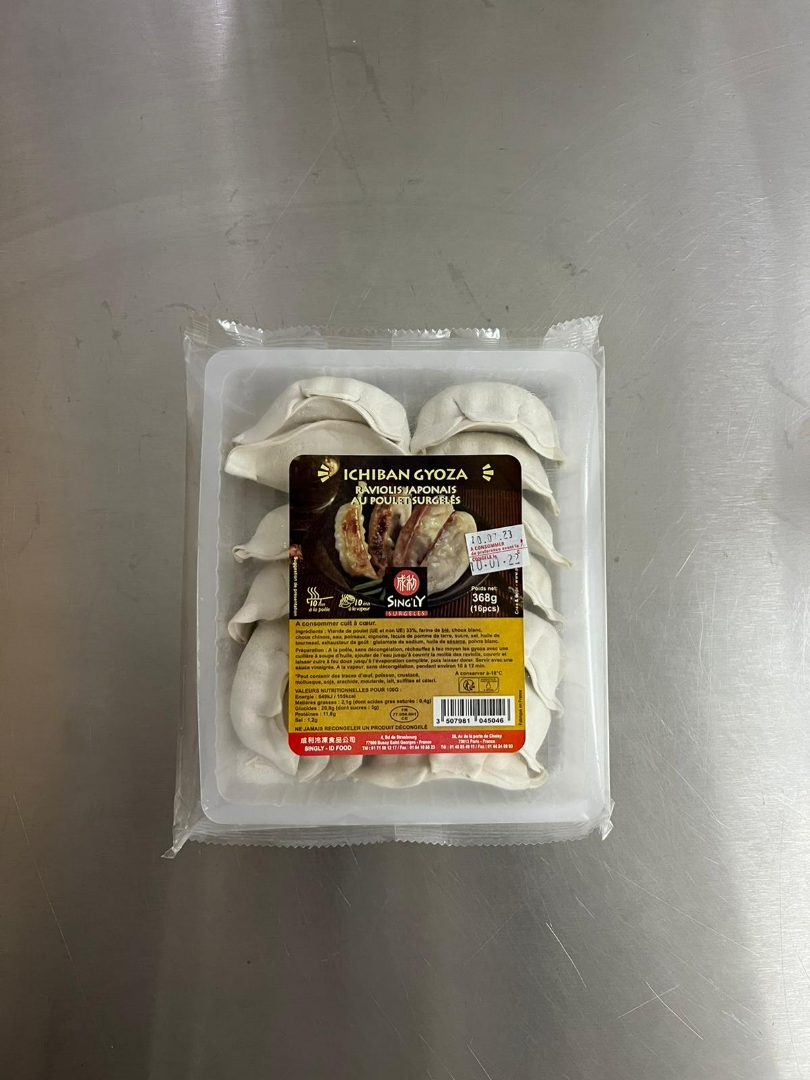
France – FROZEN JAPANESE CHICKEN RAVIOLI- Salmonella

Identification information of the recalled product
- Product category Feed
- Product subcategory Meats
- Product brand name SINGLY FROZEN
- Model names or references Japanese dumplings with chicken 16 pieces
- Identification of products
GTIN Batch Date 3507981045046 070922 Use-by date 07/03/2024 - PackagingTray of 16 pieces
- Marketing start/end dateFrom 08/09/2022 to 10/10/2022
- Storage temperature Product to keep in the freezer
- Health markEN 77-058-001 EC
- Geographic area of sale Whole France
- Distributors Wholesalers
Practical information regarding the recall
- Reason for recall Random analysis: search for salmonella: presence confirmed
- Risks incurred by the consumer Salmonella spp (causative agent of salmonellosis)
Posted in food contamination, food handler, Food Hazard, Food Hygiene, Food Inspections, Food Micro Blog, Food Microbiology, Food Microbiology Blog, Food Microbiology Testing, Food Pathogen, food recall, Food Safety, Food Safety Alert, Food Safety Management, Food Testing, Salmonella, Salmonella in Chicken
RASFF Alerts – Salmonella – Polish Chicken and Duck Products – Sesame Seeds – Chicken Fillets – Sausage – Chicken Meat Preparation – Salted Chicken Half Breast – Flavoured Cream Wafers Hazelnut – Turkey Meat
Presence of Salmonella spp. in hulled sesame seeds from India in Greece
Salmonella Infantis (in 1 out of 5 units) in fresh chicken quarters from Poland via Lithuania in Latvia
Salmonella detected in chicken fillets from the United Kingdom in Ireland and Northern Ireland.
Salmonella C1 in sausage from Poland in Germany, Netherlands and the UK
Salmonella Enteritidis in fresh frozen duck breast filet from Poland in Finland, Netherlands
Salmonella typhimurium in frozen duck fillet from Poland in Estonia and Sweden
SALMONELLA IN SESAME SEEDS FROM NIGERIA in Greece and Turkey
Salmonella in chicken meat preparation from Thailand in the Netherlands
Salmonella spp. detected in frozen salted chicken half breasts from Brazil in the Netherlands
Salmonella Infantis (in 5 out of 5 units) in fresh chicken wings from Poland via Lithuania in Latvia
Salmonella Newport (in 5 out of 5 samples) in fresh chicken thighs from Poland in Latvia
Salmonella Typhimurium in flavoured cream wafers hazelnuts, from Bosnia and Herzegovina in Croatia
SALMONELLA IN SESAME SEEDS FROM ETHIOPIA in Greece and the UAE
SALMONELLA IN SESAME SEEDS FROM NIGERIA in Greece and Turkey
SALMONELLA IN SESAME SEEDS FROM NIGERIA in Greece
Salmonella in sesame seeds from Nigeria in Greece
Salmonella group CO in turkey meat from Poland in Austria, France, Germany, Spain and UK
Posted in food contamination, food handler, Food Hazard, Food Hygiene, Food Inspections, Food Micro Blog, Food Microbiology, Food Microbiology Blog, Food Microbiology Testing, Food Pathogen, food recall, Food Safety, Food Safety Alert, Food Safety Management, food safety training, Food Testing, Polish Chicken Salmonella, RASFF, Salmonella, Salmonella in Chicken, Salmonella Poland, Salmonella Sesame Seeds, salmonellosis
Research – Managing Salmonella Enteritidis in commercial chicken flocks
INTERIM REQUIREMENTS FOR MANAGING SALMONELLA ENTERITIDIS FROM 6 OCTOBER 2022
The Animal Products Order: Emergency Control Scheme – Managing Salmonella Enteritidis in Commercial Chicken Flocks expired on 5 October 2022. After this, we’re using a regulatory framework to manage long-term risks to public health and international trade from Salmonella Enteritidis (SE).
Under the amended Animal Products Regulations 2021, people involved in the commercial chicken supply chain must have a registered Risk Management Programme no later than 1 November 2023. Before this occurs, interim requirements have been established in the Animal Product Notice: Production, Supply and Processing.
Animal Products Regulations 2021
Animal Product Notice: Production, Supply and Processing [PDF, 2.5 MB]
On 29 June 2022, Cabinet agreed that risk management programmes (RMPs) and monitoring and surveillance programmes will be the regulatory framework. Industry was consulted on proposed options for a long-term regulatory framework from 29 April to 15 May 2022.
Management of Salmonella Enteritidis and Future Food Safety Risk [PDF, 817 KB]
The guidance on this web page will help people involved in the commercial chicken supply chain to comply with the good operating practice, testing and verification requirements of the Animal Product Notice: Production, Supply and Processing (the Notice) in Part JB1 [PDF, 2.5 MB]
The rules apply to all those in the commercial chicken supply chain, including:
- breeders, hatcheries, and rearers
- egg producers and broiler meat farms.
Posted in Decontamination Microbial, Food Micro Blog, Food Microbiology, Food Microbiology Blog, Food Microbiology Research, Food Microbiology Testing, microbial contamination, Microbiological Risk Assessment, Microbiology, Microbiology Investigations, Microbiology Risk, Salmonella, Salmonella in Chicken
Ireland – Recall of a Batch of Glenhaven 4 Breaded Chicken Fillets due to the Presence of Salmonella
| Summary | |
|---|---|
| Category 1: | For Action |
| Alert Notification: | 2022.63 |
| Product: | Come Home to Glenhaven 4 Breaded Chicken Fillets (frozen); pack size: 380g |
| Batch Code: | 22158B; Best before: Dec 2023 |
| Country Of Origin: | Ireland |
Message:
The above batch of Glenhaven 4 Breaded Chicken Fillets is being recalled due to the presence of Salmonella. Point-of-sale recall notices will be displayed in stores supplied with the implicated batch.
Nature Of Danger:
People infected with Salmonella typically develop symptoms between 12 and 36 hours after infection, but this can range between 6 and 72 hours. The most common symptom is diarrhoea, which can sometimes be bloody. Other symptoms may include fever, headache and abdominal cramps. The illness usually lasts 4 to 7 days. Diarrhoea can occasionally be severe enough to require hospital admission. The elderly, infants, and those with impaired immune systems are more likely to have a severe illness.
Action Required:
Manufacturers, wholesalers, distributors, caterers & retailers:
Retailers are requested to remove the implicated batch from sale and to display a point-of-sale recall notice in stores where the affected batch was sold.
Consumers:
Consumers are advised not to eat the implicated batch.
Posted in food contamination, food handler, Food Hazard, Food Hygiene, Food Inspections, Food Micro Blog, Food Microbiology, Food Microbiology Blog, Food Microbiology Testing, Food Pathogen, food recall, Food Safety, Food Safety Alert, Food Safety Management, Food Testing, FSAI, Salmonella, Salmonella in Chicken