Listeria monocytogenes (up to 400 CFU/g) in frozen boar products from Poland in Germany
Listeria monocytogenes (presence /25g) in raw cow’s milk cheese from France in Germany

Listeria monocytogenes (up to 400 CFU/g) in frozen boar products from Poland in Germany
Listeria monocytogenes (presence /25g) in raw cow’s milk cheese from France in Germany
Posted in food contamination, Food Hazard, Food Hygiene, Food Inspections, Food Micro Blog, Food Microbiology, Food Microbiology Blog, Food Microbiology Research, Food Microbiology Testing, Food Pathogen, food recall, Food Safety, Food Safety Alert, Food Testing, Listeria, Listeria monocytogenes, RASFF, Raw Milk, raw milk cheese
Almost 20 children in Norway have fallen sick after a farm visit that included drinking unpasteurized, raw milk.
Health officials reported 17 people became ill after the farm trip, including 16 children aged 3 to 5 years old. Most were infected with Campylobacter but a few patients were also diagnosed with infections from the parasite Cryptosporidium after contact with animals.
The children fell ill after the farm visit in Viken, a county in Eastern Norway, where they were served raw, unpasteurized milk as part of their packed lunch. Pasteurization kills bacteria, viruses and parasites often found in raw milk.
The Norwegian Food Safety Authority (Mattilsynet) and the Norwegian Institute of Public Health (Folkehelseinstituttet) recommend that children, pregnant women, the elderly and those with weakened immune systems avoid drinking raw milk, because infections can have serious consequences for them.
Posted in Campylobacter, Cryptosporidiosis, Cryptosporidium, food contamination, Food Hazard, Food Hygiene, Food Illness, Food Inspections, Food Micro Blog, Food Microbiology, Food Microbiology Blog, Food Microbiology Testing, Food Pathogen, Food Poisoning, food recall, Food Safety, Food Safety Alert, Food Testing, Food Toxin, Raw Milk
HELENA — A bill gaining momentum at the Legislature would allow Montanans to sell food from their homes directly to consumers without any government oversight. It would also legalize the direct sale of raw milk.
Senate Bill 199, or the Montana Local Food Choice Act, includes a section that would make it possible for owners of small dairy herds to sell unpasteurized milk, a proposal that drew its own set of opponents with concerns about the risk of foodborne illness.
Listeria monocytogenes (>15000 CFU/g) in smoked trout fillet from Germany in the Netherlands
Listeria monocytogenes (detected /25g) in raw milk cheese from Belgium in Germany
Listeria monocytogenes (presence /25g) in soft cheese from Austria in Austria
Posted in food contamination, Food Hazard, Food Hygiene, Food Inspections, Food Micro Blog, Food Microbiology, Food Microbiology Blog, Food Microbiology Testing, Food Pathogen, food recall, Food Safety, Food Safety Alert, Food Testing, Listeria, Listeria monocytogenes, microbial contamination, Microbiology, RASFF, Raw Milk, raw milk cheese
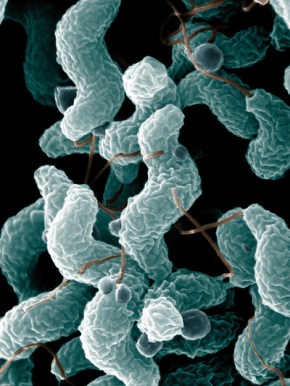
Image CDC
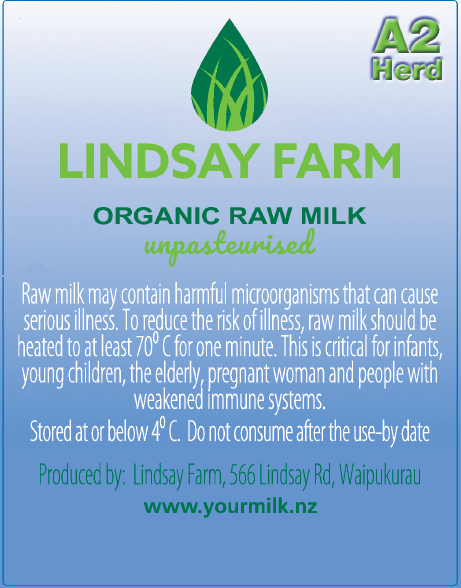
Raw unpasteurised drinking milk from Central Hawke’s Bay producers Lindsay Farm is being recalled following a detection of Campylobacter as part of their routine testing programme. Lindsay Farm is a registered provider of raw milk.
The recall affects Lindsay Farm brand organic raw drinking milk with a use by date between 6 March 2021 and up to and including 21 March 2021. The affected product is sold in the Hawke’s Bay region at seven registered depots and home deliveries. The product is sold in 2-litre plastic bottles.
Campylobacter bacteria can cause severe gastrointestinal illness in people, and can be particularly serious in young people, the elderly, pregnant women and people with weakened immune systems.
New Zealand Food Safety’s national food compliance services manager, Melinda Sando, says people with Lindsay Farm organic raw drinking milk at home should visit the MPI recalls website to check if it is among the batches of recalled product.
“If you have any of the recalled product, throw it out or return it to your supplier, or heat to 70°C and hold at this temperature for one minute. If you don’t have a thermometer, heat the milk until it nearly reaches a boil (or scald the milk) before drinking it.
“Raw milk is inherently more risky than pasteurised milk because the process of pasteurisation kills harmful bacteria. You can get sick from consuming raw milk. If you have health concerns after drinking the product, seek medical advice.
“Campylobacter symptoms include muscle pain, headache and fever followed by watery or bloody diarrhoea, stomach pain and nausea. Symptoms typically develop 2 to 5 days after infection and last between 3 to 7 days.”
In people with weakened immune systems, such as those with a blood disorder, with AIDS, or receiving chemotherapy, Campylobacter occasionally spreads to the bloodstream and causes a life-threatening infection.
Human campylobacteriosis is a notifiable disease in New Zealand. That means any cases must be reported to public health authorities.
18 March 2021: Lindsay Farm is recalling specific batches of Lindsay Farm brand Organic Raw Milk (unpasteurised) as the product may contain Campylobacter.
| Product identification | |
|---|---|
| Product type | Raw (unpasteurised) drinking milk |
| Name of product (size) | Lindsay Farm brand Organic Raw Milk (unpasteurised) 2L |
| Batch marking | Lot numbers: 0203, 0303, 0403, 0503,0603, 0703, 0803,0903, 1003, 1103, 1203,1303, 1403, 1503, 1603 and 1703 |
| Date marking | Use by date between 06.03.2021 and up to and including 21.03.2021 |
| Package size and description | The product is sold in a 2L plastic bottle. |
| Distribution | The product is sold in the Hawke’s Bay region via home deliveries and the following registered depots:
Betta Electrical, 46 – 48 Ruatainwha Street, Waipukurau Chantal Shop, 45 Hastings Street, Napier Cornucopia – The Organic Shop, 221 Heretaunga Street East, Hastings Dawnacres Florist, 208 Havelock Road, Akina, Hastings Nature’s Nurture – The Organic Grocer, 100 High Street, Waipawa Tangaroa Seafoods, 7 Tangaroa Street, Ahuriri, Napier Unichem Taradale Pharmacy, 288 Gloucester Street, Taradale, Napier. |
| Notes | This recall does not affect any other batches of Lindsay Farm brand Organic Raw Milk (unpasteurised). |
Customers are asked to check the lot number and use by date printed on the product.
If you have purchased any of the affected product listed on this notice, do not consume it. Customers should return the product to their retailer for a full refund. Alternatively, consume after heating to 70°C and holding at this temperature for one minute. If you don’t have a thermometer, heat the milk until it nearly reaches a boil (or scald the milk) before drinking it.
There have been no reports of associated illness in New Zealand. If you have consumed any of this product and have any concerns about your health, seek medical advice.
How to reduce the risk of illness if you drink raw unpasteurised milk
Campylobacter infection: symptoms and advice
If you have questions, contact Lindsay Farm:
Listeria monocytogenes (presence /25g) in frozen meat preparation from Italy in Belgium
Listeria monocytogenes in raw cow’s milk cheese from France in France
Listeria monocytogenes (present) in brie cheese from France in France
Listeria monocytogenes (17000 CFU/g) in frozen organic sweetcorn kernels from Hungary in Switzerland
Posted in food contamination, Food Hazard, Food Hygiene, Food Inspections, Food Micro Blog, Food Microbiology, Food Microbiology Blog, Food Microbiology Testing, Food Pathogen, food recall, Food Safety, Food Safety Alert, Food Testing, Listeria, Listeria monocytogenes, RASFF, Raw Milk, raw milk cheese
Leptospira borgpetersenii serovar Hardjo (LH) is an important infectious agent of reproduction pathologies and lactation decline in cattle, with a possible zoonotic role. To figure out the potential zoonotic risk for human raw-milk consumption, the present study aims at assessing the persistence and viability of LH in refrigerated raw milk over a 10-day period, which is set as the maximum time range for raw-milk domestic consumption. A negative sample of fresh raw milk was contaminated with an LH strain (2 × 10⁸ Leptospires/mL) and analyzed by a rrs (16S) gene targeting real-time PCR (rPCR) protocol for LH DNA at days 1, 2, 3, 6, 7, 9, and 10. Seven aliquots of the same sampling time were inoculated into a semisolid EMJH media for bacterial culture. All aliquots tested positive in both rPCR and culture, which demonstrates that raw milk does not alter the detectability and viability of LH, respectively. The analytical sensitivity (LoD, limit of detection) determined for the rPCR (103 Leptospires/mL) was repeatable during the study, whereas it gradually decreased when it came to the bacterial culture. This study demonstrates that bovine raw milk might be a potential vehicle of infection by LH, even when storage conditions are strictly respected. View Full-Text
MAPAQ, in collaboration with Les Gourmandises de Justin inc., located at 856A avenue Taniata, in Lévis , is notifying people considered vulnerable (namely pregnant women, people whose immune system is weakened, children and the elderly) that the products indicated in the table below have been made from unpasteurized milk and raw milk, without the retailer having mentioned it on the label . The products were offered for sale without the retailer having affixed the prescribed endorsement.
| Product name | Format | Targeted lot |
|---|---|---|
| “Macpherson de L’Isle” | In addition to this, you need to know more about it.
In addition to this, you need to know more about it. Variable |
Units sold until March 2, 2021 |
| “Cure Quertier de L’Isle” | ||
| “Tomme de Grosse-Île” | ||
| “Chemin Hatley” | ||
| “Alfred the farmer” | ||
| “Elizabeth Blue” | ||
| “Le Riopelle de l’Isle” | ||
| “Le Louis d’Or” |
The products that are the subject of this warning were offered for sale until March 2, 2021 inclusive , and only at the establishment designated above. They were wrapped in clear plastic wrap and sold refrigerated.
The retailer is voluntarily recalling the products in question. He agreed with MAPAQ to disseminate this warning as a precautionary measure. Also, people deemed vulnerable (previously designated) who have one of these products in their possession are advised not to consume it. They must return it to the establishment where they bought it, use it in a ready-cooked meal that will be cooked until it reaches a safe cooking temperature of 74 ° C or else throw it out. It should be noted that no case of illness associated with the consumption of these foods has been reported to MAPAQ so far.
Media relations
Communications
Department Ministry of Agriculture, Fisheries
and Food
Tel. : 418 380-2100, extension 3512
www.mapaq.gouv.qc.ca


 FoodWorld