Category Archives: pathogenic

Research – Nisin Inhibition of Gram-Negative Bacteria

MDPI

Abstract

Aims: This study investigates the activity of the broad-spectrum bacteriocin nisin against a large panel of Gram-negative bacterial isolates, including relevant plant, animal, and human pathogens. The aim is to generate supportive evidence towards the use/inclusion of bacteriocin-based therapeutics and open avenues for their continued development.
Methods and Results: Nisin inhibitory activity was screened against a panel of 575 strains of Gram-negative bacteria, encompassing 17 genera. Nisin inhibition was observed in 309 out of 575 strains, challenging the prevailing belief that nisin lacks effectiveness against Gram-negative bacteria. The genera AcinetobacterHelicobacterErwinia, and Xanthomonas exhibited particularly high nisin sensitivity.
Conclusions: The findings of this study highlight the promising potential of nisin as a therapeutic agent for several key Gram-negative plant, animal, and human pathogens. These results challenge the prevailing notion that nisin is less effective or ineffective against Gram-negative pathogens when compared to Gram-positive pathogens and support future pursuits of nisin as a complementary therapy to existing antibiotics.
Significance and Impact of Study: This research supports further exploration of nisin as a promising therapeutic agent for numerous human, animal, and plant health applications, offering a complementary tool for infection control in the face of multidrug-resistant bacteria.
Research- Chine -Pre-planned Studies: Pathogenic Surveillance of Foodborne Illness-Related Diarrhea — Beijing Municipality, China, 2013–2023

China CDC

  • Summary

    What is already known about this topic?Foodborne diseases present a significant public health concern, particularly in China, where they represent a significant food safety challenge. Currently, there is a need for a thorough and systematic analysis of the extended epidemiological patterns of foodborne diseases in Beijing Municipality.

    What is added by this report?Monitoring results show that Norovirus and diarrheagenic Escherichia coli (DEC) are the most commonly identified foodborne diarrheal pathogens. Individuals aged 19–30 are at a higher risk of foodborne diarrhea in Beijing, with Salmonella infection being associated with fever symptoms.

    What are the implications for public health practice?This study analyzes 11 years of consecutive monitoring data to enhance understanding of the epidemiological and clinical features of foodborne diarrhea in Beijing. It aims to identify high-risk populations, assist in clinical pathogen identification and treatment, and support the development of tailored preventive strategies.

Research – Bacteria Can Transfer from Plastic Mulch to Basil and Spinach Salad Leaves

Natural Science

Key Findings

  • The University of Stirling study found that human pathogens can transfer from plastic mulch fragments to ready-to-eat crops like basil and spinach within 24 hours
  • Pathogens such as Salmonella Typhimurium and Vibrio cholerae can persist on plastic mulch fragments for up to 14 days
  • The study highlights that removing plastic fragments and washing crops may not be enough to eliminate these pathogens, stressing the need for better management practices in agriculture
Plastic pollution is increasingly found in agricultural environments, where it contaminates soil and crops. A recent study from the University of Stirling[1] examined whether human pathogens can transfer from plastic mulch fragments to ready-to-eat crop plants, posing a risk to food safety and human health. The study focused on two pathogens, Salmonella Typhimurium and Vibrio cholerae, and found that both could persist on plastic mulch fragments for 14 days and transfer to the leaves of basil and spinach within 24 hours. This finding is significant as it highlights a new pathway for pathogen contamination in fresh produce, which has been a persistent issue with severe health, economic, and social impacts[2]. The study’s results suggest that even removing plastic fragments and washing crops may not be sufficient to eliminate these pathogens, emphasizing the need for better management practices in agricultural systems that use plastic mulches. Previous research has shown that biodegradable plastic films, although more environmentally friendly, can degrade rapidly and potentially release more microplastics into the soil compared to conventional films[3]. These microplastics can alter soil microbial communities and nutrient cycling, potentially affecting plant health and crop productivity. The University of Stirling study expands on this by demonstrating that these microplastics can also serve as vectors for human pathogens, further complicating the issue. Moreover, the degradation of plastic fragments in soil is highly variable, with some commercial polymer mixtures taking up to 48 days to degrade, while biodegradable formulations can degrade completely within 32 days[4]. The incorporation of plant growth-promoting bacteria like Bacillus subtilis can even accelerate this process. However, the rapid degradation of biodegradable plastics also means they can release pathogens more quickly into the environment, posing a continuous risk. Another concern is the contamination of agricultural soils through fertilizers composted from livestock and poultry manure, which often contain microplastics[5]. These microplastics can enter the soil and potentially carry pathogens, adding another layer of complexity to managing plastic pollution in agricultural settings. The University of Stirling study underscores the urgent need to address the co-pollutant pathogen risk associated with plastic pollution in agriculture. As the demand for intensive food production grows, so does the use of plastic mulches, making it crucial to understand and mitigate the risks they pose to food safety and human health. This research calls for improved agricultural practices and further studies to develop effective strategies for managing plastic pollution and its associated risks in food production systems.

Research – Cold plasma processing for food safety

Food Safety News

 Cold plasma is an emerging food processing technology which has been shown to effectively inactivate pathogenic bacteria, viruses, parasites, and fungi. The process uses high-voltage electricity to ionize air and/or defined gas blends to create a mixture of ions, free electrons, ozone, radical species, and other reactive products. This energetic plasma, which operates near room temperature, has been tested with fruits, vegetables, nuts, meats, cheeses, poultry, seeds, powders, and other foods.

Once created at the high voltage electrodes, the cold plasma is applied to foods and food contact surfaces. Forced air can blow the cold plasma over products and surfaces, as with plasma jet systems. This allows for the varying treatment distances of irregularly shaped foods. The commodity may also be moved in and out of the plasma field, as with dielectric barrier (DBD) systems. In either case, reactive chemical species in the cold plasma break the cellular structures, DNA, and proteins of pathogens on foods, inactivating them. Efficacy is dependent on treatment intensity and duration. Combining cold plasma with chemical sanitizers, high intensity light, or other food safety interventions can provide enhanced, synergistic pathogen inactivation. Short treatments with cold plasma can induce sublethal injury in pathogens, rendering them more susceptible to another sanitizing processes.

Research – Acid Adaptation Enhances Tolerance of Escherichia coli O157:H7 to High Voltage Atmospheric Cold Plasma in Raw Pineapple Juice

MDPI

Abstract

Pathogens that adapt to environmental stress can develop an increased tolerance to some physical or chemical antimicrobial treatments. The main objective of this study was to determine if acid adaptation increased the tolerance of Escherichia coli O157:H7 to high voltage atmospheric cold plasma (HVACP) in raw pineapple juice. Samples (10 mL) of juice were inoculated with non-acid-adapted (NAA) or acid-adapted (AA) E. coli to obtain a viable count of ~7.00 log10 CFU/mL. The samples were exposed to HVACP (70 kV) for 1–7 min, with inoculated non-HVACP-treated juice serving as a control. Juice samples were analyzed for survivors at 0.1 h and after 24 h of refrigeration (4 °C). Samples analyzed after 24 h exhibited significant decreases in viable NAA cells with sub-lethal injury detected in both NAA and AA survivors (p < 0.05). No NAA survivor in juice exposed to HVACP for 5 or 7 min was detected after 24 h. However, the number of AA survivors was 3.33 and 3.09 log10 CFU/mL in juice treated for 5 and 7 min, respectively (p < 0.05). These results indicate that acid adaptation increases the tolerance of E. coli to HVACP in pineapple juice. The potentially higher tolerance of AA E. coli O157:H7 to HVACP should be considered in developing safe juice processing parameters for this novel non-thermal technology.

Research – Foodborne Illnesses from Leafy Greens in the United States: Attribution, Burden, and Cost

Science Direct

Abstract

Leafy green vegetables are a major source of foodborne illnesses. Nevertheless, few studies have attempted to estimate attribution and burden of illness estimates for leafy greens. This study combines results from three outbreak-based attribution models with illness incidence and economic cost models to develop comprehensive pathogen-specific burden estimates for leafy greens and their subcategories in the United States. We find that up to 9.18% (90% CI: 5.81%-15.18%) of foodborne illnesses linked to identified pathogens are attributed to leafy greens. Including ‘Unknown’ illnesses not linked to specific pathogens, leafy greens account for as many as 2,307,558 (90% CI: 1,077,815–4,075,642) illnesses annually in the United States. The economic cost of these illnesses is estimated to be up to $5.278 billion (90% CI: $3.230-$8.221 billion) annually. Excluding the pathogens with small outbreak sizes, Norovirus, Shiga toxin-producing Escherichia coli (both non-O157 and O157:H7), Campylobacter spp., and nontyphoidal Salmonella, are associated with the highest number of illnesses and greatest costs from leafy greens. While lettuce (romaine, iceberg, “other lettuce”) takes 60.8% of leafy green outbreaks, it accounts for up to 75.7% of leafy green foodborne illnesses and 70% of costs. Finally, we highlighted that 19.8% of Shiga toxin-producing Escherichia coli O157:H7 illnesses are associated with romaine among all food commodities, resulting in 12,496 estimated illnesses and $324.64 million annually in the United States.

Research – Lysin and Lytic Phages Reduce Vibrio Counts in Live Feed and Fish Larvae

MDPI

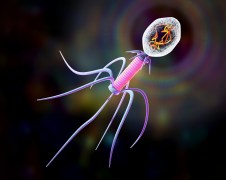
Bacteriophage on colorful background

Abstract

Vibrio species are naturally found in estuarine and marine ecosystems, but are also recognized as significant human enteropathogens, often linked to seafood-related illnesses. In aquaculture settings, Vibrio poses a substantial risk of infectious diseases, resulting in considerable stock losses and prompting the use of antimicrobials. However, this practice contributes to the proliferation of antimicrobial-resistant (AMR) bacteria and resistance genes. Our investigation aimed to explore the potential of biological agents such as bacteriophage CH20 and endolysin LysVPp1 in reducing Vibrio bacterial loads in both rotifer and fish larvae. LysVPp1’s lytic activity was assessed by measuring absorbance reduction against various pathogenic Vibrio strains. Phage CH20 exhibited a limited host range, affecting only Vibrio alginolyticus GV09, a highly pathogenic strain. Both CH20 and LysVPp1 were evaluated for their effectiveness in reducing Vibrio load in rotifers or fish larvae through short-setting bioassays. Our results demonstrated the significant lytic effect of endolysin LysVPp1 on strains of Vibrio alginolyticusVibrio parahaemolyticus, and Vibrio splendidus. Furthermore, we have showcased the feasibility of reducing the load of pathogenic Vibrio in live feed and fish larvae by using a non-antibiotic-based approach, such as lytic phage and endolysin LysVPp1, thus contributing to the progress of a sustainable aquaculture from a One Health perspective

Research – An In-Depth Study on the Inhibition of Quorum Sensing by Bacillus velezensis D-18: Its Significant Impact on Vibrio Biofilm Formation in Aquaculture

MDPI

Abstract

Amid growing concerns about antibiotic resistance, innovative strategies are imperative in addressing bacterial infections in aquaculture. Quorum quenching (QQ), the enzymatic inhibition of quorum sensing (QS), has emerged as a promising solution. This study delves into the QQ capabilities of the probiotic strain Bacillus velezensis D-18 and its products, particularly in Vibrio anguillarum 507 communication and biofilm formation. Chromobacterium violaceum MK was used as a biomarker in this study, and the results confirmed that B. velezensis D-18 effectively inhibits QS. Further exploration into the QQ mechanism revealed the presence of lactonase activity by B. velezensis D-18 that degraded both long- and short-chain acyl homoserine lactones (AHLs). PCR analysis demonstrated the presence of a homologous lactonase-producing gene, ytnP, in the genome of B. velezensis D-18. The study evaluated the impact of B. velezensis D-18 on V. anguillarum 507 growth and biofilm formation. The probiotic not only controls the biofilm formation of V. anguillarum but also significantly restrains pathogen growth. Therefore, B. velezensis D-18 demonstrates substantial potential for preventing V. anguillarum diseases in aquaculture through its QQ capacity. The ability to disrupt bacterial communication and control biofilm formation positions B. velezensis D-18 as a promising eco-friendly alternative to conventional antibiotics in managing bacterial diseases in aquaculture.

Research – Long chain unsaturated fatty acids alter growth and reduce biofilm formation of Cronobacter sakazakii

Wiley Online

Cronobacter sakazakii is a foodborne pathogen predominately transmitted through contaminated dried foods and affects populations including neonates, infants, and the elderly. Following several recent outbreaks, it is now a notifiable infection in those under 12 months of age. Current control methods include strict manufacturing guidelines, with monitoring of this genus a legal requirement in powdered infant formula production. Fatty acids have long been known as antimicrobials, with long-chain fatty acids increasingly identified as agents that target virulence factors. This study gives insight into the changes promoted by three long-chain unsaturated fatty acids (oleic, linoleic, and α-linolenic) on C. sakazakii growth, morphology, and biofilm formation. Each fatty acid was individually introduced to C. sakazakii 29544 both as a sole carbon source and as an addition to complex media. Following comparison to the untreated control, bacterial cells treated with these fatty acids showed a significant and media-dependent impact on growth and biofilm inhibition. With further characterization, long-chain fatty acids, including α-linolenic acid, could be utilized as a control method with minimal safety constraints regarding their use in the food production environment.

Research – Fermented Rapeseed and Soybean Alone and in Combination with Macro Algae Inhibit Human and Pig Pathogenic Bacteria In Vitro

MDPI

Abstract

Higher plants produce secondary metabolites expressing antimicrobial effects as a defense mechanism against opportunistic microorganisms living in close proximity with the plant. Fermentation leads to bioconversion of plant substrates to these bioactive compounds and their subsequent release via breakdown of plant cell walls. Fermented feed products have recently started to become implemented in the pig industry to reduce overall disease pressure and have been found to reduce events such as post-weaning diarrhea. In this study, we investigate the antimicrobial potential of fermented soybean- and rapeseed-based pig feed supplements with and without added seaweed. The antimicrobial effect was tested in a plate well diffusion assay against a range of known human and livestock pathogenic bacteria. Further, we investigate the metabolite profiles based on liquid-chromatography mass-spectrometry (LC-MS) analysis of the fermented products in comparison to their unfermented constituents. We observed a pronounced release of potential antimicrobial secondary metabolites such as benzoic acids when the plant material was fermented, and a significantly increased antimicrobial effect compared to the unfermented controls against several pathogenic bacteria, especially Salmonella enterica Typhimurium, Listeria monocytogenesYersinia enterocolitica, and a strain of atopic dermatitis causing Staphylococcus aureus CC1. In conclusion, fermentation significantly enhances the antimicrobial properties of rapeseed, soybean, and seaweed, offering a promising alternative to zinc oxide for controlling pathogens in piglet feed. This effect is attributed to the release of bioactive metabolites effective against pig production-relevant bacteria.