Category Archives: outbreak

USA – FDA Investigated Multistate Outbreak of Salmonella Infections Linked to Hy-Vee Spring Pasta Salad

FDA 

Salmonella

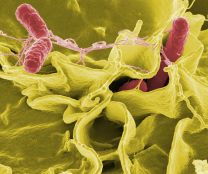
The U.S. Food and Drug Administration, along with the Centers for Disease Control and Prevention (CDC) and state and local partners, investigated a multi-state outbreak of Salmonella illnesses linked to Spring Pasta Salad sold at Hy-Vee locations in Iowa, Illinois, Kansas, Minnesota, Missouri, Nebraska, South Dakota, and Wisconsin.

Update – September 5, 2018

On September 5, 2018, the investigational activities related to this outbreak concluded.

USA – Salmonella Honey Smacks now linked to 130 illnesses in 36 States

Food Poison Journal

As of August 30, 2018, 130 people infected with the outbreak strain of Salmonella Mbandaka have been reported from 36 states – AL, AZ, CA, CO, CT, DE, FL, GA, IL, IN, KY, LA, ME, MD, MA, MI, MN, MO, MT, NC, NH, NJ, NY, OH, OK, OR, PA, RI, SC, TN, TX, UT, VA, WA, WI, WV.

untitled.png

Illnesses started on dates from March 3, 2018, to August 7, 2018. Ill people range in age from less than one year to 95, with a median age of 57. Of ill people, 69% are female. Out of 98 people with information available, 34 (35%) have been hospitalized. No deaths have been reported. Illnesses that occurred after August 4, 2018, might not yet be reported due to the time it takes between when a person becomes ill and when their illness is reported. This takes an average of 2 to 4 weeks.

Europe – Rare Salmonella strain sickens 50 in five EU countries – Salmonella Mikawasima

Food Safety News

Around 50 people in five European countries have been struck down with a rare strain of Salmonella.

Salmonella Mikawasima has infected 15 people in Germany, 13 in Sweden, eight in both Denmark and the Czech Republic and six in Austria.

USA – FDA documents first Cyclospora contamination of U.S. fresh produce

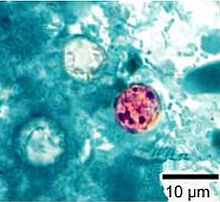
Food Safety News 220px-Cyclospora_cayetanensis_stained

A special FDA testing program on fresh herbs has documented the first confirmed evidence of the Cyclospora parasite in U.S. produce.

The Food and Drug Administration found the microscopic parasite on fresh cilantro at a U.S. distribution facility in July. In a follow-up investigation, the FDA found Cyclospora on fresh cilantro at a farm. The federal agency worked with state and local officials to embargo the cilantro. Staff from FDA have been working with the farmer on “corrective actions geared toward common routes of contamination,” according to a constituent update from the agency. 

“Although this is the first confirmed evidence of the presence of Cyclospora in domestic produce, FDA is currently unaware of illnesses associated with the product, and traceforward efforts do not indicate there are any connections between this domestic finding of contaminated cilantro and multistate outbreaks of Cyclospora illnesses investigated this spring and summer,” the agency reported.

Those Cyclospora outbreaks were linked to Del Monte vegetable-dip trays and salads made with Fresh Express chopped lettuce and carrots that were served at McDonald’s restaurants.

USA – Fremont Bowl Associated with Salmonella Outbreak in Seattle, Washington

Food Poisoning Bulletin 

Salmonellaa

The Fremont Bowl restaurant in Seattle, Washington state has been associated with a Salmonella Enteritidis outbreak, according to the Seattle King County Health Department. At least four people are sick in this outbreak; one person has been hospitalized because their illness is so severe; that person has since recovered and has been released.

The Fremont Bowl is located at 4258 Fremont Avenue N. Ste. #4262 in Seattle. those sickened ate there on July 27 – July 29, 2018. The patients were part of three separate meal parties. The press release stated that there is no indication that any employees of the restaurant have been ill with symptoms that are consistent with salmonellosis.

RASFF Alert -Foodborne Outbreak caused by Salmonella in goat’s raw milk cheese

kswfoodworld food safety poisoning

RASFF-foodborne outbreak caused by Salmonella (presence /25g) in goat’s raw milk cheese from France in France

USA – Cyclospora Outbreak Expands plus Oklahoma Outbreak

Food Poison Journal 

220px-Cyclospora_cayetanensis_stained

Image CDC Enter a caption

The CDC, public health and regulatory officials in several states, and the U.S. Food and Drug Administration are investigating a multistate outbreak of Cyclospora infections. As of August 9, 2018 (11am EDT), a total of 436 laboratory-confirmed cases of Cyclospora infection were reported in people who consumed salads from McDonald’s restaurants; the cases were reported by 15 states. Note, the Connecticut, Tennessee, and Virginia case-patients purchased salads while traveling in Illinois; the Florida case-patient purchased a salad while traveling in Kentucky.

Food Poison Journal

The Tulsa Health Department (THD) in collaboration with the Oklahoma State Department of Health (OSDH), Acute Disease Service (ADS) are investigating an outbreak of cyclosporiasis among residents of Tulsa and surrounding counties. As of August 1, 24 laboratory-confirmed cases of cyclosporiasis have been reported; symptom onsets have occurred from June 24 through July 26, 2018. The epidemiologic investigation suggests this outbreak is likely ongoing with persons currently experiencing illness and new cases being reported. Case ages range from 27 to 67 years (median = 43 years); 67% of cases are females. Nine (38%) cases are of Hispanic ethnicity. Twenty-one (88%) cases are residents of Tulsa County; although the other three cases are residents of Wagoner, Creek, and Rogers counties, case interviews have revealed at least two of these three individuals shopped and dined at establishments in the Tulsa area.


USA – Salmonella Outbreak – Arapahoe County Fair

Food Poisoning Bulletin 

Salmonella kswfoodworld

Image CDC Enter a caption

A Salmonella outbreak among people who attended the Arapahoe County Fair in Colorado has sickened at least seven people, according to the Tri-County Health Department, Arapahoe County, and the Colorado Department of Public Health and Environment. Those sickened attended the fair, or 4-H events associated with the fair, from July 21 to July 29, 2018.

Europe – Multi-country outbreak of Salmonella Agona infections possibly linked to ready-to-eat food

ECDC 


A multi-country outbreak of Salmonella enterica subspecies enterica serovar Agona (S. Agona) is under investigation in the European Union (EU), with cases retrospectively identified back to 2014. Overall, 147 outbreak cases have been reported by five EU countries: 122 cases since 1 January 2017, and 25 historical cases between 2014 and 2016. The United Kingdom is reporting most outbreak cases (129), with Finland (15), Denmark, Germany and Ireland (one case each) reporting the other cases. The Irish case was probably infected while visiting the United Kingdom.

The outbreak was first detected in the United Kingdom using whole genome sequencing (WGS). All S. Agona isolates from the five countries are genetically close with a maximum difference of 2 alleles from any other single isolate by core genome multilocus sequence typing scheme (cgMLST) using the ECDC Enterobase pipeline. The cases peaked in April 2017 and 2018. The close genomic relationship and the distinct seasonal spring peaks suggest that cases are part of an intermittent common source outbreak.

Seventeen S. Agona food isolates from 2018, detected in the United Kingdom, were found to be closely genetically related to the human strains. The food isolates were from cucumbers sampled during processing before and after washing (11 isolates) and ready to eat (RTE) food products containing cucumbers (six isolates). The contaminated food isolates were sampled in the United Kingdom at four plants owned by Company A and a Company C plant.

At present, there is insufficient epidemiological information available on the consumption of contaminated products by humans to support the microbiological evidence provided by the isolation of the outbreak strain in food. The epidemiological investigations in the other affected countries did not generate any strong hypothesis about the vehicle or source of infection.

Although the cucumbers used in all final contaminated products originated from Spain for a limited period (from November 2017 to April 2018), no connection between supply chains was identified: primary producers of cucumbers were different (producers A and B), and cucumbers were delivered to different processing companies through different distributors in the United Kingdom. The laboratory results for Salmonella in all cucumber samples, taken either at primary production level in Spain or during distribution to/within UK, were negative.

Based on the information available, the microbiological evidence suggests RTE products containing cucumbers as a possible vehicle of infection but so far it has not been possible to identify the specific point in the production chain where the contamination occurred.

Further investigations along the food chain are needed to identify the source of contamination. These should include collection of information about various production and processing stages for the RTE products implicated in this event, as well as thorough sampling and testing.

ECDC Link


Information -Surveillance for Foodborne Disease Outbreaks — United States, 2009–2015

CDC

Abstract

Problem/Condition: Known foodborne disease agents are estimated to cause approximately 9.4 million illnesses each year in the United States. Although only a small subset of illnesses are associated with recognized outbreaks, data from outbreak investigations provide insight into the foods and pathogens that cause illnesses and the settings and conditions in which they occur.

Reporting Period: 2009–2015

Description of System: The Foodborne Disease Outbreak Surveillance System (FDOSS) collects data on foodborne disease outbreaks, which are defined as the occurrence of two or more cases of a similar illness resulting from the ingestion of a common food. Since the early 1960s, foodborne outbreaks have been reported voluntarily to CDC by state, local, and territorial health departments using a standard form. Beginning in 2009, FDOSS reporting was made through the National Outbreak Reporting System, a web-based platform launched that year.

Results: During 2009–2015, FDOSS received reports of 5,760 outbreaks that resulted in 100,939 illnesses, 5,699 hospitalizations, and 145 deaths. All 50 states, the District of Columbia, Puerto Rico, and CDC reported outbreaks. Among 2,953 outbreaks with a single confirmed etiology, norovirus was the most common cause of outbreaks (1,130 outbreaks [38%]) and outbreak-associated illnesses (27,623 illnesses [41%]), followed by Salmonella with 896 outbreaks (30%) and 23,662 illnesses (35%). Outbreaks caused by Listeria, Salmonella, and Shiga toxin-producing Escherichia coli (STEC) were responsible for 82% of all hospitalizations and 82% of deaths reported. Among 1,281 outbreaks in which the food reported could be classified into a single food category, fish were the most commonly implicated category (222 outbreaks [17%]), followed by dairy (136 [11%]) and chicken (123 [10%]). The food categories responsible for the most outbreak-associated illnesses were chicken (3,114 illnesses [12%]), pork (2,670 [10%]), and seeded vegetables (2,572 [10%]). Multistate outbreaks comprised only 3% of all outbreaks reported but accounted for 11% of illnesses, 34% of hospitalizations, and 54% of deaths.

Interpretation: Foodborne disease outbreaks provide information about the pathogens and foods responsible for illness. Norovirus remains the leading cause of foodborne disease outbreaks, highlighting the continued need for food safety improvements targeting worker health and hygiene in food service settings. Outbreaks caused by Listeria, Salmonella, and STEC are important targets for public health intervention efforts, and improving the safety of chicken, pork, and seeded vegetables should be a priority.

Public Health Action: The causes of foodborne illness should continue to be tracked and analyzed to inform disease prevention policies and initiatives. Strengthening the capacity of state and local health departments to investigate and report outbreaks will assist with these efforts through identification of the foods, etiologies, and settings linked to these outbreaks.