Category Archives: Microbiology

Nearly 900 get food poisoning at ‘nagashi somen’ restaurant – Campylobacter

ASAHI

KANAZAWA—Close to 900 people suffered from food poisoning after eating at a “nagashi somen” restaurant in Tsubata, Ishikawa Prefecture.

Nagashi somen is a practice in which customers use chopsticks to try to scoop up thin somen noodles as they flow down a bamboo chute filled with running water.

The Ishikawa prefectural government announced on Oct. 6 that 892 people were certified with food poisoning after dining at the restaurant between Aug. 11 and 17, during the Bon holiday season. While none suffered serious symptoms, 22 were hospitalized.

Many complained of diarrhea and a fever, and 611 were treated at hospitals.

The prefectural government said 1,298 customers submitted complaints, of whom the 892 were certified. They came from 18 prefectures around Japan, including Ishikawa, Toyama, Tokyo, Osaka and Aichi.

Customers who ate the nagashi somen, salt-grilled mountain trout or shaved ice came down with the symptoms, leading the prefectural government to check on the springwater the restaurant used. Officials found campylobacter, a type of bacteria that causes diarrhea, in the water.

The prefectural government ordered the restaurant to suspend operations.

Research – Recent Trends in Active Packaging Using Nanotechnology to Inhibit Oxidation and Microbiological Growth in Muscle Foods

MDPI

Muscle foods are highly perishable products that require the use of additives to inhibit lipid and protein oxidation and/or the growth of spoilage and pathogenic microorganisms. The reduction or replacement of additives used in the food industry is a current trend that requires the support of active-packaging technology to overcome novel challenges in muscle-food preservation. Several nano-sized active substances incorporated in the polymeric matrix of muscle-food packaging were discussed (nanocarriers and nanoparticles of essential oils, metal oxide, extracts, enzymes, bioactive peptides, surfactants, and bacteriophages). In addition, the extension of the shelf life and the inhibitory effects of oxidation and microbial growth obtained during storage were also extensively revised. The use of active packaging in muscle foods to inhibit oxidation and microbial growth is an alternative in the development of clean-label meat and meat products. Although the studies presented serve as a basis for future research, it is important to emphasize the importance of carrying out detailed studies of the possible migration of potentially toxic additives, incorporated in active packaging developed for muscle foods under different storage conditions.

Research – Fate of Planktonic and Biofilm-Derived Listeria monocytogenes on Unwaxed Apples during Air and Controlled Atmosphere Storage

MDPI

Abstract

Multiple recalls and outbreaks involving Listeria monocytogenes-contaminated apples have been linked to the post-harvest packing environment where this pathogen can persist in biofilms. Therefore, this study assessed L. monocytogenes survival on apples as affected by harvest year, apple cultivar, storage atmosphere, and growth conditions. Unwaxed Gala, Granny Smith, and Honeycrisp apples were dip-inoculated in an 8-strain L. monocytogenes cocktail of planktonic- or biofilm-grown cells (~6.5 log CFU/mL), dried, and then examined for numbers of L. monocytogenes during air or controlled atmosphere (CA) (1.5% O2, 1.5% CO2) storage at 2 °C. After 90 days, air or CA storage yielded similar L. monocytogenes survival (p > 0.05), regardless of harvest year. Populations gradually decreased with L. monocytogenes quantifiable in most samples after 7 months. Apple cultivar significantly impacted L. monocytogenes survival (p < 0.05) during both harvest years with greater reductions (p < 0.05) seen on Gala compared to Granny Smith and Honeycrisp. Biofilm-derived cells survived longer (p < 0.05) on L. monocytogenes-inoculated Gala and Honeycrisp apples compared to cells grown planktonically. These findings should aid in the development of improved L. monocytogenes intervention strategies for apple growers and packers.

Research – Combining High-Pressure Processing and Supercritical Carbon Dioxide for Inactivation of Listeria innocua

MDPI

Abstract

The effect of high-pressure treatment with supercritical CO2 on the inactivation of Listeria innocua in a fish soup was investigated. The soup was inoculated with L. innocua, packaged in modified atmosphere with 50:50 or 95:5 CO2:N2, high-pressure processed (300, 350, 400 and 600 MPa, 2 min) under subcritical (T < 304 K) or supercritical conditions (T > 304 K) and stored at 4 °C for up to 53 days. Treatment at 400 and 600 MPa had a significant (p < 0.05) effect on L. innocua under both supercritical and subcritical conditions. In contrast, pressurization at 350 MPa and supercritical conditions were needed to significantly (p < 0.05) inactive L. innocua. Increased levels of CO2 in the headspace significantly (p < 0.05) reduced the bacterial load during processing, and supercritical conditions had a significant (p < 0.01) interaction with both CO2 levels and pressure. Increased storage time gave significantly increased levels of L. innocua at 400 and 600 MPa. In addition, high levels of CO2 significantly decreased (p < 0.001) growth. However, 350 MPa under supercritical conditions seemed to set the L. innocua in a permanent lag phase, with slow and steadily decreasing numbers of bacteria during storage. All the design variables resulted in significant inactivation of L. innocua, and supercritical conditions combined with high levels of CO2 inhibited the recovery of L. innocua to a large degree.

USA – Patient count more than doubles in Salmonella outbreak linked to taqueria

Food Safety News

Chicago’s Department of Public Health has confirmed 55 Salmonella infections stemming from the outbreak at an Avondale taqueria, Carniceria Guanajuato, up from 20 last week.

At least 17 people have been hospitalized as of Sept. 30.

An investigation into the source of the bacteria is ongoing. The restaurant remains closed as owners work with public officials to bring the eatery up to safety standards.

Carniceria Guanajuato was inspected Sept. 8 after reports of food poisoning. City health inspectors found raw beef and raw shelled eggs stored above ready-to-eat lettuce and improper storage of hot and cold foods, among other violations.

Research – Cooked rice safety: A review of status and potential of radiative pasteurization

Wiley Online

Abstract

Microbial contamination in cooked rice-based foods poses a global concern due to rice’s widespread consumption. This review aims to consolidate information on harmful microorganisms associated with such foods from various countries and their adverse effects on consumers. Additionally, it explores the reported causes of microbial contamination in cooked rice-based dishes and proposes an intervention strategy for safer consumption. The findings highlight that ready-to-eat cooked rice-based foods may harbor unsafe levels of microorganisms like Bacillus cereus, Staphylococcus aureus, and Aspergillus spp. A recommended solution is the application of microwave pasteurization. This method involves cooking rice in pasteurized packaging, minimizing human contact, and effectively controlling harmful microorganisms. Microwave pasteurization emerges as a promising approach to ensure the safe consumption of cooked rice-based foods by reducing microbial contamination levels.

USA – CDC Solves Norovirus Mystery On The Pacific Crest Trail

Weather.Com

Eurofins

Although the REDCap survey identified only 27 ill hikers, social media reports indicated that the true size of the outbreak was likely substantially larger, with 27 reports with a date of onset, and numerous others without further chronologic information apart from the year (2022). Norovirus prevention in remote areas is difficult because of a lack of easily available clean water and soap for handwashing, and inability to routinely disinfect shared surfaces (e.g., cabins and restrooms). Moreover, alcohol-based hand sanitizers, commonly used in hiking, are not effective against norovirus (5). Preventing future outbreaks will require fostering increased awareness of the importance of handwashing and lack of effectiveness of alcohol-based hand sanitizers against norovirus, and more frequent cleaning of public facilities; early outbreak detection might be facilitated by social media surveillance.

CDC

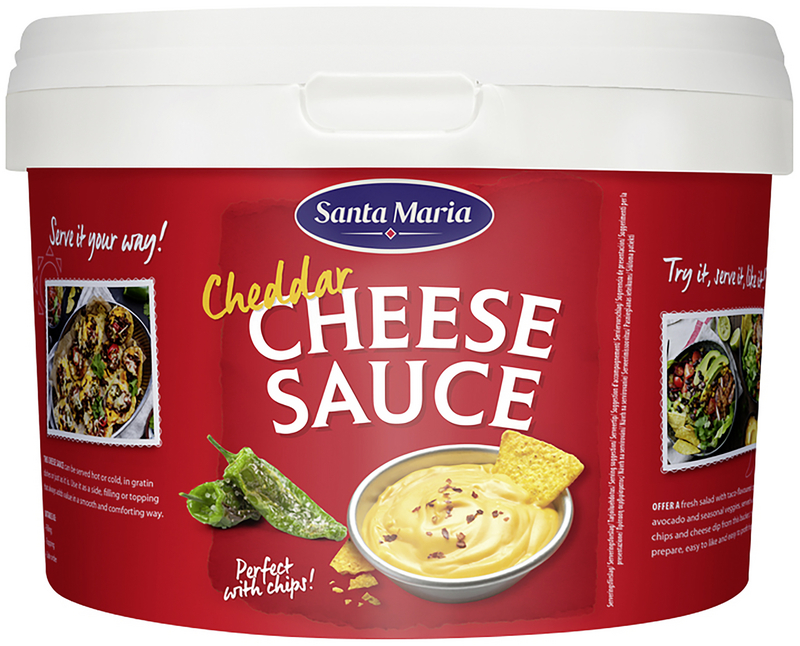
Austria – Another batch of Santa Maria Cheddar Cheese Sauce 3kg – Microbial Contamination

AGES

AGES informs about a recall from Maresi Austria GmbH. The company issued a recall of another batch of the product Santa Maria Cheddar Cheese Sauce 3kg on September 27, 2023:
 © Maresi Austria GmbH
Reason for recall
microbiological contamination
Marketed by
Maresi Austria GmbH
Expiry Date
June 8, 2024
Batch number
2329020

Extended product recall: Santa Maria Cheddar Cheese Sauce 3kg
Maresi Austria GmbH is recalling the product “Santa Maria Cheddar Cheese Sauce 3kg” with the batch number “2329020” and the best-before date June 7th, 2024 and June 8th, 2024.
In addition to the recall started on September 22nd, 2023, according to current information from the manufacturer, the recall must also be extended to the best before date of June 8th, 2024 with the batch number “2329020”.

As part of internal quality controls, bacteria were detected in the designated batch of the product “Santa Maria Cheddar Cheese Sauce 3kg”.

There is therefore the possibility of microbiological contamination in individual packages of the product. For reasons of precautionary consumer protection, Maresi Austria is recalling this article. Health impairments cannot be ruled out 100 percent. We therefore advise against consuming the following product.

Santa Maria Cheddar Cheese Sauce 3kg

Batch number: 2329020

Best before date: June 7th, 2024 and June 8th, 2024

GTIN: 7311312007759

Products with the best before date mentioned above can be returned to the stores where they were purchased. Customers will receive a refund of the purchase price even without proof of purchase. This warning does not indicate that the hazard was caused by the producer, manufacturer, importer or distributor.

Other Santa Maria batches and products are not affected and can be consumed safely.

For more information, a Maresi hotline has been set up on +43 664 45 63 206 .

Original recall

USA – CrackleMi Café Salmonella Outbreak in Seattle, WA Sickens Three

Food Poisoning Bulletin

A CrackleMi Café Salmonella outbreak in Seattle, Washington has sickened at least three people, according to the King County Public Health Department. The illnesses occurred in August, but the investigation into the outbreak was announced on September 21, 2023. That restaurant is located at 709 North 35th Street in Seattle.

UK – CFA responds to ACMSF Report on Botulinum Neurotoxin-Producing Clostridia

CFA

UK Government’s Advisory Committee on the Microbiological Safety of Food (ACMSF), has been reviewing the risk basis of the FSA’s guidance on the control of non-proteolytic Clostridium botulinum (npcb) in vacuum packed and modified atmosphere packed (VP/MAP) chilled foods. In June 2022 CFA Director Karin Goodburn presented evidence to the group (CFA News #58 & #59). ACMSF has now published its report on Botulinum Neurotoxin-Producing Clostridia. The report is available on on the ACMSF website.

CFA welcomes this Report, which not only updates the risk basis of the guidance but also extends the scope of interest to all Botulinum neurotoxin-producing Clostridia.

The Report reviews botulism incidents globally, noting they have only occurred in very rare occasions in chilled foods and only when not sold or stored chilled, and there is no correlation between the major growth in the chilled prepared food market and botulism.

Read more at the link above