Category Archives: Microbiology

Quebec – Vacuum Packed Meat Recall – Listeria monocytogenes

Quebec

The Ministry of Agriculture, Fisheries and Food (MAPAQ), in collaboration with the company Boucherie WE Bégin inc. Established at 500 rue Saint-Jean in Quebec is warning the public not to consume the product described below and manufactured by the company because it may contain Listeria monocytogenes.

 Denomination
Product
 Packaging  Lot referred
LEG CUT BRAISED Vacuum packaged and labeled “Best Before” Oct. 11, 2012
Decided by an attendant at the customer’s request Packed 26 to September 27, 2012

 This recall involves all units of the product were sold in variable weight formats, setting mentioned above.

The company is voluntarily recalling the product.   She agreed with MAPAQ disseminate this warning as a precaution.  On the other hand, it should be noted that no cases of illness associated with the consumption of this food has not been reported to date MAPAQ.

Hong Kong – Chinese Medicine Failed Micro Limits – Total Viable Count

Department of Health

The Department of Health (DH) today (October 3) instructed a licensed proprietary Chinese medicines (pCm) wholesaler, Peking Health Products Company, to recall from consumers all batches of a registered pCm, 【OIHP】Huo Xiang Zheng Qi Wan (registration no.: HKP-11335), as its microbial limit exceeded the registration criteria set out by the Chinese Medicines Board of the Chinese Medicine Council of Hong Kong.

The DH’s market surveillance revealed that a batch (batch no. 20120603W) of the aforementioned pCm was found to have a total bacterial count of 61,000 per gram, which was about six times of the registration criteria.

Peanut Butter Fudge Recalled – Salmonella Bredeney

Food Poisoning Bulletin

Kilwins Quality Confections of Michigan is recalling Kilwins Sugar Free Peanut Butter Fudge because it may be contaminated with Salmonella bacteria. The fudge was made from Sunland Inc. products and thus is part of the huge recall from that facility. Some Sunland products are linked to a multistate Salmonella Bredeney outbreak that has sickened 35 people in 19 states.

CFIA – XL Products Another Expanded Alert – E.coli O157:H7

CFIA

The public warning issued on October 5, 2012 has been updated to include additional products. Previously identified products included in this recallcan be found on the Canadian Food Inspection Agency (CFIA) website at http://www.inspection.gc.ca/recalls.

The CFIA is warning the public, distributors and food service establishments not to consume, sell, or serve the beef products described in this link because the products may be contaminated with E. coli O157:H7.

The CFIA is advising consumers who are unsure if they have the affected beef in their home to check with the store(s) where the product was purchased or throw it out.

Public health authorities have confirmed a number of illnesses linked to products from XL Foods Inc. or illnesses associated with the XL Foods Inc. food safety investigation. For more information, visit the Public Health Agency of Canada’s website at http://www.phac.gc.ca

This voluntary recall is part of an ongoing food safety investigation. The CFIA is working with the recalling firms and distributors to identify and verify all affected products.  If additional affected products are confirmed, this table will be updated on the CFIA website. To stay informed of product updates throughout the investigation, consumers are also encouraged to subscribe to CFIA food recalls and allergy alerts at http://www.foodsafety.gc.ca.

The affected products are associated with the same XL Foods manufacturing dates of August 24, 27, 28, 29 and September 5, 2012, as the previously recalled ground beef products. The trace out from XL to secondary and tertiary distributors, manufacturers and retailers could result in a large number of affected products over a wide range of codes and dates.

This recall also includes unlabelled and/or unbranded beef products sold at retail stores not identified in the CFIA’s product list below, which may include small retailers, local meat markets and butcher shops, etc. Therefore, the CFIA is advising consumers who are unsure if they have the affected beef products in their homes to check with the store(s) where the products were purchased or throw them out.

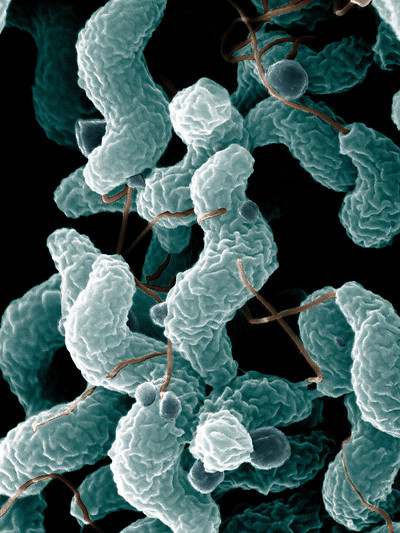
New Zealand – Poorly Cooked Liver Two Dozen Food Poisoning Cases

Stuff.co.nz

Health officials are warning liver lovers to cook their offal properly, after more than two dozen cases of food poisoning in Wellington.

Twenty-six cases of campylobacter, linked to eating liver, had been reported to public health officials in the past year.

Cook liver in small batches for at least five minutes until juices are clear. Use separate cutting boards for raw meat, clean boards with hot soapy water and thoroughly clean kitchen utensils. Store raw liver products separately and well covered to prevent cross-contamination of other foods.

German Aldi Recalls Salmon over Salmonella Fears

The Local

German discount supermarket Aldi has recalled a salmon salad over fears it may contain salmonella bacteria. Customers were told not to consume the product via the Aldi website on Thursday evening.
 

Further Peanut Butter Products Recalls – Salmonella

FDA

Talenti Gelato is recalling Talenti Chocolate Peanut Butter Cup Gelato. The peanut butter used in this product has the potential to be contaminated with Salmonella.

To date, there have been no reported illnesses attributed to Talenti Chocolate Peanut Butter Cup Gelato and the recall does not include any other flavors.  This recall is being initiated because the peanut butter used in the product is supplied by Sunland, Inc., which has issued a national recall of some of its products due to possible contamination with Salmonella.


Orkney 3 Cases of E.coli in Children Source Unknown

BBC News

Two more cases of E. coli have been confirmed in Orkney, with a third suspected case currently being investigated. All three cases are children who attend the same nursery in Kirkwall. NHS Orkney said there was no evidence to suggest transmission of the infection had taken place at the premises.

Health officials will now screen children and staff from the nursery concerned as a precaution.

There have already been six other confirmed cases of E. coli infection in Orkney since August.

German Norovirus Outbreak – Chinese Strawberry’s Implicated

Business Insider

It started on September 19. In the East German states of Brandenburg, Saxony, Berlin, Thuringia, and Saxony-Anhalt, a lot of children and adolescents as well as a few adults suddenly fell ill with vomiting and diarrhea.

Turns out, a wholesaler had sold contaminated frozen strawberries to commercial kitchens of three companies that made cafeteria food for schools and kindergartens, among them Sodexo. Sources among the food investigators stated that the strawberries had most likely come from China.

When the strawberries were thawed to be used in desserts, they weren’t always fully heated, and the noroviruses, which are particularly resistant to cold and heat, survived. The different thawing processes used in various facilities could explain why infections occurred in some schools but not in others, though all used the strawberries from the same shipment.

Uneviscerated Fish – Possible Clostridium botulinum

FDA

KRASNYI OKTYABR located at 60 20th street, Brooklyn, NY 11232 is recalling Beer Set Dried Rudd discovered by New York State Department of Agriculture and Markets Food Inspectors during a routine inspection and subsequent analysis of the product by Food Laboratory personnel that confirmed the fish had not been properly eviscerated prior to processing.

No illnesses have been reported to date in connection with this problem. Consumers who have Beer Set Dried Rudd are advised not to eat it, but should return it to the place of purchase. Consumers with questions should contact the company at 718-858-6720.