Category Archives: Microbial growth

EU proposes change to Listeria in RTE food rules

Food Safety News

The European Commission has published long-awaited plans to update the rules around Listeria monocytogenes in ready-to-eat (RTE) foods.

The draft regulation removes a section about the absence of Listeria in 25-grams before food has left the immediate control of the food business operator who has produced it.

It now states that Listeria monocytogenes not detected in 25-grams should apply to all situations where foods are placed on the market during their shelf-life and for which the producing food business has not been able to demonstrate, to the satisfaction of the relevant authority, that the level of Listeria will not exceed the limit of 100 colony forming units per gram (CFU/g) throughout their shelf-life.

Comment period
To allow food businesses time to adapt their practices and procedures to the new requirement, the earliest the regulation will become applicable is January 2026. Comments on the proposals are open until May 8, 2024.

Taiwan – Rare toxin suspected in 14 severe cases of food poisoning – Bongkrek acid is a toxin produced by the bacterium Burkholderia gladioli

Radio Taiwan International

14 severe cases of suspected food poisoning have been reported so far, including two deaths and five people currently hospitalized in critical condition. In a Legislature interview on Thursday, Health Minister Hsueh Jui-yuan (薛瑞元) stated that, after discussions with experts, the incident was highly likely caused by Bongkrek acid contamination and testing is currently underway.

Bongkrek acid is a toxin produced by the bacterium Burkholderia gladioli pathovar cocovenenans occasionally found in fermented coconut or corn. When consumed, symptoms can include vomiting, diarrhea, urinary retention, abdominal pain, and excessive sweating as the toxin mainly targets the liver, brain, and kidneys.

France – Court-bouillon snails – Possible Micro Issues – Manufacturing Defects

Gov France

Product category
Food
Product subcategory
Others
Product brand name
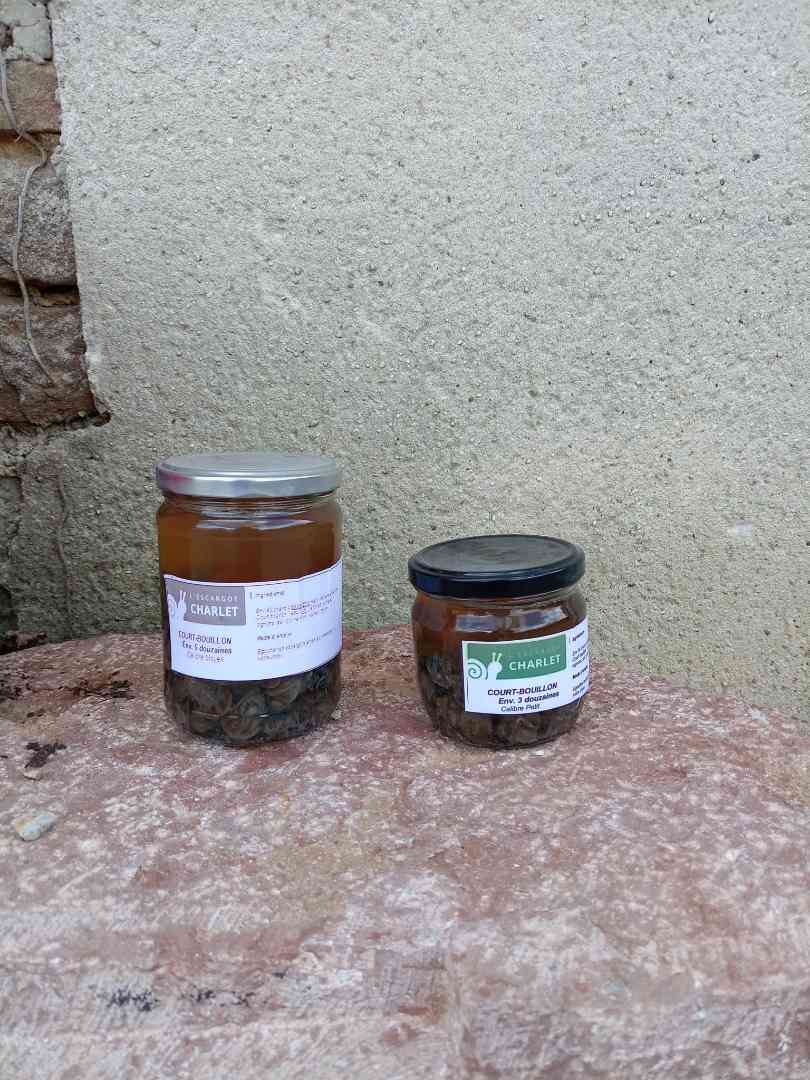
charlet snail
Model names or references
short broth verrine
Product identification
Batch Date
LOT 1529 Use-by date 11/30/2025
Packaging
verrine 580TO82 / verrine 370TO82
Start/end date of marketing
From 01/12/2023 to 15/12/2023
Storage temperature
Product to be stored at room temperature
Health mark
FR 25056058CE
Geographical sales area
Regions: Burgundy-Franche-Comté
Distributors
charlet snail

Czech Republic – BILLA Schwarzwälder Schinken – Microbial Activity

Potravinynapranyri

Illustrative photo #3

Place of inspection:
Brno ( Kounicova 966/67a, 602 00 Brno )
ID: 00685976
Food group: Meat and meat products Durable fermented products

BILLA Schwarzwälder Schinken
Category: Dangerous foods
Invalid parameter:

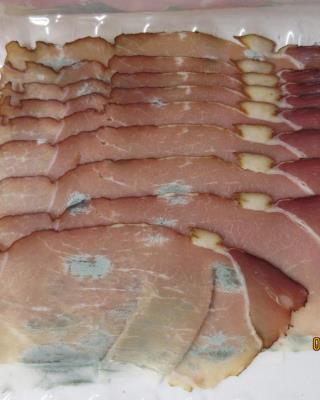
changes caused by microbial activity

Some of the packaging was found to contain mold visible to the naked eye. Food is not considered safe if it shows signs of spoilage.

Unsuitable storage temperatures of this product were not detected during the inspection. The food did not have an expiration date.

Expiration date: 28/02/2024
Packaging: 5 PP
Quantity of the product in the package: 0.1 kg
Manufacturer: MADE FOR: BILLA, spol. sro, Modletice 67, 251 01 Říčany u Prahy, Czech Republic
Date of sample collection: 2/5/2024
Reference number: 24-000152-SZPI-CZ
The sample was detected by the official control of the State Agricultural and Food Inspection.

Research – Leveraging Plasma-Activated Seawater for the Control of Human Norovirus and Bacterial Pathogens in Shellfish Depuration

MDPI

Abstract

Cold plasma is a promising alternative for water treatment owing to pathogen control and a plethora of issues in the agriculture and food sectors. Shellfish pose a serious risk to public health and are linked to large viral and bacterial outbreaks. Hence, current European regulations mandate a depuration step for shellfish on the basis of their geographical growth area. This study investigated the inactivation of relevant viral and bacterial pathogens of three plasma-activated seawaters (PASWs), and their reactive oxygen and nitrogen species (RONS) composition, as being primarily responsible for microbial inactivation. Specifically, F-specific (MS2) and somatic (φ174) bacteriophage, cultivable surrogate (murine norovirus, MNV, and Tulane virus, TV), and human norovirus (HuNoV GII.4) inactivation was determined using plaque counts and infectivity assays, including the novel human intestinal enteroid (HIE) model for HuNoV. Moreover, the kinetic decay of Escherichia coli, Salmonella spp., and Vibrio parahaemolyticus was characterized. The results showed the complete inactivation of phages (6–8 log), surrogates (5–6 log), HuNoV (6 log), and bacterial (6–7 log) pathogens within 24 h while preventing cytotoxicity effects and preserving mussel viability. Nitrites (NO2) were found to be mostly correlated with microbial decay. This research shows that PASWs are a suitable option to depurate bivalve mollusks and control the biohazard risk linked to their microbiological contamination, either viral or bacterial.

Research – Low-Temperature Plasma used to remove E. coli from hydroponically grown crops

Science Daily

A group led by researchers at Nagoya University and Meijo University in Japan has developed a disinfection technology that uses low-temperature plasma generated by electricity to cultivate environmentally friendly hydroponically grown crops. This innovative technology sterilizes the crops, promoting plant growth without the use of chemical fertilizers. Their findings appeared in Environmental Technology & Innovations.

In hydroponic agriculture, farmers cultivate plants by providing their roots with a nutrient solution.

However, the nutrient solution can become infected with pathogenic E. coli strains, contaminating the crop and leading to foodborne illnesses.

Research – A Critical Review of Risk Assessment Models for Listeria monocytogenes in Seafood

MDPI

Abstract

Invasive listeriosis, due to its severe nature in susceptible populations, has been the focus of many quantitative risk assessment (QRA) models aiming to provide a valuable guide in future risk management efforts. A review of the published QRA models of Listeria monocytogenes in seafood was performed, with the objective of appraising the effectiveness of the control strategies at different points along the food chain. It is worth noting, however, that the outcomes of a QRA model are context-specific, and influenced by the country and target population, the assumptions that are employed, and the model architecture itself. Studies containing QRA models were retrieved through a literature search using properly connected keywords on Scopus and PubMed®. All 13 QRA models that were recovered were of short scope, covering, at most, the period from the end of processing to consumption; the majority (85%) focused on smoked or gravad fish. Since the modelled pathways commenced with the packaged product, none of the QRA models addressed cross-contamination events. Many models agreed that keeping the product’s temperature at 4.0–4.5 °C leads to greater reductions in the final risk of listeriosis than reducing the shelf life by one week and that the effectiveness of both measures can be surpassed by reducing the initial occurrence of L. monocytogenes in the product (at the end of processing). It is, therefore, necessary that future QRA models for RTE seafood contain a processing module that can provide insight into intervention strategies that can retard L. monocytogenes’ growth, such as the use of bacteriocins, ad hoc starter cultures and/or organic acids, and other strategies seeking to reduce cross-contamination at the facilities, such as stringent controls for sanitation procedures. Since risk estimates were shown to be moderately driven by growth kinetic parameters, namely, the exponential growth rate, the minimum temperature for growth, and the maximum population density, further work is needed to reduce uncertainties.

Research – Outbreaks hit record high in France in 2022

Food Poison Journal

France reported a record high number of foodborne outbreaks in 2022, according to recently released data.

Notified outbreaks were at their highest since the start of surveillance in 1987 and continued the upward trend observed before the COVID-19 pandemic.

In 2022, 1,924 outbreaks were declared, affecting 16,763 people, of whom 643 went to hospital, and 17 died, said Santé publique France.

For 376 outbreaks, a pathogen could be confirmed in the food or in at least one sick person. A pathogen was suspected without microbiological confirmation for 1,260 outbreaks. For 288 outbreaks, no infectious agent was identified or suspected.

Italy – VITEL TONNE – slices of cooked adult bovine meat in tuna sauce- Microbiological Risk

Salute

Brand : Gianni Negrini srl

Name : VITEL TONNE – slices of cooked adult bovine meat in tuna sauce

Reason for reporting : Recall due to microbiological risk

Publication date : 16 February 2024

Documentation

Documentation

Research – A new Rogue-like Escherichia phage UDF157lw to control Escherichia coli O157:H7

Frontiers In.org

Introduction: Shiga toxin-producing Escherichia coli (STEC) O157:H7 is one of the notorious foodborne pathogens causing high mortality through the consumption of contaminated food items. The food safety risk from STEC pathogens could escalate when a group of bacterial cells aggregates to form a biofilm. Bacterial biofilm can diminish the effects of various antimicrobial interventions and enhance the pathogenicity of the pathogens. Therefore, there is an urgent need to have effective control measurements. Bacteriophages can kill the target bacterial cells through lytic infection, and some enzymes produced during the infection have the capability to penetrate the biofilm for mitigation compared to traditional interventions. This study aimed to characterize a new Escherichia phage vB_EcoS-UDF157lw (or UDF157lw) and determine its antimicrobial efficacy against E. coli O157:H7.