Category Archives: microbial contamination

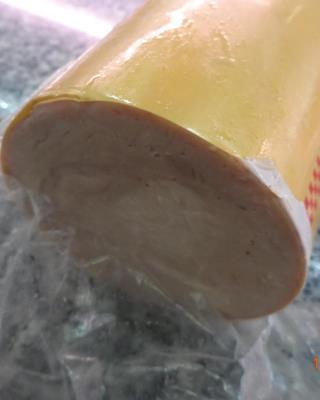
Czech Republic – HAM SALAMI – Microbial Spoilage

Potravinynapranyri

Illustrative photo #1

Place of inspection:
Tanvald ( Sports 557, 468 41 Tanvald )
ID: 64913864
Invalid parameter:

appearance
scent
changes caused by microbial activity

The food smelled of spoilage and had a slimy and sticky surface. Food is not considered safe if it shows signs of spoilage. The food had an unknown expiration date.

Packaging: intestine (open technological package)
Date of sample collection: 14/08/2024
Reference number: 24-000482-SZPI-CZ
The sample was detected by the official control of the State Agricultural and Food Inspection.

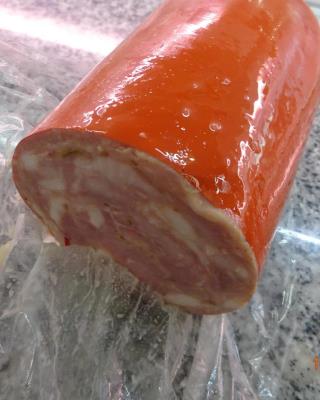
Czech Republic – Polish salami – Microbial Activity

Potravinynapranyri

Illustrative photo #1

Place of inspection:
Tanvald ( Sports 557, 468 41 Tanvald )
ID: 64913864
Invalid parameter:

appearance
scent
changes caused by microbial activity

The food smelled of spoilage and had a slimy and sticky surface. Food is not considered safe if it shows signs of spoilage. The food had an unknown expiration date.

Packaging: intestine (open technological package)
Date of sample collection: 14/08/2024
Reference number: 24-000481-SZPI-CZ
The sample was detected by the official control of the State Agricultural and Food Inspection

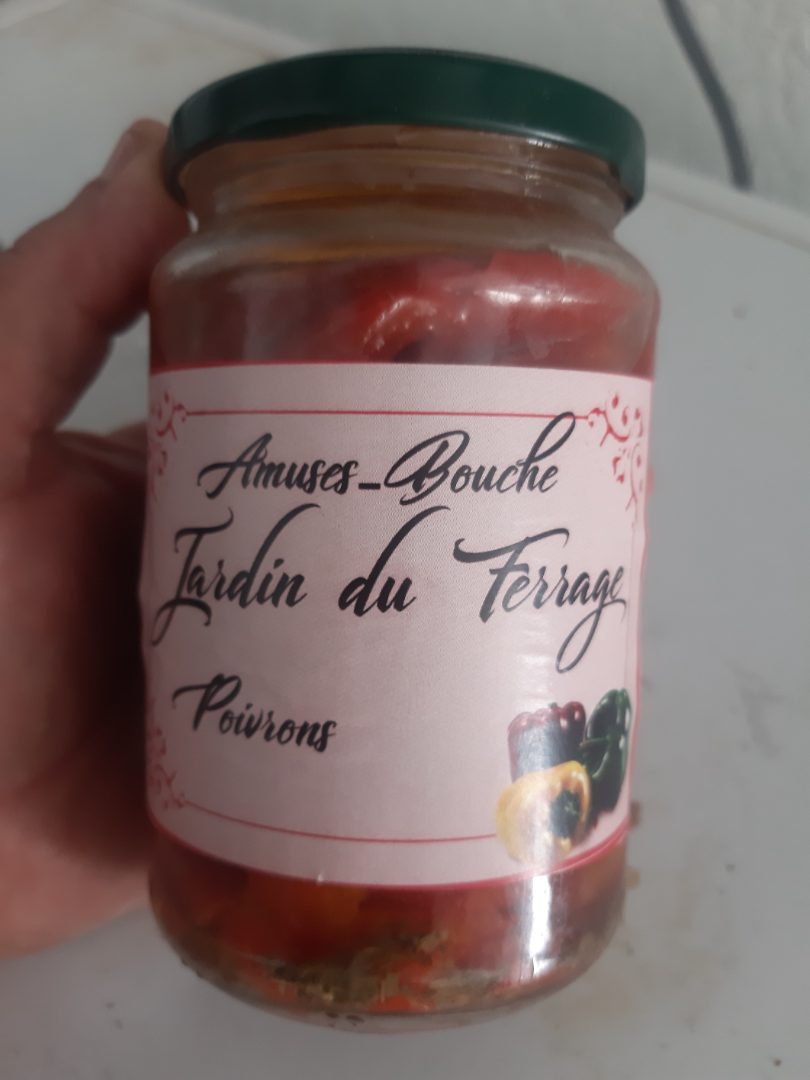
France – Pickles ratatouille tomato sauce jams – Microbiological Contamination

Gov France

Product Category
Food
Product subcategory
Soups, sauces and condiments
Product brand name
Ironworks Garden
Model names or references
350 gr jars
Product identification
Batch
Jams pickles tomato sauce ratatouille
Jams pickles tomato sauce ratatouille 12/30/2025
Packaging
350gr jars
Start/End of marketing date
From 09/13/2020 to 09/12/2024
Storage temperature
Product to be stored at room temperature
Geographic area of ​​sale
Berre the Alps 06390
Distributors
Marie’s little grocery store 1 place Bellevue Berre les Alpes

Research -Guidelines for assessing the microbiological safety of ready-to-eat foods placed on the market – 2024

UKHSA

These guidelines were completed in 2024. Since the previous edition in 2009 (1), the UK has
left the EU and this has resulted in transfer of legal responsibility from EU to UK legislation
through Statutory instruments, particularly The Food and Feed Hygiene and Safety
(Miscellaneous Amendments) (England) Regulations 2020: UK Statutory Instrument 2020
Number 1410 (2). The statutory instruments refer to EU legislation, and much remains the same or very similar such as legal obligations for food safety of food business operators and
microbiological criteria. EU references have been updated to reflect the law in force, in all new or amended guidance published since the transition.

Canada – Classic Philly Steak brand Sandwich Slices Seasoned Glazed Beef recalled due to off odour – microbial contamination

Gov Canada

Product
Sandwich Slices Seasoned Glazed Beef
Issue
Food – Microbial contamination – Non harmful (quality or spoilage)
What to do

Do not use, sell, serve or distribute the affected product.

Audience
Hotels, restaurants and institutions
Distribution
Quebec

Classic Philly Steak brand Sandwich Slices Seasoned Glazed Beef recalled due to off odour.

Research – Safeguarding produce from E. coli contamination

Phys Org

Leafy greens such as spinach and lettuce are among the most nutrient-packed foods we can eat—and some of the most prone to make us miserable, or worse. The pathogenic bacterium Escherichia coli O157:H7 causes millions of illnesses globally each year, health authorities say, including thousands of severe infections that can lead to kidney failure and even death.

The infections are often contracted from contaminated produce irrigated with water that contains animal waste runoff or grown in open fields where intruding wildlife leave feces.

To help address this challenge, a University of Maryland food safety expert is conducting microbial research to determine  for commercial growers who find evidence of wildlife faeces, or scat, in their fields.

Shirley Micallef, a professor in the Department of Plant Science and Landscape Architecture, recently concluded a series of field trials on Maryland’s Eastern Shore that examined how E. coli moves from scat to a lettuce crop following a rain event.

The results from the research, which involved other faculty and students in the College of Agriculture and Natural Resources, were recently published in the journal Frontiers in Plant Science.

Italy – FRESH EGGS CAT. ADA FARMING, FRIDGE, VARIOUS SIZE, AMADORI – Microbial Contamination

Salute

Brand : AMADORI

Name : FRESH EGGS CAT. ADA FARMING, FRIDGE, VARIOUS SIZE, AMADORI

Reason for reporting : Recall due to microbiological risk

Publication date : 2 September 2024

Documentation

Documentation

RASFF Alert – Microbial Contamination – Cheese

RASFF

Bacteriological cheese contamination from France in Monaco

Compressed Air Monitoring Webinar

IFSQN

Erin Zimmerman, the Technical Service Manager at Trace Analytics, will outline the most common sources of contaminants like particles, water, total oil, and microorganisms in compressed air systems. Learn more about the types of materials in systems that promote clean, dry air, and how to test for dangerous contamination that may impact end products.

Download the Presentation Slides and Certificate of Attendance in the files library:
Slides

Research – Microbial Diversity Across Tea Varieties and Ecological Niches: Correlating Tea Polyphenol Contents with Stress Resistance Microbial Community Differences among Different Tea Varieties and Ecological Niches

Frontiers In.org

Microorganisms exhibit intricate interconnections with tea trees plants; however, despite the well-established role of microorganisms in crop growth and development, research on microbes within the tea plant remains insufficient, particularly regarding endophytic microorganisms. In this study, we collected samples of leaves and rhizosphere soils were collected from ‘Zhuyeqi’, ‘Baojing Huangjincha#1Baojing Huangjinchayihao’, ‘Anjibaicha’Baiye#1’, and ‘Jinxuan’ varieties planted. Our analyses revealed significant variations in tea polyphenol contents among tea varieties, particularly with the ‘Zhuyeqi’ variety exhibiting higher levels of tea polyphenols (>20% contents). Microbiome studies have revealed that endophytic microbial community in tea plants exhibited higher host specificity compared to rhizospheric microbial community rhizosphere microbial community. Analyses of across-ecological niches of the microbial community associated with tea plants of the microbiota associated with tea plants revealed that soil bacteria serve as a significant reservoir for endophytic bacteria in tea plants, Balneola Bacillus may play a crucial role in shaping the bacterial community across-ecological niche within the tea plants with higher tea polyphenol levels. In the aforementioned analyses, the microbial community of ‘Zhuyeqi’ exhibited a higher degree of host specificity for leaf endophytic microorganisms, the topological structure of the co-occurrence network is also more intricate, harbouring a greater number of potential core microorganisms within its nodes. A closer examination was conducted on the microbial community. A more intricate examination was conducted on the microbial community of ‘Zhuyeqi’, further analyses of its endophytic bacteria indicated that its endophytic microbial community harbored a greater abundance of biomarkers, particularly among bacteria, and the enriched Methylobacterium and Sphingomonas in ‘Zhuyeqi’ may play distinct roles in disease resistance and drought resilience in tea plants. In summary, this study has shed light on the intricate relationships of tea plant varieties with their associated microbial communities, unveiling the importance of microorganisms and tea varieties with higher tea polyphenols, and offering valuable insights to the study of microorganisms and tea plants. this study shaded light on the intricate relationship between tea plant varieties and their associated microbial community and unveiled the importance of the tea varieties with higher tea polyphenols in microbial studies, offered valuable insights for the studies of microorganism-tea plants.