Category Archives: microbial contamination

USA – FDA Provides New Updates on Activities to Mitigate Infant Formula Supply Challenges, Abbott Nutrition Agrees to Take Corrective Actions at Facility to Produce Safe Infant Formula

FDA

The U.S. Food and Drug Administration is announcing important updates on its ongoing work to increase the supply and availability of infant formula in the U.S. On Feb. 17, the agency warned consumers not to use certain powdered infant formula products from Abbott Nutrition’s Sturgis, Michigan infant formula production facility, and Abbott voluntarily ceased production at this facility as well as initiated a voluntary recall of certain products.

Today, a proposed consent decree of permanent injunction between the FDA and Abbott Nutrition, as well as three Abbott principals, was filed in the U.S. District Court for the Western District of Michigan. Under the proposed consent decree, which is subject to court approval and entry, Abbott has agreed to take corrective actions following an FDA inspection of its Sturgis, Michigan facility. The proposed consent decree obliges Abbott to take actions that are expected to ultimately result in an increase of infant formula products, while ensuring that the company undertakes certain actions that would ensure safe powdered infant formula is produced at the facility. When the company decides to restart production at this facility, it must conform with the provisions of the proposed consent decree and meet FDA food safety standards. If contamination is identified, the company must notify the FDA, identify the source of the problem and conduct a root-cause investigation before resuming production.

“Today’s action means that Abbott Nutrition has agreed to address certain issues that the agency identified at their infant formula production facility in Michigan. The public should rest assured that the agency will do everything possible to continue ensuring that infant and other specialty formulas produced by the company meet the FDA’s safety and quality standards, which American consumers have come to expect and deserve,” said FDA Commissioner Robert M. Califf, M.D. “We recognize the hardships that parents and caregivers have faced in obtaining infant formula and the FDA is focused on boosting the availability of the country’s supply of these products, including new steps regarding importation. We are also taking a look at the supply of infant formulas developed by manufacturers across the country and around the world to determine if a reallocation of their distribution can be made to help get the right product to the right place, at the right time.” 

In the complaint, filed by the U.S. Department of Justice on behalf of the FDA, the government alleges that powdered infant formula products manufactured at Abbott Nutrition’s Sturgis facility were adulterated because they were made under insanitary conditions and in violation of current good manufacturing practice requirements. On Jan. 31, the FDA commenced a for-cause inspection and identified Cronobacter sakazakii, a bacterium that can potentially cause severe foodborne illness primarily in infants, in the facility and observed significant operational deficiencies. While the agency’s inspection was ongoing, Abbott Nutrition voluntarily recalled certain powdered infant formula products and voluntarily shut down its facility to implement corrective actions that address issues raised by the FDA.

Under the proposed consent decree, Abbott Nutrition will be required to retain an independent expert to review the Sturgis facility’s operations to ensure compliance with the law. It also includes requirements for testing products, as well as ceasing production, and promptly notifying the FDA should contamination be detected. The proposed consent decree also requires the implementation of a sanitation plan, environmental monitoring plan and employee training programs.

In the meantime, the FDA is also continuing to implement several important steps to improve the supply of infant and specialty formula products in the U.S. The agency has been in ongoing discussions with all infant formula manufacturers who are reporting that they are all producing at an expanded capacity. In fact, Gerber has reported that it increased the amount of their infant formula available to consumers by approximately 50% in March and April and Reckitt is supplying more than 30% more product year to date.

This increased production is now evident in increased infant formula sales. According to data from Information Resources Inc. (IRI), national infant formula sales by volume for the month of April were up more than 13% compared to the month prior to the recall and national infant formula sales by unit for the month of April are also up by more than 5% compared to the month prior to the recall.

While some data suppliers have reported lower in-stock rates, the most complete data sets available from IRI are showing nearly 80% in-stock rates at the week ending May 8. This means that if a local supermarket normally carries 50 different infant formula products, an 80% in-stock rate would translate to 40 of those 50 product types being available.

What the sales volume data and in-stock rates tell us is that while there is more product being sold, it may be of less variety than prior to the recall. With increased production by other manufacturers, forthcoming import actions and the potential for Abbott Nutrition’s Sturgis facility to resume production in the near-term, the FDA expects supply to continue to improve over the next couple of months. The FDA recognizes that there is variation in availability throughout the country and is working with federal partners to better understand where shortages of certain formulas exist at a more local level, as well as explore further ways to alleviate more immediate and geographical supply challenges through better distribution of products.

Increased sales are a good indicator of formula available to the general population of infants, but the agency understands that availability of specialty products such as amino acid-based specialty formulas and metabolic products continues to be of concern. The FDA has already taken steps with Abbott Nutrition to make product available to those with life-threatening conditions on a case-by-case basis and will continue its efforts to make these products even more readily available as the agency works with the company to implement provisions of the proposed consent decree. In addition, these products have been an area of focus for discussions with other manufacturers that make comparable products. As a result of the recall and work with the FDA, other manufacturers have increased production of comparable product lines and in some cases expedited the importation of these products where they exist.

The agency is also looking at ways to mitigate future, potential supply issues including building on work to date with its 21 Forward supply chain continuity system. It has made requests for new authorities from Congress to allow the FDA to regularly collect important supply data from the broader infant formula industry and is continuing to implement several important steps to improve supply.

The FDA is committed to transparently communicating updates on this dynamic situation. The agency will continue to dedicate all available resources to help ensure that infant formula products remain safe and available for use in the U.S. and will keep the public informed of progress updates.

Related Information

###

The FDA, an agency within the U.S. Department of Health and Human Services, protects the public health by assuring the safety, effectiveness, and security of human and veterinary drugs, vaccines and other biological products for human use, and medical devices. The agency also is responsible for the safety and security of our nation’s food supply, cosmetics, dietary supplements, products that give off electronic radiation, and for regulating tobacco products.

Research – An Exploration of Listeria monocytogenes, Its Influence on the UK Food Industry and Future Public Health Strategies

MDPI

Listeria monocytogenes is a Gram-positive intracellular pathogen that can cause listeriosis, an invasive disease affecting pregnant women, neonates, the elderly, and immunocompromised individuals. Principally foodborne, the pathogen is transmitted typically through contaminated foods. As a result, food manufacturers exert considerable efforts to eliminate L. monocytogenes from foodstuffs and the environment through food processing and disinfection. However, L. monocytogenes demonstrates a range of environmental stress tolerances, resulting in persistent colonies that act as reservoirs for the reintroduction of L. monocytogenes to food contact surfaces and food. Novel technologies for the rapid detection of L. monocytogenes and disinfection of food manufacturing industries have been developed to overcome these obstacles to minimise the risk of outbreaks and sporadic cases of listeriosis. This review is aimed at exploring L. monocytogenes in the UK, providing a summary of outbreaks, current routine microbiological testing and the increasing awareness of biocide tolerances. Recommendations for future research in the UK are made, pertaining to expanding the understanding of L. monocytogenes dissemination in the UK food industry and the continuation of novel technological developments for disinfection of food and the food manufacturing environment View Full-Text

EU – Update: Multi-country Salmonella outbreak linked to chocolate products

EFSA

EFSA and ECDC have updated their assessment, published in April 2022, of the multi-country outbreak of monophasic Salmonella Typhimurium infections linked to chocolate products by a company in its Belgian plant.

Cases, which have now started to decrease, stood at 324 (including both probable and confirmed) in the EU/EEA and the UK, as of 18 May 2022. They have been reported in twelve EU/EEA countries (Austria, Belgium, Denmark, France, Germany, Ireland, Italy, Luxembourg, the Netherlands, Norway, Spain and Sweden), the UK, Switzerland, Canada, and USA. The first patient was reported in the UK on 7 January, with a sampling date of 21 December 2021.

On 8 April 2022, the food safety authority in Belgium stopped the production at the facility. Withdrawals and recalls have been implemented in the countries where chocolate products manufactured at the Belgian plant were distributed. Public warnings have been issued by the competent national authorities in different countries.

Afghanistan – 42 Afghans Fall Victim To Food Poisoning

Ahmedabad Mirror

Forty-two people have fallen ill from mass food poisoning in Afghanistan’s Takhar province, police said on Monday.

The incident occurred during a wedding ceremony in Takhan Abad village of Chah Hab district on Sunday night, a provincial police official told Xinhua news agency.

Among the affected were also the bride and groom, the official said.

The affected people were transported to the district hospital where a number of the patients received treatment in an intensive care unit.

The official noted that three people were arrested following the case and an investigation was underway into the food poisoning.

China – Outbreak Reports: Extensively Drug-Resistant (XDR) Salmonella Typhi Outbreak by Waterborne Infection — Beijing Municipality, China, January–February 2022

China CDC

kswfoodworld Salmonella

On February 6, 2022, an unusual infection event was noticed by hospitals and Beijing CDC: 4 clinically diagnosed typhoid cases (3 in Beijing, 1 in Chifeng City, Inner Mongolia Autonomous Region) were reported to China’s Infectious Disease Information System. The detailed epidemiological investigation was initiated by Changping District CDC. This outbreak involved 23 cases in an apartment in Changping District in Beijing and was caused by extensively drug-resistant (XDR) Salmonella Typhi (S. Typhi) through polluted water supply, which was confirmed by laboratory detection.

Based on the epidemiological curve by date of onset and spatial distribution of cases, a point outbreak was suggested. Considering the possibility of foodborne infection, we checked the dietary history of these cases for 14 days prior to onset, but no evidence of common food or dining together was found to support this. We did not conduct case-control studies, but we received information that most cases keep good hygiene in water usage: they did not drink raw water, but they used tap water to wash vegetables and brush teeth. During this survey, the residents reported that the household water had an odor for about half a month in late December 2021, and some reported that there was disruption of water supply and transient muddy water in mid-January 2022. Herein, the water supply in this apartment was further investigated. The domestic water was supplied from a self-provided well in the village, which was piped to six apartments including the apartment where the cases lived in. Water was pumped from a nearby branch well to storage tank on the roof of the apartment for 24 hours a day to ensure adequate water supply, and then distributed to each room. In field investigation, we learned that sewage pipeline reconstruction work was carried out in December 2021 near the apartment, and the sewage pipeline was just about 1 meter away from the branch well which supplied water for the apartment.

In summary, this was the first report of waterborne outbreak caused by XDR S. Typhi in China. Whole-genome comparison and drug resistance analysis indicated that it belonged to H58 lineage 4.3.1.1.P1 originating from Pakistan, which had the capacity to invade and spread globally by travel-associated international transmission, with the potential to replace native strains (4). However, it was unclear how this novel clone strain entered China and was associated with this outbreak, due to the lack of detailed historical epidemiological data. Importantly, in a modern city such as Beijing, especially in suburban or rural areas where the municipal water supply does not reach, there is still a potential risk of typhoid fever outbreak. So, it is urgent to appeal to relevant governmental authorities to provide safe and hygienic potable water, strengthen supervision on water quality, and educate the public to keep good hygiene habits. In addition, with narrow treatment options for typhoid fever, XDR typhoid itself should also attract great attention, which may lead to treatment failure, prolonged hospitalization, as well as recurrent and extensive transmission of the disease. Therefore, it is necessary to track the source of the XDR strains and to strengthen monitoring their spread through laboratory and extensive epidemiological investigations in the future.

India – Telangana: Now report food safety and quality issues through social media

Telangana Today

Hyderabad: To address grievances related to food poisoning, lack of quality and safety in food products and ingredients, the Telangana government on Sunday has urged people to call (040-21111111) or reach out to food safety officials through micro-blogging social media platform Twitter (@AFCGHMC) for quick redressal.

State Health Minister, T Harish Rao, in a review meeting here on Sunday with officials from Commissioner of Food Safety, Institute of Preventive Medicine (IPM) and food safety inspectors from all the districts and senior health officials, assured people that quick food safety checks will be conducted by food safety officials after receiving complaints through the call centre or the Twitter handle @AFCGHMC.

Ghana – Marwako food poisoning case: Competitor sabotage is possible – PRO

Myjoyonline

The Public Relations officer of Marwako Fast Food Limited has said that his outfit is investigating the incidence of food poisoning that was recorded in some of its branches.

Mr. Mohammed Amin Lamptey said Management is considering all possibilities in the quest to ascertain the cause of the unfortunate happening.

Marwako, a fast-food eatery in Accra, has been trending on Twitter for the past three days after several Twitter users complained of being served contaminated food, resulting in food poisoning.

The complaints were triggered by one Edward Elohim, who posted about his illness after eating at Marwako last Saturday.

Israel – Strauss warns of profit impact due to Salmonella incident

Food Safety News

Strauss Group has estimated the impact of Salmonella illnesses and related recalls to be about U.S. $33 million on first quarter financial results.

The company said net profit for the first quarter of 2022 is expected to be hit by Israeli New Shekel 115 to 125 million ($33.6 to $36.5 million). The financial statement as of March 31 is expected to be published around May 25.

During an inspection of Strauss’s factory in Nof Hagalil, Israel in April, the Ministry of Health found “significant” failings in the company’s protocols. The agency has suspended the plant’s approval for three months or until issues detected during the visit have been rectified.

Elite branded items such as cakes, wafers, energy grain snacks, energy chocolate rice cakes, chewing gum and toffee candies were sent to the United States, Canada, Australia, New Zealand, Austria, Brazil, Cyprus, Estonia, France, Germany, Hungary, Italy, Luxembourg, Netherlands, Poland, Romania, Russia, South Africa, Spain, Sweden and the United Kingdom.

USA – CDC closes infant formula outbreak investigation; FDA continues work to find source; USDA works to resolve shortages – Cronobacter

Food Safety News

The CDC has declared that an outbreak of cronobacter infections among babies is over, but the Food and Drug Administration is continuing its investigation into the maker of the implicated infant formula.

The FDA received four complaints of cronobacter infections in infants beginning on Sept. 20, 2021, and running through Jan. 11, 2022. Two of the infected babies died. Parents of all four infants reported having fed their children formula produced by Abbott Nutrition before they became ill.

The Centers for Disease Control and Prevention worked with the FDA and state health departments to investigate the outbreak. The FDA began an investigation into Abbott’s Sturgis, MI, production facility and the plant remains closed while the investigation continues. Although five strains of cronobacter have been found in the production plant, none of them is an exact match for the patient samples.

The situation led to the recall of certain Similac products as well as products sold under the Alimentum and EleCare brands.

Quebec – Notice not to consume products packaged in glass jars and sold by the company Petits pots et gourmandises (Le Locker Distillerie inc.)

Quebec

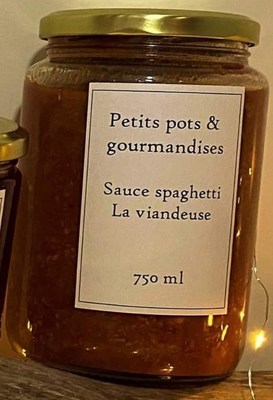
"LA MEAT SPAGHETTI SAUCE" (CNW Group/Ministry of Agriculture, Fisheries and Food)

he Ministry of Agriculture, Fisheries and Food (MAPAQ), in collaboration with the company Petits pots et gourmandises (Le Locker Distillerie inc.) located at 9302, boulevard Sainte-Anne in Sainte-Anne -de-Beaupré, warns the population not to consume the products indicated in the table below, because they have not been packaged in such a way as to ensure their safety.

Product name

Format

Affected batch

“THE MEATY SPAGHETTI SAUCE”

750ml

Units sold until May 12, 2022

” BUTTER CHICKEN “

” VEGETABLE SOUP “

The products that are the subject of this warning were offered for sale until May 12, 2022 at the establishment designated above as well as at the Fromagerie Le Mouton Blanc, located at 176, route 230 Ouest in La Pocatière, and at the Fromagerie Boulangerie Médard, located at 10, rue De Quen in Saint-Gédéon. They were packaged in glass jars with a gold lid and sold at room temperature. The label of the products includes, in addition to their name, the mention “Small pots and delicacies”.

The operator is voluntarily recalling the products in question. It has agreed with MAPAQ to issue this warning as a precautionary measure. Also, people who have any of these products in their possession are advised not to consume it. They must return it to the establishment where they bought it or throw it away. Even if the affected products show no signs of tampering or suspicious odors, their consumption may represent a health risk. No case of illness associated with the consumption of these foods has been reported to MAPAQ to date.