Category Archives: Legionnaires’ disease

Research – Environmental Management of Legionella in Domestic Water Systems: Consolidated and Innovative Approaches for Disinfection Methods and Risk Assessment

MDPI

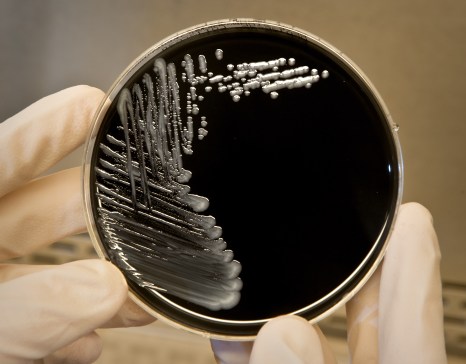
Legionella_Plate_01

Legionella is able to remain in water as free-living planktonic bacteria or to grow within biofilms that adhere to the pipes. It is also able to enter amoebas or to switch into a viable but not culturable (VBNC) state, which contributes to its resistance to harsh conditions and hinders its detection in water. Factors regulating Legionella growth, such as environmental conditions, type and concentration of available organic and inorganic nutrients, presence of protozoa, spatial location of microorganisms, metal plumbing components, and associated corrosion products are important for Legionella survival and growth. Finally, water treatment and distribution conditions may affect each of these factors. A deeper comprehension of Legionella interactions in water distribution systems with the environmental conditions is needed for better control of the colonization. To this purpose, the implementation of water management plans is the main prevention measure against Legionella. A water management program requires coordination among building managers, health care providers, and Public Health professionals. The review reports a comprehensive view of the state of the art and the promising perspectives of both monitoring and disinfection methods against Legionella in water, focusing on the main current challenges concerning the Public Health sector.

USA – NJDOH Investigates Legionnaires’ Cluster in Union County

NBC

Legionella A

The New Jersey Department of Health (NJDOH) is investigating a cluster of Legionnaires’ disease — a bacteria-triggered form of pneumonia — in Union County in which at least 14 cases, including one death, were confirmed.

The cases were reported to the state’s Department of Health between Feb. 3 and Feb. 26, according to officials.

Health officials are working with the local health departments in Union County to investigate this cluster. The individual who died was a male resident of Union County in his late 60s.

USA – Ongoing lead, Legionella water issues in schools

Downtown Publications

CDC legionella

As students return to full in-person instruction, many Birmingham Public Schools continue to be plagued by locations where legionella has been found, as well as lead and copper, with remediation continuing in all affected buildings.

Reports have come in from Greenfield, Quarton, Beverly, Pierce, Harlan and West Maple elementary schools, Berkshire Middle School, and Seaholm and Grove high schools, indicating that while there have been improvements in the water quality at the schools since they were last tested last fall, continued remediation is still needed to eliminate all legionella from school plumbing. There have not been updates Derby Middle Schools or Birmingham Covington School.

According to communications from the school, “BPS is focused on the remediation of legionella while providing a lead-free source of drinking water for all staff and students. BPS will shift to cold water flushes to reduce copper and lead in the system in the coming weeks. All individuals should use water from home or bottled water until water filter stations are enabled again.”

At Groves, while legionella was found at more than 220 locations at the school in the first round of testing, following remediation and retesting, there are currently 79 locations were it was found.

Australia – Legionnaires’ disease cases up in Sydney

Outbreak News Today

CDC legionella

NSW Health is reporting an increase in Legionnaires’ disease cases in the Greater Sydney area in December and January.

Seventeen cases of Legionnaires’ disease were notified across Sydney and in the Illawarra in January.

Health officials has not identified a specific source to date and reminds building owners to ensure cooling towers are properly maintained.

“Public Health Unit staff investigate each case of Legionnaire’s disease and no specific source has been identified,” Director of Health Protection Dr Richard Broome said.

Research – Legionellosis Caused by Non-Legionella pneumophila Species, with a Focus on Legionella longbeachae

MDPI

CDC legionella

 Although known as causes of community-acquired pneumonia and Pontiac fever, the global burden of infection caused by Legionella species other than Legionella pneumophila is under-recognised. Non-L. pneumophila legionellae have a worldwide distribution, although common testing strategies for legionellosis favour detection of L. pneumophila over other Legionella species, leading to an inherent diagnostic bias and under-detection of cases. When systematically tested for in Australia and New Zealand, L. longbeachae was shown to be a leading cause of community-acquired pneumonia. Exposure to potting soils and compost is a particular risk for infection from L. longbeachae, and L. longbeachae may be better adapted to soil and composting plant material than other Legionella species. It is possible that the high rate of L. longbeachae reported in Australia and New Zealand is related to the composition of commercial potting soils which, unlike European products, contain pine bark and sawdust. Genetic studies have demonstrated that the Legionella genomes are highly plastic, with areas of the chromosome showing high levels of recombination as well as horizontal gene transfer both within and between species via plasmids. This, combined with various secretion systems and extensive effector repertoires that enable the bacterium to hijack host cell functions and resources, is instrumental in shaping its pathogenesis, survival and growth. Prevention of legionellosis is hampered by surveillance systems that are compromised by ascertainment bias, which limits commitment to an effective public health response. Current prevention strategies in Australia and New Zealand are directed at individual gardeners who use potting soils and compost. This consists of advice to avoid aerosols generated by the use of potting soils and use masks and gloves, but there is little evidence that this is effective. There is a need to better understand the epidemiology of L. longbeachae and other Legionella species in order to develop effective treatment and preventative strategies globally.

Portugal – Legionnaires’ disease outbreak in northern Portugal declared over

Outbreak News Today

CDC legionella

In a follow-up on the Legionnaires’ disease outbreak in the North Region of Portugal, health authorities have declared the outbreak over, according to the European Centre for Disease Prevention and Control (ECDC).

The outbreak in Póvoa de Varzim, Vila do Conde and Matosinhos counties, which began in late October, resulted in a total of 88 cases, including 15 deaths.

The source of exposure has not been identified.

Legionella bacteria occur naturally in the environment. Water containing Legionella can be aerosolized through cooling towers, showers, hot tubs, and decorative fountains, and can cause Legionnaire’s disease, a serious lung infection (pneumonia) when inhaled.

USA – Legionnaires’ disease outbreak in Portland: 1 dead; 4 hospitalised

Outbreak News Today

A bacterial pneumonia outbreak, known as Legionnaires’ disease has hit a Portland-based senior housing complex, leaving 1 dead and 4 hospitalized as more than 100 residents were evacuated from the housing complex.

A report released by the Multnomah County Health Department said that the outbreak is caused by contaminated water that has entered the Rosemont Court senior living complex. Health authorities further say that people that have increased risk, including senior members of the community, have a greater risk for Legionnaires disease, albeit being not contagious in nature.

USA – Estimate of Burden and Direct Healthcare Cost of Infectious Waterborne Disease in the United States

CDC

Provision of safe drinking water in the United States is a great public health achievement. However, new waterborne disease challenges have emerged (e.g., aging infrastructure, chlorine-tolerant and biofilm-related pathogens, increased recreational water use). Comprehensive estimates of the health burden for all water exposure routes (ingestion, contact, inhalation) and sources (drinking, recreational, environmental) are needed. We estimated total illnesses, emergency department (ED) visits, hospitalizations, deaths, and direct healthcare costs for 17 waterborne infectious diseases. About 7.15 million waterborne illnesses occur annually (95% credible interval [CrI] 3.88 million–12.0 million), results in 601,000 ED visits (95% CrI 364,000–866,000), 118,000 hospitalizations (95% CrI 86,800–150,000), and 6,630 deaths (95% CrI 4,520–8,870) and incurring US $3.33 billion (95% CrI 1.37 billion–8.77 billion) in direct healthcare costs. Otitis externa and norovirus infection were the most common illnesses. Most hospitalizations and deaths were caused by biofilm-associated pathogens (nontuberculous mycobacteria, PseudomonasLegionella), costing US $2.39 billion annually.

At the beginning of the 20th century, diseases commonly transmitted by water, such as cholera and typhoid, were major causes of death in the United States (1). Reliable provision of treated, safe drinking water dramatically reduced the burden of these diseases and has been recognized as one of the greatest public health achievements of the 20th century (2). Despite this achievement, waterborne disease in the United States persists (35).

In the United States, outbreaks associated with large public drinking water systems have sharply declined in the past 40 years (3,6), likely the result of improvements in regulation and operation. However, transmission of disease via drinking water systems still occurs, often attributable to aging infrastructure, operational challenges, and the private or unregulated water systems (e.g., private wells) that serve an estimated 43 million persons (7). At the same time, the complexity and scope of water use has increased; drinking, sanitation, hygiene, cooling, and heating needs are supported by 6 million miles of plumbing inside US buildings (i.e., premise plumbing) (8,9). Premise plumbing water quality can be compromised by long water residency times, reduced disinfectant levels, and inadequate hot water temperatures, creating environments where pathogens (e.g., nontuberculous mycobacteria [NTM], Pseudomonas, and Legionella) can amplify in biofilms (10). People can be exposed to these pathogens through contact, ingestion, or inhalation of aerosols (e.g., from showerheads, building cooling towers, or decorative fountains).

As leisure time has increased, swimming pools, waterparks, water playgrounds, and hot tubs have proliferated (5). These venues rely largely on chlorination as the major barrier against disease transmission. Cryptosporidium has emerged as the major cause of outbreaks associated with treated aquatic venues because it is extremely chlorine resistant and has a low infectious dose (5,11,12). Warmer oceans have led to Vibrio-associated wound infections farther north than previously documented (13).

Estimates of the overall burden of foodborne disease in the United States, including both known and unknown agents, have been useful in directing prevention activities and setting public health goals (14,15). Quantifying the burden of infectious waterborne disease in the United States would also be beneficial.

Previous studies have attempted to estimate the burden of gastrointestinal illness (16,17) or all illness associated with drinking water (18) and untreated recreational water (19) in the United States, but the burden of disease from all water sources (drinking, recreational, environmental) and exposure routes (ingestion, contact, inhalation) has not been estimated. We present an estimate of the burden of waterborne disease in the United States that includes gastrointestinal, respiratory, and systemic disease; accounts for underdiagnosis; and includes all water sources and exposure routes.

Portugal – Portugal Legionnaires’ disease outbreak sickens dozens, kills 9

Outbreak News Today

CDC legionella

Public health authorities in Portugal are reporting a Legionnaires’ disease outbreak in the Greater Porto region of the northern region of the country.

Three counties have been affected–Póvoa de Varzim, Vila do Conde and Matosinhos.

The number of legionella cases diagnosed since the outbreak began on Oct. 29 is 85, including nine deaths due to complications associated with the disease.

According to the ECDC, an epidemiological investigation is ongoing, including clinical and environmental assessment and sampling for subsequent subtyping and isolate comparison. Two cooling towers have been closed.

USA – CDC Closes Atlanta Buildings After Finding Legionella

Outbreak News Today

CDC legionella

Image CDC

The CDC closed several buildings it leases in Atlanta after finding legionella bacteria in the plumbing. “During the recent closures at our leased space in Atlanta, working through the General Services Administration (GSA), CDC directed the landlord to take protective actions,” CDC told CNN.

“Despite their best efforts, CDC has been notified that Legionella, which can cause Legionnaires’ Disease, is present in a cooling tower as well as in some water sources in the buildings. Out of an abundance of caution, we have closed these buildings until successful remediation is complete.”