Category Archives: Hand Washing

Research – COVID-19 expert explains what soap does to SARS-CoV-2 virus

Mayo Clinic

Your hand has oils on it, and viruses stick to that oil. They have an electrostatic charge to them. But when you’re washing with soap, soap has things that decrease surface tension in them so you are physically rubbing by friction and washing away that virus. It is the most effective thing we know to do. That’s why surgeons, for example, scrub their hands so very carefully before they go into an OR. It works, and it works really well.

Research – Preventative care: Increasing Hepatitis A vaccinations among food service workers

Food Safety News 

Thesis: Over the past three years, there has been an ongoing outbreak of Hepatitis A in the United States although it is the only foodborne disease that has a vaccination. Mandating vaccinations to food service workers is essential to reduce the spread of Hepatitis A, especially since outbreaks involving food handlers are in the public eye. 

Background & Analysis: It is estimated that in the United States alone there are 48 million cases of foodborne illness annually. Out of these 48 million, 128,000 are hospitalized and 3,000 people die. The CDC recommends to the general public that the best way to prevent Hepatitis A is through vaccination, but not have explicitly stated that food service workers should be administered the vaccination. While food service workers are not traditionally designated as having an increased risk of Hepatitis A transmission, they are not free from risk. Additionally, 24% of Hepatitis A cases are asymptomatic which means a food-handler carrying the virus can unknowingly transmit the disease to a consumer. Historically, when an outbreak occurs local health departments start administering the vaccine for free or at a reduced cost. The funding from these vaccinations is through taxpayer dollars. 

Research – Microbial risks in food franchise: A step forward in establishing ideal cleaning and disinfection practices in SSOPs

Wiley Online

Abstract

Microbial contamination in coffee specialty franchises using uniform processing procedures in Korea was examined. Cleaning or disinfection practices for sanitation standard operating procedures (SSOPs) are proposed. For each processing step, food materials and associated processing environments were tested for heterotrophic bacteria (HB), Escherichia coli, coliform, and Staphylococcus aureus. Existing SSOP cleaning or disinfection practices were also evaluated. Ice‐making procedures revealed coliform and HB contamination in all coffee houses, with high HB contamination on several supplementary food materials and associated food utensils. Microbial loads in food materials or final products were high on structures and materials that are difficult to clean and disinfect. Staphylococcus species contaminated food machinery and utensils directly contacted by food handlers. Based on our analysis of cleaning and disinfection practices in each franchise’s SSOPs, current practices should be complemented to ensure food safety. Our results provide a foundation for developing sanitation standards optimized for coffee specialty franchises.

Practical applications

Franchise brands operating collectively require well‐established sanitation practices such as sanitation standard operating procedures (SSOPs) to ensure food safety and quality. Microbiological studies were performed to evaluate coffee processing procedures and environments at specialty franchise brands. Hygiene practices in SSOPs were simultaneously evaluated to examine cleaning and disinfection procedures. In several processing procedures and associated processing environments, coliform and Staphylococcus aureus were detected on food handlers’ hands, gloves, and hand‐accessible areas of food utensils or machinery simultaneously. Coliforms were also detected in edible ice cubes and on related utensils or machinery for ice production or storage (ice‐making machine, ice‐bin). Heterotrophic bacteria (HB) were detected at high densities in sugar syrup (under‐using) and edible ice (during production and storage). Particularly, HB concentrations increased during processing. Thus, microbial contamination is increased by various factors during processing, particularly inappropriate cleaning or disinfection of utensils or machinery. Evaluation of cleaning and disinfection practices for each franchise’s SSOPs revealed that the cleaning and disinfection practices for machinery or utensils accessible to worker’s hands must be supplemented. Establishments serving a wide variety of coffee beverages may require complex and different processing procedures. Because utensils and machinery affecting the microbial load of the final product can vary, the areas and targets of cleaning and disinfection should be expanded. Second, the structure or material characteristics of food utensils or machinery that are difficult to clean and disinfect can lead to microbial growth. Cleaning or disinfection of food utensils or machinery should be considered in SSOPs. Purchasing management (as a major category of SSOPs for food safety) should be expanded to utensils or machinery in addition to food materials. Furthermore, cleaning and disinfection targets aimed at under‐used utensils or facilities must be established in SSOPs.

Global Handwashing Day – Yesterday?

CDChandwashing

Celebrate Global Handwashing Day to promote handwashing with soap in your community and around the world.

Established by the Global Handwashing Partnership in 2008, Global Handwashing Day is celebrated each year on October 15 as a way to increase awareness and understanding of the benefits of handwashing with soap. Global Handwashing Day is an opportunity to get involved in creative ways to encourage people to wash their hands with soap at critical times.

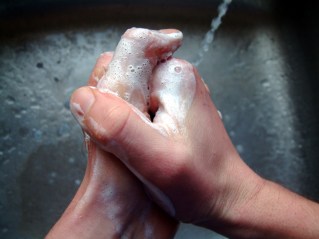
Handwashing(https://www.cdc.gov/handwashing/index.html) is one of the most important steps we can take to avoid getting sick and spreading germs to others. Many germs that can make people sick are spread by not washing hands with soap and clean, running water. Handwashing is especially important during key times(https://www.cdc.gov/handwashing/when-how-handwashing.html), such as after using the bathroom or before preparing food.

CDC – Handwashing Posters

CDC Handwashing Posters

Some examples and there are links to many others.

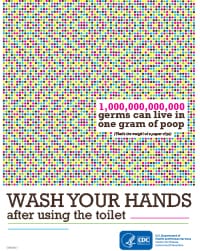
superhero poster featuring a boy and girl with african-american features        One trillion germs - english    Poster featuring a princess with african american features


Keep Calm and Wash Your Hands (english version)   Keep Calm and Wash Your Hands (spanish version)         Keep Calm and Wash Your Hands (chinese version)

A nine-panel photo storyboard poster that depicts the step-by-step progression of a foodborne illness outbreak. A food employee is experiencing vomiting at work.  


Information – Blame the consumer, cruise edition

Barf Blog

The simple fact is that if people washed their hands, there would be no norovirus,’ that’s what Royal Caribbean CEO Michael Bayley said in an  interview in Business Insider published this week.

Nope. It’s not that simple. Handwashing is a factor, but so is showing up ill, so is how surfaces are cleaned and sanitized (and with what compound). Norovirus isn’t just a handwashing or cruise patron problem. And if it was, and  was so simple we wouldn’t see 20 million + illness annually in the U.S.


Research – Retail Packed Chicken and Microorganisms

Food Safety News imagesCAYZ5I84

It won’t all harm you, but some of it might. That’s the caveat in the latest Consumer Reports analysis of tests on raw chicken breasts purchased at retailers nationwide. The analysis found that 97 percent of tested chicken breast samples “harbored bacteria that could make you sick.”

While it is true that the detected bacteria could cause infections if improperly handled, a smaller proportion has the potential to cause foodborne illness in the classic sense.

Research – MRSA Treatment

News NortheasternStaphylococcus

Recent work from Uni­ver­sity Dis­tin­guished Pro­fessor of Biology Kim Lewis promises to over­come one of the leading public health threats of our time. In a ground­breaking study pub­lished Wednesday in the journal Nature, Lewis’ team presents a novel approach to treat and elim­i­nate methi­cillin resis­tant staphy­lo­coccus aureus, or MRSA, a potent bac­terium whose resis­tance to antibi­otics has kept it one step ahead of researchers. That is, until now.

Bac­teria such as MRSA have evolved to actively resist cer­tain antibi­otics, a fact that has gen­er­ated sig­nif­i­cant interest among the sci­en­tific and med­ical com­mu­ni­ties. But Lewis, Director of Northeastern’s Antimi­cro­bial Dis­covery Center, sus­pected that a dif­ferent adap­tive func­tion of bac­teria might be the true cul­prit in making these infec­tions so devastating. –

USA – Shigella and Legionella Outbreaks

Shigella Blog

Health officials at the Florida Department of Health in Broward County are advising parents, schools and daycare centers to take precautionary action to prevent the spread of Shigellosis. Shigellosis is a highly contagious form of diarrhea caused by Shigella bacteria. Shigella can spread through person to person contact and may cause severe diarrhea, fever and stomach cramps. Parents of children, or anyone with symptoms of Shigellosis should contact their healthcare provider for diagnosis and treatment.

Food Posioning Blog

October 23, 2013  by Leave a Comment

To date, one person has died and several others have been sickened in an outbreak of Legionnaires’ disease linked to Glenwood Nursing Home in Florence, Alabama. Legionnaires’ is a form of pneumonia caused by inhaling water mist containing Legionella bacteria.

All confirmed and suspected cases have been either residents or visitors to the nursing home. The one person who has died in the outbreak was a woman who visited the facility with two family members. She later developed respiratory symptoms and was hospitalized. Tests confirmed Legionnaires disease (Legionella pneumonia). The other family members were also sickened.

Information – Managing Norovirus in Childcare Facilities

ECDCecdclogo

Norovirus, which has epidemiological characteristics that promote a high rate of infectivity and transmission, remains one of the most common causes of childhood gastroenteritis. A new technical report from ECDC provides guidance on steps that can be taken to better prevent and control outbreaks.

The Prevention of Norovirus Infection in Schools and Childcare Facilities report offers guidance to EU Member States regarding the efficacy of different ways to manage the spread of the virus. It also reviews findings related to the prevention and control of outbreaks of gastroenteritis in schools and childcare facilities.

Much of the guidance has been synthesised from numerous other international guideline documents, which have been formed by expert consensus. There is limited primary research on the efficacy of interventions for the prevention and control of norovirus.

Primary prevention measures include effective hand hygiene, frequent cleaning of childcare environments, especially toilet facilities, and adherence to robust food hygiene standards. The effectiveness of each measure is discussed more fully in the report.

This technical report was open to public consultation between 12 July and 31 August 2012. The responses to the consultation were taken into account and the report revised accordingly.

REPORT LINK