Category Archives: food safety training

Hong Kong – The Centre for Food Safety (CFS) holds a series of food safety exhibitions across the territory every year. 

CFS

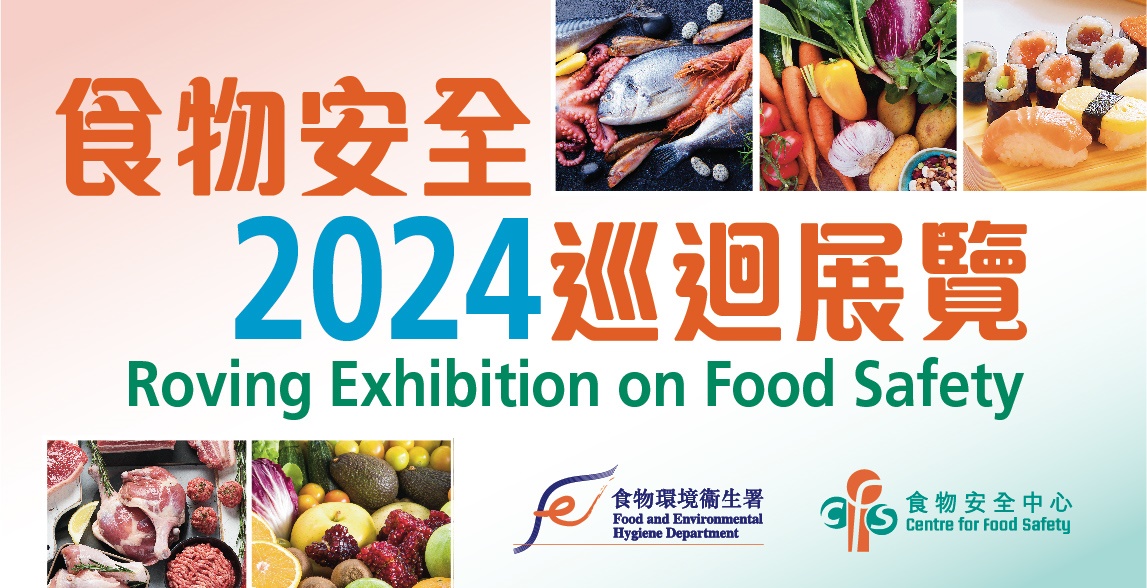
Roving Exhibitions on Food Safety in 2024

The Centre for Food Safety (CFS) holds a series of exhibitions across the territory every year.  Panels covering different topics such as food safety and nutrition are shown to enhance public knowledge on how to make safe and suitable food choices.

Four roving exhibitions will be held in the following venues in April 2024. Details are as follows:

Date Time Venue Theme
10/4 10am – 4pm Causeway Bay Market Prevention of Cross-contamination; Take Notice of Eating Scallops
17/4 10am – 4pm Smithfield Market Prevention of Cross-contamination; Trans Fats
19/4 10am – 4pm Tsuen Wan Government Offices Food Safety Advice for Pregnant Women; Enhance Food Traceability, Strengthen Food Safety
24/4 10am – 4pm Sai Wan Ho Market Control of Food Temperature; Genetically Modified Food

New arrangements of the exhibitions will be announced regularly and members of the public are welcome to visit the CFS website.  For any enquiries, please contact our Communication Resource Unit at 2381 6096.

UK survey shows gap between food hygiene knowledge and practises.

Food Safety News

I would like to have said that I was surprised but I am not.

A survey on habits and beliefs around food hygiene has found some people wash raw chicken before cooking and others check their phones while preparing food.

Ipsos interviewed 2,231 adults aged 16 to 75 in the United Kingdom online in March 2024.

Overall, 85 percent of adults said they cook or prepare food at home at least several times a week.

One potentially harmful habit was people using the same tea towel for multiple purposes, including drying hands and kitchen objects. The data suggest that almost four in 10 do this at least frequently. Even among those who say they cook and prepare food at home on a daily basis, the proportion of those sharing this habit is 36 percent.

More than a third always or frequently check their phone whilst preparing food. One in five store leftover food in open containers in the fridge.

Almost one in three respondents frequently or always wash raw chicken before cooking it. This practice can cause cross-contamination through splashing bacteria onto hands, clothes, worktops and utensils. Microscopic droplets can cause cross-contamination.

Hong Kong – Food Safety by Events and Seasons

CFS

Buffet and Food Safety

In Hong Kong, we are very privileged to savour different cuisines. If we wish to enjoy a wide variety of foods, buffet is the best choice. As buffets are on offer in many restaurants, how should we choose? That is simple and we just have to apply the 5 Keys to Food Safety.

First, choose. We should patronise reliable and licensed restaurants with good hygiene. Check whether the hygiene conditions of the restaurant are good and their staff observe good personal hygiene. When choosing foods, pick those fresh ones.

Second, clean. We should wash hands thoroughly with warm water and liquid soap before eating and after going to the toilets. Check whether the tableware is clean and in good condition and ask for a change if there is dirt or crack on it.

Third, separate. We should avoid cross-contamination between raw and cooked foods. In some restaurants, consumers can choose raw materials they like and ask chefs to prepare dishes for them. When taking these raw foods, use designated utensils as provided. Besides, observe whether chefs properly apply the key “separate” in the preparation of foods.

Fourth, cook. Make sure that foods are cooked thoroughly, especially those cooked at the spot such as BBQ and hotpot foods. If in doubt, ask the chefs to cook the foods again until it is properly done. Juices from thoroughly cooked meats and poultry should be clear and no longer red.

Lastly, safe temperature. Hot dishes should be placed at temperature above 60oC, while cold dishes and foods to be eaten raw such as raw oysters, sashimi, sushi and salads should be put in a chiller or on ice with storage temperature at 4oC or below to prevent bacteria growth. Since cold dishes and foods to be eaten raw are high-risk foods, you should pay special attention to their storage conditions. If cold dishes are not cold, hot dishes are only lukewarm or foods look or taste abnormal, you should not eat them. Eat the foods as soon as possible after taking them and do not leave foods under room temperature for a long time.

Always bear in mind the above 5 Keys to Food Safety and never overeat at buffets. Pregnant women, children, the elderly and people with weakened immunity should avoid high-risk foods like foods to be eaten raw and cold dishes as far as possible.

Hong Kong – Food Safety Focus

CFS

“Food Safety Focus” provides a channel of communication between the Centre for Food Safety (CFS) and the general public. Its main objectives are to arouse the awareness of the community on current food safety issues, both local and overseas, as well as the actions undertaken by the CFS in relation to these issues; to provide professional and easy-to-understand information on various food hazards and their public health risks and to promote food safety through enhancing communication with the food trade and public.

Click to access FSF212_2024_03_20.pdf

Hong Kong – Roving Exhibitions on Food Safety in 2024

CFS

The Centre for Food Safety (CFS) holds a series of exhibitions across the territory every year.  Panels covering different topics such as food safety and nutrition are shown to enhance public knowledge on how to make safe and suitable food choices.

THREE roving exhibitions will be held in the following venues in February 2024. Details are as follows:

Date Time Venue Theme
7/2 10am – 4pm Tai Kiu Market Trans Fats; Take Notice of Eating Scallops
23/2 10am – 4pm Shek Tong Tsui Market Pesticide Residues; Trans Fats
28/2 10am – 4pm Cheung Sha Wan Government Offices Trans Fats; Avoid Consuming Puffer Fish

New arrangements of the exhibitions will be announced regularly and members of the public are welcome to visit the CFS website.  For any enquiries, please contact our Communication Resource Unit at 2381 6096.

USA – Hot Dogs and Food Safety

FSIS USDA

The same general food safety guidelines apply to hot dogs as to all perishable products — “Keep hot food hot and cold food cold.”

When you leave the grocery store with hot dogs, head straight home and refrigerate or freeze them immediately. If there is no product date, hot dogs can be safely stored in the unopened package for 2 weeks in the refrigerator; once opened, only 1 week. For maximum quality, freeze hot dogs no longer than 1 or 2 months. And, of course, never leave hot dogs at room temperature for more than 2 hours and no more than 1 hour when the temperature goes above 90°F.

Although hot dogs are fully cooked, those at increased risk of foodborne illness should reheat hot dogs and luncheon meat until steaming hot before eating, due to the threat of listeriosis.

Listeria monocytogenes, the bacteria that cause listeriosis, can be found in the intestinal tracts of humans and animals, and in milk, soil and leaf vegetables. The bacteria can grow slowly at refrigerator temperatures. Listeria monocytogenes can be in ready-to-eat foods such as hot dogs, luncheon meats, cold cuts, fermented or dry sausage, and other deli-style meat and poultry, soft cheeses and unpasteurized milk. Symptoms of listeriosis include fever, chills, headache, backache, an upset stomach, abdominal pain and diarrhea. Persons who have ingested the bacteria may take up to three weeks to become ill. At-risk persons (pregnant women and newborns, older adults and people with weakened immune systems) may later develop more serious illnesses. Listeria monocytogenes can also cause miscarriages.

Italy – Ground arabica coffee “Arte delle Specialità” – Ochratoxin A

Salute

Brand : Arte delle Specialità

Name : Ground arabica coffee “Arte delle Specialità”

Reason for reporting : Recall due to chemical risk

Publication date : 23 February 2024

Documentation

Documentation

Hong Kong – Poon Choi and Food Safety

CFS

“Poon Choi”, which comprises a great variety of food, involves a number of processing steps, which demands meticulous attention during preparation.

People should order their “Poon Choi” from reputable and licensed food suppliers. If they want to make their own, they should maintain good personal and food hygiene to prevent cross contamination.

To enjoy a delicious and healthy meal, people should pay particular attention to food safety.

Here are some safety tips for enjoying “Poon Choi”:

When purchasing “Poon Choi”:

  • Order from reputable licensed suppliers
  • Hot “Poon Choi” should be kept at 60℃ or above and chilled “Poon Choi” should be kept at 4℃ or below to prevent growth of bacteria
  • Ask for the reheating instruction for the “Poon Choi”. For example, does the “Poon Choi” have to be reheated before consumption and if so, how and for how long? And is it possible to reheat it in its original container?
  • Notify the supplier of the time you collect the “Poon Choi”. It is best to collect it half an hour to one hour before consumption
  • Return home immediately after collecting the “Poon Choi”. Avoid keeping it for a prolonged period of time at room temperature
  • Keep chilled “Poon Choi” at 4℃ or below to minimise its exposure to the temperature danger zone of 4 to 60℃

When preparing “Poon Choi” at home:

  • Buy ingredients from reputable retailers
  • Plan the work schedule ahead of time, with consideration to ingredients involved. Don’t start cooking too early
  • Defrost frozen food inside the chilled compartment of a refrigerator or under cool running water
  • Cook high risk food such as poached chicken and seafood like fresh oysters thoroughly
  • Raw and cooked food should be covered and stored separately to prevent cross contamination
  • If the ingredients need to be stored after cooking, they should either be kept chilled at 4℃ or below, or kept warm at 60℃ or over
  • Cover food properly to prevent cross contamination
  • Since lots of ingredients and cooking utensils are involved in the course of preparing “Poon Choi”, a well-organised work schedule can help prevent cross contamination
  • Before preparing “Poon Choi”, thoroughly clean and sterilize cutting boards, knives, containers and other cooking utensils
  • Maintain good personal hygiene. Wash hands with liquid soap before handling food and after using the toilet

When consuming “Poon Choi”:

  • Consume the “Poon Choi” as soon as possible after it is collected or cooked. Don’t keep it under room temperature for more than two hours
  • As “Poon Choi” is generally served in a large pot, a longer period of time is required to reheat it thoroughly
  • When eating “Poon Choi” in a restaurant, pay attention to its serving temperature. When in doubt, stop eating and inform the caterer in charge
  • Use communal chopsticks and spoons when consuming “Poon Choi”
  • Consume “Poon Choi” in one go

Belgium shares benefits of food safety barometer

Food Safety News

A food safety barometer in Belgium has found improvements in the country during the past decade.

The purpose is to measure food safety and enable evidence-based risk management and policy decisions. It consists of 30 indicators that cover various aspects of food safety from farm to fork.

It relies on data collected from the Belgian Federal Agency for the Safety of the Food Chain (FASFC) control programs and the National Reference Center for Disease data. Indicators are expressed as positive or negative changes compared to the previous year and compared to a reference year to assess long-term progress.

UK- Research – How pathogen genomics could help us detect new health threats and improve vaccines.

UKSHA

Pathogen genomics is an important tool in our mission to prepare for and respond to infectious disease threats as well as food safety.

Our new 5-year Pathogen Genomics Strategy will establish a unified programme to enhance and expand our excellence in this field. Using pathogen genomics, we will increase our understanding of infectious disease risks, and enable effective evaluation of interventions to mitigate them.

In this blog post at the above link, we will explore the role of pathogen genomics in UK biosecurity and how we are developing our genomic systems to better protect public health in the UK.