Category Archives: Food Microbiology Research

Research – Dynamic Changes of Bacterial Communities and Microbial Association Networks in Ready-to-Eat Chicken Meat during Storage

MDPI

Ready-to-eat (RTE) chicken is a popular food in China, but its lack of food safety due to bacterial contamination remains a concern, and the dynamic changes of microbial association networks during storage are not fully understood. This study investigated the impact of storage time and temperature on bacterial compositions and microbial association networks in RTE chicken using 16S rDNA high-throughput sequencing. The results show that the predominant phyla present in all samples were Proteobacteria and Firmicutes, and the most abundant genera were WeissellaPseudomonas and Proteus. Increased storage time and temperature decreased the richness and diversity of the microorganisms of the bacterial communities. Higher storage temperatures impacted the bacterial community composition more significantly. Microbial interaction analyses showed 22 positive and 6 negative interactions at 4 °C, 30 positive and 12 negative interactions at 8 °C and 44 positive and 45 negative interactions at 22 °C, indicating an increase in the complexity of interaction networks with an increase in the storage temperature. Enterobacter dominated the interactions during storage at 4 and 22 °C, and Pseudomonas did so at 22 °C. Moreover, interactions between pathogenic and/or spoilage bacteria, such as those between Pseudomonas fragi and Weissella viridescensEnterobacter unclassified and Proteus unclassified, or those between Enterobacteriaceae unclassified and W.viridescens, were observed. This study provides insight into the process involved in RTE meat spoilage and can aid in improving the quality and safety of RTE meat products to reduce outbreaks of foodborne illness. View Full-Text

Research – Contamination of eggs by Salmonella Enteritidis in experimentally infected laying hens of four commercial genetic lines in conventional cages and enriched colony housing

Science Direct

ABSTRACT

Human illness caused by the consumption of eggs contaminated with Salmonella Enteritidis is a continuing international public health concern. This pathogen is deposited inside the edible contents of eggs as a consequence of its ability to colonize reproductive tissues in infected hens. Conditions in the housing environment can influence the persistence and transmission of avian Salmonella infections, but the food safety ramifications of different poultry management systems are not entirely clear. The present study assessed the deposition of S. Enteritidis inside eggs laid by groups of experimentally infected laying hens of 4 commercial genetic lines (designated as white egg lines W1 and W2 and brown egg lines B1 and B2). Groups of hens from each line were housed at 555 cm2 of floor space per bird in both conventional cages and colony units enriched with access to perches and nesting areas. All hens were orally inoculated with 5.75 × 10⁷ cfu of a 2-strain S. Enteritidis mixture, and the internal contents of eggs laid 5 to 24 D post-inoculation were cultured to detect the pathogen. No significant differences in egg contamination frequencies were found between the 2 housing systems for any of the hen lines. Contaminated eggs were laid between 7 and 21 D post-inoculation at an overall frequency of 2.47%, ranging from 0.25 to 4.38% for the 4 hen lines. The frequency of S. Enteritidis recovery from egg samples was significantly (P < 0.05) lower for line B2 than for any of the other lines, and the egg contamination frequency for line W1 was significantly greater than for line W2. The overall incidence of contamination among white eggs (3.38%) was significantly higher than among brown eggs (1.56%). These results demonstrate that S. Enteritidis deposition inside eggs can vary between genetic lines of infected laying hens, but housing these hens in 2 different systems did not affect the production of contaminated eggs.

Research – Bacterial microbiota profile in gills of modified atmosphere-packaged oysters stored at 4 °C

Science Direct

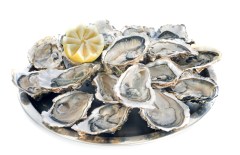
french oysters

Abstract

As filter-feeding bivalves, oysters can accumulate microorganisms into their gills, causing spoilage and potential safety issues. This study aims to investigate the changes in the gill microbiota of oysters packed under air and modified atmospheres (MAs, 50% CO2: 50% N2, 70% CO2: 30% O2, and 50% CO2: 50% O2) during storage at 4 °C. The diversity of bacterial microbiota in oyster gills was profiled through polymerase chain reaction-denaturing gradient gel electrophoresis (PCR-DGGE) analysis on the 16S rRNA gene V3 region to describe the variation during the entire storage period. The DGGE profile revealed high bacterial diversity in the air- and MA-packaged oyster gills, and the spoilage bacterial microbiota varied in the MA-packaged oyster gills. Results indicated that CO2:O2 (70%:30%) was suitable for oyster MA packaging and that high bacterial loads in oyster gills need to be considered during storage. In addition, Lactobacillus and Lactococcus species were found to grow dominantly in fresh oyster gills under MA packaging, which supports the potential application of MA packaging for oyster storage.

Research – Salmonella enterica Outbreaks Linked to the Consumption of Tahini and Tahini-Based Products

MDPI

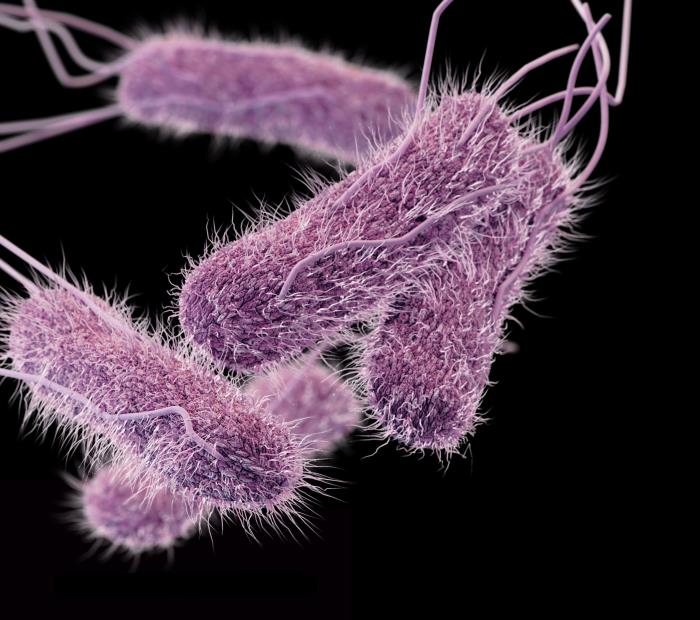
kswfoodworld Salmonella

Salmonella is a leading cause of bacterial foodborne illness in the world. Although typically associated with foods of animal origin, low-moisture foods, such as tahini, are quickly gaining recognition as an important vehicle of Salmonella exposure. This review offers the Canadian perspective on the issue of Salmonella in tahini and tahini-based products. A summary of several recent food product recalls and foodborne outbreaks related to the presence of Salmonella in tahini and tahini-based products such as halva are presented. The properties of the food vehicles, their production practices, and potential routes of contamination are discussed. Particular focus is placed on the ecology of Salmonella in the tahini production continuum, including its survival characteristics and response to intervention technologies. View Full-Text

Quebec – Notice not to consume bagels prepared and sold by Côte St-Luc Bagel inc.

Quebec

QUEBEC CITY , Nov. 24, 2022 /CNW Telbec/ – The Ministry of Agriculture, Fisheries and Food (MAPAQ), in collaboration with the Food Inspection Division of the City of Montreal and the company Côte St-Luc Bagel inc., located at 5757 Caldwell Avenue, in Montreal, advises the public not to consume any bagel sold by the latter, because the products have not been prepared and packaged in such a way as to ensure their safety.

The products that are the subject of this warning were offered for sale until November 23, 2022, only at the establishment designated above. The products were sold and packaged by the attendant at the request of customers.

The operator is voluntarily recalling the products in question. It has agreed with MAPAQ to issue this warning as a precautionary measure. Also, people who have any of these products in their possession are advised not to consume it. They must return it to the establishment where they bought it or throw it away. Even if the affected products show no signs of tampering or suspicious odors, their consumption may represent a health risk. No case of illness associated with the consumption of these foods has been reported to MAPAQ to date.

Research – Alerts involving global food safety network climb; frozen berries linked to multi-country outbreak

Food Safety News

The number of food safety incidents involving an international network has gone up in the third quarter of this year compared to the previous three months.

The International Food Safety Authorities Network (INFOSAN) was part of 58 alerts from July through September compared to 46 in the second quarter of 2022.

Thirty-two incidents fell into the biological hazard category which was dominated by Listeria monocytogenes and Salmonella with 10 each. E. coli was behind with six, Clostridium botulinum and hepatitis A caused two each, and Bacillus cereus and Coxsackievirus one each.

Research – Joint FAO/WHO Expert meeting on microbiological risk assessment of Listeria monocytogenes in foods

FAO

kswfoodworld Listeria monocytogenes

The Joint FAO/WHO Expert meeting on microbiological risk assessment of Listeria monocytogenes in foods was convened in response to a request by the Codex Committee on Food Hygiene (CCFH) at its fifty-second session1to undertake a full farm to table risk assessment on Listeria monocytogenes in food in order to inform a possible future revision of the Guidelines on the Application of General Principles of Food Hygiene to the Control of Listeria monocytogenes in Foods (CXG 61-2007)2.This document summarizes the conclusions and recommendations for the development of microbiological risk assessment of L.monocytogenes in specific foods; namely, leafy greens, frozen vegetables, cantaloupe melon and ready-to-eat (RTE)seafood, in the light of new data and approaches. This document has been prepared to facilitate the deliberations of the upcoming CCFH. The full report will be published as part of the Food and Agriculture Organization (FAO)and World Health Organization(WHO)Microbiological Risk Assessment (MRA) Series.

USA – Patient count growing in Salmonella outbreak from unknown source; other investigations ongoing

Food Safety News

An outbreak of infections from Salmonella Typhimurium is slowly growing according to the FDA, and an investigation into an outbreak of E. coli infections has been closed.

For the Salmonella outbreak, the number of patients has increased from 264 to 269, but the Food and Drug Administration has not reported the patients’ states of residence.

The agency has begun traceback efforts but has not revealed what food or foods are being traced. The FDA has begun sample collection and analysis, but has not revealed what is being collected or sampled.

Research – Effect of Probiotic Lactic Acid Bacteria (LAB) on the Quality and Safety of Greek Yogurt

MDPI

Abstract

Greek yogurt is a strained yogurt with a high protein content that brings nutritional benefits. To enhance the functional benefits of Greek yogurt, Greek yogurt was prepared with various combinations of probiotic lactic acid bacteria (LAB) (Streptococcus thermophilusLactobacillus bulgaricusLactobacillus gasseri BNR17, and Lactobacillus plantarum HY7714). Effects of probiotic LAB on quality, sensory, and microbiological characteristics of Greek yogurt were then compared. Among samples, Greek yogurt fermented by S. thermophilus and L. bulgaricus showed the highest changes of pH and titratable acidity during 21 d of storage at 4 °C. Greek yogurt fermented with L. plantarum HY7714 had a higher viscosity than other samples. Greek yogurt fermented with S. thermophilusL. bulgaricusL. gasseri BNR17, and L. plantarum HY7714 showed superior physicochemical properties and received the highest preference score from sensory evaluation among samples. Overall, the population of enterohaemorrhagic Escherichia coli (EHEC) was more effectively reduced in Greek yogurt fermented with probiotic LAB than in commercial Greek yogurt during storage at 4, 10, and 25 °C. Thus, the addition of L. gasseri BNR17 and L. plantarum HY7714 as starter cultures could enhance the microbial safety of Greek yogurt and sensory acceptance by consumers.

Research – Salmonella recall cost Cranswick £3 million

Food Safety News

Cranswick has revealed that a Salmonella incident earlier this year cost the company more than £3 million ($3.6 million).

In a half-year results statement, which covers up to Sept. 24, 2022, the food producer said adjusted group operating profit was 1.7 percent lower at £68.4 million ($81.4 million).

This included a charge of £3.1 million ($3.7 million) due to costs associated with the product recall in May after Salmonella was found at the Hull cooked poultry facility in England.