Category Archives: Food Microbiology Blog

UK -Lidl recalls Braemoor Duck Breast Fillet products because of the presence of Salmonella

FSA

Lidl is recalling Braemoor 2 Duck Breast Fillets with Plum, Soy and Ginger Sauce Sachet and Braemoor 2 Duck Breast Fillets, Skin on and Boneless because salmonella has been found in the products.

Product details
Braemoor 2 Duck Breast Fillets with Plum, Soy and Ginger Sauce Sachet
Pack size 400g
Best before 21 August 2024
Braemoor 2 Duck Breast Fillets, Skin on and Boneless
Pack size 400g
Best before 31 August 2024
Risk statement
Salmonella has been found in the products listed above. Symptoms caused by salmonella usually include fever, diarrhoea and abdominal cramps.

Action taken by the company
Lidl is recalling the above products and has issued a point-of-sale to their customers. These notices explain to customers why the products are being recalled and tell them what to do if they have bought the products. Please see the attached notices.
PDF
ViewCustomer notice – Braemoor Duck Breast Filletsas pdf(Open in a new window) (225.18 KB)
Our advice to consumers
If you have bought any of the above products do not eat them. Instead, return them to the store where they were bought for a full refund. For further information contact Lidl Customer Care on 0203 966 5566 or email customer.care@lidl.co.uk. For Northern Ireland, please contact 0289 568 4888.
Research -Improvement of Microbial Quality, Physicochemical Properties, Fatty Acids Profile, and Shelf Life of Basa (Pangasius bocourti) Fillets during Chilling Storage Using Pepsin, Rosemary Oil, and Citric Acid

MDPI

Abstract

Meat discoloration, lipid oxidation, and undesirable texture are inevitable phenomena in basa fish fillets during storage, which in turn limits their exportation as well as decreases consumer acceptability. In addition, increasing consumers’ requirements for high-quality, minimally processed, and ready-to-cook fish fillets with an extended shelf-life is a great challenge, particularly with lifestyle changes. Accordingly, this study aimed to improve the quality, lipid stability, fatty acid profile, and lipid nutritional quality indices (LNQI) of basa fish fillets during chilling storage at 4 °C for 15 days using pepsin enzyme (E, 0.1%), rosemary oil (R, 0.5%), citric acid (CA, 0.5%), and their combination (0.1% E + 0.5% R; 0.1% E + 0.5% CA; and 0.1% E + 0.5% R + 0.5% CA). Our results revealed that all treated samples exhibited a significant increase in protein content, a significant decrease in fat content, and a marked reduction in pH, total volatile base nitrogen (TVBN), thiobarbituric acid (TBA), free fatty acids, and shear force (SF) values in comparison to control ones. Moreover, significant improvements in sensory scores, color stability, fatty acid profile, LNQI, and microbial quality of all treated samples were observed. Such findings were more pronounced in samples treated with a mixture of pepsin, rosemary, and citric acid (TVBN: 2.04 vs. 6.52 mg%; TBA: 0.40 vs. 2.68 mg malonaldehyde/Kg; and SF: 8.58 vs. 19.51 Kgf). Based on the obtained results, there was an extension for the shelf life of all treated basa fish fillet samples, especially in samples treated with a mixture of pepsin, rosemary, and citric acids when compared with the control samples (˃15 days versus 10 days). Additionally, eucalyptol, camphor, isoborneol, and α-pinene are the main components of rosemary, with great antioxidant and antimicrobial activity. In conclusion, the mixture of pepsin, rosemary, and citric acid can be applied easily in the seafood industry and at the household level to provide ready-to-cook fish fillets of high quality with great health benefits.

Research – Sage Essential Oil as an Antimicrobial Agent against Salmonella enterica during Beef Sous Vide Storage

MDPI

Abstract

Sous-vide is a process comprising vacuum-sealing food, heating it to the desired temperature, and circulating it in a water bath in a sous vide machine. This cooking technique is increasingly common in homes and catering establishments due to its simplicity and affordability. However, manufacturers and chef’s recommendations for low-temperature and long-term sous-vide cooking in media raise food safety concerns, particularly when preparing beef tenderloin. In this study, Salmonella enterica was found to be inactivated by heat and sage essential oil (EO) in beef samples from musculus psoas major that had been sous vide processed. To determine whether heat treatment was likely to increase the sous vide efficiency, Senterica and sage EO were mixed. After being vacuum-packed and injected with S. enterica, the samples were cooked at 50–65 °C through the sous vide technique for the prescribed time. On days 1, 3, and 6, the amounts of S. enterica, total bacteria, and coliform bacteria were measured in the control and treated groups of beef processed sous vide. Mass spectrometry was used to identify bacterial isolates on different days. On each day that was measured, a higher number of all the microbiota was found in the samples exposed to 50 °C for 5 min. The most frequently isolated microorganisms from both groups of samples were Pseudomonas fragi (17%), Pseudomonas cedrina (8%), and Proteus vulgaris (8%); in the treated group, also S. enterica (21%), Pseudomonas fragi (13%), and Pseudomonas veronii (6%). After the heat treatment of samples at 65 °C for 20 min, the total count of bacteria and coliform bacteria was zero. It has been shown that adding sage essential oil (EO) in combination with sous vide processing technique leads to the stabilization and safety of beef tenderloin.

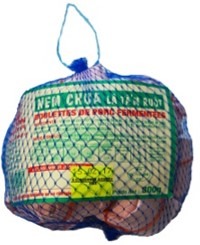
France – Fermented pork balls with leaf (Nem chua with leaf) – Listeria monocytogenes

Gov France

Product category
Food
Product subcategory
Meats
Product brand name
HOA NAM
Model names or references
Fermented pork balls with leaf (Nem chua with leaf)
Product identification
GTIN Batch Date
3474930202006 151123 Use-by date 11/15/2023
Packaging
Clipped net with 10 pieces
Start/end date of marketing
From 10/25/2023 to 10/31/2023
Storage temperature
Product to keep in the refrigerator
Health mark
FR 75 113 006 CE
Geographical sales area
Whole France
Distributors
see list of points of sale
List of points of sale
List_of_sales_points_with_address.pdf

Scotland – The Cocktail Geeks Ltd recalls various canned cocktails because they have been produced without adequate food safety controls

Food Standards Scotland

The Cocktail Geeks Ltd is recalling various canned cocktails because they have been produced without adequate food safety controls and may be unsafe to consume.

Product details:

Products Pack size Best before date
My Precious 150ml All handwritten durability dates
Order 66 150ml All handwritten durability dates
Sorting Potion 150ml All handwritten durability dates
Hellfire 150ml All handwritten durability dates
Dracarys 150ml All handwritten durability dates
Friendly Neighbourhood 150ml All handwritten durability dates

No other The Cocktail Geeks products are known to be affected

Risk

As these products were not prepared in line with food hygiene and legislative requirements, they may be unsafe.

Our advice to consumers

If you have bought any of the above products do not consume them. Instead, return them to The Cocktail Geeks store at 27 East Market Street, Edinburgh, EH8 8FS or contact Info@thecocktailgeeks.com for a full refund.

Action taken by the company

The Cocktail Geeks Ltd is recalling the above products. Point of sale notices will be displayed in all retail stores that are selling these products. These notices explain to customers why the products are being recalled and tell them what to do if they have bought the product.

France – Provençal-style sliced ​​turkey – Salmonella

Gov France

Product category
Food
Product subcategory
Meats
Product brand name
None
Model names or references
nothing
Product identification
GTIN Batch Date
0209699000000 Made on 11/11/2023 Use-by date 11/15/2023
Packaging
bulk intended for sale in the traditional butcher’s department
Start/end date of marketing
From 11/11/2023 to 11/15/2023
Storage temperature
Product to keep in the refrigerator
Health mark
nothing
Further information
Internal traceability
Geographical sales area
48 boulevard des 2 moulins le Poiré sur Vie 85170
Distributors
PSV DISTRIBUTION

France – Chablis terrine – Salmonella

Gov France

Product category
Food
Product subcategory
Meats
Product brand name
Le Marsigny
Model names or references
Terrine with Chablis Le Marsigny
Product identification
GTIN Batch Date
26006598 312045 Use-by date 12/12/2023
26006598 311025 Use-by date 11/12/2023
26006598 306045 Use-by date 06/12/2023
26006598 307025 Use-by date 07/12/2023
26006598 310062 Use-by date 10/12/2023
Packaging
Individual tray 200G slice under modified atmosphere
Start/end date of marketing
Since 09/11/2023
Storage temperature
Product to keep in the refrigerator
Health mark
FR 21 231 005 CE
Geographical sales area
Whole France
Distributors
Aldi, Salaisons Dijonnaises factory store

Norway – Coop Norge SA and Goman Vest are recalling Coop Suksesskake small 500g, due to the content of harmful bacteria – Staphylococcus

Matportalen

Coop Norge SA recalls Coop Success Cake small 500g. The product is marked with lot numbers 563452 and 563462. The reason is that coagulase-positive staphylococci have been detected through routine analysis samples. The product is sold at OBS Lagunen, OBS Sartor, OBS Vestkanten, OBS Horisont and Coop Mega Nordås.

The product can be dangerous to health and should therefore not be eaten. The consumer can return the product with the specified lot number to the store for a refund, or throw it away.

The lot consists of 17 cakes, of which 12 pieces have been sold to consumers.

Contact
Coop: Harald Kristiansen, communications manager: harald.kristiansen@coop.no

Italy – SALAME – Listeria monocytogenes

Salute

Brand : TORESAN

Name : SALAME

Reason for reporting : Recall due to microbiological risk

Publication date : 24 November 2023

Documentation

Documentation

Italy-SMOKED SALAMI- Listeria monocytogenes

Salute

Brand : TORESAN

Name : SMOKED SALAMI

Reason for reporting : Recall due to microbiological risk

Publication date : 24 November 2023

Documentation

Documentation