Category Archives: Food Illness

Pakistan – Polluted Water – Culltivated Vegetables – Hepatitis A

Business Recorder

Cultivations of vegetables from polluted water in the outskirts of the city is posing serious public health hazard and authorities concerned are doing almost nothing to stop this practice. Experts believe that contaminated water, industrial waste and unhygienic food are causing a surge in the incidence of Hepatitis-A disease.

They said that different government and private hospitals reported that patients of Hepatitis-A were increasing. Experts feared that the situation was worsening in cities such as Karachi, Multan, Swat, and areas near Islamabad where the polluted water contaminated drinking water because of poor sanitation system.

The Environmental Protection Agency (EPA) had conducted tests in few areas and found them prone to Hepatitis-A. However, scores of areas are also affected with the same problem and continue to cause health hazards to people with infectious disease. Medical experts say that it is the responsibility of the government to providing clean drinking water to the citizens on a regular basis. Doctors advised patients to get vaccinated against Hepatitis-A as preventive measures.

USA Research – Report on Anitmicrobial Resistance

Food Poisoning Bulletincocci

The Center for Science in the Public Interest (CSPI) has released a white paper titled “Antibiotic Resistance in Foodborne Pathogens.” The paper details information about more than 55 foodborne illness outbreaks since 1973. In 31 of those outbreaks, the bacteria were resistant to five or more antibiotics. Forty-eight of the 55 outbreaks were caused by Salmonella bacteria.

The foods most likely associated with antibiotic resistant bacteria included dairy products, ground beef, and poultry; those foods were associated with 31 out of 55 outbreaks. The paper states that the two populations that are most at risk of foodborne illness are children and immune-compromised people.

CSPI is critical of the FDA’s approach to dealing with this problem. In April 2012, the FDA issued guidance documents for industry that just “encourage” drug companies to change labeling on antibiotics used in animals to prevent their non-therapeutic use for growth promotion or feed efficiency. Scientists, including those at Johns Hopkins Center for a Livable Future, say that the government should issue regulations about antibiotic use that have enforcement capability. Furthermore, CSPI and other groups want legislation such as “The Preservation of Antibiotics for the Medical Treatment Act” or PAMTA, passed into law.

USA – Campylobacter in Raw Milk Outbreak

Food Poisoning JournalimagesCAZ9J1WP

The Alaska Section of Epidemiology is investigating another outbreak of Campylobacter infection associated with the consumption of raw milk. This new outbreak is associated with raw milk distributed by the same Kenai Peninsula cow-share program that was linked to a Campylobacter outbreak sickened at least 31 people in February 2013.

In the current investigation, five cases of Campylobacter infection have been identified to date. Two of the five people sought medical attention. Testing by the Alaska State Public Health Laboratory identified the bacteria strain as Campylobacter jejuni. The exact same strain of C. jejuni was found in cow manure obtained earlier this year at the cow-share farm that distributed the raw milk. “The genetic fingerprint of the bacteria isolated from these two people and the cow is unique. It has never been seen before in the United States,” said Dr. Joe McLaughlin, State Epidemiologist. “These outbreaks are an unfortunate reminder of the inherent risks associated with raw milk consumption, and underscore the importance of pasteurization.”

Malaysia – Pupils Ill from Free Milk

Borneo PostimagesCAZ9J1WP

MELAKA: Eighteen pupils of a school in Telok Mas here were rushed to a health  clinic for suspected food poisoning after having consumed milk provided free  under a school milk programme.

The pupils, from standards one and three of Sekolah Kebangsaan Bukit Lintang,  complained of stomachache and vomitted after taking the milk at about 9 am and  were taken to the Umbai Health Clinic.


Research – Salmonella and Campylobacter Prevalence and Concentration on Pasture-Raised Broilers

USDA

The small-scale, pasture-raised poultry production model is a growing niche in
the locally grown food movement. There is limited research that focuses on the
food safety of small-scale broiler processing methods. The objective of this
study was to compare Salmonella and Campylobacter prevalence and concentrations on pasture-raised broilers processed on-farm, in a small United States Department of Agriculture (USDA)-Inspected custom slaughter facility (U-IF), and in a Mobile Processing Unit (MPU) pilot plant. A total of 120, 100, and 50 post-chill, pasture-raised broiler carcasses were sampled from each processing method, respectively. Salmonella and Campylobacter concentrations in whole carcass rinses were determined using a 3-tube Most Probable Number (MPN) method for Salmonella and direct plating method for Campylobacter according to the USDA-Food Safety and Inspection Service (FSIS) protocols. Salmonella prevalence and concentrations on-farm (89% and 1.78 MPN/carcass [95% CI: 1.60-1.96]), USDA-IF (43% and 0.78 MPN/carcass [95%CI: 0.58-0.98]) were significantly (P <0.05) different. Campylobacter prevalence was not significantly (P >0.05) different on carcasses processed by the three methods (70% on-farm, 82% USDA-IF, and 100% MPU). The mean log10 Campylobacter concentrations in MPU processed carcasses (5.44 CFU/carcass [95% CI: 5.24-5.63]) was significantly higher (P < 0.05) compared to on-farm (2.32 CFU/carcass [95% CI: 2.06-2.80]) and USDA-IF (2.44 CFU/carcass (95% CI: 2.03-2.85]). Based on the results of this baseline study, most pasture-raised broilers processed by the three methods were contaminated with Salmonella and/or Campylobacter with the exception of MPU carcasses on which Salmonella was not detected. Further research is needed to assess other potential risk factors such as farm and regional differences.

China – 548 Students Food Poisoned

Global Times

A total of 548 students from multiple elementary and high schools have been affected by food poisoning in Northwest China’s Qinghai Province, local authorities said Wednesday.

Dozens of students from three schools in the Hui and Tu Autonomous County of Datong started to show symptoms of food poisoning such as vomiting and diarrhea after eating lunch at their schools on Wednesday.

The source that caused the mass food poisoning has been discovered, Wang Yubo, mayor of Xining, the provincial capital, said.

Local authorities added that the remaining lunch has been sealed for tests.

An investigation into the cause of the accident is under way.

USA – 25 Sickened Home Made Raw Milk Cheese – Salmonella

MDH

At least 25 Minnesotans have been sickened with salmonellosis linked to eating a raw Mexican-style cheese, queso fresco, state health officials said. The outbreak illustrates the dangers of consuming unpasteurized dairy products.

The Minnesota Department of Health (MDH), the Minnesota Department of Agriculture (MDA) and the City of Minneapolis have been investigating the outbreak and the source of the raw milk used to make the cheese since the first cases were detected in late April.

Russia – Cream Puffs – Salmonella Outbreak

UPi.comSalmonella

CHELYABINSK, Russia, May 20 (UPI) — About 66  pounds of cream puffs were removed from stores in the Russian Urals city of  Chelyabinsk on Monday after a salmonella outbreak was reported there.

“The police have found 12 outlets selling these products. About 30 kilograms  [about 66 pounds] of cream puffs were removed from sale. A working group has  been set up to find other outlets. An investigation is under way,” a spokeswoman  for the Chelyabinsk region police department told ITAR-Tass.

ITAR-Tass said 36 people, including eight children, were hospitalized with  salmonella poisoning in Chelyabinsk, two in serious condition.

Local news sources said as many as 41 people have been sickened, ITAR-Tass  reported.

Read more:  http://www.upi.com/Top_News/World-News/2013/05/20/Salmonella-outbreak-reported-in-Chelyabinsk/UPI-40751369073409/#ixzz2TuXyckc7

Eygpt – Salmonella Mass Poisoning Al-Azhar University

AHRAMONLINESalm

Egypt’s Health Minister Mohamed Hamed said that salmonella bacteria was behind the second mass poisoning incident in Al-Azhar University in Cairo.

Hamed said in a press statement on Friday that the final report on the incident revealed that the bacteria contaminated the food, which left 180 students hospitalised on 29 April after eating in the dormitory.

The minister also stressed the importance of the personal hygiene of staff members involved in food preparation.

Earlier, on 1 April, over 500 students were hospitalised with food poisoning after eating on campus, which sparked protests.

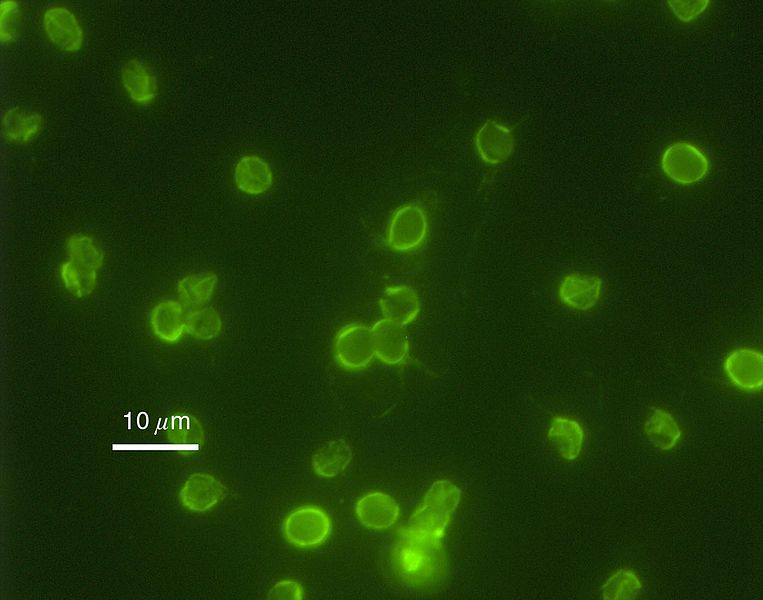
Ireland – 6,000 People Affected by Cryptosporidium

The Irish Sun763px-Cryptosporidium_parvum_01

CONTAMINATED water has left 13 people with stomach  illnesses after two outbreaks of the parasitic disease crypto-sporidiosis.

Up to 6,000 people in Roscommon town and its surrounds have been affected by  the bug in the local water supply.

A “boil water notice” has been in place since April 25. The contamination can  lead to a gut infection caused by a parasite, which results in a diarrhoea-type  illness.

People living and working in the area have been advised by Roscommon County  Council and the HSE to boil all water for drinking, preparation of salads and  for use in brushing teeth.

Both bodies have set up an Incident Response Team to minimise the risk to the  public.

Sales of bottled water have shot up in the area amid concerns that the boil  water restriction could remain in place until the system gets the all-clear,  which could take several weeks.