Category Archives: Food Illness

Research – Listeria’s Resistance to Disinfectants

University of Veterinary Science- ViennaEurofins Food Testing UK

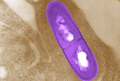
Listeria poses a significant risk to human health. The main transmission route involves meat and dairy products, so it is important to treat dairies and food-processing plants regularly with disinfectants to kill bacteria. Unfortunately, listeria is developing resistance to the compounds that are most frequently used. Recent work in the group of Stephan Schmitz-Esser at the University of Veterinary Medicine, Vienna (Vetmeduni Vienna) has uncovered the mechanism for listeria’s resistance to one such agent, benzalkonium chloride. The findings have been published in the online journal Plos One.


Canada . Ecoli O157 Outbreak Update

E.coli Blog

The Public Health Agency of Canada, along with its health and food safety partners, is investigating 27 confirmed cases of E. coli O157:H7 illness; 12 in British Columbia, 10 in Alberta, 2 in Saskatchewan, 2 in Manitoba and 1 in Quebec.

These individuals became ill between mid-July and late-September.  There has been one death.

Certain contaminated cheese products manufactured by Gort’s Gouda Cheese Farm in Salmon Arm, British Columbia, have been identified as the source of the illnesses. The Canadian Food Inspection Agency (CFIA) has issued a Health Hazard Alert warning the public not to consume the affected product.

Research – Norovirus Survival on Sprouted Seeds

American Society for Microbiologyalfalfa

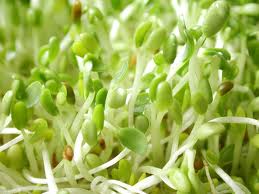
Human norovirus (huNoV) and hepatitis A virus (HAV) have been involved in several produce-associated outbreaks and identified as major food-borne viral etiologies. In this study, the survival of huNoV surrogates (murine norovirus [MNV] and Tulane virus [TV]) and HAV was investigated on alfalfa seeds during storage and postgermination. Alfalfa seeds were inoculated with MNV, TV, or HAV with titers of 6.46 ± 0.06 log PFU/g, 3.87 ± 0.38 log PFU/g, or 7.01 ± 0.07 log 50% tissue culture infectious doses  (TCID50)/g, respectively. Inoculated seeds were stored for up to 50 days at 22°C and sampled during that storage period on days 0, 2, 5, 10, and 15. Following storage, virus presence was monitored over a 1-week germination period. Viruses remained infectious after 50 days, with titers of 1.61 ± 0.19 log PFU/g, 0.85 ± 0.21 log PFU/g, and 3.43 ± 0.21 log TCID50/g for MNV, TV, and HAV, respectively. HAV demonstrated greater persistence than MNV and TV, without a statistically significant  reduction over 20 days (<1 log TCID50/g); however, relatively high levels of genomic copies of all viruses persisted over the testing time period. Low titers of  viruses were found on sprouts and were located in all tissues as well as in sprout-spent water sampled on days 1, 3, and 6  following seed planting. Results revealed the persistence of viruses in seeds for a prolonged period of time, and perhaps  of greater importance these data suggest the ease of which virus may transfer from seeds to sprouts and spent water during  germination. These findings highlight the importance of sanitation and prevention procedures before and during germination.

Italy – One Dead and Three Ill from Ricotta – Listeria monocytogenes

Italian Daily Mail

Listeria bacterium in a ricotta product in Italy has caused the death of  an elderly man aged 74 of Poggio Mirteto, while three other people were severely intoxicated, including a man of 45 years of Casperia. The four people’s place of residence, Lower Sabina, and they consumed the product at the beginning of the month, cheese and dairy products by a famous dairy company which has not yet been named.

Research – Salmonella

Food Poisoning BulletinSalm

Salmonella is naturally occurring. In the wake of outbreaks, like the one linked to Foster Farms chicken, it’s an often-repeated phrase meant to assuage consumer fears and absolve corporate responsibility. But the phrase leaves out a key piece of information, where Salmonella naturally occurs.

Salmonella lives in the intestines of humans and other animals. It doesn’t “naturally occur” on the boneless, skinless chicken breasts or the wings and drumsticks you buy at the store. It gets there through a process of contamination. People can only get Salmonella infections when they eat or drink foods that have microscopic amounts of human or animal fecal matter on them.

Food Safety News

The mishandling or undercooking of raw chicken meat associated with the recent Foster Farms Salmonella outbreak has sickened nearly 340 people across 20 states and Puerto Rico since March and has caused concern among consumers, consumer groups, and food-safety advocates about the safety of our food system and the efficacy of testing systems designed to keep our nation’s food supply safe.

Currently, federal law under USDA allows for 7.5 percent of whole chicken carcasses to be contaminated with pathogenic bacteria such as Salmonella and Campylobacter. This means that products contaminated with Salmonella and Campylobacter have become common and are frequently shipped from production facilities to stores. It is up to the consumer to follow safe handling and cooking practices to avoid being sickened.

USDA Food Safety and Inspection Service guidelines require microbiological sampling to monitor raw poultry for harmful pathogenic bacteria such as Salmonella and Campylobacter, but the regulations are not necessarily enforceable because no strains of Salmonella and Campylobacter are classified as adulterants.

Canada – CFIA Updated Recall – Listeria monocytognes

CFIA

The public warning issued on October 23, 2013 has been updated to correct some product information.

The Canadian Food Inspection Agency (CFIA) and Reser’s Fine Foods Inc. are warning the public not to consume the salad products described in the link above, because they may be contaminated with Listeria monocytogenes.

There have been no reported illnesses associated with the consumption of these products.

The manufacturer, Reser’s Fine Foods Inc., Beaverton, Oregon, USA, is voluntarily recalling the affected products from the marketplace. The CFIA is monitoring the effectiveness of the recall.

USA – Shigella and Legionella Outbreaks

Shigella Blog

Health officials at the Florida Department of Health in Broward County are advising parents, schools and daycare centers to take precautionary action to prevent the spread of Shigellosis. Shigellosis is a highly contagious form of diarrhea caused by Shigella bacteria. Shigella can spread through person to person contact and may cause severe diarrhea, fever and stomach cramps. Parents of children, or anyone with symptoms of Shigellosis should contact their healthcare provider for diagnosis and treatment.

Food Posioning Blog

October 23, 2013  by Leave a Comment

To date, one person has died and several others have been sickened in an outbreak of Legionnaires’ disease linked to Glenwood Nursing Home in Florence, Alabama. Legionnaires’ is a form of pneumonia caused by inhaling water mist containing Legionella bacteria.

All confirmed and suspected cases have been either residents or visitors to the nursing home. The one person who has died in the outbreak was a woman who visited the facility with two family members. She later developed respiratory symptoms and was hospitalized. Tests confirmed Legionnaires disease (Legionella pneumonia). The other family members were also sickened.

USA – Cyclospora Outbreak Update

Food Poisoning Journal

As of September 20, 2013 (5pm EDT), CDC has been notified of 643 ill persons with of Cyclospora infection from 25 states: Arkansas, California, Connecticut, Florida, Georgia, Illinois, Iowa, Kansas, Louisiana, Massachusetts, Michigan, Minnesota, Missouri, Nebraska, New Hampshire, New Jersey, New York (including New York City), Ohio, Pennsylvania, South Dakota, Tennessee, Texas, Virginia, Wisconsin, and Wyoming.

Most of the illness onset dates have ranged from mid-June through mid-July.

Public health officials in Iowa and Nebraska performed investigations within their states and concluded that restaurant-associated cases of cyclosporiasis in their states were linked to a salad mix produced by Taylor Farms de Mexico.

Epidemiologic and traceback investigations conducted in Texas by state and local public health and regulatory officials, the FDA, and CDC indicated that some illnesses among Texas residents were linked to fresh cilantro from Puebla, Mexico.

USA – Lean Ground Meat Recalls – E.coli O157

E.coli Blog

Costco, in Coon Rapids, Minn., is recalling an undetermined amount of lean fresh ground beef products that may be contaminated with E. coli O157:H7, the U.S. Department of Agriculture’s Food Safety and Inspection Service (FSIS) announced today.

The product subject to recall is 383 units of 88% lean fresh ground beef (88/12). It bears the Costco item number 33724 under the Costco label. This product was sold directly to 342 consumers in a Costco located at 12547 Riverdale Blvd., Coon Rapids, Minn., between Sept. 4 and Sept. 7.

UK- Public Health England New Food Web Link

We are pleased to inform you that the UK National Reference Laboratory for Food Microbiology has launched a webpage within Public Health England Food, Water and Environmental Microbiology Services, giving details of recent activities and events.  Please click on this link PHE

Within our webpage you will see two published documents which are free to download as pdf copies:-

  • “Audit      of Official Control Laboratories capabilities and accreditation status in      the UK 2013”
  • “2012      – 2013 Report of UK National Reference Laboratory for Food Microbiology”