Category Archives: Food Illness

USA – Papaya importer fires back at FDA; says it isn’t linked to outbreaks – FDA Statement Letter

Food Safety News kswfoodworld

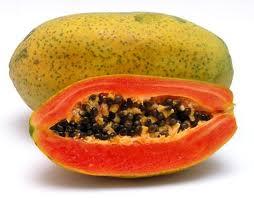
A firm that the government says has been importing contaminated papayas since at least 2011 is vehemently denying statements made in an FDA warning, despite evidence that Cavi brand papayas have been linked to several Salmonella outbreaks, including a current one.

The warning letter, sent yesterday by the Food and Drug Administration and posted for the public today, cites numerous times from 2011 through this year when papayas imported by Agroson’s LLC in the Bronx, NY, were linked to outbreaks that sickened hundreds of people.

FDA

Statement calling on all sectors of the papaya industry to improve practices to better protect consumers.

Every day Americans enjoy an abundant food supply that is among the safest in the world. The U.S. Food and Drug Administration works tirelessly to ensure that foods available to consumers, whether they are produced domestically or abroad, meet the FDA’s food safety requirements and that we are using all available tools to ensure compliance.

As demand and tastes continue to drive change in the market, consumers’ desire for a variety of products available year-round have increased the number of imported foods offered for sale in the U.S. To keep up with this trend, we have doubled down on our efforts to ensure the safety of imported food. This includes issuing a new Strategy for the Safety of Imported Food and requesting new funding from Congress to support our efforts.

While we continue to focus on shifting our work upholding food safety from response to prevention, we know that there are times where we will still need to respond to problems when they arise, including outbreaks of foodborne illness. This is especially important when we see recurrent patterns of illness associated with particular commodities. For example, fresh papayas. This commodity is most often eaten raw, without cooking or processing to eliminate microbial hazards; and therefore, the way they are grown, harvested, packed, held, processed and distributed is crucial to minimizing the risk of contamination with human pathogens.

Unfortunately, since 2011, American consumers have been exposed to eight outbreaks caused by Salmonella serotypes linked to imported, fresh papaya. And, just this June we started an investigation into an outbreak of Salmonella Uganda illnesses tied to the consumption of whole, fresh papaya imported from Mexico. While the 2019 outbreak is ongoing, the first seven outbreaks accounted for almost 500 reported cases of illness, more than 100 hospitalizations, and two deaths.

This trend has to stop. The pattern of recurrent outbreaks we have observed since 2011, including the 2019 illnesses, have involved Salmonella infections traced back to, or are suspected of being associated with, papaya grown in Mexico. The recurring nature of these outbreaks is a clear indication that more must be done within all sectors of the papaya industry to protect its customers and to meet its legal obligations. This includes growers, importers and even retailers that can and must do more.

This is why today we have issued a letter calling on all sectors of the papaya industry to take actions to prevent these outbreaks in the future. We are urging growers, packers, shippers and retailers in the papaya industry to review their operations and make all necessary changes to strengthen public health safeguards.

Our letter calls on the papaya industry to assess the factors that make their crops vulnerable to contamination. If a foodborne pathogen is identified in the crop or growing environment, a root cause analysis should be performed to determine the likely source of contamination. Procedures and practices that minimize that contamination must be implemented.

We are strongly encouraging the papaya industry to examine the use and monitoring of water used to grow, spray (pesticides, fungicides), move, rinse or wax crops to identify and minimize risks from potential hazards. All sectors of the industry should adopt tools and practices needed to enhance traceability since papayas are a perishable commodity, to more rapidly facilitate the tracking of involved product to expedite its removal from commerce, prevent additional consumer exposures, and properly focus any recall actions.

And finally, they should fund and actively engage in food safety research to identify the potential sources and routes of contamination by microbial pathogens and develop data-driven and risk-based preventive controls.

In response to this most recent Salmonella Uganda outbreak, the FDA deployed an inspection team to the packing house and farm that was linked to the contaminated papayas via traceback and epidemiological evidence. The findings of those visits will be made public when their investigation is complete. We have also increased sampling and screening of papayas at the border. In addition, the FDA is actively collaborating with our counterparts in the Mexican government regarding this current outbreak through the agency’s Latin America Office to determine ways to further our collaborative prevention efforts.

The U.S. Federal Food, Drug, and Cosmetic Act prohibits food producers from introducing, or delivering for introduction, into interstate commerce adulterated foods (meaning foods that are potentially harmful to consumers). Additionally, there are new requirements under the FDA Food Safety Modernization Act (FSMA). The Produce Safety Rule under FSMA sets science- and risk-based minimum standards for domestic and foreign farms for the safe growing, harvesting, packing and holding of covered produce, which includes papayas. Another FSMA rule, the Foreign Supplier Verification Program(FSVP) makes importers responsible for verifying that the foods they bring into the U.S., including papayas, have been produced in a manner that meets applicable U.S. safety standards.

We take our responsibility to protect public health very seriously and will continue to use all of our regulatory authorities and enforcement tools available to do so. So, today we issued a warning letter to a papaya importer, Agroson’s LLC, following an FDA investigation at the facility in conjunction with the current outbreak. This investigation uncovered significant violations of the Federal Food, Drug, and Cosmetic Act. Rest assured that the FDA will continue to strengthen safeguards and prevent contaminated papayas from being imported into the U.S. Our efforts also include education, outreach, training and research activities designed to support farmers’ efforts to keep their crops safe for consumers.

Although today’s actions focus on the papaya industry, recurring outbreaks taking place with any commodity are unacceptable from a public health perspective. We know that more must be done by industry as repeated illness outbreaks are a threat to public health. In such situations, it is incumbent upon all sectors of the industry to work together to investigate the cause, review food safety procedures and practices, and take action to prevent further outbreaks.

We must take collective steps to eliminate the threat that recurring outbreaks pose to consumers and look forward to working with the papaya industry as well as all food producers to ensure that America’s food supply remains among the safest in the world.

The FDA, an agency within the U.S. Department of Health and Human Services, protects the public health by assuring the safety, effectiveness, and security of human and veterinary drugs, vaccines and other biological products for human use, and medical devices. The agency also is responsible for the safety and security of our nation’s food supply, cosmetics, dietary supplements, products that give off electronic radiation, and for regulating tobacco products.


USA- Canada – Has the USDA Found a Link in the Chicken Listeria Outbreak?

Outbreak News Today

The United States Department of Agriculture’s Food Safety and Inspection Service announced a recall of fully cooked poultry products that may be contaminated with Listeria.

This recall comes very soon after the announcement of a Canadian Chicken Listeria Outbreak as well as a lingering question of whether this outbreak and the mystery source of the Listeria cases in the US are one in the same. Has the USDA confirmed the US link in the Listeria Outbreak? There is some compelling information that has recently come to light.

According to the USDA’s announcement, “The problem was discovered on August 17, 2019, when the Canadian Food Inspection Agency (CFIA) notified FSIS that a sample of product produced by Tip Top Poultry, Inc. confirmed positive for the presence of Listeria monocytogenes. Canadian public health and food safety partners, including the Public Health Agency of Canada and the Canadian Food Inspection Agency, have been investigating an outbreak of Listeria monocytogenes. A ready-to-eat diced chicken product collected as part of the investigation tested positive for Listeria monocytogenes. The investigation is ongoing.”

USA – More than 70 cases of foodborne illness reported in Hidalgo County

The Monitor cyclo

EDINBURG — Hidalgo County health officials are warning residents about the growing number of parasites found in leafy vegetables that could cause medical concerns for vulnerable populations.

More than 70 cases of cyclosporiasis have been reported to the Hidalgo County Health and Human Services office, chief administrative officer Eddie Olivarez said Monday.

“It’s a public health concern we not only have in the Rio Grande Valley, but in the state of Texas, and even throughout the nation,” Olivarez said. “We’ve had over 70 cases in Hidalgo County; over 300 cases in the state of Texas and there’s over 1,200 cases in the United States. So much so, that the CDC (Centers for Disease Control) is concerned about it and putting out alerts in reference to this particular parasite.”


Spain – Over 500 suspected Listeria cases in Spain linked to La Mechá – 2 Dead

Food Poison Journal

Spanish health authorities announced a second person has died in an outbreak of Listeria from pork meat. The health spokesman for the southern Andalusia region, José Miguel Cisneros, said Friday a 72-year-old man who was in a terminal phase of pancreatic cancer died from the bacteria.

The first victim was a 90-year-old woman earlier this week. The outbreak started Aug. 15 in Andalusia and has sickened at least 186 people. The Spanish Health Ministry said it was looking into another 523 suspected cases. Of the 50 people currently hospitalized, 23 of them are pregnant women. Sevilla is the most affected region (with 153 cases), followed by Huelva (16), Cádiz (8), Malaga (5), and Granada (4). Other regions with confirmed cases are Asturias, Aragón, and Extremadura.

The packaged meat plant to the outbreak is being inspected by Spanish officials after lab tests showed the presence of Listeria. The product blamed for the outbreak is a stringy cooked meat sold under the brand “La Mechá.”

RASFF Alert – Foodborne Outbreak – Listeria monocyotgenes – Carne Mechada

RASFF-Logo

RASFF – foodborne outbreak caused by Listeria monocytogenes (>1.5x10E4 CFU/g) in chilled roast pork (carne mechada) from Spain in Spain

Spain -Listeria, the stealthy pathogen that kills 70 people a year in Spain

El Pais

The country ranks third in the EU for reported cases of listeriosis, which is caused by a common bacteria that withstands freezing temperatures and oxygen starvation

On a European scale, Spain had the third highest incidence of reported listeriosis cases in 2016, trailing Germany and France, according to the European Center for Disease Prevention and Control.

The epidemiologist Zaida Herrador from the Carlos III Health Institute is the main author of the biggest research effort to date on the incidence of listeria in Spain. From 1997 to 2015, a total of 5,696 people were admitted to hospital for listeriosis. Almost 1,000 of these cases proved lethal (17%) in a trend that has seen the average figure of 20 annual deaths two decades ago rise to an average of 70 in recent years. “It’s a growing problem, and there is still a lot to be investigated,” says Herrador. “We can see that the number of cases is growing noticeably, but presumably this is because they are being reported more. It wasn’t an illness that had to be declared until 2015.”

USA – Website for reporting Food Illness – iwaspoisoned.com

https://www.iwaspoisoned.com/

iwaspoisoned.com is for people who love to eat out but don’t expect to be ill because of it. The platform is a consumer led website for diners to report suspected food poisoning or bad food experiences. It allows users to report food poisoning from businesses, food products, or if they have general symptoms. This real time information is shared by consumers, food authorities, restaurants, and industry with one aim – to make eating a safer experience. By aggregating and analyzing citizen-submitted data, our site prevents food poisoning outbreaks, reduces risks, and creates better outcomes for restaurants, shareholders, and the public.


Mission of iwaspoisoned.com

Use data to bring together consumers, public health, and industry in near real-time to keep people safer and businesses more profitable.


Featured in:

This is especially true of IWasPoisoned, which has collected about 89,000 reports since it opened in 2009. Consumers use the site to decide which restaurants to avoid, and public health departments and food industry groups routinely monitor its submissions, hoping to identify outbreaks before they spread. The site has even begun to tilt stocks, as traders on Wall Street see the value of knowing which national restaurant chain might soon have a food-safety crisis on its hands.


Spain – Listeria outbreak hits Spain, Most in Andalusia – Pork Meatloaf

Outbreak News Today Products from La Mechá that have been taken off the market.

An outbreak of listeriosis in Spain has sickened about 155 people to date, killing one, according to the health authorities. The Spanish Health Ministry said it was looking into another 523 suspected cases.

The outbreak has primarily affected Andalusia in the Seville region; however, cases have also been recorded in Asturias, Extremadura, Madrid, Catalonia and Aragon.

Unfortunately, a 90-year-old Andalusia woman has become the first fatal victim.

The Spanish Agency for Food Safety and Nutrition (AESAN) has already warned about a roasted meat product of the brand “La Mechá” made by Magrudis SL not to consume it.

El Pais

An outbreak of listeriosis in Spain caused by meat produced by a firm in the southern Spanish province of Seville is now having international repercussions. The country’s Health Ministry has activated alert and communication systems with the European authorities and the World Health Organization (WHO) “given the possibility that cases might be detected in other countries.” The move, according to ministerial sources, is a precaution in case any tourists visiting the country may have contracted the infection after consuming contaminated products in Spain. So far there have been no registered cases outside of the country.

The current outbreak of the bacterial infection has its source in pork meatloaf – known in Spanish as ‘carne mechada’

The current outbreak of the bacterial infection has its source in pork meatloaf – known in Spanish as carne mechada – sold under the brand name La Mechá, and produced by the Seville-based company Magrudis S.L.

A total of 53 people – including 23 pregnant women – are currently hospitalized in Andalusia due to the bacterial infection, three of whom are in intensive care. So far, one person has died from the outbreak: a 90-year-old woman who passed away in the early hours of Monday in a Seville hospital.

Turkey – Over 50 tourists hospitalised for suspected food poisoning in Turkey’s Cappadocia

Ahval News

A total of 52 tourists have been hospitalised in a case of suspected food poisoning in Turkey’s central tourism hotspot of Cappadocia.

The tourists staying a hotel in the Kaymaklı district of Nevşehir province began experiencing abdominal pain and nausea in the early morning hours, state-run Anadolu news agency reported on Monday.

Forty-five Chinese and seven Indonesian nationals were taken to nearby hospitals.

The tourists appear to have experienced food poisoning according to preliminary findings, Kaymaklı Mayor Harun Çekiç told Anadolu, adding that officials are conducting an investigation into the case.

India – Pune: 23 students in Katraj fall ill due to food poisoning.

Pune Mirror

Pune: At least 23 students from a city-based school fell ill after consuming the mid-day meal on Wednesday noon.
They were served rice as a part of their mid-day meal, but after some time students started vomiting, while some complained of nausea.
