Category Archives: Food Hygiene

Malta -Another Maltese Farm Has Been Found To Contain Salmonella

Lovin Malta Salmonella Eggs Food Poisoning Food Safety

Five days after local authorities confirmed a farm in Malta had salmonella in its eggs, a second producer has been directed to stop selling their produce on the market.

Located in Victoria, Gozo, the sampled eggs were found to have the bacteria by the Veterinary National Control Program.

The farm must now recall all eggs produced from July 13th onwards, and cannot place any more on the market. With license number PLG 016, it is located in 133, St Domenica Street, Victoria, Gozo.

This is the second farm to be found with salmonella after St. Joseph’s farm was blacklisted last Tuesday.

Authorities have warned the public to not consume eggs originating from either of these farms.

Australia -Food poisoning at Bundy restaurant under investigation

News Mail

THE Wide Bay Public Health Unit is investigating a case of potential food poisoning at a Bundaberg restaurant.

Reports from a number of community members complaining of a possible food-borne illness arose earlier this week.

Wide Bay Public Health Unit acting public health physician Dr Gulam Khandaker said the unit was responsible for investigating food contamination and provided food safety advice as part of its environmental health role.

“Often our investigations rely on information from the community, or from partners in food safety such as local government,” Dr Khandaker said.

“Food-borne illness investigations are complex, and at this early stage no conclusions can yet be drawn.

“We are unable to make further comment until the investigation is further advanced.”

India -25 people treated for suspected food poisoning

Business Standard

At least 25 people were hospitalised for suspected food poisoning after eating at a in of district, police said.

The incident occurred at Khardi-Shirol village last evening.

After consuming Chinese fried rice, at least 25 persons complained of giddiness and stomach pain and were hospitalised.

All of them were discharged after treatment.

Police have collected from the joint and sent to the forensic lab, an said, adding that probe was on.


Ukraine -Food poisoning sickens 70 in Ukrainian capital

Xinhuanet

KIEV, Aug. 2 (Xinhua) — At least 70 people, including 10 children, were sickened by food poisoning in the Ukrainian capital after eating street snacks, a local food safety official said Thursday.

Oleg Ruban, head of the Kiev office of the State Service of Ukraine for Food Safety and Consumer Protection, told reporters that the incident marked the worst food poisoning case in Kiev in almost 10 years.

While speaking at the press conference, Ruban said 60 victims, some in severe condition, were hospitalized.

Those who fell ill were diagnosed with an acute enteric infection after eating doner kebab at four locations in different parts of the city, Ruban said.

The snack sellers responsible for the food poisoning have had their businesses suspended, he added.

The police have launched an investigation into the incident.

Canada -Food Recall Warning – Randsland brand Classic Coleslaw and Broccoli Slaw recalled due to Listeria monocytogenes

CFIA CIFA

Recall details

Ottawa, August 3, 2018 – Randsland Farms Inc. is recalling Randsland brand Classic Coleslaw and Broccoli Slaw from the marketplace due to possible Listeria monocytogenes contamination. Consumers should not consume the recalled products described below.

Recalled products

Brand Name Common Name Size Code(s) on Product UPC
Randsland Classic Coleslaw 340 g 080118 0 57225 00007 0
Randsland Broccoli Slaw 340 g 080118 0 57225 00008 7

Research -Bacteria isolated from the bovine gelatin production line: biofilm formation and use of different sanitation procedures to eliminate the biofilms

Wiley Online

Abstract

The objective of this study was to evaluate the biofilm formation by Staphylococcus aureus, Bacillus cereus, and Bacillus licheniformis, as well to verify the efficiency of the sanitation procedures (cleaning, disinfection, and cleaning + disinfection) on the biofilm removal. Biofilms were formed after immersion of stainless steel and PVC coupons into different culture media (semi‐finished bovine gelatin, final gelatin, and hydrolyzed collagen) at 35°C for 5, 32, and 48 hr. After 32 hr of contact, all microorganisms were capable to form biofilms on the different surfaces in contact with all culture media tested. The semi‐finished gelatin and the hydrolyzed collagen provided a higher biofilm formation (counts between 3.54 and 7.87 log CFU/cm2) when compared to the final gelatin (counts between 3.05 and 6.70 log CFU/cm2). The cleaning step complemented with the disinfection with peracetic acid was the only procedure capable of removing all biofilms (counts ❤ log CFU/cm2).

Practical applications

In this study, we investigated the biofilm formation by different isolates from bovine gelatin, simulating the processing conditions of gelatin and hydrolyzed collagen. The present study showed a peculiar result since the gelatin was the culture medium that provided a lower biofilm formation, while the hydrolyzed collagen and the semi‐finished gelatin provided the best conditions for the formation of biofilms. In addition, we verified that the use of detergent or disinfectant alone was not efficient in the removal of the biofilms formed. In view of this, we suggest the requirements to prevent the formation of microbial biofilms of different bacterial species in the gelatin processing industry. In addition, we suggest measures to remove the biofilms from food processing surfaces.

Information – Pregnancy and food safety

Food Authority NSW

Pregnant women often call the NSW Food Authority asking why we list certain foods as ‘foods to avoid’.

Certain foods are regarded as having a higher risk of containing the bacteria Listeria monocytogenes which can be harmful to pregnant women and their baby or other bacteria such as Salmonella, which also causes food poisoning.

The common foods we advise women to avoid during pregnancy are:

  • soft and semi-soft cheeses (unless thoroughly cooked to at least 75oC and eaten soon afterwards)
  • processed meats (unless thoroughly cooked to at least 75oC and eaten soon afterwards)
  • cold cooked chicken
  • pre-prepared vegetables and salads
  • pre-cut fruit
  • pậté
  • soft-serve ice-cream
  • raw seafood.

Pregnant women are at a higher risk of becoming infected with Listeria than an average healthy adult and the outcomes for their baby can be fatal.

Hormonal changes in the body during pregnancy lower the immune system, making it harder to fight off disease and infection.

One in 10 cases of listeriosis infection in Australia occur in pregnant women and although cases in Australia are relatively rare, the consequences are dire with 1 in 5 cases of listeriosis in pregnant women proving fatal for the developing foetus.

We put the risks in context and explain the science behind the recommendations on why you should avoid certain foods.

We want you to have the right information so you can make informed, sensible choices about what you eat during pregnancy.

Canada -Food Recall Warning – Oysters recalled due to Salmonella

CFIA Vibrio

Recall details

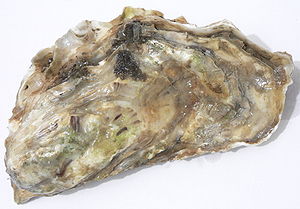
Ottawa, August 2, 2018 – The Great Little Harbour Seafood Company Ltd. is recalling Oysters from the marketplace due to possible contamination. Consumers should not consume the recalled products described below.

Recalled products

Brand Name Common Name Size Code(s) on Product UPC
None Oysters 3″
Small Choice
100 count Production Date: 20/07/2018
Harvest Date: 19/07/2018
Harvest Area: NB 6D
Lease #: MS-1367
10879601002471
None Standards Oysters 100 count Production Date: 20/07/2018
Harvest Date: 19/07/2018
Harvest Area: NB-6D
Lease #: MS-1367
10879601002648

France -McDonald’s France finds Listeria in chicken salad; supplier recalls dill

Food Safety News france

McDonald’s has revealed it detected Listeria in a chicken salad sold in restaurants throughout France.

The fast food giant said an internal control found the pathogen in one lot of chicken Caesar salad sold from July 9 to 14. It was removed from sale July 15. Florette Food Services (FFS), which is part of the Florette company, supplied the product to McDonald’s.

McDonald’s has around 1,400 restaurants in France and informed clients of those affected on its website and by putting up posters in outlets. No illnesses linked to the product have been reported.

Other analyses throughout the chain, on the lot concerned, during the day and the month of production have been given the all clear.

In the United States, McDonald’s is one of potentially several other companies that sold Fresh Express salad mix contaminated with Cyclospora, resulting in a multi-state outbreak. The U.S. Food and Drug Administration confirmed the parasite in salad from the Chiquita Brands LLC subsidiary Fresh Express.

South Africa – 216 Dead with 1,060 with Listeria in South Africa – People still getting sick from Polony

Food Poison Journal

NICD updated this Listeria Outbreak at the end of July.  Of note, the numbers of ill have continued to drop following the recall of Tiger Brands Enterprise Foods polony in March. However, it appears that some of the “recalled” product is still being consumed.

1,060 laboratory-confirmed cases have been reported from 01 January 2017 to 17 July 2018. The number of new cases reported each week has decreased since the implicated products were recalled on 04 March 2018 with no new cases of listeriosis reported during the week prior to release of this sitrep (Figure 1). Neonates ≤28 days of age are the most affected age group (42%, 443/1 060), followed by adults aged 15 – 49 years of age (32%, 334/1 060) – Figure 2. Most cases have been reported from Gauteng Province (58%, 614/1 060), followed by Western Cape (13%, 136/1 060) and KwaZulu-Natal (8%, 83/1 060) provinces (Table 1). Final outcome (i.e. death or discharge) is known for 76% (806/1 060) of total cases to date; 27% (216/806) with known outcome died.