Category Archives: Food Hygiene

Poland – Audit finds Polish food companies’ tests for Salmonella are ineffective

PoultryMed

A European audit was carried out in Poland from 6 to 15 February 2018 as part of the published Directorate-General for Health and Food Safety audit programme. The objective of the audit was to evaluate the actions taken by the Polish competent authority in order to control Salmonella, in particular the implementation of the Salmonella National Control Programmes in different poultry populations. Subsequent to the latest previous audit (2015) and the Salmonella outbreak of 2016, the Polish competent authorities have made several changes to the Salmonella National Control Programmes, to relevant national legal instruments, and to instructions and official checks related to the Salmonella National Control Programmes. Official controls in place respect (and sometimes exceed) the planned frequencies of on-site inspections, and detected and effectively imposed correction of food business operator non compliances with requirements. Verification of the performance of official controls is in place and has also detected and obtained correction of shortcomings with the official checks. The Salmonella National Control Programmes in Poland are generally in line with EU requirements and well implemented and correct restrictive measures were imposed and/or taken by farmers when needed and mostly well documented. However, for laying hens in particular, the epidemiological investigations have frequently not managed to identify the source of infection and ECDC-EFSA data indicates that this infection is likely to still be ongoing in Poland.

USA – FDA Investigating Multistate Outbreak of Salmonella Enteritidis Linked to Shell Eggs from Gravel Ridge Farms

FDA

The U.S. Food and Drug Administration, along with the Centers for Disease Control and Prevention (CDC) and state and local partners, are investigating a multi-state outbreak of Salmonella Enteritidis illnesses that is linked to shell eggs.

Update – September 10, 2018

As of September 10, 2018, there are 14 illnesses. Gravel Ridge Farms of Cullman, Alabama, has recalled cage-free, large eggs dating back to June 25, 2018.

Recommendations

The FDA is advising consumers not to eat recalled shell eggs produced by Gravel Ridge Farms. Consumers who have purchased these products can return them to the store for a refund. If any consumers have Gravel Ridge Farms eggs in their refrigerator, they should be discarded, regardless of the date stamped on the package. Recalled eggs were also sold to several grocery stores in Alabama, Georgia, and Tennessee. For a complete list of stores, visit the recall notice.

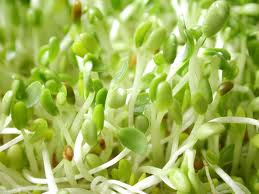
Australia – Spike in Salmonella Oranienburg cases linked to alfalfa sprouts

Outbreak News Today alfalfa

Officials with the Government of South Australia (SA Health) are warning the public not to eat a number of alfalfa sprout products produced by Adelaide business Sunshine Sprouts, after several people became ill with Salmonella Oranienburg.

SA Health’s Acting Executive Director Public Health Services, Dr Chris Lease, said there had been spike in cases of Salmonella Oranienburg, with eight confirmed cases in the past month, compared with eight for all of last year.

“As part of the investigation into these cases, 116 alfalfa sprout products were sampled as two cases had reported eating these types of products.  Results received this morning identified that Salmonella Oranienburg was present in three of these samples,” Dr Lease said.

“A number of Sunshine Sprouts alfalfa sprouts products have already been voluntarily recalled and we are advising anyone who has purchased the affected products not to eat them, and to return them to the place of purchase for a refund or throw them away.

USA – Salmonella Prompts Gravel Ridge Farm Eggs Recall

Food Poison Journal Salmonella Eggs Food Poisoning Food Safety

Gravel Ridge Farms is recalling Cage Free Large Eggs due to a potential contamination of Salmonella. The recall was initiated because reported illnesses were confirmed at locations using Gravel Ridge Farm Eggs, and we are voluntarily recalling out of an abundance of caution.

Ireland – Recall of a Batch of The Deli Green Pesto Due to Detection of Listeria monocytogenes

FSAI  

Summary
Category 2: For Information
Alert Notification: 2018.36
Product: The Deli Green Pesto; pack size: 140g
Batch Code: ‘Use-by’ date: 16.09.2018
Country Of Origin: Ireland

Message:

Aldi is recalling the above batch of its The Deli Green Pesto due to the detection of Listeria monocytogenes. Point-of-sale recall notices will be displayed in Aldi Stores.

USA – E. coli Outbreak Linked to WA Dungeness Valley Creamery Raw Milk Sickens Two

Food Poisoning Bulletin Raw Milk Food Safety KSW Foodworld

An E. coli outbreak that sickened a child under the age of 5 and a person in their 70s is linked to raw milk from Dungeness Valley Creamery raw milk in Olympia, Washington. The child lives in Island county and the older adult lives in Clallam County. The press release from the Washington State Department of Health states that they got sick “with an E. coli infection after drinking Dungeness Valley Creamery raw milk.”

Dr. Scott Lindquist, Washington state communicable disease epidemiologist, said in a statement, “Raw milk doesn’t go through the pasteurization process where harmful germs and bacteria are destroyed. This puts infants, young children, the elderly, pregnant women and those with a weakened immune system at a greater risk of illness when they drink it.”

Canada – Updated Food Recall Warning – Randsland brand Super Salad Kit recalled due to Listeria monocytogenes

CFIA CIFA

Recall details

Ottawa, September 8, 2018 – The food recall warning issued on September 6, 2018 has been updated to include additional product information. This additional information was identified during the Canadian Food Inspection Agency’s (CFIA) food safety investigation.

Randsland Farms Inc. is recalling Randsland brand Super Salad Kit from the marketplace due to Listeria monocytogenes. Consumers should not consume the recalled product described below.

Recalled products

Brand Name Common Name Size Code(s) on Product UPC
Randsland Super Salad Kit 454 g 090318 0 57225 00005 6

USA – Outbreak at Pasha’s Mediterranean Grill in San Antonio, Texas; Lawsuits Possible

Food Poisoning Bulletin

An outbreak of food poisoning at Pasha’s Mediterranean Grill in San Antonio, Texas has been reported by the San Antonio Metro Health Department. The press release states that “numerous, independent companies of foodborne illness [have been] reported by individuals who have dined at Pasha’s Mediterranean Grill on Wurzbach Road during the past Labor Day weekend.

USA – Reilly Craft Creamery Recalls Ice Cream in Michigan for Possible Listeria

Food Poisoning Bulletin kswfoodworld Listeria monocytogenes

Reilly Craft Creamery is recalling two flavors of ice cream because they may be contaminated with Listeria monocytogenes bacteria, according to a notice posted at the Michigan.gov website. No illnesses have been reported to date in connection with this recall.

The flavors recalled are Vanilla Bean Ice Cream and Choc Choc Chunk Ice Cream. It was sold to four local retail grocery stores in southeastern Michigan and one distributor in Ann Arbor: The Farmer’s Hand in Detroit; Western Market in Ferndale; Fairfax Quality Market in Grosse Pointe Park; Fresh Farms Market in Grosse Pointe, and Eat Local Eat Natural in Ann Arbor. The ice cream was also sold through the Michigan Farm to Family website. It’s possible that the ice cream was distributed to other grocery stores and restaurants across the state.

The Vanilla Bean Ice Cream was produced on July 31, 2018 and has a product code of 073118-1. The Choc Choc Chunk Ice Cream was produced on July 5, 201,  and has a product code of 070518-1. The product is packed in paper pint cartons. The product numbers are on the bottom of each container. The vanilla bean flavor ice cream has a large gray ‘R’ on the front of the carton with the flavor listed on top of the ‘R’ in yellow cursive font. The choc choc chunk flavor ice ream has a large light-brown ‘R’ on the front of the carton with the flavor listed on top of the ‘R’ in dark-brown cursive font.

Listeria monocytogenes bacteria was found in two flavors of ice cream produced in July 2018. But consumers who have bought ANY flavor of Reilly Craft ice cream since March 2018 are urged not to eat it. Throw it away in a sealed or bagged package or take it back to the place of purchase for a refund. Production of the ice cream at Reilly Craft Creamery has been suspended while the investigation is conducted.

UK – Scotland – FSS Statement regarding Errington Cheese Ltd

FSA

Food Standards Scotland is aware of ongoing commentary around the Errington Cheese Ltd case. Food Standards Scotland is – rightly – publically accountable, and accountable to Parliament. Our duty is to protect public health. We believe it is in the public interest for FSS to address the inaccuracies being reported.

First, Food Standards Scotland does not act alone during a major food incident. In this instance, we were one of several agencies and 60 individuals representing Health Protection Scotland, NHS Health Boards, South Lanarkshire Council and other Local Authorities. Setting up an Incident Management team during an incident is standard practice to ensure a range of experts are involved.

Secondly, extensive investigations into the possible cause of the E.coli O157 outbreak of 2016 were undertaken – not just looking at a range of possible food sources, but also at possible factors common to all of the patients interviewed, such as recent travel, environmental factors etc. These investigations were extensive and exhaustive, and led the Incident Management Team to Dunsyre Blue cheese, produced by Errington Cheese Ltd, as the source of the outbreak.

This conclusion of the Incident Management Team report is not being legally challenged. The recent Sheriff Court proceedings did not relate to Dunsyre Blue cheese and therefore the Court did not have the opportunity to review the large body of evidence considered by the Incident Management Team during the outbreak. The Court condemned some batches of Corra Linn and Lanark Blue cheese because they failed to comply with food safety requirements, and released others.

Thirdly, the epidemiology (the spread of the disease and identification of the source) is being challenged in a report by Professor Norman Noah which we understand was prepared for the purpose of defending litigation against Errington Cheese Ltd by a third party. Neither Food Standards Scotland nor Health Protection Scotland have had sight of this report, despite requests, and so have had no opportunity to respond to its conclusions.

Further, there are calls for an independent review of Food Standards Scotland’s actions and decision – which, to reiterate, were not taken in isolation. An independent review has already been undertaken under a co-operative agreement between the central food authorities of New Zealand and those of the United Kingdom, which we have published on our website.

The Government of New Zealand’s Ministry for Primary Industries evaluated the decisions that were taken regarding the recall of products from Errington Cheese Ltd during the E.coli O157 outbreak of 2016.

The reviewers in New Zealand were presented with extensive documentation which we will also be releasing. The evaluation was based on international good practice, New Zealand regulatory requirements and expectations that would be applied in a similar scenario, as well as the Ministry for Primary Industries’ specialist scientific evidence.

The New Zealand government reviewers “find the risk management decisions made and actions taken by the Competent Authorities SLC [South Lanarkshire Council] and FSS are reasonable and proportionate in regard to protecting public health.”