
Category Archives: Food Hygiene

Europe – EU countries send ‘clear signals’ on lack of resources for safety efforts

Food Safety News  EUC

European member states have sent clear signals that staff resources for official controls are increasingly limited, according to a report.

Any potential further reduction risks negatively affecting the levels and quality of controls and capacity to respond to emergencies. Resource shortage also concerned equipment in some member states for laboratories, or means of transport for staff, affecting performance of controls.

The report covers the outcome of official controls in member states during 2014 to 2016.

The European Commission said it took note of these signals and will consider such issues when developing legislation. It added member states will likely aim to address the problem with new IT systems, re-organization and optimized procedures.

The Official Controls Regulation (EU) 2017/625 applied from April 2017 with rules gradually coming into force and a main application date of Dec. 14, 2019.

USA – Salmonella Outbreak Linked to Pot ‘O Gold Dairy Raw Milk in Bear Lake, PA

Food Poisoning Bulletin Raw Milk Food Safety KSW Foodworld

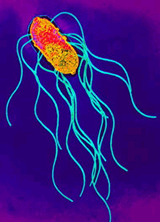
A Salmonella outbreak has been linked to raw milk from Pot ‘O Gold Dairy Specialties in Bear Lake, Warren County. That dairy is located in Pennsylvania. The Pennsylvania State Department of Agriculture released information about the outbreak late yesterday.

So far, nine cases of Salmonella food poisoning have been diagnosed and confirmed. The press release did not state the ages of the patients, whether or not anyone has been hospitalized, or the illness onset dates.

The raw whole milk was sold in glass half gallon containers with the Pot ‘O Gold label at 16 stores in these counties: Erie, Crawford, McKean, Warren, and Venango. The milk that was sold from September 10, 2018 to the present is part of this recall.

The milk was sold at these Crawford County facilities: Buck and Kathy in Titusville, D&J Bakery in Cambridge Springs, MIller’s Country Store in Cochranton.It was sold there locations in Erie County: Corry Lumber in Corry, Duran’s Farm Fresh Products in Waterford, Edinboro Market in Edinburg, Orton’s Fruit Market in North East, and Sander’s Market in Corry. The raw whole milk was sold at Circle K Feeds in Kane in McKean County, and at Farmer’s Daughter’s Country Market in Venango County. Finally, in Warren County, it was sold at Kondak’s Markert in Clarendon, Lottsville Miling in Lottsville, Scandia General Store in Scandia, Shell Service Center in Warren, Town and Country Store in Sugar Grove, and Youngsville Hardware in Youngsville.

Research – Occurrence of Salmonella in Ready-to-Eat Meat and Poultry Product Samples from U.S. Department of Agriculture–Regulated Producing Establishments. I. Results from the ALLRTE and RTE001 Random and Risk-Based Sampling Projects, from 2005 to 2012

Journal of Food Protection

Ready-to-eat (RTE) meat and poultry product samples collected from RTE-producing establishments for the ALLRTE (random) and RTE001 (risk-based) sampling projects of the Food Safety and Inspection Service (FSIS) were tested for both Salmonella and Listeria monocytogenes. The FSIS analyzed Salmonella results for RTE meat and poultry product samples collected for the two sampling projects from 2005 to 2012. Data for 24,385 ALLRTE samples collected from 3,023 establishments and 66,653 RTE001 samples collected from 2,784 establishments were evaluated for the percentages of Salmonella-positive samples, product types of positive samples, and Salmonella serotypes. There also were descriptive summaries with respect to establishment hazard analysis and critical control point (HACCP) size, production volumes, L. monocytogenes control alternatives, geographic location, and season or month of sample collection. Results showed low occurrences of Salmonella-positive samples from the ALLRTE and RTE001 sampling projects, with 14 positive samples (0.06%) for ALLRTE and 33 positive samples (0.05%) for RTE001. Percentages of establishments with at least one Salmonella-positive sample averaged 0.46% for ALLRTE and 1.11% for RTE001. Three product types—sausage products, pork barbecue, and head cheese—accounted for 62% of all positive samples. There were 27 distinct serotypes from 48 Salmonella isolates, with serotypes Infantis and Typhimurium being the most common (5 isolates each). All but one of the Salmonella-positive samples were obtained from establishments with HACCP sizes of small or very small. More than half of the positive samples were obtained from establishments using L. monocytogenes control alternative 3 (sanitation only, highest-risk category). Positive Salmonella samples were found in all geographic regions at all times of the year. Information obtained from these sampling projects is relevant to the prevention of foodborne Salmonella illnesses from RTE meat and poultry products.

Research – Prevalence and Concentration of Salmonella on Raw, Shelled Peanuts in the United States

Journal of Food Protection Salmonella kswfoodworld

Recalls and outbreaks associated with Salmonella contamination in peanut-containing products have been reported over the past several years. Very limited data existed on the prevalence and concentration of Salmonella on raw, shelled peanuts in the United States. An initial study was completed in 2012 to estimate the prevalence and concentration of Salmonella on Runner- and Virginia-type raw, shelled peanuts in the United States from the 2008 through 2011 crop years, which were proportionately sampled from each growing region based on 2007 production volume. That study was extended to include samples of Runner- and Virginia-type peanuts from 2013, 2014, and 2015 crop years proportionately sampled from each growing region on the basis of the 2008 through 2010 volumes. Of the total 2,506 raw, shelled peanut samples, 41 (1.63%) were positive for Salmonella by the VIDAS SLM assay. Salmonella serovars identified in this study included Agona, Anatum, Bardo, Braenderup, Cannstatt, Dessau, Gaminara, Litchfield, Hartford, Inverness, Mbandaka, Meleagridis, Muenchen, Newport, Pakistan, Rodepoort, Rubislaw, Tennessee, and Tornow. The concentration levels of Salmonella in positive samples, as determined by most probable number (MPN), ranged from <0.003 to 2.4 MPN/g. These data will be useful when designing and validating processes for the reduction or elimination of Salmonella in peanuts or peanut-containing products or both.

Research – Molecular detection and genotype identification of Toxoplasma gondii in domestic and industrial eggs

Wiley Online 


Abstract

Birds are important intermediated hosts of Toxoplasma gondii. Consumption of chicken meat and its infected products is one of the main sources of human infection with T. gondii. However, little information is available about T. gondii infection in egg. In this study, the contamination of industrial and local eggs with Toxoplasma was investigated by PCR method targeting the RE gene in two tropical cities of Iran. Genotypes of T. gondii were determined by PCR‐RFLP method targeting the SAG3 gene. T. gondii DNA was detected in 11% (22/200) of the eggs. Genotyping of 14 T. gondii isolates revealed that all of the isolates were belonged to genotype III of T. gondii. Sequencing of the isolates by the SAG3 gene showed 95%–100% similarity with the T. gondii isolates in GenBank.

Practical applications

The findings of this study suggested that consumption of raw or undercooked eggs might play a role in human infection with Toxoplasma. Hence, consumption of adequately cooked eggs should be considered for prevention of human toxoplasmosis.

Italy – Recall of eggs due to Salmonella enteritidis

Poultry Med

The Ministry of Health has published a recall notice of three batches of free range hen’s eggs from the Bosi Luigi farm.The cause is the presence of Salmonella enteritidis. The eggs recalled were produced by the Bosi Luigi farm of Bosi Costanza in the province of L’Aquila (identification mark IT X8HOM CE).

USA – FSIS urges the public to check homes for recalled meat, chicken entrees

Food Safety News

Valley Fine Foods is recalling more than 35,000 pounds of refrigerated Simple Dishes brand pasta entrees containing meat and chicken after discovering the products might be contaminated with “spoilage organisms.”

The Forest City, NC, company reports it produced the recalled products from Aug. 15 through Oct. 4. The products are heat-treated, but are not fully cooked, according to a recall notice posted by the USDA’s Food Safety and Inspection Service (FSIS).

Some of the Simple Dishes products have Nov. 25 best-if-used-by dates, prompting FSIS to urge consumers to check their homes for the chicken and meat pasta dishes. No one should eat any of the recalled products. Company and government officials say the products should immediately be thrown away or returned to the place of purchase.

“The problem was discovered on Oct. 4 by the establishment’s (Valley Fine Foods) research and development department during routine internal testing. FSIS was notified on Oct. 10,” according to the recall notice. As of the posting of the notice Thursday evening, no confirmed illnesses had been reported in relation to the recalled products.

USA – Processing error blamed for small chicken jerky recall in Tennessee

Food Safety News

About 23 pounds of ready-to-eat chicken jerky were recalled Thursday by Pigeon Forge, TN-based Jerky Boyz because of a processing deviation that may have led to under-processing of products, according to the USDA’s Food Safety and Inspection Service (FSIS).

The problem was discovered Oct. 10 by FSIS inspection personnel during a records review verification.

The ready-to-eat chicken jerky was produced from Sep. 6 through Sep. 26. The following products are subject to recall:

  • 2.5-oz. clear plastic packages containing “Jerky BoyZ Chicken Jerky Buffalo Wing” with lot code 81101.
  • 2.5-oz. clear plastic packages containing “Jerky BoyZ Chicken Jerky Kickin’ Pepper” with lot code 81101.

The recalled products bear establishment number “P-46388” inside the USDA mark of inspection. These items were shipped to retail locations in Tennessee.

There have been no confirmed reports of adverse reactions due to consumption of these products. Anyone concerned about an injury or illness should contact a healthcare provider.

RASFF Alerts – Aflatoxin – Pistachios – Groundnuts – Almond Kernels – Red Rice – Red Rice Flakes – Shelled Peanuts

RASFF-Logo

RASFF-aflatoxins (B1 = 116; Tot. = 119 µg/kg – ppb) in pistachios in shell from Syria, via Turkey in Portugal

RASFF-aflatoxins (B1 = 16.3; Tot. = 19.7 / B1 = 22.1; Tot. = 25.4 µg/kg – ppb) in groundnuts in shell from Egypt in Germany

RASFF-aflatoxins (B1 = 24; Tot. = 24 µg/kg – ppb) in almond kernels from Australia in Spain

RASFF-aflatoxins (B1 = 12.5; Tot. = 39.4 µg/kg – ppb) in red rice from Sri Lanka in Switzerland

RASFF-aflatoxins (B1 = 32.2 µg/kg – ppb) in red rice flakes from Sri Lanka in Switzerland

RASFF-aflatoxins (B1 = 55.4; Tot. = 65.6 µg/kg – ppb) in shelled peanuts from Brazil in Italy

RASFF Alerts – STEC E.coli -Chilled VP Beef – Chilled Chopped Endive – Chilled Beef

RASFF-Logo

RASFF-shigatoxin-producing Escherichia coli (presence /25g) in chilled vacuum-packed beef from Argentina in Italy

RASFF-shigatoxin-producing Escherichia coli (stx2f /25g) in chilled chopped endive from the Netherlands in the Netherlands

RASFF-shigatoxin-producing Escherichia coli (stx+) in chilled beef from Argentina in the Netherlands
