Category Archives: Cyclospora

USA – Cyclospora Outbreak in Boston Sickens More Than 80 People

Food Poisoning Bulletin cyclo

A cyclospora outbreak in the Boston area has sickened more than 80 people since May 2019, according to news reports. Dr. Larry Maddoff, medical director for the Bureau of Infectious Diseases and Laboratory Sciences at the Massachusetts Department of Public Health told Boston 25 News about this outbreak.

USA – Another State with Cyclospora?

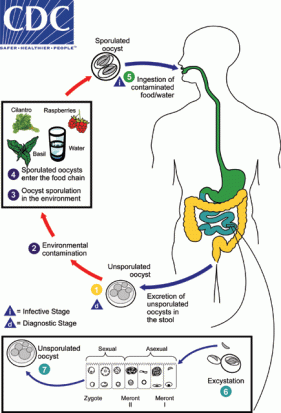
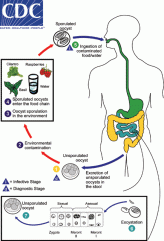
Food Poison Journal Cyclospora_LifeCycle201

Northern Virginia Area Investigating an Increase in Intestinal Illness Associated with Cyclospora

Health Districts in the Region Seeking the Cause of Cyclosporiasis Increase

The health districts in northern Virginia are notifying the public that there has been a significant increase in the number of reported cyclosporiasis cases since mid-June 2019. To date there are 15 cyclosporiasis cases reported in the Northern Region of Virginia, up from eight at this time last year. Additionally, more than 40 people from two large businesses in the area have reported gastrointestinal illness, and are under investigation for suspected cyclosporiasis. A food or water source of this outbreak has not yet been identified, and the investigation is ongoing.

USA – Cyclospora at Italian American Community Center, Union College and Prime Life Restaurant

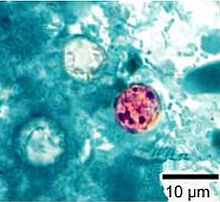
Food Poison Journal 220px-Cyclospora_cayetanensis_stained

The New York State Department of Health, working collaboratively with the Albany County Department of Health, Montgomery County Public Health, Saratoga County Public Health and Schenectady County Public Health Services, is investigating reports of multiple cases of Cyclosporiasis.

USA -Alleged Cyclospora Outbreak at Cooper’s Hawk Winery in Jacksonville, FL

Food Poisoning Bulletin Cyclospora_LifeCycle201

News outlets are reporting that an alleged cyclospora outbreak has occurred after people ate at Cooper’s Hawk Winery & Restaurant, located in the Markets at Town Center near the St. Johns Town Center in Jacksonville, Florida. People who belong to the Exchange Club held a banquet at that venue last month.

UK – Scotland – Cyclospora risk for travellers to Mexico

HPS 

Seasonal outbreaks of Cyclospora infection in UK travellers returning from Mexico have been reported, with the majority of cases in travellers who have stayed in the Riviera Maya and Cancun regions of Mexico. The source of infection was likely to be contaminated food items supplied to hotels throughout the area.

Cyclospora cayetanensis is a protozoan parasite that can infect humans, causing frequent, watery diarrhoea, abdominal cramping, bloating, nausea, flatulence, low-grade fever and loss of both appetite and weight. HIV-positive individuals and those with other immune deficiencies can be at risk of more severe infection.

On return from Mexico, travellers with any symptoms such as those described should seek medical attention and inform their GP of their travel history.

Healthcare practitioners should raise awareness of Cyclospora infection with all travellers to Mexico, and should strongly advise that travellers maintain a high standard of food, water and personal hygiene, even if staying in high-end resorts.

For further information on protozoan parasitic infection, including Cyclospora, consult TRAVAX (for health professionals) and fitfortravel (for the general public).

Sources: TRAVAX and fitfortravel (both 10 June 2019)

Research – Prevention of Foodborne Cyclospora Outbreaks

AGF Storage Cyclospora_LifeCycle201

In the spring and summer of 2018, Fresh Express and other fresh produce suppliers were linked to a Cyclospora cayetanensis outbreak — with U.S.-grown fresh produce samples testing positive for the parasite. To address this issue, Fresh Express formed the Blue-Ribbon Panel on the Prevention of Foodborne Cyclospora Outbreaks, comprising scientists with deep expertise in the biology of the organism, food safety, outbreak response, and public health. The panel was charged with studying the parasite and identifying controls to limit further C. cayetanensis– associated outbreaks. After a November 2018 in-person meeting, the Blue-Ribbon Panel formed four working groups that continued to work on C. cayetanensis specific issues related to root-cause assessment, preventive measures/controls, collaborative approach, and testing
validation over the next several months. This report contains the working groups’ preliminary findings, recommendations, and continuing priorities to more effectively prevent and control C. cayetanensis outbreaks going forward.


USA – Kwik Trip Del Monte Vegetable Trays Linked to Salmonella Outbreak in WI and MN

Food Poisoning Bulletin

A new Kwik Trip Del Monte vegetable tray outbreak has sickened three people in Wisconsin and one person in Minnesota with Salmonella food poisoning, according to the Wisconsin Department of Health. Last year, a cyclospora outbreak that was linked to Del Monte vegetable trays, also sold at Kwik Trip and Kwik Star locations in the upper Midwest, sickened at least 250 people.

USA – Chicken and Eggs Top List of Causes for Foodborne Outbreaks

Healthline


Chicken, eggs, and produce are most likely to carry bacteria responsible for the vast majority of foodborne illness in the United States.

The bacteria most likely to make you sick year after year: Campylobacter and Salmonella. Less common pathogens also include ShigellaCyclospora, and Listeria.

Foodborne illness is still a major health problem in the United States, according to a report released last week from the Centers for Disease Control and Prevention (CDC).

The agency identified more than 25,000 foodborne infections through various surveillance sites in 2018. Nearly 6,000 of those cases resulted in hospitalizations, and 120 people died as a result of foodborne illness.

The report is part of annual surveillance by the CDC that tracks the pathogens responsible for foodborne illness.

Information – Annual snapshot of foodborne illnesses shows Cyclospora spike

CIDRAP Cyclospora_LifeCycle201

In its annual report summing up the latest trends with pathogens that are common sources of foodborne illness, the Centers for Disease Control and Prevention (CDC) said today that the incidence of most illnesses increased in 2018, especially Cyclospora infections.

A team from the CDC and partners in 10 states that are part of the FoodNet surveillance network looked at levels for 2018 and compared them with levels for 2015 through 2017. The pathogens they tracked included CampylobacterCryptosporidiumCyclosporaListeriaSalmonella, Shiga toxin-producing Escherichia coli (STEC), ShigellaVibrio, and Yersinia. They published their findings today in the latest edition of Morbidity and Mortality Weekly Report.

In preliminary findings for 2018, the FoodNet system flagged 25,606 infections, 5,893 hospitalizations, and 120 deaths. They note that the incidence for most infections is rising, including Campylobacter and Salmonella. However, they added an important caveat that some of the increase might be partly due to the increased use of culture-independent diagnostic tests (CIDTs), which can identify pathogens not regularly found by other testing methods — complicating data interpretation.

USA – Research – FDA Sampling Fresh Herbs, Guacamole and Processed Avocado

FDA


As of January 1, 2019, the FDA has tested 747 fresh herb samples (441 domestic, 306 import), and 526 processed avocado or guacamole samples (435 domestic, 91 import). Of the fresh herb samples, nine tested positive for Salmonella (4 domestic, 5 import), and six tested positive for Shiga-toxin producing E. coli (STEC), with further characterization determining that the STEC were incapable of causing severe illness. The FDA did not detect E. coli O157:H7 in any of the fresh herb samples that it tested. Of the processed avocado or guacamole samples, 11 tested positive for Listeria monocytogenes (9 domestic, 2 import), and two tested positive for Salmonella (both domestic samples).

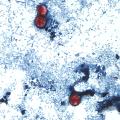
The FDA also began testing its fresh herb samples for Cyclospora cayetanensis in July 2018, given that Cyclospora-related illnesses typically occur during the summer. The agency detected Cyclospora cayetanensis in two of the 141 samples of domestically grown fresh herbs tested, and in four of the 74 samples of imported fresh herbs tested. Testing for all pathogens is still underway and no conclusions can be drawn at this time.

December 7, 2018

As of October 1, 2018, the FDA has tested 683 fresh herb samples (407 domestic, 276 import), and 474 processed avocado or guacamole samples (386 domestic, 88 import). Of the fresh herb samples, nine tested positive for Salmonella (4 domestic, 5 import), and six tested positive for Shiga-toxin producing E. coli (STEC), with further characterization determining that the STEC were incapable of causing severe illness. The FDA did not detect E. coli O157:H7 in any of the fresh herb samples that it tested. Of the processed avocado or guacamole samples, 11 tested positive for Listeria monocytogenes (9 domestic, 2 import). The FDA did not detect Salmonella in any of the samples of processed avocado or guacamole.

The FDA also began testing its fresh herb samples for Cyclospora cayetanensis in July given that Cyclospora-related illnesses typically occur during the summer. The agency detected Cyclospora cayetanensis in two of the 107 samples of domestically grown fresh herbs tested, and in two of the 44 samples of imported fresh herbs tested. Testing for all pathogens is still underway and no conclusions can be drawn at this time.