Category Archives: Contaminated water

Sweden – Sweden -Cryptosporidium outbreak tops 300 cases since October

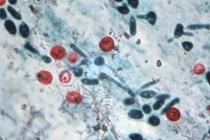
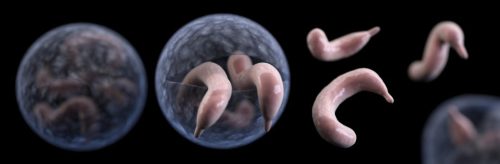
Outbreak News Today crypt

In a follow-up on a previous report on the Cryptosporidium outbreak in Sweden, the Public Health Authority, or Folkhalsomyndigheten, report more than 300 cases of cryptosporidiosis in October and November.

The good news is while the number of cases are still unusually high, the number of reported cases has decreased.


France -Cryptosporidium outbreak reported in Alpes-Maritimes, France

Outbreak News Today 

The Agence régionale de santé Provence-Alpes-Côte d’Azur (ARS Paca) is reporting (computer translated) a Cryptosporodium outbreak in Grasse and several surrounding municipalities of the Alpes-Maritimes.

Since October 7, at least 92 cases of diarrhea caused by a parasite. There is a suspicion of contamination in the Grasse sector, supplied with water by the Foulon canal (west of the Alpes-Maritimes), which could have been contaminated following heavy rainfall.

Officials recommended as a precaution to drink only bottled water or to boil the tap water before consume it or use it to prepare food.


Europe -How Common is Legionnaires’ Disease in Europe?

Legionella Control

In this article the water safety experts at Legionella Control International ask the question… how common is Legionnaires’ disease in Europe, and what can be done to prevent it? It examines data from the ECDC (European Centre for Disease Prevention and Control) including records of how many people catch Legionnaires’ disease in Europe, and typical mortality rates. It then looks at what key steps can be taken to control the spread of the disease, including legionella risk assessment and the development and implementation of a Water Safety Plan or WSP.

Sweden -Sweden reports increase in Cryptosporidium, most in Stockholm

Outbreak News Today crypto

Swedish health officials, aka Folkhalsomyndigheten have reported an increase in the parasitic infection, cryptosporidiosis in recent weeks, particularly in November.

About half of the country’s regions have reported cases in all ages, but primarily in adults. Most cases are seen in the Stockholm region.

The Public Health Agency and the National Food Agency have started an outbreak investigation to identify if there are one or more common sources of infection that are unknown so far. As part of the investigation, cases are interviewed about what they ate and drank before they became ill.

USA – Elmira Legionnaires Outbreak

Outbreak News Today

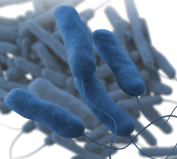
CDC legionella

Image CDC

13 Elmira residents are recovering from Legionnaires’ disease.  The Chemung County Department of Health and the New York State Department of Health are investigating the Elmira Legionnaires Outbreak.  Legionnaires disease is a serious and often deadly lung disease.  Overall, 10% of Americans who develop Legionnaires disease die.

A cooling tower at Elmira Heat Treating may be the source of this Legionnaires outbreak.  Cooling towers are a common source of Legionnaires disease outbreaks. Elmira Heat Treating has three cooling towers.  One cooling tower tested positive for Legionnaires disease.

USA – East Texas State Fair Linked to Legionnaires’ Outbreak

Outbreak News Today

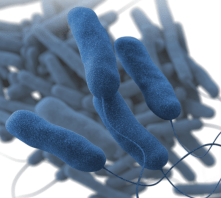
CDC legionella

Image CDC


12 people may have developed Legionnaires’ disease in the East Texas State Fair Legionnaires Outbreak.  The Northeast Texas Public Health District alerts the public in East Texas that:

Anyone who attended the East Texas State Fair in Tyler during September 2019 and is sick due to symptoms of Legionnaires’ disease is urged to discuss Legionnaires’ disease with your health care provider immediately.

Public health investigators are working to identify how the outbreak happened.  7 confirmed cases of Legionnaires Disease and 5 possible cases have been linked to the East Texas State Fair, which was help on September 20th – September 29th.

The Tyler Morning Telegraph reports that, “state health investigators have determined that all who are sick attended the East Texas State Fair that took place Sept. 20-29 in Tyler. If exposed to the disease, attendees already would have exhibited symptoms.”

RASFF Alert -Escherichia coli -Pseudomonas aeruginosa – Enterococcus – Still and Sparkling Bottled Water

RASFF-Logo

RASFF – Escherichia coli, Pseudomonas aeruginosa (>100 CFU/250ml) and Enterococcus in still and sparkling bottled water from Ireland in Ireland

Research -Occurrence, Seasonal Distribution, and Molecular Characterization of Vibrio vulnificus, Vibrio cholerae, and Vibrio parahaemolyticus in Shellfish (Mytilus galloprovincialis and Ruditapes decussatus) Collected in Sardinia (Italy)

Journal of Food Protection

ABSTRACT

In this study, we investigated the occurrence, seasonal distribution, and molecular characterization of pathogenic vibrios in Mediterranean mussels (Mytilus galloprovincialis) and grooved carpet shells (Ruditapes decussatus) from two harvesting areas of Sardinia (Italy). Samples collected before and after depuration were submitted for qualitative and quantitative determination of Vibrio spp. Vibrio spp. isolates were presumptively identified by means of biochemical methods. Identification and virulence profile of Vibrio cholerae, Vibrio parahaemolyticus, and Vibrio vulnificus were performed by molecular methods. The prevalence of Vibrio spp. in M. galloprovincialis and R. decussatus was, respectively, 96 and 77%. The averaged enumeration (mean ± standard deviation) of Vibrio spp. in samples of M. galloprovincialis and R. decussatus collected at the harvesting time was 2.04 ± 0.45 and 2.51 ± 0.65 log CFU/g, respectively. The average contamination levels in samples collected after purification were 2.28 ± 0.58 log CFU/g (M. galloprovincialis) and 2.12 ± 0.67 log CFU/g (R. decussatus). Four potentially pathogenic V. parahaemolyticus isolates (tdh+ or trh+) were recovered from grooved carpet shells samples. No isolate was tdh+/trh+. The presence of potentially pathogenic vibrios in Sardinian waters strengthens the need for rational purification practices under controlled conditions to guarantee the protection of consumers.

HIGHLIGHTS
  • Occurrence and pathogenicity characteristics of Vibrio pathogens were investigated.

  • Prevalence of Vibrio spp. in M. galloprovincialis was 96% and in R. decussatus was 77%.

  • Environmental conditions influence the occurrence of Vibrio spp.

  • Four V. parahaemolyticus isolates carried tdh or trh genes.

  • Rational purification practices are needed to guarantee the protection of consumers.

Ireland -Recall of Certain Batches of Bottled Water Bottled by Celtic Pure due to Microbiological Contamination

FSAI

Pseudomonas aeruginosa, Enterococci or E. coli bacteria were detected in a range of batches of water bottled by Celtic Pure. Please see tables of implicated brands and batches that do not comply with the legal requirements. These implicated batches are unsafe or potentially unsafe and are subject to recall.

Update 1, 22.10.2019: Please note that the recall was extended to include additional batches of bottled waters bottled by Celtic Pure, see FSAI Food Alert 2019.42 Update 1 for further details.

Update 2, 23.10.2019: Please note that the recall was extended to include an additional batch of bottled water bottled by Celtic Pure, see FSAI Food Alert 2019.42 Update 2 for further details.

For more information, please see statement: https://www.fsai.ie/news_alert/bottled_water_21102019.html.


Nature Of Danger:

Pseudomonas aeruginosa poses a higher risk of complications if consumed by severely immunocompromised people such as those who have undergone transplants or chemotherapy. It rarely causes illness in healthy individuals.

Enterococci and E. coli – their presence in water is considered an indicator that the water has been contaminated with faecal material, however, this does not mean that it will make people sick.

Action Required:

Manufacturers, wholesalers, distributors, caterers & retailers:

Retailers are requested to remove the implicated batches from sale. Retailers are also advised to display a point-of-sale recall notice in stores where the implicated batches were sold.

Consumers:

Consumers are advised not to drink the implicated bottled waters.

Research – EU – Cryptosporidiosis – Annual Epidemiological Report for 2017

ECDC crypto

Executive summary

Key facts

  • For 2017, 21 EU/EEA countries reported 11 449 cryptosporidiosis cases, of which 11 418 were confirmed.
  • The notification rate was 3.2 confirmed cases per 100 000 population.
  • Germany, the Netherlands and the United Kingdom (UK) accounted for 71% of all confirmed cases, with the United Kingdom alone accounting for 44%.
  • Most of the cases were reported in September 2017, following the seasonal pattern of previous years.
  • Children aged 0–4 years had the highest notification rate of 12.5 cases per 100 000 population.

Download

Thumbnail