Category Archives: bacterial contamination

France – Product recall: Cervelas Quality Choice 400 g brand Every day – Listeria monocytogenes

Oulah

Product recall: Cervelas Quality Choice 400 g brand Every day

ENCOUNTERED PROBLEM

Possible presence of Listeria monocytogenes

PROPOSED SOLUTION

Those in possession of this product are asked not to consume it and to return it to the point of sale where it was purchased.

People who have consumed this product and who present with fever, isolated or accompanied by headaches, are invited to consult their attending physician and notify them of this consumption.
Pregnant women should pay special attention to these symptoms, as well as immunocompromised people and the elderly. These symptoms may suggest listeriosis, a disease that can be serious and can take up to eight weeks to incubate.

FURTHER INFORMATION

▸ Barcode
3700311865745

▸ Health
stamp FR 44-180-004 CE

▸ DLC
10/30/2020

▸ Lot
408.38

▸ Consumer service contact
For any further information, you can contact the consumer service by dialing the Freephone number: 0 800 13 30 16 (free service and call) from Monday to Friday from 8:30 am to 6 pm.

▸ Source
https://www.supercasino.fr/

Canada – Updated Food Recall Warning – Eggs from Hilly Acres Farm recalled due to Salmonella

CFIA

Recall details

Ottawa, October 9, 2020 – The food recall warning issued on October 8, 2020 has been updated to include additional distribution and product information. This additional information was identified during the Canadian Food Inspection Agency’s (CFIA) food safety investigation.

Hilly Acres Farm is recalling eggs from the marketplace due to possible Salmonella contamination. Consumers should not consume and distributors, retailers and food service establishments such as hotels, restaurants, cafeterias, hospitals and nursing homes should not serve, sell or use the recalled products described below.

The following products have been sold in Newfoundland and Labrador and Cape Breton, Nova Scotia.

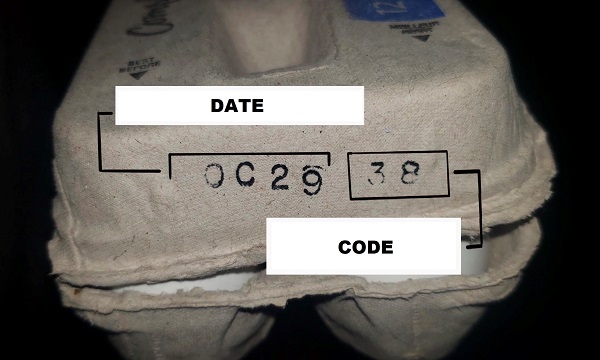
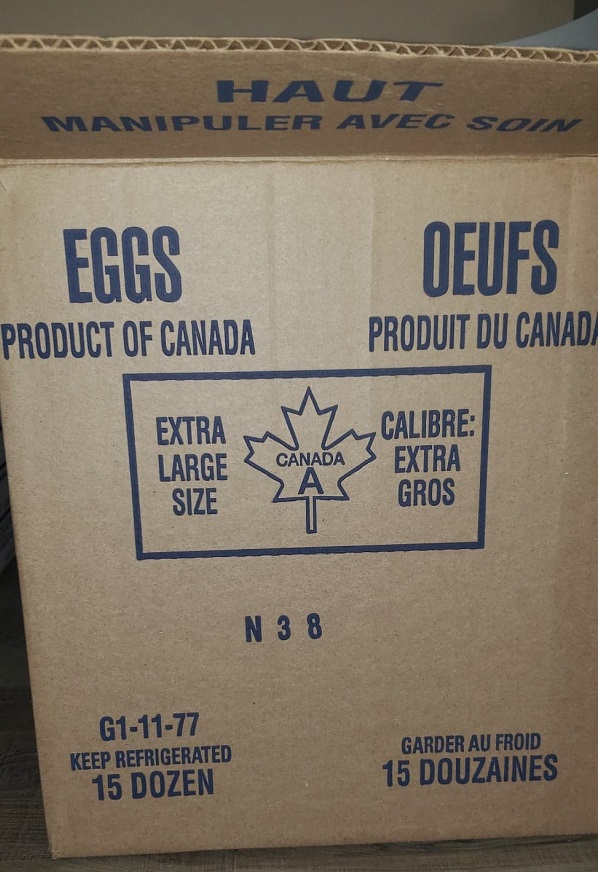
Only eggs from Hilly Acres Farm with best before dates from September 2, 2020 to October 31, 2020 inclusively where the lot code contains “38” or “N38” or where there is no lot code on the package are implicated by the recall.

Recalled product

Brand Product Size UPC Codes Additional Information
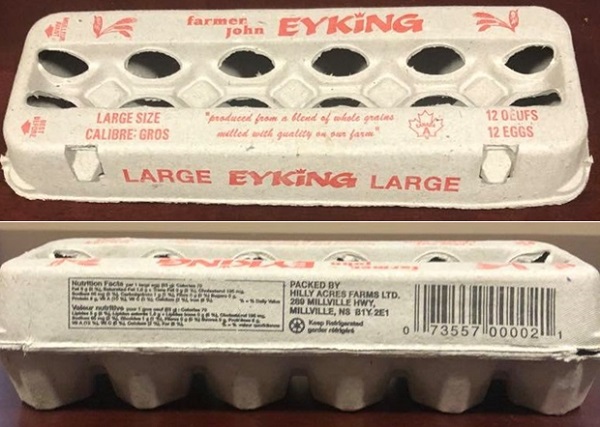
Farmer John Eyking Large Size Eggs 12 eggs 0 73557 00002 1 All code dates between September 2 and October 31, 2020, inclusively.
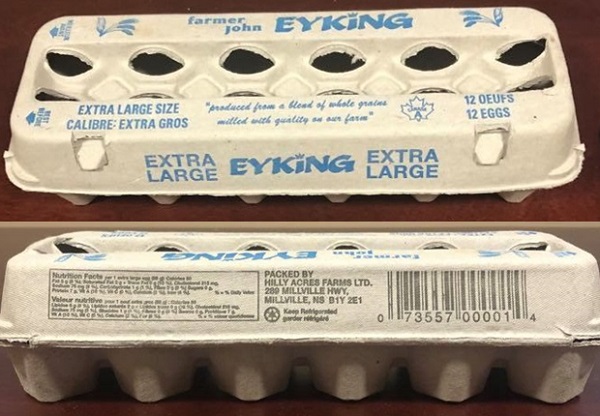
Farmer John Eyking Extra Large Size Eggs 12 eggs 0 73557 00001 4 All code dates between September 2 and October 31, 2020, inclusively.
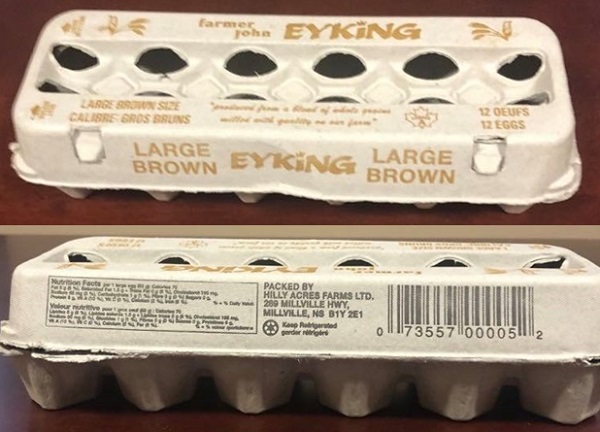
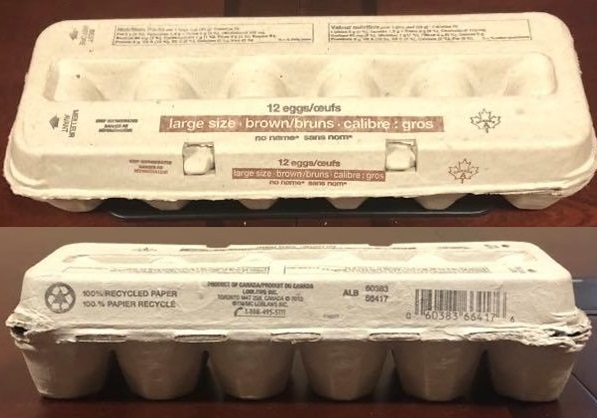
Farmer John Eyking Large Size Brown Eggs 12 eggs 0 73557 00005 2 All code dates between September 2 and October 31, 2020, inclusively.
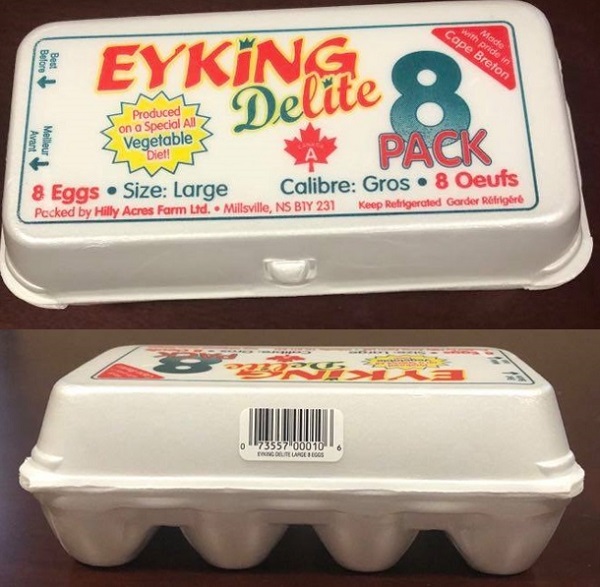
Eyking Delite Large Size Eggs 8 eggs 0 73557 00010 6 All code dates between September 2 and October 31, 2020, inclusively.
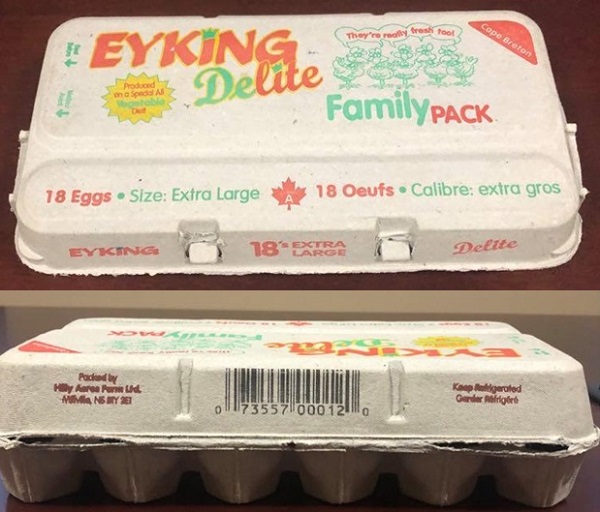
Eyking Delite Extra Large Size Eggs 18 eggs 0 73557 00012 0 All code dates between September 2 and October 31, 2020, inclusively.
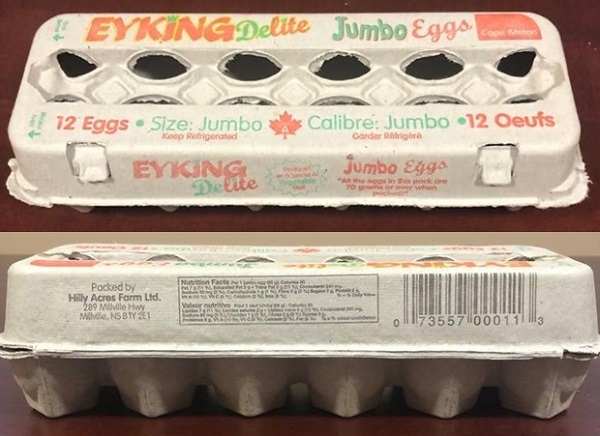
Eyking Delite Jumbo Size Eggs 12 eggs 0 73557 00011 3 All code dates between September 2 and October 31, 2020, inclusively.
Eyking Delite Large Size Eggs 12 eggs 0 73557 00013 7 All code dates between September 2 and October 31, 2020, inclusively.
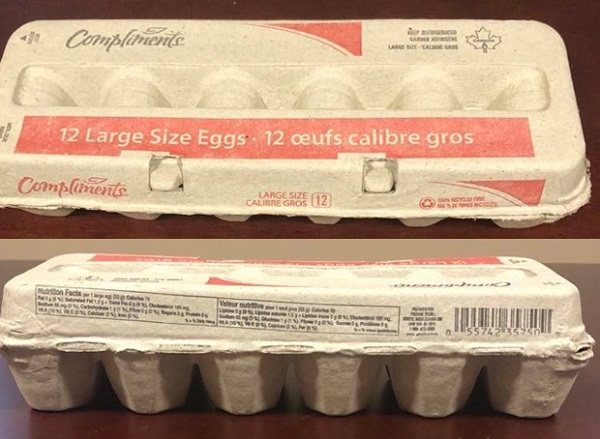
Compliments Large Size Eggs 12 eggs 0 55742 35750 9 All best before dates from September 2, 2020 to October 31, 2020 inclusively where the lot code contains “38” or “N38” or where there is no lot code on the package. These products may have been sold without a lot code. Consumers who are unsure are advised to check with their retailer.
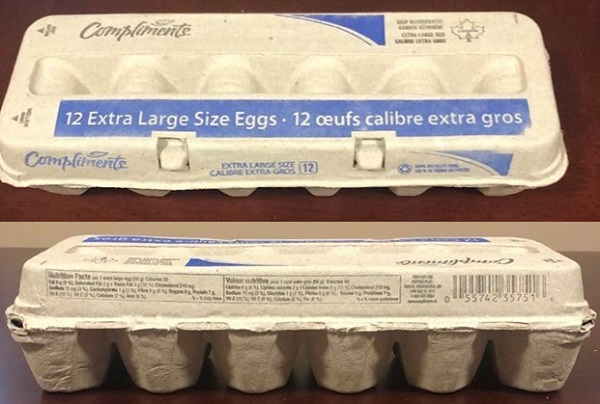
Compliments Extra Large Size Eggs 12 eggs 0 55742 35751 6 All best before dates from September 2, 2020 to October 31, 2020 inclusively where the lot code contains “38” or “N38” or where there is no lot code on the package. These products may have been sold without a lot code. Consumers who are unsure are advised to check with their retailer.
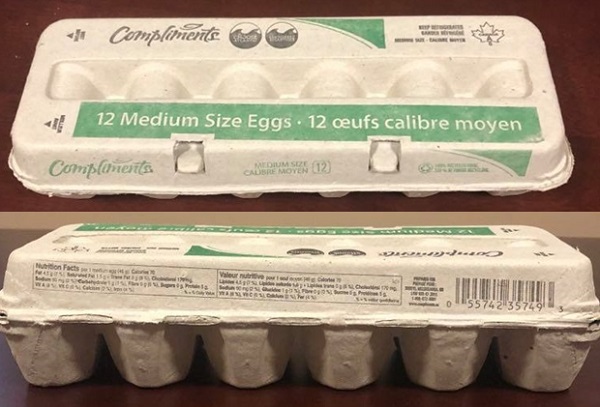
Compliments Medium Size Eggs 12 eggs 0 55742 35749 3 All best before dates from September 2, 2020 to October 31, 2020 inclusively where the lot code contains “38” or “N38” or where there is no lot code on the package. These products may have been sold without a lot code. Consumers who are unsure are advised to check with their retailer.
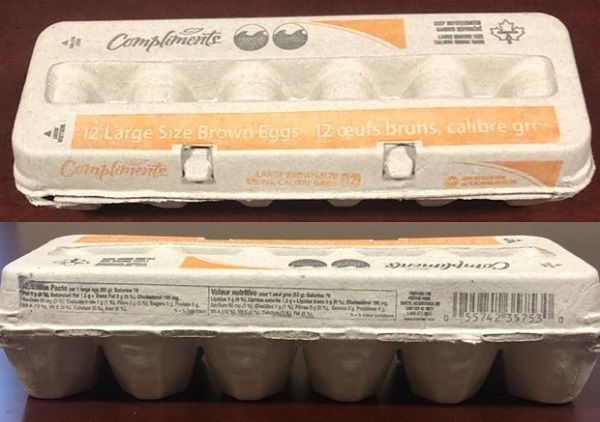
Compliments Large Size Brown Eggs 12 eggs 0 55742 35753 6 All best before dates from September 2, 2020 to October 31, 2020 inclusively where the lot code contains “38” or “N38” or where there is no lot code on the package. These products may have been sold without a lot code. Consumers who are unsure are advised to check with their retailer.
None Medium Eggs Sold in flats of 30 eggs None All code dates between September 2 and October 31, 2020, inclusively. Boxes are marked “N38”
None Large Eggs Sold in flats of 30 eggs None All code dates between September 2 and October 31, 2020, inclusively. Boxes are marked “N38”
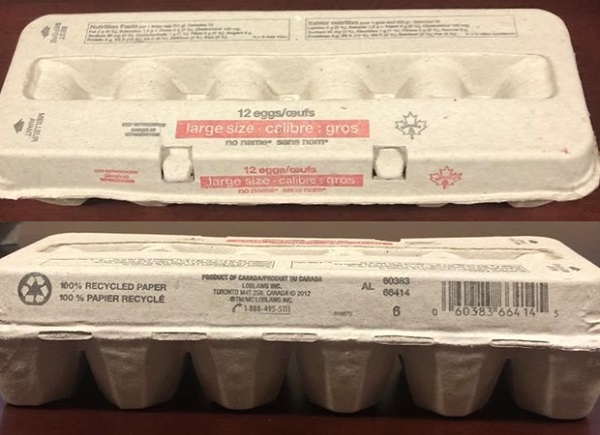
no name Large Size Eggs 12 eggs 0 60383 66414 5 All best before dates from September 2, 2020 to October 31, 2020 inclusively where the lot code contains “38” or “N38” or where there is no lot code on the package. These products may have been sold without a lot code. Consumers who are unsure are advised to check with their retailer.
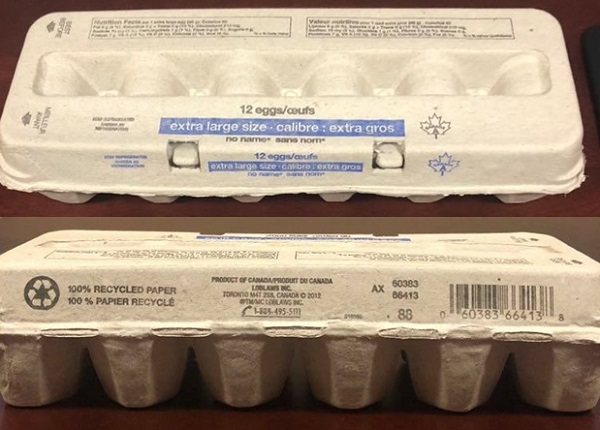
no name Extra Large Size Eggs 12 eggs 0 60383 66413 8 All best before dates from September 2, 2020 to October 31, 2020 inclusively where the lot code contains “38” or “N38” or where there is no lot code on the package. These products may have been sold without a lot code. Consumers who are unsure are advised to check with their retailer.
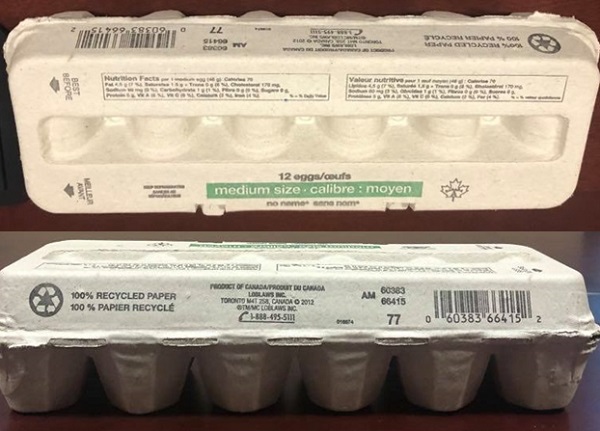
no name Medium Size Eggs 12 eggs 0 60383 66415 2 All best before dates from September 2, 2020 to October 31, 2020 inclusively where the lot code contains “38” or “N38” or where there is no lot code on the package. These products may have been sold without a lot code. Consumers who are unsure are advised to check with their retailer.
no name Large Size Brown Eggs 12 eggs 0 60383 66417 6 All best before dates from September 2, 2020 to October 31, 2020 inclusively where the lot code contains “38” or “N38” or where there is no lot code on the package. These products may have been sold without a lot code. Consumers who are unsure are advised to check with their retailer.
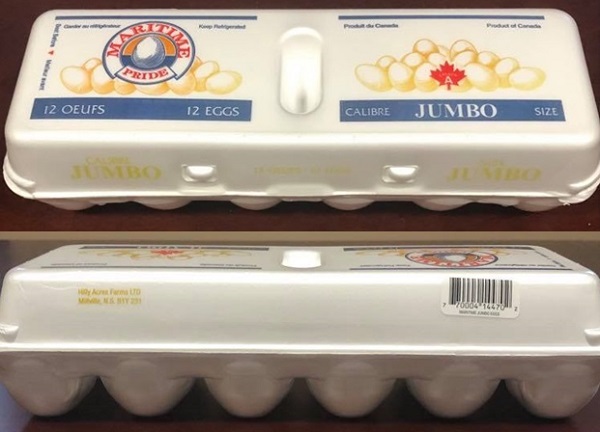
Maritime Pride Jumbo Size Eggs 12 eggs 7 70004 14470 2 All best before dates from September 2, 2020 to October 31, 2020 inclusively where the lot code contains “38” or “N38” or where there is no lot code on the package. These products may have been sold without a lot code. Consumers who are unsure are advised to check with their retailer.
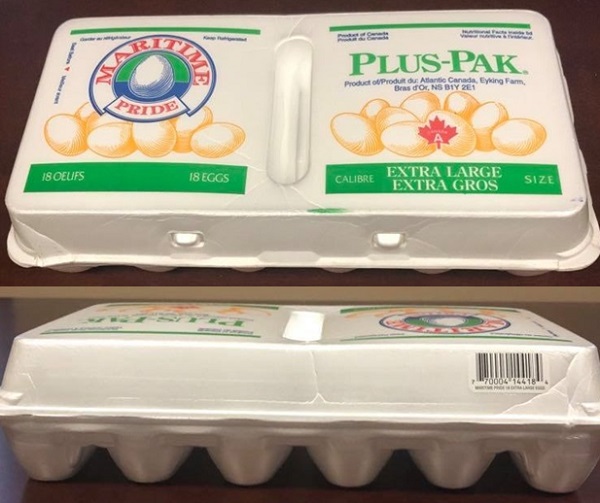
Maritime Pride Extra Large Size Eggs 18 eggs 7 70004 14418 4 All best before dates from September 2, 2020 to October 31, 2020 inclusively where the lot code contains “38” or “N38” or where there is no lot code on the package. These products may have been sold without a lot code. Consumers who are unsure are advised to check with their retailer.
Maritime Pride Medium eggs 30 eggs 7 70004 14414 6 All best before dates from September 2, 2020 to October 31, 2020 inclusively where the lot code contains “38” or “N38” or where there is no lot code on the package. These products may have been sold without a lot code. Consumers who are unsure are advised to check with their retailer.
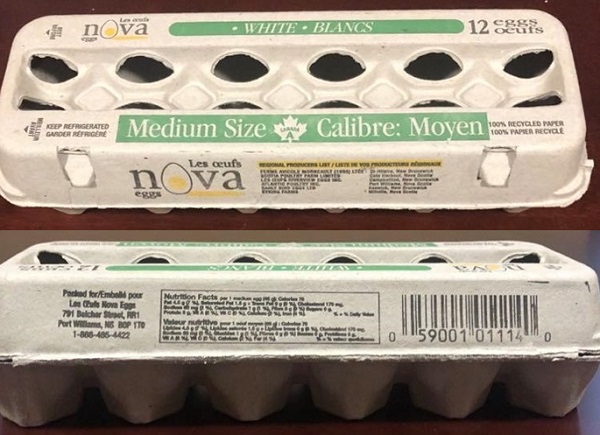
Nova Eggs Medium Size White Eggs 12 eggs 0 59001 01114 0 All best before dates from September 2, 2020 to October 31, 2020 inclusively where the lot code contains “38” or “N38” or where there is no lot code on the package. These products may have been sold without a lot code. Consumers who are unsure are advised to check with their retailer.
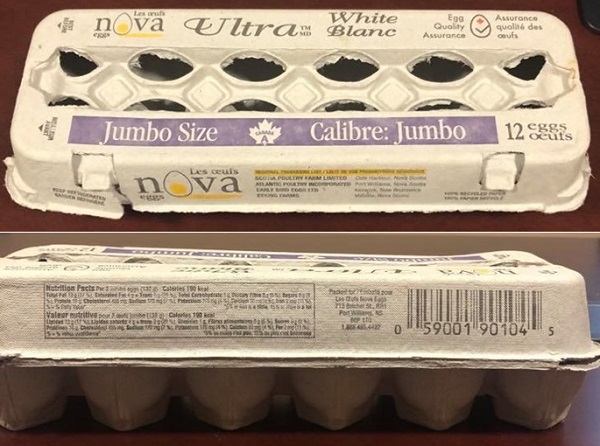
Nova Eggs Ultra Jumbo Size White Eggs 12 eggs 0 59001 90104 5 All best before dates from September 2, 2020 to October 31, 2020 inclusively where the lot code contains “38” or “N38” or where there is no lot code on the package. These products may have been sold without a lot code. Consumers who are unsure are advised to check with their retailer.
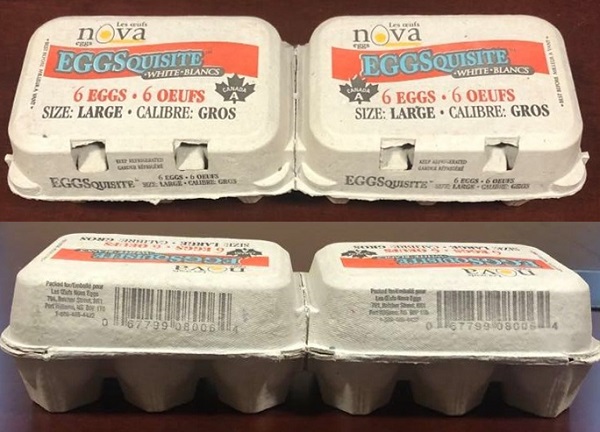
Nova Eggs Eggsquisite Large White Eggs 6 eggs 0 67799 08006 4 All best before dates from September 2, 2020 to October 31, 2020 inclusively where the lot code contains “38” or “N38” or where there is no lot code on the package. These products may have been sold without a lot code. Consumers who are unsure are advised to check with their retailer.
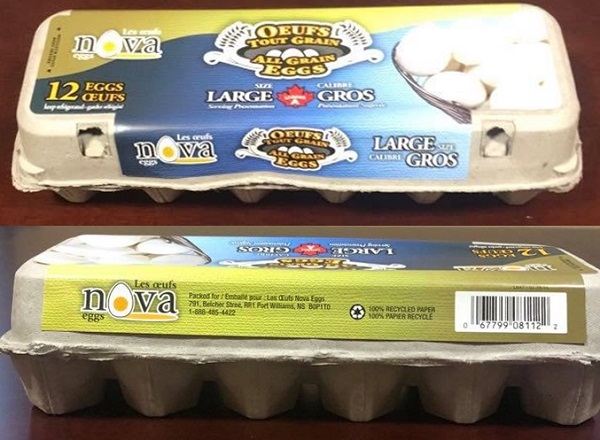
Nova Eggs All Grain Eggs Large Size 12 eggs 0 67799 08112 2 All best before dates from September 2, 2020 to October 31, 2020 inclusively where the lot code contains “38” or “N38” or where there is no lot code on the package. These products may have been sold without a lot code. Consumers who are unsure are advised to check with their retailer.
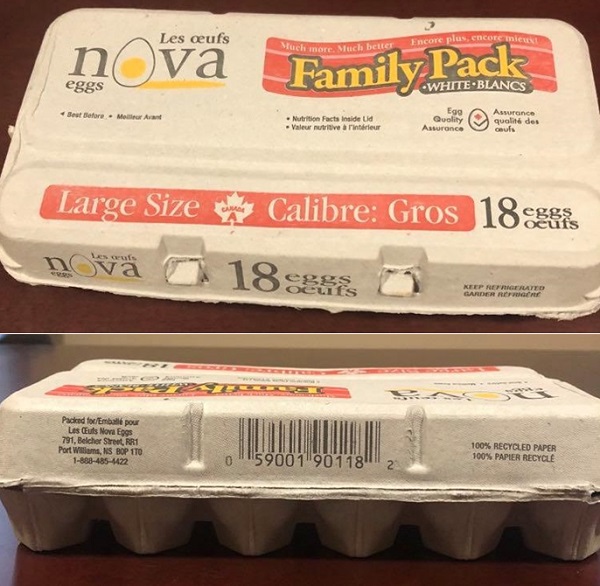
Nova Eggs Large Size White Eggs 18 eggs 0 59001 90118 2 All best before dates from September 2, 2020 to October 31, 2020 inclusively where the lot code contains “38” or “N38” or where there is no lot code on the package. These products may have been sold without a lot code. Consumers who are unsure are advised to check with their retailer.
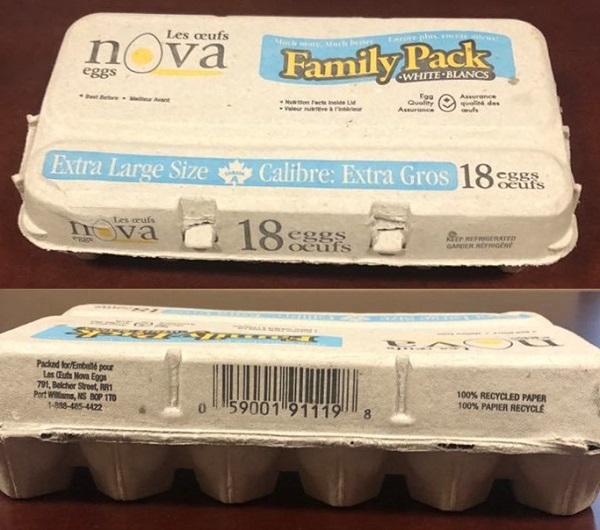
Nova Eggs Extra Large Size White Eggs 18 eggs 0 59001 91119 8 All best before dates from September 2, 2020 to October 31, 2020 inclusively where the lot code contains “38” or “N38” or where there is no lot code on the package. These products may have been sold without a lot code. Consumers who are unsure are advised to check with their retailer.
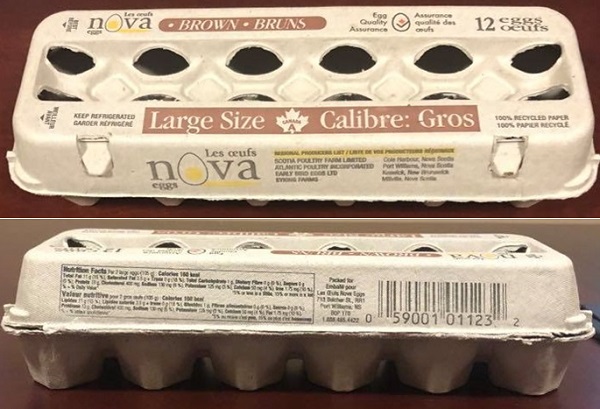
Nova Eggs Large Size Brown Eggs 12 eggs 0 59001 01123 2 All best before dates from September 2, 2020 to October 31, 2020 inclusively where the lot code contains “38” or “N38” or where there is no lot code on the package. These products may have been sold without a lot code. Consumers who are unsure are advised to check with their retailer.
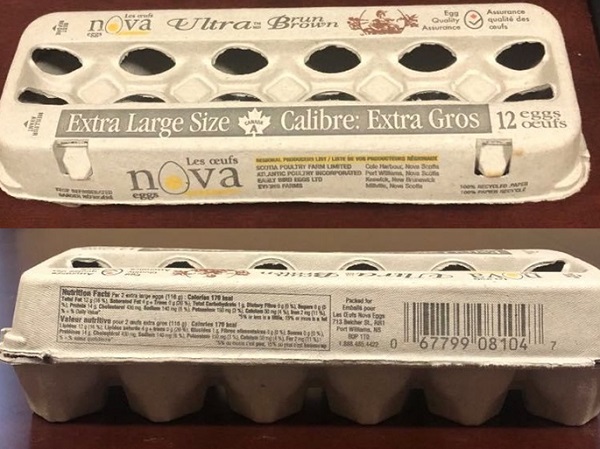
Nova Eggs Ultra Extra Large Size Brown Eggs 12 eggs 0 67799 08104 7 All best before dates from September 2, 2020 to October 31, 2020 inclusively where the lot code contains “38” or “N38” or where there is no lot code on the package. These products may have been sold without a lot code. Consumers who are unsure are advised to check with their retailer.
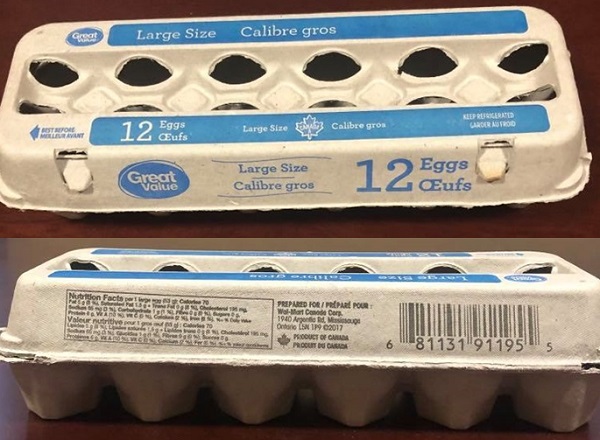
Great Value Large Size Eggs 12 eggs 6 81131 91195 5 All best before dates from September 2, 2020 to October 31, 2020 inclusively where the lot code contains “38” or “N38” or where there is no lot code on the package. These products may have been sold without a lot code. Consumers who are unsure are advised to check with their retailer.
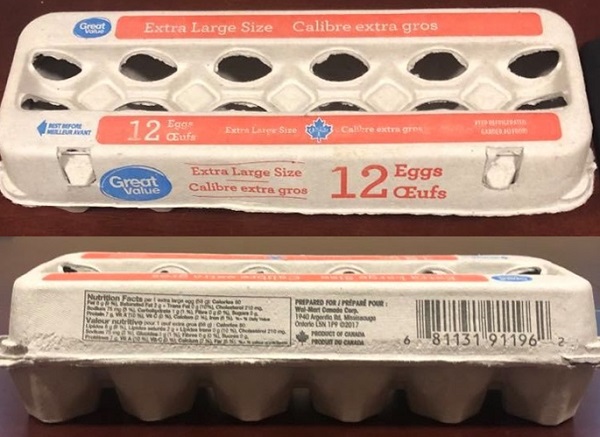
Great Value Extra Large Size Eggs 12 eggs 6 81131 91196 2 All best before dates from September 2, 2020 to October 31, 2020 inclusively where the lot code contains “38” or “N38” or where there is no lot code on the package. These products may have been sold without a lot code. Consumers who are unsure are advised to check with their retailer.
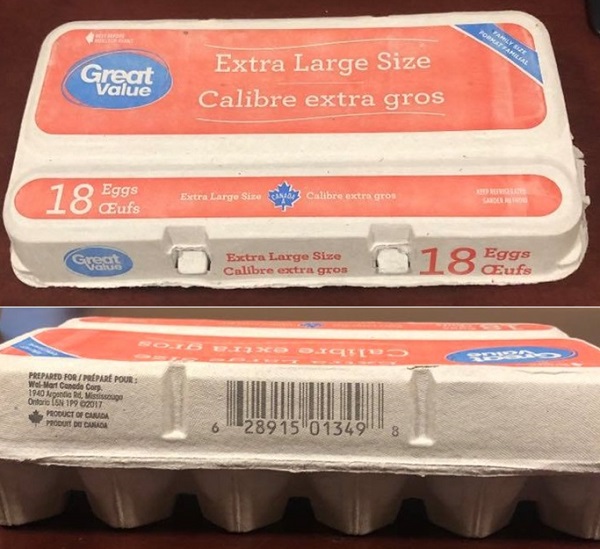
Great Value Extra Large Size Eggs 18 eggs 6 28915 01349 8 All best before dates from September 2, 2020 to October 31, 2020 inclusively where the lot code contains “38” or “N38” or where there is no lot code on the package. These products may have been sold without a lot code. Consumers who are unsure are advised to check with their retailer.

What you should do

If you think you became sick from consuming a recalled product, call your doctor.

Check to see if you have the recalled products in your home or establishment. Recalled products should be thrown out or returned to the store where they were purchased.

Food contaminated with Salmonella may not look or smell spoiled but can still make you sick. Young children, pregnant women, the elderly and people with weakened immune systems may contract serious and sometimes deadly infections. Healthy people may experience short-term symptoms such as fever, headache, vomiting, nausea, abdominal cramps and diarrhea. Long-term complications may include severe arthritis.

Background

This recall was triggered by the company test results. The CFIA is conducting a food safety investigation, which may lead to the recall of other products. If other high-risk products are recalled, the CFIA will notify the public through updated Food Recall Warnings.

The CFIA is verifying that industry is removing the recalled products from the marketplace.

Illnesses

There have been no reported illnesses associated with the consumption of these products.

Product photos

Printer ready version of photos

  • Farmer John Eyking – Large Size Eggs (12 eggs)
  • Farmer John Eyking – Extra Large Size Eggs (12 eggs)
  • Farmer John Eyking – Large Size Brown Eggs (12 eggs)
  • Eyking Delite – Large Size Eggs (8 eggs)
  • Eyking Delite – Jumbo Size Eggs (12 eggs)
  • Eyking Delite – Extra Large Size Eggs, (18 eggs)
  • Compliments – Large Size Eggs (12 eggs)
  • Compliments – Extra Large Size Eggs (12 eggs)
  • Compliments – Medium Size Eggs (12 eggs)
  • Compliments – Large Size Brown Eggs (12 eggs)
  • no name – Large Size Eggs (12 eggs)
  • no name – Extra Large Size Eggs (12 eggs)
  • no name – Large Size Brown Eggs (12 eggs)
  • no name – Medium Size Eggs (12 eggs)
  • Maritime Pride – Jumbo Size Eggs (12 eggs)
  • Maritime Pride – Extra Large Size Eggs (18 eggs)
  • Nova Eggs – Medium Size White eggs (12 eggs)
  • Nova Eggs Ultra – Jumbo Size White eggs (12 eggs)
  • Nova Eggs Eggsquisite – Large White Eggs (6 eggs)
  • Nova Eggs – Large Size White eggs (18 eggs)
  • Nova Eggs – All Grain Eggs Large Size (12 eggs)
  • Nova Eggs – Extra Large Size White Eggs (18 eggs)
  • Nova Eggs – Large Size Brown Eggs (12 eggs)
  • Nova Eggs Ultra – Extra Large Size Brown Eggs (12 eggs)
  • Great Value – Extra Large Size Eggs (12 eggs)
  • Great Value – Large Size Eggs (12 eggs)
  • Great Value – Extra Large Size Eggs (18 eggs)
  • Best Before Date – Egg Code
  • Eggs N38 – Extra Large Size Eggs (15 Dozen)

Public enquiries and media

Public enquiries
Toll-free: 1-800-442-2342 (Canada and U.S.)
Telephone: 1-613-773-2342 (local or international)
Email: cfia.enquiries-demandederenseignements.acia@canada.ca
Media relations
Telephone: 613-773-6600
Email: cfia.media.acia@canada.ca

Canada – Updated Food Recall Warning – Certain Trinity Bakeshop Ltd. brand bakery products recalled due to Salmonella

CFIA

Recall date:
October 10, 2020
Reason for recall:
Microbiological – Salmonella
Hazard classification:
Class 2
Company / Firm:
Trinity Bakeshop Ltd.
Distribution:
Newfoundland and Labrador
Extent of the distribution:
Retail

Recall details

Ottawa, October 10, 2020 – The food recall warning issued on October 8, 2020 has been updated to include additional product information. This additional information was identified during the Canadian Food Inspection Agency’s (CFIA) food safety investigation.

Trinity Bakeshop Ltd. is recalling certain Trinity Bakeshop Ltd. brand bakery products from the marketplace due to possible Salmonella contamination. Consumers should not consume the recalled products described below.

Recalled product

Brand Product Size / Format UPC Codes
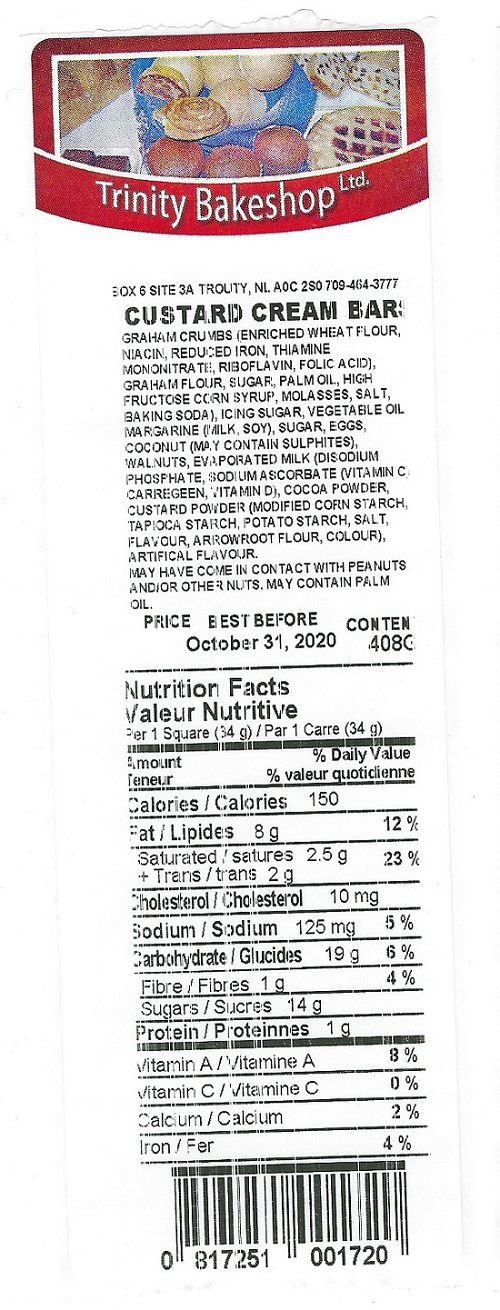
Trinity Bakeshop Ltd. Custard Cream Bars 408 g 0 817251 001720 All best before dates from October 26, 2020 to October 29, 2020 inclusively.
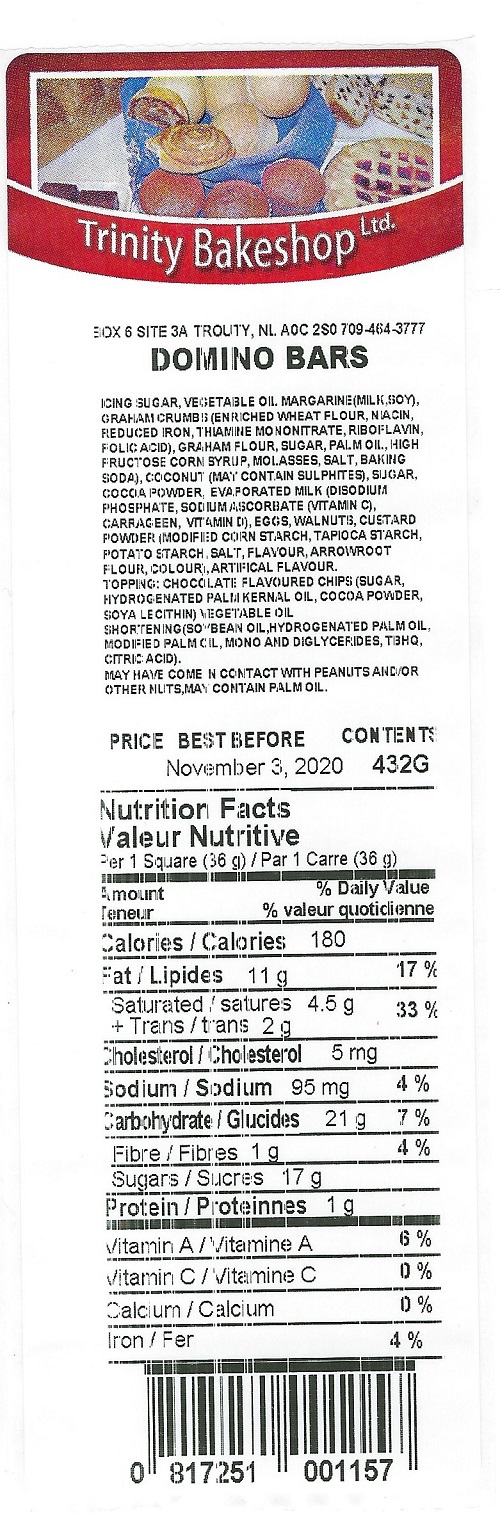
Trinity Bakeshop Ltd. Domino Bars 432 g 0 817251 001157 All best before dates from October 29, 2020 to November 1, 2020 inclusively.
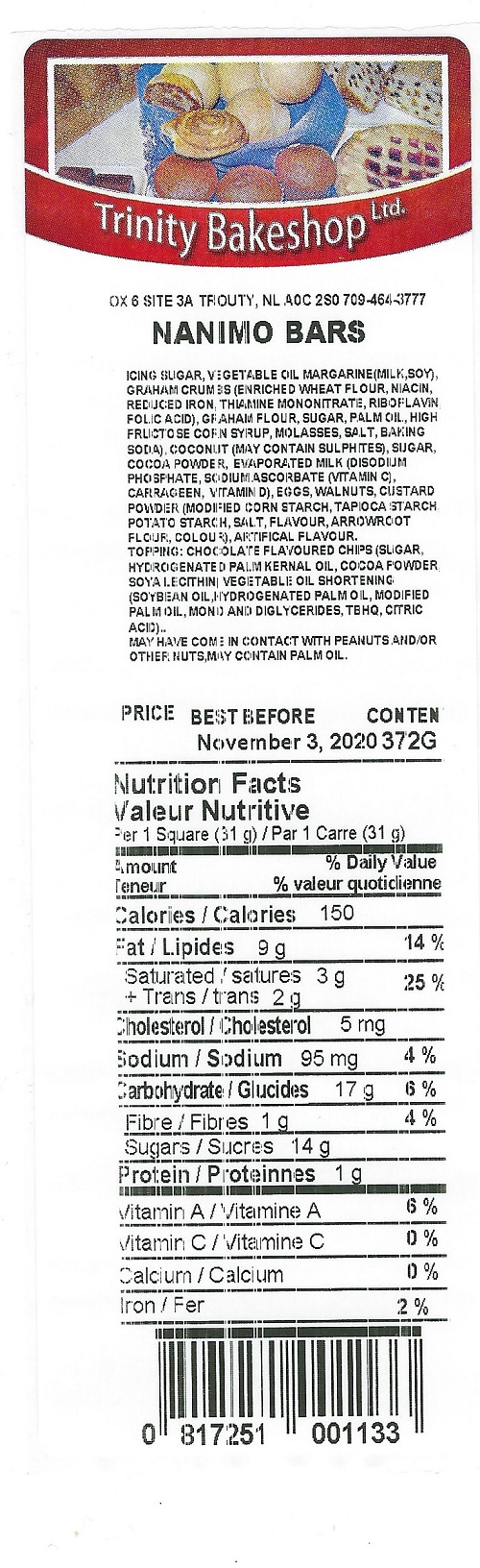
Trinity Bakeshop Ltd. “Nanimo Bars” 372 g 0 817251 001133 All best before dates from October 29, 2020 to November 1, 2020 inclusively.
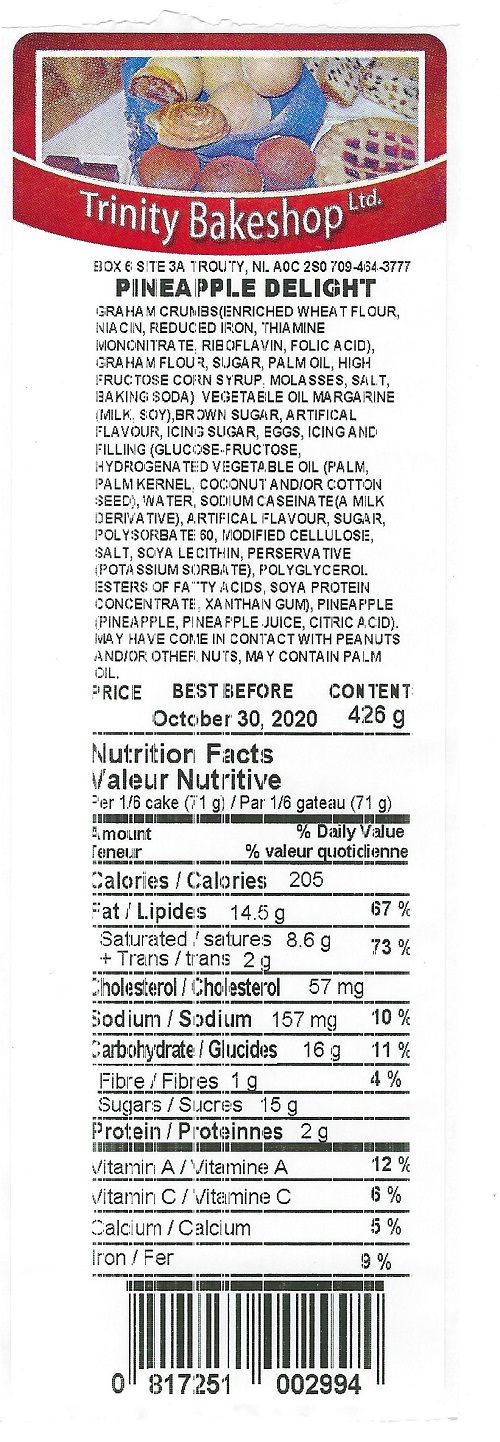
Trinity Bakeshop Ltd. Pineapple Delight 426 g 0 817251 002994 All best before dates from October 25, 2020 to October 28, 2020 inclusively.
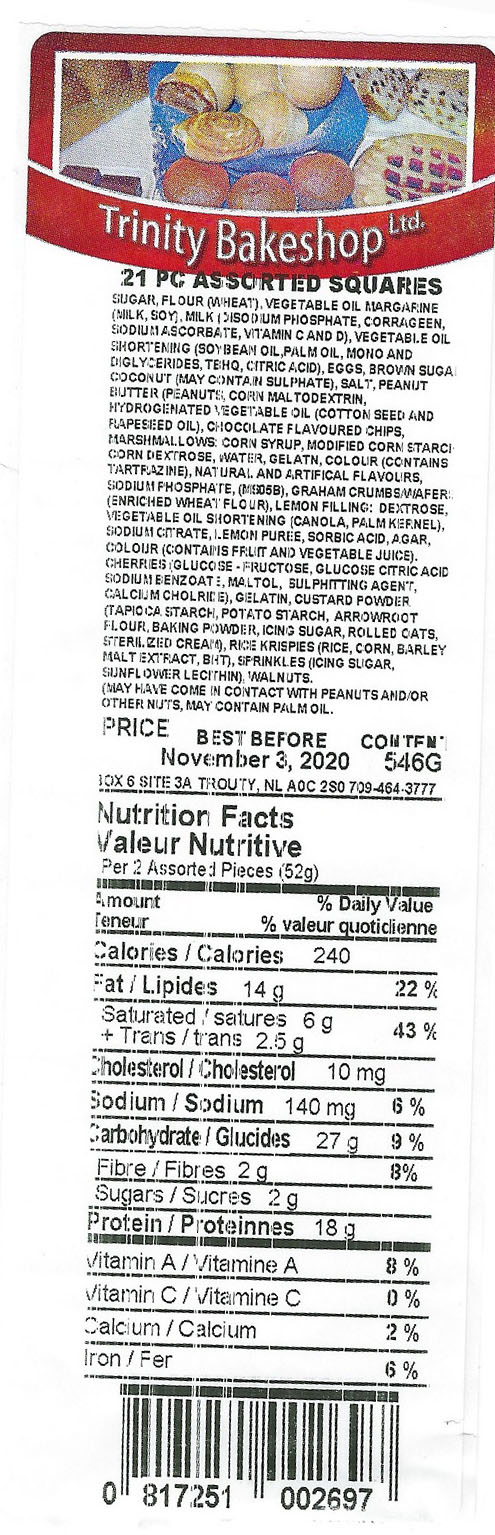
Trinity Bakeshop Ltd. 21 pc Assorted Squares 546 g 0 817251 002697 All best before dates from October 29, 2020 to November 1, 2020 inclusively.

What you should do

If you think you became sick from consuming a recalled product, call your doctor.

Check to see if you have the recalled products in your home. Recalled products should be thrown out or returned to the store where they were purchased.

Food contaminated with Salmonella may not look or smell spoiled but can still make you sick. Young children, pregnant women, the elderly and people with weakened immune systems may contract serious and sometimes deadly infections. Healthy people may experience short-term symptoms such as fever, headache, vomiting, nausea, abdominal cramps and diarrhea. Long-term complications may include severe arthritis.

Background

This recall was triggered by the company. The CFIA is conducting a food safety investigation, which may lead to the recall of other products. If other high-risk products are recalled, the CFIA will notify the public through updated Food Recall Warnings.

The CFIA is verifying that industry is removing the recalled products from the marketplace.

Illnesses

There have been no reported illnesses associated with the consumption of these products.

Product photos

Printer ready version of photos

  • Trinity Bakeshop Ltd. Custard Cream Bars
  • Trinity Bakeshop Ltd. Domino Bars
  • Trinity Bakeshop Ltd. 'Nanimo Bars'
  • Trinity Bakeshop Ltd. Pineapple Delight
  • Trinity Bakeshop Ltd. 21 pc Assorted Squares

Public enquiries and media

Public enquiries
Toll-free: 1-800-442-2342 (Canada and U.S.)
Telephone: 1-613-773-2342 (local or international)
Email: cfia.enquiries-demandederenseignements.acia@canada.ca
Media relations
Telephone: 613-773-6600
Email: cfia.media.acia@canada.ca

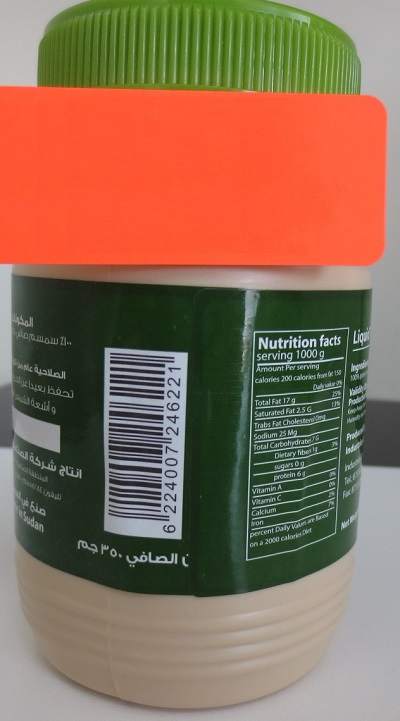
Canada – Alwatania brand Liquid Tahina may be unsafe due to Salmonella

CFIA

Advisory date:October 11, 2020Reason for advisory:Microbiological – SalmonellaHazard classification:–Company / Firm:–Distribution:Possibly National, QuebecExtent of the distribution:Retail

Advisory details

Ottawa, October 11, 2020 – The Canadian Food Inspection Agency (CFIA) is warning the public not to consume and retailers, restaurants and institutions not to sell or use the product described below due to possible Salmonella contamination.

Product

Brand Product Size UPC Codes
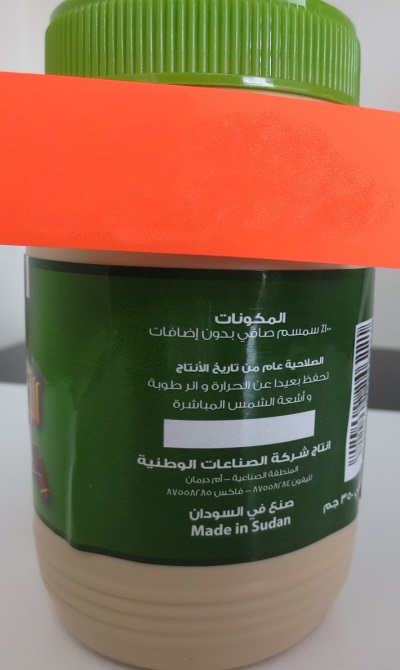
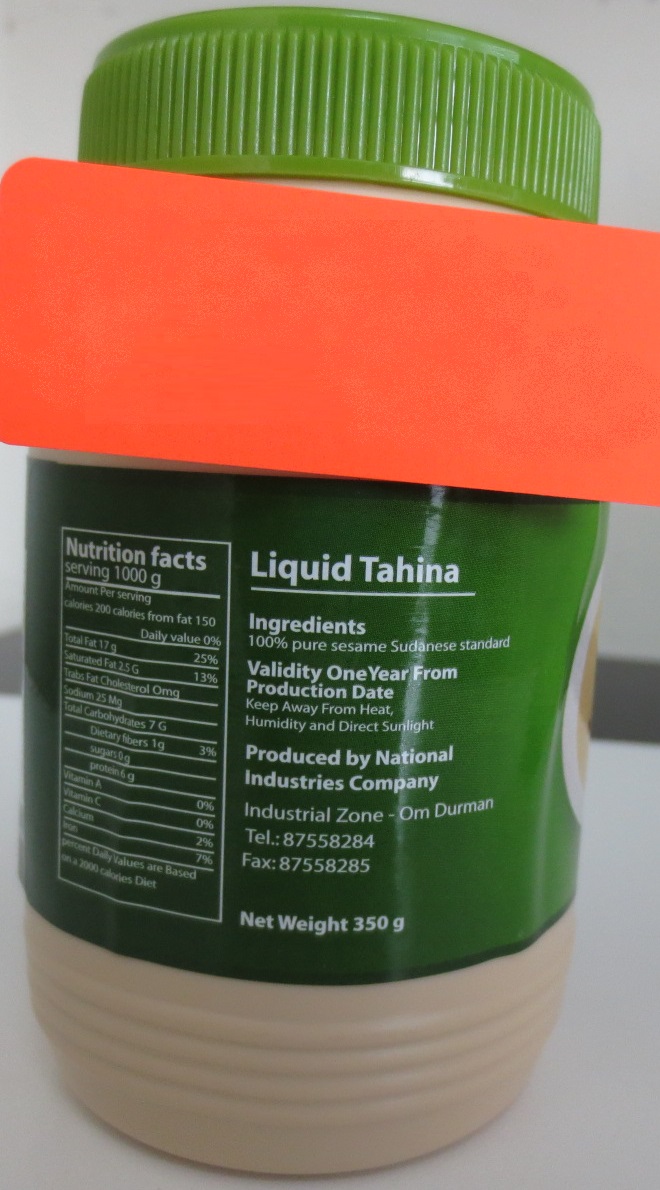
Alwatania (Arabic characters only) Liquid Tahina 350 g 6 224007 246221 PRO: 20/05/2019
Best Before 19/05/2021

What you should do

If you think you became sick from consuming a food product, call your doctor.

Check to see if you have the affected product in your home. If the product is in your home, do not consume it.

Food contaminated with Salmonella may not look or smell spoiled but can still make you sick. Young children, pregnant women, the elderly and people with weakened immune systems may contract serious and sometimes deadly infections. Healthy people may experience short-term symptoms such as fever, headache, vomiting, nausea, abdominal cramps and diarrhea. Long-term complications may include severe arthritis.

Background

This warning was triggered by CFIA test results. The CFIA is conducting a food safety investigation, which may lead to the recall of this or other products. If products are recalled, the CFIA will notify the public through a Food Recall Warning.

Illnesses

There have been no reported illnesses associated with the consumption of this product.

Product photos

Printer ready version of photos

  • Alwatania (Arabic characters only) Liquid Tahina
  • Alwatania (Arabic characters only) Liquid Tahina - side label
  • Alwatania (Arabic characters only) Liquid Tahina - Nutrition facts
  • Alwatania (Arabic characters only) Liquid Tahina - UPC

Public enquiries and media

Public enquiries
Toll-free: 1-800-442-2342 (Canada and U.S.)
Telephone: 1-613-773-2342 (local or international)
Email: cfia.enquiries-demandederenseignements.acia@canada.ca
Media relations
Telephone: 613-773-6600
Email: cfia.media.acia@canada.ca

Research – Microbiological profile, incidence and behavior of Salmonella on seeds traded in Mexican markets.

Journal of Food Protection

Seed consumption has increased in recent years because the high nutrient content of seeds. However, the number of outbreaks caused by Salmonella associated with the consumption of low water activity food items has also increased, although these food items do not support microbial growth. The main goal of this study was to quantify microbial indicators and to determine the prevalence and content of Salmonella spp. in chia, amaranth and sesame seeds obtained from Mexican retail outlets. In addition, the behavior of this pathogen on seeds was also evaluated. One hundred samples of each product (chia, amaranth and sesame seeds) were collected from Queretaro City markets. Aerobic plate count (APC), coliforms and Escherichia coli were quantified, and the presence and number of Salmonella were also determined. Chia, amaranth and sesame seeds (1 kg each) were inoculated with a cocktail containing five Salmonella strains (~6 log CFU mL -1 ) and were stored at ambient temperature and populations of Salmonella were quantified. The median APC contents in chia, amaranth, and sesame seeds were 2.1, 2.4, and 3.8 log CFU g -1 , respectively, and the content of coliforms on the seeds ranged from 0.48 to 0.56 log MPN g -1 . E. coli was present at low concentrations in the three types of seeds. Salmonella was detected in chia (31%), amaranth (15%), and sesame (12%) seeds, and the population ranged from 0.48 to 0.56 Log MPN g -1 . Salmonella spp. decreased through 240 days of storage, showing inactivation rates of 0.017, 0.011 and 0.016 log CFU h -1 in chia, amaranth, and sesame seeds, respectively. The high prevalence of Salmonella in the seeds highlights potential risks for consumers, particularly giving that seeds are generally consumed without treatments guaranteeing pathogen inactivation.

Research – Evaluation of Hot-air Drying to Inactivate Salmonella spp. and Enterococcus faecium on Apple Pieces

Journal of Food Protection

Hot-air drying processes are used to provide specific quality attributes to products, such as dehydrated apple pieces. To comply with the U. S. Food and Drug Administration Food Safety Modernization Act, there is a need to understand microbial lethality during these processes. The objective of this study was to determine the level of inactivation provided by hot-air drying on a Salmonella cocktail inoculated onto apple cubes and to evaluate the performance of Enterococcus faecium as a surrogate. A Salmonella cocktail ( S. Agona, S. Tennessee, S. Montevideo, S. Mbandaka and S. Reading) and E. faecium were individually inoculated onto cored, peeled Gala apple cubes at 9.2 ± 0.3 and 8.8 ± 0.1 log CFU/sample, respectively . Apple cubes were dried at 104°C or 135°C in ~1.5 kg batches using a hot-air dryer with a vertically directed heat source and without mixing. Three subsamples, consisting of 4 inoculated cubes, were enumerated at each time point (n ≥ 5) from multiple product bed depths. Water activity decreased throughout the duration of the study with samples at 135°C drying faster than 104°C. Samples at the bottom bed depth, closer to the heat source, dried faster than those at the higher bed depth, regardless of temperature. Significant microbial inactivation was not seen immediately. It took >10 min at the bottom bed depth or > 40 min of drying at the top bed depth, regardless of temperature (p < 0.05).  By the end of drying average Salmonella inactivation of greater than 5 log CFU/sample was achieved. At temperature conditions evaluated, E. faecium inactivation was slower than Salmonella , indicating that it would likely serve as a good surrogate for in-plant validation studies. Case hardening did not inhibit microbial inactivation in the conditions tested. Hot-air drying under the conditions evaluated may provide a preventive control in the production of dehydrated products, such as apples.

Research – The growth characteristics of Bacillus cereus in sake and during its manufacture.

Journal of Food Protection

Sake (Japanese rice wine) has been recognized as being low-risk in terms of its microbiological safety. However, a confirmation of the food safety aspects of sake based on scientific evidence is important for establishing consumer confidence, in part because consumer concerns regarding food safety have increased. The presence of Bacillus cereus spores in refined rice wine has been reported, and in light of consumers’ growing concern over food safety, the establishment of food and beverage safety is important for consumers’ reassurance. Herein, to confirm the microbiological safety of sake, we investigated the content and growth of B. cereus. We conducted a spore addition test to determine whether B. cereus spores grow during sake production, and we observed no growth or germination of B. cereus spores during the manufacturing process. We also observed that processes such as solid-liquid separation and filtration help remove the risk posed by B. cereus. We then conducted a survey to assess the density of B. cereus in various commercial sake products. We analyzed 162 samples of commercial sake and observed that 11 of the products had ≥1 CFU of living cells in 1 mL of sake (detection rate: 6.8%). There was no product in which ≥100 CFU/mL-sake of living cells was detected. Our findings confirmed that the density of these bacteria in sake is lower than that in other foods, and the probability of infection is very low. The emetic toxin produced by B. cereus was not detected in any of the sake samples. This is the first study based on experimental data demonstrating that B. cereus is not able to grow in sake or during the sake manufacturing process. We thus conclude that the safety risk of B. cereus in sake is negligible. Our findings indicate that Bacillus cereus is not a significant hazard in the sake brewing process, and they will contribute to the food hygiene management based on scientific evidence in sake breweries.

Research – Antimicrobial and preservative effects of the combinations of nisin, tea polyphenols, rosemary extract and chitosan on pasteurized chicken sausage

Journal of Food Protection

The study evaluated the antimicrobial and antioxidant effects of the combinations of nisin (NS), tea polyphenols (TP), rosemary extract (RE) and chitosan (CS) on low-temperature chicken sausage. An orthogonal test revealed that the most effective antimicrobial compositions were equal-quantity mixtures of 0.05% NS + 0.05% TP + 0.03% RE + 0.55% CS . The mixture also produced strong antimicrobial and antioxidant effects in low-temperature chicken sausage related to extend the shelf life to more than 30 days at 4°C. The study also investigated the inhibitory zone of NS, TP, RE and CS against Pseudomonas aeruginosa , lactic acid bacteria (LAB) and Staphylococcus aureus which were the dominant spoilage bacteria in low-temperature chicken sausage. NS had the greatest inhibitory effect on LAB and Staphylococcus aureus , exhibiting clear zone diameters of 19.7 mm and 17.8 mm respectively. TP had the largest inhibitory effect on Pseudomonas aeruginosa , exhibiting a clear zone diameter of 18.2 mm. These results indicated that the combination of NS, TP, RE and CS could be used as natural preservative s to efficiently inhibit the growth of spoilage microorganisms in low-temperature chicken sausage so as to improve its safety and shelf life.

Research – The effect of feeding a Saccharomyces cerevisiae fermentation derived postbiotic as a pre-harvest food safety hurdle for reducing Salmonella Enteritidis in the ceca of layer pullets

Journal of Food Protection

Salmonella Enteritidis is responsible for a significant proportion of foodborne Salmonellosis in the United States and continues to be attributable to table eggs, despite increased federal oversight in recent years. Technologies, including feed additives, continue to be evaluated for pre-harvest application of their potential food safety benefits. Here, Diamond V Original XPC™, a Saccharomyces cerevisiae fermentation based postbiotic (SCFP), was evaluated for its effectiveness in the reduction of Salmonella Enteritidis (SE) colonization in young layer pullets. A total of forty, day-old Hy-Line W-36 layer pullets were equally divided and randomly assigned to one of two dietary treatments with SCFP, or without (PCON) and orally gavaged on Day 28 with 10 6 CFU/mL of SE. Another twenty, day-old layer pullets were fed the same control feed without SCFP and blank inoculated on Day 28 with 1 ml of sterile PBS to serve as a negative control (NCON). Qualitative and quantitative analyses of cecal Salmonella contents were performed for all birds on Day 32. The prevalence of SE in the ceca of all directly challenged birds was 100%, however, the SE concentration in birds fed SCFP diet (3.35 Log 10 CFU/g) was significantly lower ( P <0.0001) than that of the PCON birds not fed SCFP (4.49 Log 10 CFU/g). Moreover, the proportion of SE colonized individuals with enumerable SE concentrations was lower in SCFP fed birds (57.9%) when compared to the PCON (95.0%). These data suggest that inclusion of SCFP in the diet may aid in the reduction of SE within the ceca of commercial laying hens and could serve as an additional, pre-harvest food safety hurdle.

Research – A comparison of Salmonella survival and detection using an enrichment technique in dry and wet inoculated rendered chicken fat treated with sodium bisulfate

Journal of Food Protection

The differences in the recovery of Salmonella from rendered chicken fat treated with sodium bisulfate (SBS) when inoculated with a dry vs wet inoculum was evaluated. Food grade rendered chicken fat was inoculated with a dry and wet inoculum containing a Salmonella cocktail (S. Enteritidis, S. Heidelberg, and S. Typhimurium). In addition, the effect of an antimicrobial treatment (sodium bisulfate, SBS) against Salmonella spp. in both the aqueous and fat phase of the chicken fat was evaluated. The untreated control samples in the aqueous phase had a consistent level of Salmonella (~7 log) when both the dry and wet inoculum was used. In the SBS treated aqueous phase, Salmonella were not detectable after 6h when the wet inoculum was used; whereas, when using the dry inoculum, the Salmonella were not detectable at 24h. Salmonella were detected for up to 6h in the SBS treated fat phase when the dry inoculum was used as compared to 2h with the wet-inoculum. The 24h fat samples which failed to show growth on trypticase soy agar were enriched for Salmonella isolation followed by confirmation by polymerase chain reaction using primers for the invA gene. Both SBS treated and control samples from the dry inoculated, and the inoculated control from the wet inoculated rendered chicken fat tested positive for Salmonella. However, the SBS treated sample from the wet inoculated fat was negative for Salmonella. The use of dry SBS powder against dry Salmonella inoculum in the fat matrix caused only ~2.8 log reduction after 24h as compared to ~2.2 log reduction in the positive control. However, the recovery of Salmonella from untreated control fat was lower and was not different (P ≤ 0.05) than the SBS treated fat. The results suggest the development of potential VBNC states of Salmonella or the presence of injured cells in rendered chicken fat hence suggesting that testing should include an enrichment and appropriate molecular confirmation instead of agar plating alone