Category Archives: Bacillus cereus

Warning not to consume hummus prepared and sold by the company Boulangerie Bagels on Greene ltée – Bacillus cereus

Quebec

QUEBEC CITY , Sept. 10 , 2024 /CNW/ – The Ministère de l’Agriculture, des Pêcheries et de l’Alimentation (MAPAQ), in collaboration with the Food Inspection Division of the City of Montreal and Boulangerie Bagels on Greene Ltd., located at 4160, rue Sainte-Catherine Ouest, in Montreal, is warning the public not to consume the product indicated in the table below, as this food may contain the bacteria Bacillus cereus .

Product name

Format

Target lot

“Homemade hummus”

UNITARY

All lots with an
expiration date
prior to

September 7th

The product that is the subject of this warning was offered for sale until September 10, 2024, and only at the establishment designated above. The product was packaged in a clear plastic container. It was reportedly sold refrigerated or frozen.

The operator is recalling the product in question. It has agreed with the MAPAQ and the Food Inspection Division of the City of Montreal to issue this warning as a precautionary measure. In addition, people who have this product in their possession are advised not to consume it. They must return it to the establishment where they purchased it or throw it away. Even if the product in question does not show any signs of alteration or suspicious odor, its consumption may represent a health risk.

Symptoms of Bacillus cereus poisoning can occur 1.5 to 5 hours after consuming the contaminated food and include nausea and vomiting. However, they can also appear 8 to 16 hours after consuming the food. In this case, the main symptoms are nausea, abdominal cramps, diarrhea, and sometimes vomiting. Symptoms usually disappear within 24 hours.

It should be noted that no cases of illness associated with the consumption of this food have been reported to MAPAQ to date.

Additional information

The Ministry publishes various information documents concerning food safety. Interested persons can consult the Food This hyperlink will open in a new window. section  of the Government of Quebec website. They also have the possibility of registering online to receive, by email, the food  recall This hyperlink will open in a new window. press releases published by the Ministry. Finally, it is possible to follow “MAPAQaliments” on X (formerly Twitter) at the following address: www.twitter.com/MAPAQaliments This hyperlink will open in a new window. .

Risk classification:  class 1

Reference number: 5084

New Zealand – All Good brand Barista Oat Milk – Bacillus cereus

MPI

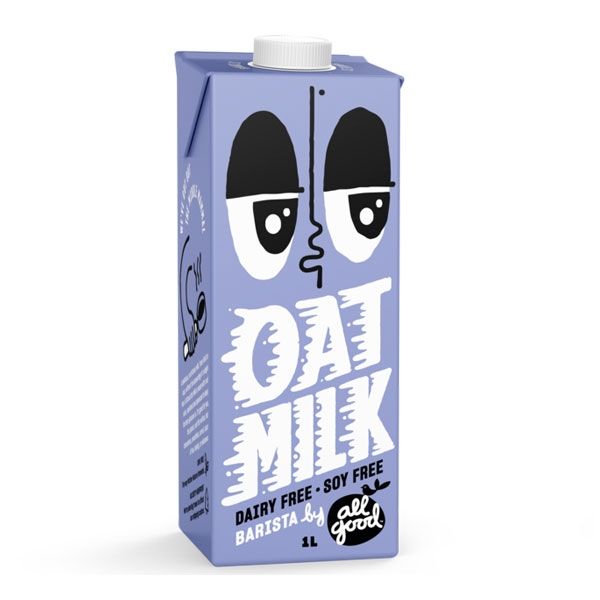
10 September 2024: All Good Bananas Ltd is recalling a specific batch of its All Good brand Barista Oat Milk due to the possible presence of Bacillus cereus.

Product identification
Product type Oat milk
Name of product (size) All Good brand Barista Oat Milk (1 Litre)
Batch marking 234806
Date marking BBD 04/02/2025 and BBD 05/02/2025
Package size The product is sold in a 1 litre carton.
Distribution The product is imported from Sweden.

The product is sold at selected supermarkets and retail outlets throughout New Zealand.

The product has not been re-exported.

Notes This recall does not affect any other All Good brand products.

Point of sale notice for retailers

If you are a retailer of the product in this recall, download a copy of the point of sale notice. You need to display it in your store for one month.

Point of sale notice – All Good brand Barista Oat Milk [PDF, 111KB]

Consumer advice

Customers are asked to check the batch and date marking on the back of the product.

Affected product should not be consumed. There have been no reports of associated illness, however if you have consumed this product and have any concerns about your health, seek medical advice.

Quebec – Update – Warning not to consume various varieties of tofu prepared and sold by the company Les aliments Wah Hoa – Bacillus cereus

Quebec

The Ministry of Agriculture, Fisheries and Food (MAPAQ), in collaboration with the Food Inspection Division of the City of Montreal and the company Les aliments Wah Hoa, located at 4800, rue Saint-Ambroise , in Montreal, advises the public not to consume the products listed in the table below, as they may contain the bacteria Bacillus cereus or generic E. coli (non-pathogenic strain).

Product name

Brand

Format

Target lot

“FRIED TOFU”

Wah Foods

Hoa inc.

300 g


240907

“SOFT TOFU”

Wah Foods

Hoa

800 g

Date “best”

Before ” :

AUG 28

Date “best”

Before ” :

SEP 10

“PRESSED TOFU”

Wah Foods

Hoa inc.

400 g

Date “best”

Before ” :

2024SE 13

Date “best”

Before ” :

2024SE 20

The products that are the subject of this warning were offered for sale until August 20, 2024 , in several establishments in Quebec. They were sold refrigerated.

The operator is recalling the products in question. It has agreed with the MAPAQ and the Food Inspection Division of the City of Montreal to issue this warning as a precautionary measure. In addition, people who have one of these products in their possession are advised not to consume it. They must return it to the establishment where they purchased it or throw it away. Even if the products in question do not show any signs of spoilage or suspicious odor, their consumption may represent a health risk. Symptoms of Bacillus cereus poisoning can occur 1.5 to 5 hours after consuming the contaminated food and are manifested by nausea and vomiting. However, they can also appear 8 to 16 hours after consuming the food. In this case, the main symptoms are nausea, abdominal cramps, diarrhea and sometimes vomiting. Symptoms generally disappear within 24 hours. Generic E. coli poisoning can cause cramps and diarrhea.

It should be noted that no cases of illness associated with the consumption of these foods have been reported to MAPAQ to date.

Research – Levels and types of microbial contaminants in different plant-based ingredients used in dairy alternatives

Science Direct

Abstract

In this study levels and types of microbial contaminants were investigated in 88 different plant-based ingredients including many that are used to manufacture dairy alternatives. Studied ingredients encompassed samples of pulses (pea, faba bean, chickpea, and mung bean), cereals/pseudocereals (oat, rice, amaranth and quinoa) and drupes (coconut, almond and cashew). The microbial analysis included: i) total viable count (TVC), ii) total aerobic mesophilic spore count (TMS), iii) heat resistant aerobic thermophilic spore count (HRTS), iv) anaerobic sulfite reducing Clostridium spore count (SRCS), and v) Bacillus cereus spore count (BCES). Microorganisms isolated from the counting plates with the highest sample dilutions were identified using 16S rRNA and MALDI-TOF MS analyses.

Many of the investigated ingredients showed a high proportion of spores as part of their total aerobic mesophilic counts. In 63 % of the samples, the difference between TVC and TMS counts was 1 Log10 unit or less. This was particularly the case for the majority of pea isolates and concentrates, faba bean isolates, oat kernels and flakes, and for single samples of chickpea isolate, almond, amaranth, rice, quinoa, and coconut flours. Concentrations of TVC ranged between <1.0 and 5.3 Log10 CFU/g in different samples, and TMS varied between <1.0 and 4.1 Log10 CFU/g. Levels of HTRS, BCES and SRCS were generally low, typically around or below the LOD of 1.0 Log10 CFU/g.

In total, 845 individual bacterial colonies were isolated belonging to 33 different genera. Bacillus licheniformis and B. cereus group strains were most frequently detected among Bacillus isolates, and these species originated primarily from pea and oat samples. Geobacillus stearothermophilus was the main species encountered as part of the HRTS. Among the Clostridium isolates, Clostridum sporogenes/tepidum were predominant species, which were mostly found in pea and almond samples. Strains with potential to cause foodborne infection or intoxication were typed using the PCR-based method for toxin genes detection. In the B. cereus group, 9 % of isolates contained the ces gene, 28 % contained hbl, 42 % cytK, and 69 % were positive for the nhe gene. Absence of the boNT-A and -B genes was confirmed for all isolated C. sporogenes/tepidum strains. Nearly all (98 %) B. licheniformis isolates were positive for the lchAA gene.

Insight into the occurrence of microbial contaminants in plant-based ingredients, combined with knowledge of their key inactivation and growth characteristics, can be used for the microbial risk assessment and effective design of plant-based food processing conditions and formulations to ensure food safety and prevent spoilage.

Belgium -Lemon Grass Powder – Bacillus cereus

AFSCA

gemalen citroengras

Following a notification via the RASFF system (European Rapid Alert System for Food and Feed), the AFSCA is withdrawing the product “lemon grass powder” (ground lemongrass) from the Cock Brand brand due to the possible presence of Bacillus cereus.

The AFSCA asks that you do not consume this product and return it to the point of sale where it was purchased.

Product Description :

– Product name: lemon grass powder

– Brand: Cock Brand

– Lot number: 2312202

– Expiration date (DDM): 02/15/2026

– Weight: 100g

The product was distributed through various outlets, including:

Sushi of the Detail 1348 Louvain-la-Neuve Rue des Wallons 8

Thai Store Sprl 5002 Saint-Servais Rue De Gembroux 378

Bestar Europe Bv 2100 Deurne (Antwerpen) Bisschoppenhoflaan 547-549

Welcome Asia Bv 3190 Boortmeerbeek Leuvensesteenweg 74b 

For any further information, you can contact the AFSCA contact point for consumers: 0800/13.550 or pointdecontact@afsca.be.

Research – Inactivation of Bacillus cereus Spores and Vegetative Cells in Inert Matrix and Rice Grains Using Low-Pressure Cold Plasma

MDPI

Abstract

This study investigated the effects of low-pressure cold plasma on the inactivation of Bacillus cereus vegetative cells and spores in an inert matrix (borosilicate glass slide) and in rice grains, using oxygen as ionization gas. Greater reductions in B. cereus counts were observed in vegetative cells rather than spores. The experimental data obtained show that both the power of the plasma treatment and the matrix proved to be determining factors in the inactivation of both the spores and vegetative cells of B. cereus. To characterize the inactivation of B. cereus, experimental data were accurately fitted to the Weibull model. A significant decrease in parameter “a”, representing resistance to treatment, was confirmed with treatment intensification. Furthermore, significant differences in the “a” value were observed between spores in inert and food matrices, suggesting the additional protective role of the food matrix for B. cereus spores. These results demonstrate the importance of considering matrix effects in plasma treatment to ensure the effective inactivation of pathogenic microorganisms, particularly in foods with low water activity, such as rice. This approach contributes to mitigating the impact of foodborne illnesses caused by pathogenic microorganisms.

Hong Kong – Do not consume a batch of bottled preserved bean curd due to excessive level of Bacillus cereus

CFS

Issue Date 16.7.2024
Source of Information Food Surveillance Programme, Centre for Food Safety
Food Product Bottled preserved bean curd
Product Name and Description Product name: 廖孖記衛生腐乳王(Not available in English)

Place of origin: Hong Kong

Net weight: 255 grams

Best-before date: August 7, 2025

Manufacturer: LIU MA KEE LIMITED

Reason For Issuing Alert The CFS announced earlier that a sample of bottled preserved bean curd collected under its routine Food Surveillance Programme from a retail outlet in Sai Ying Pun was found to contain an excessive amount of Bacillus cereus. When following up on the incident, the CFS further collected the above-mentioned sample from a retail outlet in Yau Ma Tei on July 9 for testing. The test result showed that the sample contained Bacillus cereus at a level of 1 300 000 per gram. According to the Microbiological Guidelines for Food, if ready-to-eat food contains Bacillus cereus at a level of more than 100 000 per gram, it is considered unsatisfactory.

Bacillus cereus is commonly found in the environment. Unhygienic conditions in food processing and storage may give rise to its growth. Consuming food contaminated with excessive Bacillus cereus or its heat-stable toxins may cause gastrointestinal upset such as vomiting and diarrhoea.

Action Taken by the Centre for Food Safety The CFS has informed the vendor concerned of the irregularity and has instructed the vendor to stop sales and to remove from shelves the affected batch of the product. The manufacturer concerned has initiated a recall of the affected batch of the product according to the CFS’s instructions.

The CFS will alert the trade to the incident, and will continue to follow up and take appropriate action. An investigation is ongoing.

Advice to the Trade The trade should stop using or selling the product concerned immediately if they possess it.
Advice to Consumers Not to consume the affected product if they have bought any.
Further Information The CFS press release

Members of the public may call the hotline of the manufacturer at 2730 2968 during office hours for enquiries about the recall.

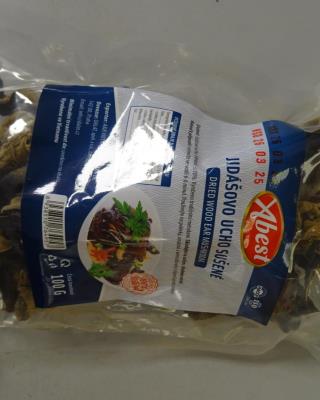
Czech Republic – Abest JUDAS’ EAR DRIED 100 g – Bacillus cereus

Potravinynapranyri

Illustrative photo no. 1

Place of inspection:
Česká Lípa ( Erbenova 2906, 470 01 Česká Lípa )
IN: 61534625
Food group: Processed vegetable and mushroom products Processed mushrooms

Abest JUDAS’ EAR DRIED 100 g
Category: Unsafe food
Unsatisfactory parameter:

Bacillus Cereus

The presence of the pathogenic bacterium Bacillus cereus , which produces a thermostable toxin, was detected in the food  . The food was evaluated as harmful to health.

[machine translate]

Best date: 26 03 25
Packaging: plastic bag with pap. data label
The amount of product in the package: 100 g
Importer: DALAT, spol. s ro, Libušská 319/126, 142 00, Prague
Country of origin:  Vietnam
Date of taking the sample: 3/12/2024
Reference number: 24-000181-SZPI-CZ
Sample was detected by official control of Czech Agriculture and Food Inspection Authority.

Hong Kong – CFS finds excessive Bacillus cereus in sample of bottled preserved bean curd

CFS

The Centre for Food Safety (CFS) of the Food and Environmental Hygiene Department today (July 4) announced that a sample of bottled preserved bean curd was found to contain an excessive amount of Bacillus cereus. Members of the public should not consume the affected batch of the product. The trade should also stop using or selling the affected batch of the product immediately if they possess it.

Product details are as follows:

Product name: (Not available in English)
Place of origin: Hong Kong
Net weight: 255 grams
Best-before date: April 16, 2025
Manufacturer: LIU MA KEE LIMITED

“The CFS collected the above-mentioned sample from a retail outlet in Sai Ying Pun for testing under its routine Food Surveillance Programme. The test result showed that the sample contained Bacillus cereus at a level of 130 000 per gram. According to the Microbiological Guidelines for Food, if ready-to-eat food contains Bacillus cereus at a level of more than 100 000 per gram, it is considered unsatisfactory,” a spokesman for the CFS said.

The spokesman said that the CFS has informed the vendor concerned of the irregularity and has instructed the vendor to stop sales and to remove from shelves the affected batch of the product. The manufacturer concerned has initiated a recall of the affected batch of the product according to the CFS’s instructions. Members of the public may call the manufacturer’s hotline at 2730 2968 during office hours for enquiries about the product recall. The CFS has also inspected the food factory concerned, provided health education on food safety and hygiene to the person-in-charge and staff of the food factory, and requested it to review and improve the food production process and carry out thorough cleaning and disinfection. In addition, the sample did not indicate the best-before date according to the requirements stipulated in the Food and Drugs (Composition and Labelling) Regulations (Cap. 132W). Prosecution will be instituted against the persons concerned should there be sufficient evidence.

“Bacillus cereus is commonly found in the environment. Unhygienic conditions in food processing and storage may give rise to its growth. Consuming food contaminated with excessive Bacillus cereus or its heat-stable toxins may cause gastrointestinal upset such as vomiting and diarrhoea,” the spokesman said.

The CFS will alert the trade to the incident, and will continue to follow up and take appropriate action. The investigation is ongoing.

RASFF Alert – Bacillus cereus – Mascarpone

RASFF

Bacillus cereus in Mascarpone from Italy in France