Category Archives: Antimicrobials

Research -Recent advances in the preservation effects of spice essential oils on fruits and vegetables

Science Direct

Abstract

Spice essential oils (SEOs) are currently a prominent area of investigation in food preservation due to their natural, effective, and environmentally friendly properties. This review discussed the latest research progress concerning the application of SEO in fruits and vegetables preservation. The article commenced with an overview of the sources of SEOs and their main components, explored their bioactivities, antimicrobial mechanisms, and the microencapsulation and nanotechnology utilizing spice essential oils. Further research explored the applications of SEOs in culinary, pharmaceuticals, cosmetics, agriculture, and food industries, with a focus on evaluating their effectiveness in extending the shelf-life of fruits and vegetables. Additionally, it discusses limitations such as intense aroma and toxicity concerns, while also outlining prospects for future research and applications in the food sector. Overall, SEOs offer promising avenues for effectively prolonging the storage period of post-harvested fruits and vegetables while maintaining their quality attributes.
Research – UK food microbiology lab reports updates on recent work

Food Safety News

The main food microbiology lab in the United Kingdom has shared highlights of its recent activity in an annual report.

The report covers work of the UK’s national reference laboratory (NRL) for food microbiology between April 2023 and March 2024.

The UK Health Security Agency (UKHSA) provides the service for the Food Standards Agency (FSA) and Food Standards Scotland (FSS). It covers Listeria monocytogenes, coagulase-positive staphylococci, E. coli, Campylobacter, Salmonella, and antimicrobial resistance.

Research – Antibacterial Activity of Ethanol Extract from Australian Finger Lime

MDPI

Abstract

Australian finger lime (Citrus australasica L.) has become increasingly popular due to its potent antioxidant capacity and health-promoting benefits. This study aimed to determine the chemical composition, antibacterial characteristics, and mechanism of finger lime extract. The finger lime extracts were obtained from the fruit of the Australian finger lime by the ethanol extraction method. The antibacterial activity of the extract was examined by detecting the minimum inhibitory concentration (MIC) for two Gram-positive and four Gram-negative bacterial strains in vitro, as well as by assessing variations in the number of bacteria for Candidatus Liberibacter asiaticus (CLas) in vivo. GC-MS analysis was used to identify the antibacterial compounds of the extract. The antibacterial mechanisms were investigated by assessing cell permeability and membrane integrity, and the bacterial morphology was examined using scanning electron microscopy. The extract demonstrated significant antibacterial activity against Staphylococcus aureusBacillus subtilis, and Gram-negative bacterial species, such as Escherichia coliAgrobacterium tumefaciensXanthomonas campestrisXanthomonas citri, and CLas. Among the six strains evaluated in vitro, B. subtilis showed the highest susceptibility to the antimicrobial effects of finger lime extract. The minimum inhibitory concentration (MIC) of the extract against the tested microorganisms varied between 500 and 1000 μg/mL. In addition, the extract was proven effective in suppressing CLas in vivo, as indicated by the lower CLas titers in the treated leaves compared to the control. A total of 360 compounds, including carbohydrates (31.159%), organic acid (30.909%), alcohols (13.380%), polyphenols (5.660%), esters (3.796%), and alkaloids (0.612%), were identified in the extract. We predicted that the primary bioactive compounds responsible for the antibacterial effects of the extract were quinic acid and other polyphenols, as well as alkaloids. The morphology of the tested microbes was altered and damaged, leading to lysis of the cell wall, cell content leakage, and cell death. Based on the results, ethanol extracts from finger lime may be a fitting substitute for synthetic bactericides in food and plant protection.

Research – Comparative Study of the Antibacterial Effects of S-Nitroso-N-acetylcysteine and Sodium Nitrite against Escherichia coli and Their Application in Beef Sausages

MDPI

Abstract

This study investigated the antibacterial effects of S-nitroso-N-acetylcysteine (SNAC) and sodium nitrite (NaNO2) against Escherichia coli and their application in beef sausages. Both SNAC and NaNO2 demonstrated pH-responsive antibacterial activity, with SNAC showing greater efficacy than NaNO2 (p < 0.05) at the same pH (3, 5, and 7). The reactive oxygen species (ROS) and reactive nitrogen species (RNS) induced in E. coli by SNAC were significantly higher than those induced by NaNO2 (p < 0.05), and both ROS and RNS values increased as the pH decreased. In addition, a lower pH led to more pores on the E. coli cell surface and increased membrane permeability, resulting in a more pronounced inhibitory effect. When applied to a beef sausage, SNAC-treated sausages had significantly lower total colony counts and carbonyl content compared to NaNO2-treated ones (p < 0.05). Consequently, SNAC shows great potential as a replacement for NaNO2 in meat products.

Research – Application of Plant Antimicrobials in the Food Sector: Where Do We Stand?

MDPI

Abstract
The Special Issue “Plant Extracts Used to Control Microbial Growth: Efficacy, Stability and Safety Issues for Food Applications” explored the potential of plant-based extracts as natural antimicrobial agents in the food industry. Its purpose was to address the growing demand for natural, safe, and effective food preservation methods. The contributions highlighted various plant extracts’ antimicrobial efficacy, including phenolic compounds, terpenes, and other bioactive substances. Research papers and one review were submitted from countries, including Spain, Portugal, Italy, Mexico, Turkey, India, USA, Romania, China, and Lithuania, showcasing a diverse international collaboration. Key topics covered in this issue included the chemical characterization of plant extracts, their stability under different processing and storage conditions, and their safety assessments. Advances were reported in using plant extracts to inhibit spoilage microorganisms and foodborne pathogens, enhance food safety, and extend shelf life. The published papers in the Special Issue studied various food types, including yogurt, catfish fillets, edible Mushrooms, red grapes, herring Fillets, and various food types covered in the review. This diversity demonstrates the broad applicability of plant extracts across different food products. Notable findings included the antimicrobial activities of fermented grapevine leaves, grapefruit seed extract, cinnamaldehyde, clove oil, and other plant-based compounds. In conclusion, this Special Issue demonstrated significant progress in applying plant extracts for food preservation, highlighting their potential to contribute to safer and more sustainable food systems worldwide.

Research – Lysin and Lytic Phages Reduce Vibrio Counts in Live Feed and Fish Larvae

MDPI

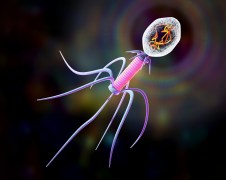
Bacteriophage on colorful background

Abstract

Vibrio species are naturally found in estuarine and marine ecosystems, but are also recognized as significant human enteropathogens, often linked to seafood-related illnesses. In aquaculture settings, Vibrio poses a substantial risk of infectious diseases, resulting in considerable stock losses and prompting the use of antimicrobials. However, this practice contributes to the proliferation of antimicrobial-resistant (AMR) bacteria and resistance genes. Our investigation aimed to explore the potential of biological agents such as bacteriophage CH20 and endolysin LysVPp1 in reducing Vibrio bacterial loads in both rotifer and fish larvae. LysVPp1’s lytic activity was assessed by measuring absorbance reduction against various pathogenic Vibrio strains. Phage CH20 exhibited a limited host range, affecting only Vibrio alginolyticus GV09, a highly pathogenic strain. Both CH20 and LysVPp1 were evaluated for their effectiveness in reducing Vibrio load in rotifers or fish larvae through short-setting bioassays. Our results demonstrated the significant lytic effect of endolysin LysVPp1 on strains of Vibrio alginolyticusVibrio parahaemolyticus, and Vibrio splendidus. Furthermore, we have showcased the feasibility of reducing the load of pathogenic Vibrio in live feed and fish larvae by using a non-antibiotic-based approach, such as lytic phage and endolysin LysVPp1, thus contributing to the progress of a sustainable aquaculture from a One Health perspective

Research – Biocontrol of multidrug resistant pathogens isolated from fish farms using silver nanoparticles combined with hydrogen peroxide insight to its modulatory effect

Nature

This study was divided into two parts. The first part involved the isolation, and detection of the prevalence and antimicrobial resistance profile of Aeromonas hydrophila, Pseudomonas aeruginosa, and Vibrio species from Nile tilapia fish and marine aquatic water. One hundred freshly dead Nile tilapia fish were collected from freshwater aquaculture fish farms located in Al-Abbassah district, Sharkia Governorate, and 100 samples of marine aquatic water were collected from fish farms in Port Said. The second part of the study focused on determining the in vitro inhibitory effect of dual-combination of AgNPs-H2O2 on bacterial growth and its down regulatory effect on crucial virulence factors using RT-PCR. The highest levels of A. hydrophila and P. aeruginosa were detected in 43%, and 34% of Nile tilapia fish samples, respectively. Meanwhile, the highest level of Vibrio species was found in 37% of marine water samples. Additionally, most of the isolated A. hydrophila, P. aeruginosa and Vibrio species exhibited a multi-drug resistance profile. The MIC and MBC results indicated a bactericidal effect of AgNPs-H2O2. Furthermore, a transcriptional modulation effect of AgNPs-H2O2 on the virulence-associated genes resulted in a significant down-regulation of aerA, exoU, and trh genes in A. hydrophila, P. aeruginosa, and Vibrio spp., respectively. The findings of this study suggest the effectiveness of AgNPs-H2O2 against drug resistant pathogens related to aquaculture.

Research – Prevalence, identification and antimicrobial resistance of Listeria monocytogenes and Listeria spp. isolated from poultry and pork meat

IFST

The aim of this work was to evaluate the prevalence of Listeria monocytogenes and other Listeria spp. in chicken, duck, quail, turkey and pork meat, including the antibiotic resistance of isolated strains. A total of 184 meat samples were collected from different retailers in La Rioja (Spain). The presence of Listeria spp. and L. monocytogenes were detected in 24.46% and 10.32% of the meat samples respectively. L. monocytogenes was the predominant Listeria spp. found in chicken, quail and pork meat, while L. innocua and L. welshimeri were the predominant species in duck and turkey meat respectively. A total of thirty-three strains (55.93%) of Listeria spp. were found to be multi-resistant (resistant to ≥3 families of antibiotics). The highest multi-resistant rates were observed in L. monocytogenes (73.68%) and L. innocua (70.59%), followed by L. ivanovii (50%). Resistance to ampicillin and trimethoprim–sulfamethoxazole were found in L. monocytogenes strains isolated from chicken, being of special concern, since these antibiotics are used in the treatment of listeriosis. Special measures should be taken to reduce meat contamination such as adequate handling, correct preparation (cooking) and cleaning and disinfection in order to avoid cross-contamination.

Research – Multistate nontyphoidal Salmonella and Shiga toxin-producing Escherichia coli outbreaks linked to international travel—United States, 2017–2020

Cambridge.org

Abstract

Enteric bacterial infections are common among people who travel internationally. During 2017–2020, the Centers for Disease Control and Prevention investigated 41 multistate outbreaks of nontyphoidal Salmonella and Shiga toxin-producing Escherichia coli linked to international travel. Resistance to one or more antimicrobial agents was detected in at least 10% of isolates in 16 of 30 (53%) nontyphoidal Salmonella outbreaks and 8 of 11 (73%) Shiga toxin-producing E. coli outbreaks evaluated by the National Antimicrobial Resistance Monitoring System. At least 10% of the isolates in 14 nontyphoidal Salmonella outbreaks conferred resistance to one or more of the clinically significant antimicrobials used in human medicine. This report describes the epidemiology and antimicrobial resistance patterns of these travel-associated multistate outbreaks. Investigating illnesses among returned travellers and collaboration with international partners could result in the implementation of public health interventions to improve hygiene practices and food safety standards and to prevent illness and spread of multidrug-resistant organisms domestically and internationally.

Research – Antimicrobial Resistance in E. coli: A Growing Concern in Nile Tilapia Consumption

BNN Breaking

A recent study has found a high prevalence and alarming levels of antimicrobial resistance (AMR) in Escherichia coli (E. coli) found in Nile tilapia, a commonly consumed fish. The research analyzed 828 samples from different parts of the fish, including the flesh, liver, kidney, and intestine. Across the samples, high occurrences of fecal coliforms (61.6%) and E. coli (53.0%) were detected. The intestine samples showed the highest prevalence of E. coli at 71.4%, while the liver and kidney samples had a prevalence of 45.7%.