Brand : FINITTICA SRLU – GORO (FE) CE IT 513 CDM
Name : CLAMS OR LUPINS (CHAMELEA GALLINA) LOT 13F3
Reason for reporting : Recall due to microbiological risk
Publication date : 20 September 2024


Brand : FINITTICA SRLU – GORO (FE) CE IT 513 CDM
Name : CLAMS OR LUPINS (CHAMELEA GALLINA) LOT 13F3
Reason for reporting : Recall due to microbiological risk
Publication date : 20 September 2024
Posted in E.coli, food recall, product recall, Recall
Brand : LA BOTTEGA DEL GUSTO
Name : COPPA AFFETTATA STAGIONATA
Reason for reporting : Recall due to microbiological risk
Publication date : 20 September 2024
Posted in food recall, Listeria, Listeria monocytogenes, product recall, Recall
Do not use, sell, serve or distribute the affected products.
Central Dairies brand and S’Milk brand 2% Partly Skimmed Milk recalled due to spoilage.
James Hall & Co Ltd is recalling SPAR Corned Beef because Listeria monocytogenes has been found in the product. This recall only affects SPAR stores in the Northwest of England.
| Pack size | 120g |
|---|---|
| Use by | 20 September 2024 |
The presence of Listeria monocytogenes in the product above.
Symptoms caused by this organism can be similar to flu and include high temperature, muscle ache or pain, chills, feeling or being sick and diarrhoea. However, in rare cases, the infection can be more severe, causing serious complications, such as meningitis.
Some people are more vulnerable to listeria infections, including those over 65 years of age, pregnant women and their unborn babies, babies less than one month old and people with weakened immune systems.
Posted in food recall, fsa, Listeria, Listeria monocytogenes, product recall, Recall
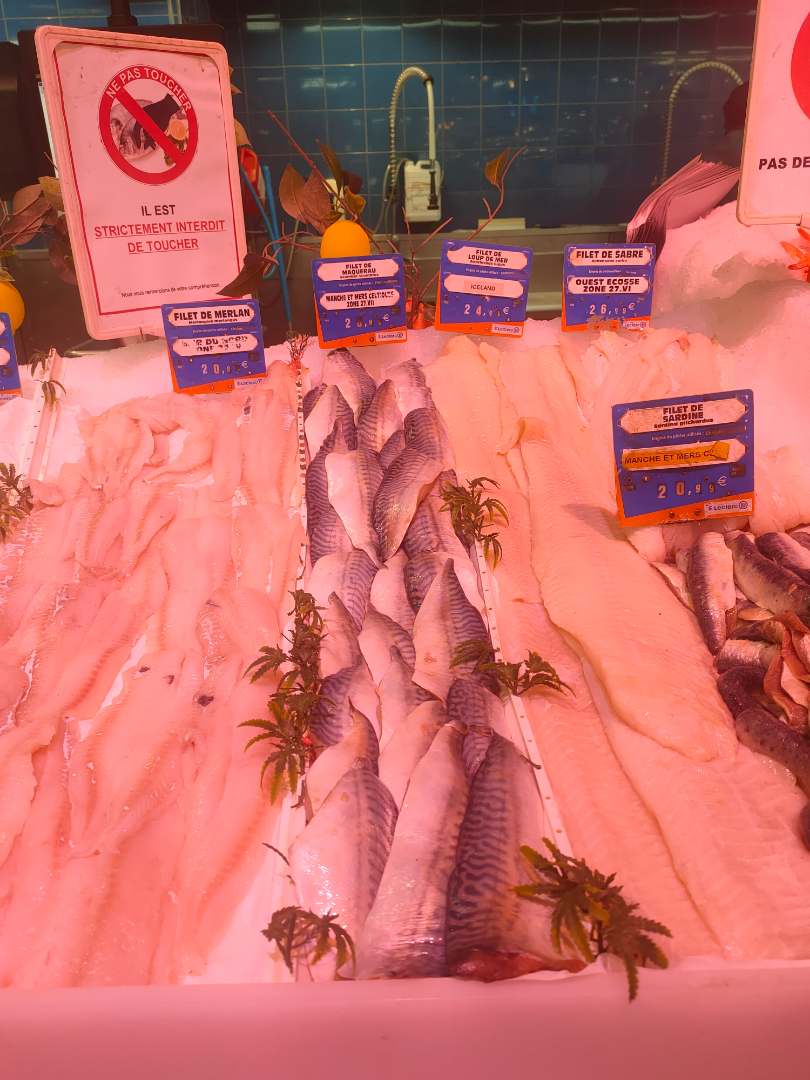
Product Category
Food
Product subcategory
Fishery and aquaculture products
Product brand name
Unbranded
Model names or references
Mackerel fillet
Product identification
GTIN Batch Date
0208158000000 Packaged between 04/09 and 07/09 Expiry date between 04/09/2024 and 07/09/2024
Packaging
Assisted sale, self-service sales pouch, shrink-wrapped
Start/End of marketing date
From 04/09/2024 to 07/09/2024
Storage temperature
Product to be kept in the refrigerator
Geographic area of sale
E.Leclerc of Viry-Chatillon
Distributors
E.Leclerc of Viry-Chatillon
Posted in food recall, Histamine, product recall, Recall
Listeria monocytogenes is an emerging pathogen responsible for the serious foodborne disease, listeriosis. The commensal gut microbiota is the first line of defense against pathogen internalization. The gut microbiome can be modified by prebiotic substrates, which are frequently added to food products and dietary supplements. Prebiotics should selectively support the growth of beneficial microbes and thus improve host health. Nevertheless, little is known about their effect on the growth of L. monocytogenes. The aim of this study was to evaluate the growth ability of four L. monocytogenes strains, representing the most common serotypes, on prebiotic oligosaccharides (beta-(1,3)-D-glucan, inulin, fructooligosaccharides, galactooligosaccharides, lactulose, raffinose, stachyose and 2′-fucosyllactose and a mixture of human milk oligosaccharides) as a sole carbon source. The results showed that only beta-(1,3)-D-glucan was metabolized by L. monocytogenes. These cell culture data suggest that beta-(1,3)-D-glucan may not be selectively utilized by healthy commensal bacteria, and its role in intestinal pathogen growth warrants further exploration in vivo.
Food poisoning, also known as foodborne illness, is a significant public health issue in the United States. Every year, millions of people suffer from foodborne illnesses, ranging from mild discomfort to life-threatening conditions. These illnesses arise from consuming contaminated food, which may harbor harmful bacteria, viruses, or parasites. Beyond the personal toll on those affected, food poisoning has far-reaching economic implications, from medical costs to lost productivity. Various health agencies, including the Centers for Disease Control and Prevention (CDC), the Food and Drug Administration (FDA), and state and local health departments, work tirelessly to mitigate the impact of foodborne illnesses. This article will provide an in-depth examination of the annual cases of food poisoning in the U.S., the associated economic costs, and the roles of these agencies in safeguarding public health.
Microwaves have become an essential part of the modern kitchen, but their potential as a reservoir for bacterial colonization and the microbial composition within them remain largely unexplored. In this study, we investigated the bacterial communities in microwave ovens and compared the microbial composition of domestic microwaves, microwaves used in shared large spaces, and laboratory microwaves, using next-generation sequencing and culturing techniques. The microwave oven bacterial population was dominated by Proteobacteria, Firmicutes, Actinobacteria, and Bacteroidetes, similar to the bacterial composition of human skin. Comparison with other environments revealed that the bacterial composition of domestic microwaves was similar to that of kitchen surfaces, whereas laboratory microwaves had a higher abundance of taxa known for their ability to withstand microwave radiation, high temperatures and desiccation. These results suggest that different selective pressures, such as human contact, nutrient availability and radiation levels, may explain the differences observed between domestic and laboratory microwaves. Overall, this study provides valuable insights into microwave ovens bacterial communities and their potential biotechnological applications.
This innovative technology, developed by Canadian biotechnology company Innodal, uses antimicrobial peptides to eliminate the harmful pathogen. With its entry into the U.S. market, Innodal is set to launch industrial-scale projects with U.S. processing companies.
Listeria monocytogenes is feared by public health because it potentially has a high mortality rate. In a 2008 Canadian outbreak, that rate approached 40 percent.
INNEO is Innodal’s flagship product. It has been successfully commercialized in Canada for four years and will now be available in the U.S. market. Designed to target Listeria monocytogenes — a severe foodborne pathogen responsible for listeriosis — INNEO has proven significantly more effective than traditional chemical treatments in industry trials, particularly against strains that have led to major recalls in North America.
Scientists have revealed that lettuce contaminated by animal waste during flooding was the likely vehicle of infection in an E. coli outbreak in 2022.
In September 2022, a large outbreak of STEC O157:H7 was identified in the United Kingdom. It was one of the biggest E. coli outbreaks since the early 1980s.
In late August and early September, the UK Health Security Agency (UKHSA) Gastrointestinal Bacteria Reference Unit (GBRU) reported a substantial increase in submitting certain fecal samples and isolates that were presumptive for STEC.

 FoodWorld