Tag Archives: food

USA – Sister Sarah Products Recall – Clostridium botulinum

Food Safety News

The California Department of Public Health (CDPH) is warning consumers not to eat “Sister Sara’s Good for You” products because they may have been improperly produced, making them susceptible to contamination with Clostridium botulinum.

No illnesses have been linked to any of the affected products at this time. The products were sold at certified farmers markets in Alameda County.

Sister Sara of Pleasanton, CA., recalled the products after CDPH discovered they were produced without the required controls to prevent formation of botulism toxin. Ingestion of botulism toxin from improperly processed foods can lead to serious illness and death.

The products were sold under the Sister Sara label and packaged in one-pint glass canning jars with screw-on metal lids. The products were labeled as “Sister Sara’s Good for You Soup,” “Sister Sara’s Bread & Butter Pickles,” “Sister Sara’s Pickled Beets,” and “Sister Sara’s Old Fashioned Dill Pickles.”

Canada – KFC – Taco Bell Lettuce – E.coli

Food Poisoning BulletinSalmonella

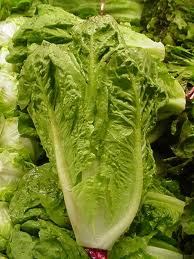
The source of an E.coli outbreak that has sickened at least 16 people in Canada was lettuce served at Taco Bell and KFC restaurants, health officials in New Brunswick have discovered.  The outbreak affected three provinces: New Brunswick, where six people became ill and Nova Scotia and Ontario which each had five cases.

“Based on the information we have collected and shared with other provinces, we believe that lettuce has been a common food source among cases,” said Dr. Eilish Cleary, New Brunswick’s chief medical officer of health. “Since lettuce has a limited shelf life, it is highly unlikely that some from the affected lots remain in restaurants.”

UK – FSA Second Update Recall of Tofu – Bacillus cereus

FSAfood_standards_agency_logo

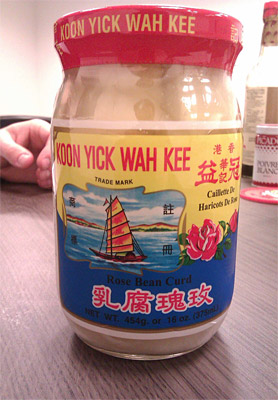
The Food Standards Agency is issuing a second updated Food Alert for Action on the Koon Yick Wah Kee rose bean curd (tofu) and chilli bean curd (tofu) originating from China via The Netherlands, because of confirmation that further tofu from the same company has high levels of Bacillus cereus.

The affected products have a best before date of 30 December 2013 but there are currently no distributions details available. The levels of the bacteria detected can cause vomiting or diarrhoea.

Australia New Advice About Listeriosis – Rising Number of Cases

NSW Food Authority

The NSW Food Authority advises those most at risk to avoid the following ready to eat foods:

  • soft cheese such as brie, blue, fetta, camembert and ricotta
  • cold chicken or turkey particularly if sliced or diced – such as used in chicken sandwiches
  • cold meats, pate and meat spreads
  • pre-prepared or packaged salads greens and salads
  • raw seafood such as oysters, sashimi, smoked salmon or oysters (canned oysters are safe)
  • sushi
  • unpasteurised dairy products including raw goat’s milk and Roquefort cheese

“Signs of listeriosis include flu-like symptoms such as fever, muscle aches, nausea and diarrhoea that can sometimes lead to septicemia, meningitis and in some cases, miscarriage in pregnant women,” Dr McAnulty said.

Investigations into listeriosis are complex as it can be difficult to identify the source. Symptoms of illness can take up to 70 days to appear.

Healthy people usually show only mild symptoms. However, in people at risk, early symptoms of listeria infection include fever, headache, tiredness and aches and pains.

Other useful links can be found at the base of the articel in the link above.

USA – Another Smoked Salmon Recall – Listeria monocytogenes

Listeria Blog

GIANT Food Stores, LLC and MARTIN’S Food Markets, following a recall by Ocean Beauty Seafoods LLC, announced it removed from sale several varieties of smoked salmon due to possible contamination by Listeria monocytogenes.

The following products are included in this recall:

* Nathan’s Nova Salmon, 3 o.z., UPC 7303080368, all sell by dates * Nathan’s Nova Salmon, 8 o.z., UPC 7303080369, all sell by dates * Lascco Smoked Salmon, 3 o.z., UPC 7284001703, all sell by dates

USA – Cold Smoked Salmon Recall – Listeria monocytogenes

Food Poisoning Bulletin

Potential Listeria contamination in certain smoked salmon products sold at Sam’s Club stores nationwide has prompted the discount retailer to notify its customers of a recall. The products under recall were produced by Tampa Bay Fisheries Inc. of Dover Fl. and Multi-Export Foods. Inc of Miami.

The recall covers all smoked salmon products produced since November 14, 2012.Specifically, Smoked Salmon Twin Packs with the UPC numbers 0068826486705) or UPC 0068826486703  with a lot-sublot-batch number of: 931-59733-2; 933-59753-1; 933-59754-2;  875-701413-1 and 890-701413-1 are under recall. Those numbers can be found on a white sticker located on the back of the package above the UPC bar code.

European Alerts – Extended Recall Tofu – Bacillus cereus – Dog Food – Salmonella – Cheese – Listeria

AFSAC – FrenchEnglish tofu

The Food Agency recommends not eating TOFU in sesame oil with or without chili brand KOON WAH KEE YICK following the detection of Bacillus cereus in this commodity. The product is sold in Asian specialty stores.

RASFF – Salmonella in Dog Food in Germany sourced in India

France – (English)

Following the detection of Listeria monocytogenes in certain lots of cheese, and as a precautionary measure, the company JUSSAC OF CHEESE shall withdraw the sale and recall of consumption of all cheeses.

The products covered by these measures were traded between 31 October 2012 and 26 December 2012.

Research Papers – Pathogens – Celery – Irradiation – Spinach – Boiling Shrimp – Low Water Activity and Pathogens

Science Direct

Illnesses from Escherichia coli O157:H7, Listeria monocytogenes, and Salmonella have been associated with the consumption of numerous produce items. Little is known about the effect of consumer handling practices on the fate of these pathogens on celery. The objective of this study was to determine pathogen behavior at different temperatures under different storage conditions. Commercial fresh-cut celery was inoculated at ca. 3 log CFU/g onto either freshly cut or outer uncut surfaces and stored in either sealed polyethylene bags or closed containers. Samples were enumerated following storage for 0, 1, 3, 5, and 7 days when held at 4 °C or 12 °C, and after 0, 8, and 17 h, and 1, and 2 days when held at 22 °C. At 4 °C, all populations declined by 0.5–1.0 log CFU/g over 7 days. At 12 °C, E. coli O157:H7 and Salmonella populations did not change, while L. monocytogenes populations increased by ca. 0.5 log CFU/g over 7 days. At 22 °C, E. coli O157:H7, Salmonella, and L. monocytogenes populations increased by ca. 1, 2, or 0.3 log CFU/g, respectively, with the majority of growth occurring during the first 17 h. On occasion, populations on cut surfaces were significantly higher than those on uncut surfaces. Results indicate that populations are reduced under refrigeration, but survive and may grow at elevated temperatures.

The Packer

Researchers say common packinghouse practices for fresh spinach are not sufficient to avoid outbreaks of salmonella-related illnesses and recently showed that irradiation eliminated almost all cross contamination from field and packing operations.

Scientists at Texas A&M University and Pusan National University in South Korea set out to develop a quantitative risk assessment model to evaluate microbial hazards during the processing of baby spinach leaves, according to their abstract recently published with their results in the journal “ScienceDirect.”

IngentaConnect

The purpose of this study was to determine whether the current consumer method of boiling shrimp until floating and pink in color is adequate for destroying Listeria and Salmonella. Shrimp samples were submerged in bacterial suspensions of Listeria and Salmonella for 30 min and allowed to air dry for 1 h under a biosafety cabinet. Color parameters were then measured with a spectrophotometer programmed with the CIELAB system. Twenty-four shrimp samples were divided into groups (days 0, 1, or 2) and stored at 4°C. The samples were treated by placing them in boiling water (100°C) on days 0, 1, and 2. The shrimp were immediately removed from the boiling water once they floated to the surface, and color parameters were measured. Bacterial counts were determined, and the log CFU per gram was calculated. The effect of sodium tripolyphosphate on the color change of cooked shrimp also was determined. Initial bacterial counts on shrimp after air drying were 5.31 ± 0.14 log CFU/g for Salmonella Enteritidis, 5.24 ± 0.31 log CFU/g for Salmonella Infantis, 5.40 ± 0.16 log CFU/g for Salmonella Typhimurium, 3.91z 0.11 log CFU/g for Listeria innocua, 4.45 ± 0.11 log CFU/g for Listeria monocytogenes (1/2a), and 3.70 ± 0.22 log CFU/g for Listeria welshimeri. On days 0, 1, and 2, all bacterial counts were reduced to nondetectable levels for shrimp samples that floated. The average time for shrimp to float was 96 ± 8 s. The bacterial counts remained at nondetectable levels (<10 log CFU/g) during refrigerated (4°C) storage of cooked shrimp for 2 days. The redness, yellowness, and lightness were significantly higher (P < 0.0001) for the cooked shrimp than for the uncooked shrimp on all days tested. The standard deviation for redness in the cooked shrimp was large, indicating a wide range of pink coloration on all days tested. The results suggest that boiling shrimp until they float will significantly reduce Listeria and Salmonella contamination, but color change is not a good indication of reduction of these pathogens because of the wide natural color variation.

IngentaConnect

Foods and food ingredients with low water activity (aw) have been implicated with increased frequency in recent years as vehicles for pathogens that have caused outbreaks of illnesses. Some of these foodborne pathogens can survive for several months, even years, in low-aw foods and in dry food processing and preparation environments. Foodborne pathogens in low-aw foods often exhibit an increased tolerance to heat and other treatments that are lethal to cells in high-aw environments. It is virtually impossible to eliminate these pathogens in many dry foods or dry food ingredients without impairing organoleptic quality. Control measures should therefore focus on preventing contamination, which is often a much greater challenge than designing efficient control measures for high-aw foods. The most efficient approaches to prevent contamination are based on hygienic design, zoning, and implementation of efficient cleaning and sanitation procedures in the food processing environment. Methodologies to improve the sensitivity and speed of assays to resuscitate desiccated cells of foodborne pathogens and to detect them when present in dry foods in very low numbers should be developed. The goal should be to advance our knowledge of the behavior of foodborne pathogens in low-aw foods and food ingredients, with the ultimate aim of developing and implementing interventions that will reduce foodborne illness associated with this food category. Presented here are some observations on survival and persistence of foodborne pathogens in low-aw foods, selected outbreaks of illnesses associated with consumption of these foods, and approaches to minimize safety risks.

Denmark Recall – Lollo Rosso Lettuce – Salmonella

RASFF – Salmonella in Lollo Rosso Lettuce in Germany sourced in Denmark

USA – 10 Largest Food Poisoning Outbreaks 2012

Food Poisoning BulletinEcoli Istock

The 10 largest multi-state food poisoning outbreaks of 2012 poisoned 1,071 people in 45 states. Various strains of just three pathogens- Salmonella, E.coli and  Listeria were the cause of the 10 largest multi-state foodborne illness outbreaks, based on the total number of people sickened.  Six of them were caused by Salmonella, three by E.coli and one by Listeria. These dangerous bacteria  made their way into unsuspecting consumers through a variety of food sources including  meat, cheese, fish, peanut butter, fruit and vegetables.