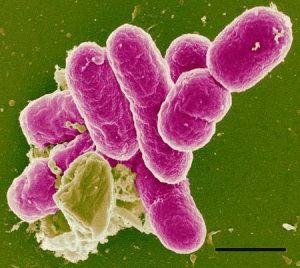
Shigella is a significant cause of bacterial gastroenteritis worldwide and can have serious health implications, depending on the population affected as well as the specific strain involved. Here are some key points: Read more at the link above.

Shigella is a significant cause of bacterial gastroenteritis worldwide and can have serious health implications, depending on the population affected as well as the specific strain involved. Here are some key points: Read more at the link above.
The St. Clair County Health Department (SCCHD) and Illinois Department of Public Health (IDPH) continue to investigate the outbreak of Shigellosis caused by Shigella bacteria, a disease that affects your digestive system. As of October 11, 2024, the SCCHD has identified 24 individuals with positive Shigella lab reports and an additional 44 individuals reporting illness consistent with Shigellosis after dining at the LongHorn Steakhouse located at 6115 North Illinois Street, in Fairview Heights, Illinois between the dates of September 20th and September 30th, 2024. Age range of those affected are from age 12 to 80 years of age. A total of nine (9) people have been hospitalized.
LongHorn Steakhouse officials voluntarily closed the Fairview Heights establishment on October 2, 2024 and have fully cooperated with SCCHD and IDPH on the investigation to determine the source of the infections. SCCHD has performed environmental assessments of the restaurant and provided corrective actions and guidance in consultation with IDPH on safe food handling practices, proper handwashing protocols and professional environmental cleaning services to prevent further spread of disease.
Shigella is a type of bacteria that causes an infectious disease called shigellosis, which is most known for causing diarrhea and other gastrointestinal symptoms. As a parent, it’s important to be informed about shigella to protect your family, especially young children, who are more susceptible. Here’s what you need to know: Read more at the link above.
Shigella outbreaks caused by restaurant employees are not extremely common, but they do occur and can be significant when they happen. Shigella is a highly infectious bacterium, and even a small amount can cause illness. Outbreaks linked to food handlers can happen through the following mechanisms read more at the link above.
According to press reports, the St. Clair County Health Department is investigating the cause of a cluster of gastrointestinal illnesses among customers who dined at the LongHorn Steakhouse in Fairview Heights.
The restaurant has voluntarily closed Wednesday and Thursday. Officials determined that some of the illnesses were caused by shigellosis, an infectious disease caused by a group of bacteria called shigella. As of Wednesday afternoon, the department had received 14 reports from people testing positive for shigella. Twelve had dined at the LongHorn Steakhouse at 6115 N. Illinois St. between Sept. 21 and 22. Six cases have required hospitalization, according to the health department.
Humboldt County Department of Health & Human Services Public and Environmental Health officials are advising community residents who attended a dinner at the Elks Lodge in Eureka on Wednesday, Aug. 28, that they may have been exposed to Shigella. Attendees experiencing gastrointestinal (GI) issues should contact their primary care provider, as well as take steps not to spread the highly contagious infection.
Instances of Shigella infection are on the rise in the county after at least six individuals have tested positive for the illness since August.
The first cluster of three cases was identified in late-August. The individuals all appear to have been infected sometime in mid-August and a connection between the individuals could not be confirmed. Based on this information, Public Health sent out a Provider Alert to monitor for potential cases in case there was ongoing spread in the community.
Humboldt County Health Officer Dr. Candy Stockton said within the last 24 hours, staff was notified about three new confirmed cases and five suspected cases associated with the Aug. 28 event.
Today, the U.S. Food and Drug Administration (FDA) released findings from a sampling assignment that collected and tested both domestic and imported fresh basil, cilantro, and parsley. The assignment sought to estimate the prevalence of Cyclospora cayetanensis, Salmonella spp., and Shiga toxin-producing Escherichia coli (STEC) in these herbs as part of the FDA’s ongoing effort to help proactively ensure food safety.
From September 2017 to September 2021, the FDA collected and tested a total of 1,383 samples of fresh basil, cilantro, and parsley. The agency detected Salmonella spp. in 17 out of 1,358 samples, detected C. cayetanensis in 18 out of 812 samples, and detected STEC in 1 out of 1,350 samples. The FDA worked closely with the firm to quickly remove the contaminated products from the market. The sampling assignment took longer than anticipated, due to a nine month pause during the COVID-19 pandemic.
Fresh herbs contaminated with Salmonella spp., C. cayetanensis, and STEC can present a significant public health risk. From FY2000 through FY2016, cilantro was potentially linked to at least three outbreaks in the U.S. And since 2017, the U.S. has experienced at least six additional outbreaks involving basil, cilantro, and parsley. More than 1,200 illnesses and 80 hospitalizations were tied to these outbreaks. Thus, the FDA determined that sampling may help the agency assess the prevalence of pathogens in the commodities and identify common factors among contaminated samples, with the goal of helping to protect consumers.
Given the findings of the assignment, the FDA encourages industry to ensure its compliance with the agency’s Produce Safety Rule, Preventive Controls for Human Food Rule, and FSMA Final Rule on Requirements for Additional Traceability Records for Certain Foods, as applicable. Importers of fresh herbs should ensure their compliance with the agency’s Foreign Supplier Verification Programs Rule.
This sampling assignment was the agency’s first largescale field activity to focus on fresh basil, cilantro, and parsley. This data will help the agency develop guidance and update program priorities, including future sampling assignments and the prioritization of surveillance inspections. The FDA will continue to sample these fresh herbs for pathogens as warranted to protect consumers.
A severe food poisoning outbreak linked to a kebab shop in Abergavenny, Wales, in the UK has left at least one victim still suffering from health complications more than a year later. John Inglesby, 76, is among over 50 customers who contracted shigella bacteria after eating at Marmaris Kebab House in February 2023. Food Poisoning News reported on this story last month.
Inglesby’s ordeal began when he visited the kebab shop shortly after returning to work following his wife’s death, according to The Sun. What should have been a comforting meal turned into a nightmare as he experienced severe symptoms including diarrhea, vomiting, abdominal pain, and sweats. A visit to the doctor confirmed he had contracted shigella, a highly contagious intestinal infection spread through contaminated food.
The owners of a kebab shop in Wales gave more than 50 of their customers food poisoning, with 11 of them being hospitalised, after serving contaminated food.
The outbreak happened in February 2023 when customers ate food contaminated with shigella bacteria at Abergavenny’s Marmaris Kebab House in Wales.
Shigella bacteria is extremely contagious and is spread when a person swallows a small amount of it from the stool of someone who is infected. For example, someone may contract shigella if they eat food prepared by someone who has it and didn’t wash their hands.

 FoodWorld