Category Archives: Salmonella

Canada – Malichita brand and Rudy brand Cantaloupes recalled due to Salmonella

CFIA

Malichita - Cantaloupe

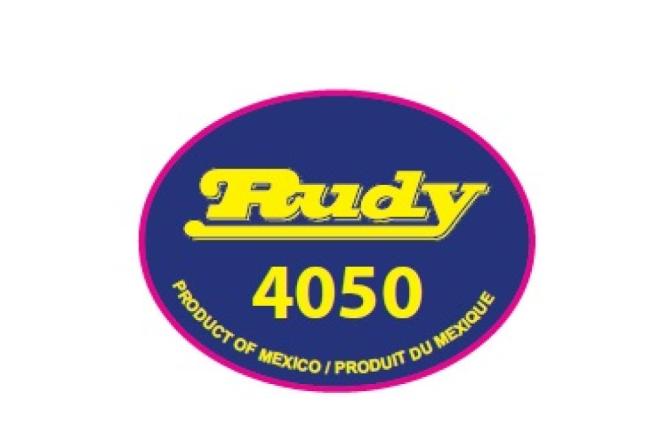
Rudy - Cantaloupes - Sticker

Product

Cantaloupes

Issue

Food – Microbial Contamination – Salmonella

What to do

Do not consume, use, sell, serve or distribute recalled products.

Distribution

Alberta

British Columbia

Manitoba

New Brunswick

Newfoundland and Labrador

Nova Scotia

Ontario

Prince Edward Island

Quebec

Possibly other provinces and territories

Similar recalls or alerts

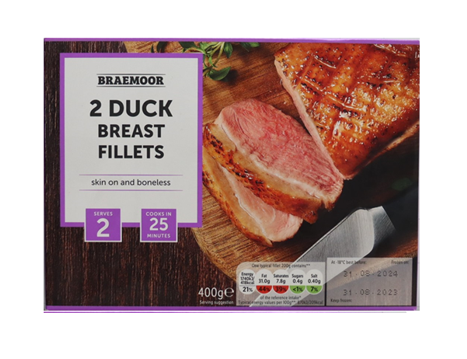
Ireland – Recall of a batch of Lidl Braemoor 2 Duck Breast Fillets due to the presence of Salmonella

FSAI

Frozen Duck Breast Fillets

Alert Summary
Category 1: For Action
Alert Notification: 2023.31
Product Identification: Braemoor 2 Duck Breast Fillets skin on and boneless (frozen); pack size: 400g
Batch Code Best before: 31/08/2024
Country Of Origin: Hungary
Message:
The above batch of Braemoor 2 Duck Breast Fillets skin on and boneless is being called due to the presence of Salmonella.

Recall notices will be displayed at point-of-sale in Lidl stores.

Nature Of Danger:
People infected with Salmonella typically develop symptoms between 12 and 36 hours after infection, but this can range between 6 and 72 hours. The most common symptom is diarrhoea, which can sometimes be bloody. Other symptoms may include fever, headache and abdominal cramps. The illness usually lasts 4 to 7 days. Diarrhoea can occasionally be severe enough to require hospital admission. The elderly, infants, and those with impaired immune systems are more likely to have a severe illness.

Action Required:

Manufacturers, wholesalers, distributors, caterers & retailers:
Retailers are requested to remove the implicated batch from sale and display recall notices at point-of-sale.

Consumers:
Consumers are advised not to eat the implicated batch.

Catalonia – Presence of Salmonella in frozen cooked necores carcasses from Ireland

ACSA

Salmonella necoras

USA -Pacific Trellis Fruit Recalls Malichita Brand Cantaloupes Due to Possible Health Risk – Salmonella

FDA

Company Announcement

Pacific Trellis Fruit, LLC dba Dulcinea is initiating a voluntary recall of 4,872 cases of Malichita brand whole cantaloupe. The voluntary recall is due to the FDAs ongoing investigation of an outbreak involving Malichita brand cantaloupe. The cantaloupes have the potential to be contaminated with SalmonellaSalmonella is an organism which can cause serious and sometimes fatal infections in young children, frail or elderly people, and others with weakened immune systems. Healthy people may experience fever, nausea, vomiting, diarrhea (which may be bloody), and abdominal pain. In rare cases the organism can get into the bloodstream and produce more severe illnesses such as arterial infections (i.e., infected aneurysms), endocarditis and arthritis.

The products were distributed between October 18th – 26th in California, Illinois, Oklahoma, Texas, and Wisconsin, and sold in various retail supermarkets. The whole cantaloupe is packed in corrugated cartons, the price look-up sticker is labeled “Malichita”.

Brand Item Description PLU Lot Code
Malichita Whole Cantaloupe 4050 21651
Malichita Whole Cantaloupe 4050 21699
Malichita Whole Cantaloupe 4050 21775
Malichita Whole Cantaloupe 4050 21787
Malichita Whole Cantaloupe 4050 21870

This is an ongoing outbreak, and several illnesses have been reported to the Centers for Disease Control and Prevention in the United States and Canada. To date, Pacific Trellis Fruit has not received any reports of illness.

Customers who have purchased these products are urged not to consume the products and should dispose of them. Consumers may contact Pacific Trellis Fruit for further information at 323-859-9600 Monday – Friday 9AM – 5PM PST. Consumers with concerns about an illness from consumption of this product should contact a health care provider.


Company Contact Information

Consumers:
Evangelina Kaudze
 (323) 859-9600

UK -Lidl recalls Braemoor Duck Breast Fillet products because of the presence of Salmonella

FSA

Lidl is recalling Braemoor 2 Duck Breast Fillets with Plum, Soy and Ginger Sauce Sachet and Braemoor 2 Duck Breast Fillets, Skin on and Boneless because salmonella has been found in the products.

Product details
Braemoor 2 Duck Breast Fillets with Plum, Soy and Ginger Sauce Sachet
Pack size 400g
Best before 21 August 2024
Braemoor 2 Duck Breast Fillets, Skin on and Boneless
Pack size 400g
Best before 31 August 2024
Risk statement
Salmonella has been found in the products listed above. Symptoms caused by salmonella usually include fever, diarrhoea and abdominal cramps.

Action taken by the company
Lidl is recalling the above products and has issued a point-of-sale to their customers. These notices explain to customers why the products are being recalled and tell them what to do if they have bought the products. Please see the attached notices.
PDF
ViewCustomer notice – Braemoor Duck Breast Filletsas pdf(Open in a new window) (225.18 KB)
Our advice to consumers
If you have bought any of the above products do not eat them. Instead, return them to the store where they were bought for a full refund. For further information contact Lidl Customer Care on 0203 966 5566 or email customer.care@lidl.co.uk. For Northern Ireland, please contact 0289 568 4888.

Research – Control of Salmonella in Chicken Meat by a Phage Cocktail in Combination with Propionic Acid and Modified Atmosphere Packaging

MDPI

Abstract

Salmonella contamination in poultry meat is an important food safety issue as this pathogen can lead to serious illness and economic losses worldwide. In poultry meat processing, a variety of strong bacteriostatic agents has been introduced for controlling Salmonella including bacteriophages (phages), organic acids, and modified atmosphere packaging (MAP). In our study, two selected phages including vB_SenM_P7 and vB_SenP_P32 were used in combination with propionic acid (PA) and MAP for controlling Salmonella of multiple serovars on chicken meat under storage at 4 °C. The two phages showed strong lytic activity against over 72 serovars of Salmonella tested (25.0 to 80.6%). Phages, vB_SenM_P7 and vB_SenP_P32 showed 40% and 60% survival rates, respectively, after the exposure to temperatures up to 70 °C. Both phages remained active, with nearly 100% survival at a wide range of pH (2 to 12) and 15% NaCl (w/v). The available chlorine up to 0.3% (v/v) led to a phage survival rate of 80–100%. A combination of Salmonella phage cocktail and 0.5% PA could reduce Salmonella counts in vitro by 4 log CFU/mL on day 3 whereas a phage cocktail and 0.25% PA showed a 4-log reduction on day 5 during storage at 4 °C. For the phage treatment alone, a 0.3-log reduction of Salmonella was observed on day 1 of storage at 4 °C. In the chicken meat model, treatment by a phage cocktail and PA at both concentrations in MAP conditions resulted in a complete reduction of Salmonella cells (4–5 log unit/g) on day 2 of storage whereas each single treatment under MAP conditions showed a complete cell reduction on day 4. For the meat sensory evaluation, chicken meat treated with a phage cocktail-PA (0.5%) in MAP condition showed the highest preference scores, suggesting highly acceptability and satisfactory. These findings suggest that a combined treatment using a phage cocktail and PA in MAP conditions effectively control Salmonella in poultry meat during storage at low temperature to improve the quality and safety of food.

Research – Salmonella Infection in Poultry: A Review on the Pathogen and Control Strategies

MDPI

Abstract

Salmonella is the leading cause of food-borne zoonotic disease worldwide. Non-typhoidal Salmonella serotypes are the primary etiological agents associated with salmonellosis in poultry. Contaminated poultry eggs and meat products are the major sources of human Salmonella infection. Horizontal and vertical transmission are the primary routes of infection in chickens. The principal virulence genes linked to Salmonella pathogenesis in poultry are located in Salmonella pathogenicity islands 1 and 2 (SPI-1 and SPI-2). Cell-mediated and humoral immune responses are involved in the defense against Salmonella invasion in poultry. Vaccination of chickens and supplementation of feed additives like prebiotics, probiotics, postbiotics, synbiotics, and bacteriophages are currently being used to mitigate the Salmonella load in poultry. Despite the existence of various control measures, there is still a need for a broad, safe, and well-defined strategy that can confer long-term protection from Salmonella in poultry flocks. This review examines the current knowledge on the etiology, transmission, cell wall structure, nomenclature, pathogenesis, immune response, and efficacy of preventative approaches to Salmonella.

Research – Sage Essential Oil as an Antimicrobial Agent against Salmonella enterica during Beef Sous Vide Storage

MDPI

Abstract

Sous-vide is a process comprising vacuum-sealing food, heating it to the desired temperature, and circulating it in a water bath in a sous vide machine. This cooking technique is increasingly common in homes and catering establishments due to its simplicity and affordability. However, manufacturers and chef’s recommendations for low-temperature and long-term sous-vide cooking in media raise food safety concerns, particularly when preparing beef tenderloin. In this study, Salmonella enterica was found to be inactivated by heat and sage essential oil (EO) in beef samples from musculus psoas major that had been sous vide processed. To determine whether heat treatment was likely to increase the sous vide efficiency, Senterica and sage EO were mixed. After being vacuum-packed and injected with S. enterica, the samples were cooked at 50–65 °C through the sous vide technique for the prescribed time. On days 1, 3, and 6, the amounts of S. enterica, total bacteria, and coliform bacteria were measured in the control and treated groups of beef processed sous vide. Mass spectrometry was used to identify bacterial isolates on different days. On each day that was measured, a higher number of all the microbiota was found in the samples exposed to 50 °C for 5 min. The most frequently isolated microorganisms from both groups of samples were Pseudomonas fragi (17%), Pseudomonas cedrina (8%), and Proteus vulgaris (8%); in the treated group, also S. enterica (21%), Pseudomonas fragi (13%), and Pseudomonas veronii (6%). After the heat treatment of samples at 65 °C for 20 min, the total count of bacteria and coliform bacteria was zero. It has been shown that adding sage essential oil (EO) in combination with sous vide processing technique leads to the stabilization and safety of beef tenderloin.

France – Provençal-style sliced ​​turkey – Salmonella

Gov France

Product category
Food
Product subcategory
Meats
Product brand name
None
Model names or references
nothing
Product identification
GTIN Batch Date
0209699000000 Made on 11/11/2023 Use-by date 11/15/2023
Packaging
bulk intended for sale in the traditional butcher’s department
Start/end date of marketing
From 11/11/2023 to 11/15/2023
Storage temperature
Product to keep in the refrigerator
Health mark
nothing
Further information
Internal traceability
Geographical sales area
48 boulevard des 2 moulins le Poiré sur Vie 85170
Distributors
PSV DISTRIBUTION

France – Chablis terrine – Salmonella

Gov France

Product category
Food
Product subcategory
Meats
Product brand name
Le Marsigny
Model names or references
Terrine with Chablis Le Marsigny
Product identification
GTIN Batch Date
26006598 312045 Use-by date 12/12/2023
26006598 311025 Use-by date 11/12/2023
26006598 306045 Use-by date 06/12/2023
26006598 307025 Use-by date 07/12/2023
26006598 310062 Use-by date 10/12/2023
Packaging
Individual tray 200G slice under modified atmosphere
Start/end date of marketing
Since 09/11/2023
Storage temperature
Product to keep in the refrigerator
Health mark
FR 21 231 005 CE
Geographical sales area
Whole France
Distributors
Aldi, Salaisons Dijonnaises factory store