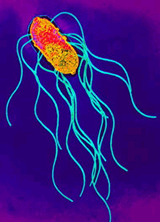
Category Archives: Salmonella

Research – Comparative persistence of Salmonella and Escherichia coli O157:H7 in loam or sandy loam soil amended with bovine or swine manure

Canadaion Journal of Microbiology

The fate of Salmonella and Escherichia coli O157:H7 in swine or dairy manure amended into sandy loam or loam soil under field conditions was studied. Soil was amended with manure inoculated with a Salmonella or E. coli O157:H7 cocktail, then transferred to 0.22 μm pore size membrane walled vials. The vials were then placed on the surface or at 15 cm depth in the test plots. Pathogen numbers, soil moisture, rainfall, and temperature were measured throughout the three trials (20–47 weeks duration) representing spring or fall application. Survival curves were characterized by having an initial rapid decline in pathogen numbers followed by a slower inactivation phase with an occasional increase in culturable cells. The CT99.9 values (time to reach a 3 log CFU reduction) varied from 2 to 120 days, with the most rapid decrease being observed on the surface of sandy loam soil. The persistence of pathogens is primarily governed by variations in moisture and temperature, although season of application along with manure and soil type also contribute. To generate more accurate predictive pathogen models, there is a need for laboratory-based trials to mirror the dynamic variation in temperature and soil moisture encountered within the natural environment.


USA – Outbreak of Multidrug-Resistant Salmonella Infections Linked to Raw Chicken Products

CDC

Latest Outbreak Information

Illustration of a megaphone.
  • Ninety-two people infected with the outbreak strain of Salmonella Infantis have been reported from 29 states.
    • Twenty-one people have been hospitalized, and no deaths have been reported.
  • Epidemiologic and laboratory evidence(https://www.cdc.gov/foodsafety/outbreaks/investigating-outbreaks/index.html) indicates that many types of raw chicken products from a variety of sources are contaminated with Salmonella Infantis and are making people sick.
    • In interviews, ill people report eating different types and brands of chicken products purchased from many different locations.
    • The outbreak strain has been identified in samples taken from raw chicken pet food, raw chicken products, and live chickens.
  • Antibiotic resistance testing conducted by CDC on Salmonella bacteria isolated from ill people shows that the outbreak strain is resistant to multiple antibiotics. Read the Advice to Clinicians(https://www.cdc.gov/salmonella/infantis-10-18/advice.html).
  • A single, common supplier of raw chicken products or of live chickens has not been identified.
  • The outbreak strain of Salmonella Infantis is present in live chickens and in many types of raw chicken products, indicating it might be widespread in the chicken industry. CDC and USDA-FSIS have shared this information with representatives from the chicken industry and asked about steps that they may be taking to reduce Salmonella contamination.

RASFF Alerts – Salmonella – Black Pepper – Turkey Breast – Sesame Seeds – Beef Trimmings – Quails – Chicken -Buttermilk Powder – Mussels

RASFF-Logo

RASFF – Salmonella (presence /25g) in black pepper from Brazil in the Netherlands

RASFF-Salmonella enterica ser. Typhimurium monophasic (1 ,4, [5], 12:i:-) (presence /25g) in frozen turkey breasts from Germany in Denmark

RASFF-Salmonella enterica ser. Marburg (presence /25g), Salmonella enterica ser. Ngili (presence /25g) and Salmonella enterica ser. Wilhelmsburg (presence /25g) in hulled sesame seeds from Sudan in Greece.

RASFF-Salmonella enterica ser. Alachua (presence /25g) and Salmonella enterica ser. Isangi (presence /25g) in hulled sesame seeds from Sudan in Greece

RASFF-Salmonella enterica ser. Dublin (present /25g) in chilled beef trimmings from Germany in Sweden

RASFF-Salmonella enterica ser. Typhimurium (presence /25g) in frozen quails from Italy in Italy

RASFF-Salmonella enterica ser. Typhimurium (present /25g) in chilled chicken carcasses from Belgium in Belgium

RASFF-Salmonella enterica ser. Kotu (presence /25g) and Salmonella enterica ser. Poona (presence /25g) in ground black pepper from Jordan in Malta

RASFF-Salmonella in buttermilk powder and skim whey protein blend from Ireland in Ireland

RASFF-Salmonella (presence /25g) in sesame seeds from Sudan in Greece

RASFF-Salmonella enterica ser. Typhimurium monophasic (1 ,4, [5], 12:i:-) (presence /25g) in chilled chicken fillets from Poland in France

RASFF-Salmonella (presence /25g) in live mussels (Mytilus galloprovincialis) from Greece in Italy

RASFF-Salmonella (presence /25g) in ground black pepper from Poland, with raw material from Brazil, via Germany in Poland

UK – FSA – Advice – Advice on cooking raw meat following rise in Salmonella Typhimurium

FSA

Advice on cooking raw meat following rise in Salmonella Typhimurium

This comes as we investigate a rise in cases of a particular strain of Salmonella Typhimurium which have been linked to lamb and mutton. We first saw an increase in cases of this particular type of salmonella in July 2017. A number of control measures were put into place which led to a significant decline in cases at the end of that year. A total of 118 cases were reported up until May 2018.

Since June 2018, a further 165 cases have been reported (up to 19 October), which led us to put control measures in place. This hasn’t led to the same decline in cases as in 2017 and so we are now reminding the public about how to cook and handle raw meat.

Colin Sullivan, Chief Operating Officer at the Food Standards Agency said: ‘We are advising care when preparing all meat, including lamb and mutton, to reduce the likelihood of becoming ill with Salmonella Typhimurium. Our advice is to purchase food as normal but to take care when storing, handling and cooking raw meat.

‘People should wash their hands after touching raw meat, avoid contaminating other food in the kitchen by storing it separately in the fridge and using different chopping boards and knives, and ensure that meat, particularly diced and minced lamb, is cooked properly.’

Nick Phin, Deputy Director, National Infection Service, PHE said: ‘The likely cause of the increased numbers of this specific strain of Salmonella Typhimurium is considered to be meat or cross-contamination with meat from affected sheep. People can be infected with Salmonella Typhimurium in a number of ways such as not cooking their meat properly, not washing hands thoroughly after handling raw meat, or through cross-contamination with other food, surfaces and utensils in the kitchen.’

RASFF Alerts – Animal Feed – Salmonella – Bran – Fish Meal – Rapeseed Meal

RASFF-Logo

RASFF-Salmonella enterica ser. Newport (present /25g) in bran from Sweden in Sweden

RASFF-Salmonella (in 1 out of 5 samples <10 CFU/g) in fish meal from Mauritania in Greece

RASFF-Salmonella enterica ser. Tennessee (Present /25g) in rapeseed meal from Germany in Finland

RASFF-Salmonella enterica ser. Tennessee (presence /25g) in rapeseed meal from Germany in Finland

RASFF-Salmonella enterica ser. Tennessee (present /25g) in rapeseed meal from Germany in Finland

RASFF–Salmonella (presence /25g) in fish meal from Mauritania in Greece


Research -Adoption of Neutralizing Buffered Peptone Water Coincides with Changes in Apparent Prevalence of Salmonella and Campylobacter of Broiler Rinse Samples

Journal of Food Protection

Buffered peptone water is the rinsate commonly used for chicken rinse sampling. A new formulation of buffered peptone water was developed to address concerns about the transfer of antimicrobials, used during poultry slaughter and processing, into the rinsate. This new formulation contains additives to neutralize the antimicrobials, and this neutralizing buffered peptone water replaced the original formulation for all chicken carcass and chicken part sampling programs run by the Food Safety and Inspection Service beginning in July 2016. Our goal was to determine whether the change in rinsate resulted in significant differences in the observed proportion of positive chicken rinse samples for both Salmonella and Campylobacter. This assessment compared sampling results for the 12-month periods before and after implementation. The proportion of carcass samples that tested positive for Salmonella increased from approximately 0.02 to almost 0.06. Concurrently, the proportion of chicken part samples that tested for Campylobacter decreased from 0.15 to 0.04. There were no significant differences associated with neutralizing buffered peptone water for the other two product-pathogen pairs. Further analysis of the effect of the new rinsate on corporations that operate multiple establishments demonstrated that changes in the percent positive rates differed across the corporations, with some corporations being unaffected, while others saw all of the establishments operated by the corporation move from passing to failing the performance standard and vice versa. The results validated earlier concerns that antimicrobial contamination of rinse samples was causing false-negative Salmonella testing results for chicken carcasses. The results also indicate that additional development work may still be required before the rinsate is sufficiently robust for its use in Campylobacter testing.

USA -Salmonella and Listeria monocytogenes cause Salad with Bacon and Corn to be Recalled

Food Poison Journal

Prime Deli Corporation, a Lewisville, Texas establishment, is recalling approximately 217 pounds of ready-to-eat salad with bacon products that contain a corn ingredient that may be contaminated with Salmonella and Listeria monocytogenes, the U.S. Department of Agriculture’s Food Safety and Inspection Service (FSIS) announced today.

The ready-to-eat salads with bacon were produced on October 13. The following products are subject to recall:

  • 11.2-oz. clear plastic clamshell packages containing “7-ELEVEN™ BISTRO SOUTHWEST STYLE SALAD WITH BACON” and best by date of “Tuesday 1016”.
  • 9.6-oz. clear plastic clamshell packages containing “7-ELEVEN™ BISTRO SOUTHWEST STYLE SALAD WITH BACON” and best by date of “Tuesday 1016”.

The products subject to recall bear establishment number “EST. 13553” inside the USDA mark of inspection. These items were shipped to retail locations in Texas.

The problem was discovered on October 14, 2018 when Prime Deli Corporation received notification that the corn used in the production of their Southwest Style Salad with Bacon was being recalled by their corn supplier due to Listeria monocytogenes and Salmonella concerns.

USA – Salmonella Outbreak Linked to Pot ‘O Gold Dairy Raw Milk in Bear Lake, PA

Food Poisoning Bulletin Raw Milk Food Safety KSW Foodworld

A Salmonella outbreak has been linked to raw milk from Pot ‘O Gold Dairy Specialties in Bear Lake, Warren County. That dairy is located in Pennsylvania. The Pennsylvania State Department of Agriculture released information about the outbreak late yesterday.

So far, nine cases of Salmonella food poisoning have been diagnosed and confirmed. The press release did not state the ages of the patients, whether or not anyone has been hospitalized, or the illness onset dates.

The raw whole milk was sold in glass half gallon containers with the Pot ‘O Gold label at 16 stores in these counties: Erie, Crawford, McKean, Warren, and Venango. The milk that was sold from September 10, 2018 to the present is part of this recall.

The milk was sold at these Crawford County facilities: Buck and Kathy in Titusville, D&J Bakery in Cambridge Springs, MIller’s Country Store in Cochranton.It was sold there locations in Erie County: Corry Lumber in Corry, Duran’s Farm Fresh Products in Waterford, Edinboro Market in Edinburg, Orton’s Fruit Market in North East, and Sander’s Market in Corry. The raw whole milk was sold at Circle K Feeds in Kane in McKean County, and at Farmer’s Daughter’s Country Market in Venango County. Finally, in Warren County, it was sold at Kondak’s Markert in Clarendon, Lottsville Miling in Lottsville, Scandia General Store in Scandia, Shell Service Center in Warren, Town and Country Store in Sugar Grove, and Youngsville Hardware in Youngsville.

Research – Occurrence of Salmonella in Ready-to-Eat Meat and Poultry Product Samples from U.S. Department of Agriculture–Regulated Producing Establishments. I. Results from the ALLRTE and RTE001 Random and Risk-Based Sampling Projects, from 2005 to 2012

Journal of Food Protection

Ready-to-eat (RTE) meat and poultry product samples collected from RTE-producing establishments for the ALLRTE (random) and RTE001 (risk-based) sampling projects of the Food Safety and Inspection Service (FSIS) were tested for both Salmonella and Listeria monocytogenes. The FSIS analyzed Salmonella results for RTE meat and poultry product samples collected for the two sampling projects from 2005 to 2012. Data for 24,385 ALLRTE samples collected from 3,023 establishments and 66,653 RTE001 samples collected from 2,784 establishments were evaluated for the percentages of Salmonella-positive samples, product types of positive samples, and Salmonella serotypes. There also were descriptive summaries with respect to establishment hazard analysis and critical control point (HACCP) size, production volumes, L. monocytogenes control alternatives, geographic location, and season or month of sample collection. Results showed low occurrences of Salmonella-positive samples from the ALLRTE and RTE001 sampling projects, with 14 positive samples (0.06%) for ALLRTE and 33 positive samples (0.05%) for RTE001. Percentages of establishments with at least one Salmonella-positive sample averaged 0.46% for ALLRTE and 1.11% for RTE001. Three product types—sausage products, pork barbecue, and head cheese—accounted for 62% of all positive samples. There were 27 distinct serotypes from 48 Salmonella isolates, with serotypes Infantis and Typhimurium being the most common (5 isolates each). All but one of the Salmonella-positive samples were obtained from establishments with HACCP sizes of small or very small. More than half of the positive samples were obtained from establishments using L. monocytogenes control alternative 3 (sanitation only, highest-risk category). Positive Salmonella samples were found in all geographic regions at all times of the year. Information obtained from these sampling projects is relevant to the prevention of foodborne Salmonella illnesses from RTE meat and poultry products.

Research – Prevalence and Concentration of Salmonella on Raw, Shelled Peanuts in the United States

Journal of Food Protection Salmonella kswfoodworld

Recalls and outbreaks associated with Salmonella contamination in peanut-containing products have been reported over the past several years. Very limited data existed on the prevalence and concentration of Salmonella on raw, shelled peanuts in the United States. An initial study was completed in 2012 to estimate the prevalence and concentration of Salmonella on Runner- and Virginia-type raw, shelled peanuts in the United States from the 2008 through 2011 crop years, which were proportionately sampled from each growing region based on 2007 production volume. That study was extended to include samples of Runner- and Virginia-type peanuts from 2013, 2014, and 2015 crop years proportionately sampled from each growing region on the basis of the 2008 through 2010 volumes. Of the total 2,506 raw, shelled peanut samples, 41 (1.63%) were positive for Salmonella by the VIDAS SLM assay. Salmonella serovars identified in this study included Agona, Anatum, Bardo, Braenderup, Cannstatt, Dessau, Gaminara, Litchfield, Hartford, Inverness, Mbandaka, Meleagridis, Muenchen, Newport, Pakistan, Rodepoort, Rubislaw, Tennessee, and Tornow. The concentration levels of Salmonella in positive samples, as determined by most probable number (MPN), ranged from <0.003 to 2.4 MPN/g. These data will be useful when designing and validating processes for the reduction or elimination of Salmonella in peanuts or peanut-containing products or both.