Category Archives: Research

UK/Germany/Netherlands – Increase in Cryptosporidium Notifications in 2012

ECDC

An increase in Cryptodsporidim notifications has been observed in the UK, Netherlands and Germany since August 2012 that is likely to be real and not due to surveillance or notifcations artifacts.

The available information from investigations in the United Kingdom, the Netherlands and Germany indicates that there is not a single, common source, but rather a combination of several causes. These may include climatic drivers, such as the increased rainfall in the summer of 2012 in these countries or a widely distributed commonly consumed product. There is however no evidence for it at this stage and further investigations are ongoing.

 The overall threat for the European Union/European Economic Area (EU/EEA) is considered to be low.

 EU/EEA Member States should be alert to an increase in cases as observed in the United Kingdom, the Netherlands and Germany, particularly in relation to immunocompromised and other at-risk groups as they may present with a more severe manifestation of cryptosporidiosis.


Australia – Tasmanian Scallops PSP and Unsafe Poultry

AFNSalmonella Campylobacter

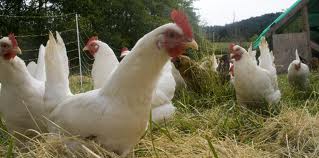
The Food Safety Information Council has released concerning national survey data this week that shows 60% of home cooks in Australia are putting themselves at additional risk of food poisoning from chicken.

The data showed that 60 per cent were at risk from washing whole poultry before it was cooked, which can spread bacteria around the kitchen. A further 16% of those surveyed incorrectly tasted chicken to see if it was cooked properly rather than using a safe meat thermometer.

The focus on cross-contamination of meats by the Food Safety Information Council (FSIC) comes as yesterday marked the start of Australian Food Safety Week. The FSIC week is specifically focusing on chicken and those most affected by food poisoning with the theme “vulnerable populations.”

Food Safety Information Council Chairman, Dr Michael Eyles said that chicken, as Australia’s most popular meat, was consumed by 8 in every ten home cooks.

”Home cooks are probably following what their parents or grandparents did in the past by washing poultry, not to mention probably patting it dry with a tea towel. Washing poultry splashes these bacteria around the kitchen cross contaminating sinks, taps, your hands, utensils, chopping boards and foods that aren’t going to be cooked like salads or desserts,” Dr Eyles said.

“Chicken is a healthy, convenient meal [but] other poultry is also becoming popular with just under half of those surveyed cooking whole turkey and 37% whole duck but these, too, are being washed before cooking, with 68% washing turkey and 74% duck,” he added.

According to a Food Standards Australia New Zealand survey referenced by the Food Safety Information Council, 84 per cent of raw chicken carcasses tested positive to the food poisoning bacteria Campylobacter and 22 per cent to Salmonella.

News Com Au

SCALLOPS from the east coast of Tasmania have joined the area’s mussels in being banned following a toxic algal bloom.

A scallop fishery in the White Rock area has been closed after the same paralytic shellfish toxin (PST) found in Spring Bay Seafood’s mussels was detected in samples taken on November 2.

“PST levels in tested scallops are currently either close to or slightly over the permitted level, but it’s possible the level will increase before it goes back down again,” a health department warning said.

The affected shellfish don’t look or taste different and the toxin is not destroyed by cooking or freezing, but there have been no reports of illness.

Research – Mobile Phones and Bugs

HACCPEUROPA

Our generation uses mobile phones and smartphones for work, college, making phone calls, reminders, sending messages, emails, music, photographs, games and the internet. Over 80% of the world citizens are in a possession of mobile phones.

With how attached people have become to their mobile phones or smartphones, it’s not a surprise that what we touch ends up on the screen. It’s what exactly ends up there that’s the real shocker.

Researchers from UW-Milwaukee’s Microbiology department tested heavily used mobile phones.

The tests found traces of E. coli and other coliforms. Coliforms are a bacteria indicating fecal contamination. They found between about 2,700 and 4,200 units of coliform bacteria on 8 phones.

Research Information on Food Preservation Download

Food Navigator Download

Preservatives are essential additives to prevent microbial spoilage and ensure food & beverage safety. This application note provides practical guidelines for the use of traditional preservatives as well as an introduction to clean label innovations.

Armenia – Clostridium botulinum Incidents 2012

NEWSAM 

Total of 11 cases of botulism were registered during the 11 months of this year with 17 poisoned people out of which two ended fatally, Sanitary-Epidemiological Service at the Armenian Healthcare Ministry informed Armenian News Am. Two of the poisoned persons were children. The poisoning cases were registered in Yerevan, as well as in Shirak, Ararat, Armavir, Lori and Tavush regions of Armenia. As a matter of fact, 19 cases of botulism were registered last year with 30 poisoned people, 3 of whom died.

To avoid the poisoning, the Ministry warns again not to prepare canned food at home, or at least to boil it for up to 30 minutes before consumption.

Belgian – Research – Grape Seed Extract Reduces the Infectivity of Norovirus

HACCPEUROPA – Full Article

Norovirus causes more than half of all food-borne illnesses in the United States, and is the second greatest source of reported food borne illness outbreaks in the European Union. A norovirus is a small virus that contains RNA and is surrounded by a protein coating. By sequencing the RNA, scientists have discovered that there are many different types of norovirus. Originally, strains were named based on the city in which they were first identified. Thus, one common strain used to be called Norwalk virus. Based on genetic typing, we now know that there are at least 25 different strains of norovirus that affect humans.

A recent study found that grape seed extract could reduce the infectivity of Norovirus surrogates.

Researchers from Ghent University, Belgium have shown that grape seed extract does so by denaturing the capsid protein, which is the coat of the virus, thereby disabling the virus.

In the study, the researchers observed that under treatment with grape seed extract, at low doses, the spherically-shaped murine (mouse) norovirus-1 coat proteins clumped, and showed obvious deformation and inflation. At higher doses, the researchers saw no coat proteins, only protein debris. This provides evidence that grape seed extract could effectively damage the norovirus capsid protein, which could reduce viral binding ability and infectivity accordingly.

CDC Letter – UK Shellfish Market and Viruses – Hepatitis E

CDC (full letter)

Bivalve mollusks (shellfish), such as mussels and oysters, are filter feeders; they concentrate microorganisms of human and animal origin (up to 100×) from the surrounding environment. Several recent reports have linked the incidence of human infection with hepatitis E virus (HEV) to consumption of undercooked pork, game products, and shellfish (1,2). Infectious HEV has been found in swine manure and wastewater (3); therefore, application of manure to land and subsequent runoff could contaminate coastal water, leading to contamination of shellfish and, subsequently, possible human infection. Because they are filter feeders, bivalve mollusks are biologically relevant sentinels and can indicate potential pathogens that are contaminating the environment. It is essential to ensure that this sustainable resource of coastal areas, where mussels and oysters are farmed or collected wild, is not subjected to environmental contamination that could lead to public health risks.

Risk management for bivalve mollusks, aimed at control of fecal pollution, relies heavily on the use of Escherichia coli as an indicator of fecal (sewage) contamination and is enacted under European food regulations (Regulation 854/2004, www.cefas.co.uk/media/455777/extract_reg_no_854_2004.pdf Adobe PDF file). However, although these regulations probably reduce the number of infections, especially bacterial infections, they are not viewed as adequately controlling the risk for viral infections. Specific risks are posed by the robustness of viruses in the environment and the different behavior of viruses within bivalve mollusks compared with behavior within bacterial fecal indicators.

Research – E.coli Outbreak 2011 in Germany

HACCPEUROPA – Full Article

A novel strain of E. coli bacteria caused a serious outbreak of foodborne illness focused in Germany in 2011. In all, 3,950 people were affected and 53 died, including 51 in Germany. Authorities have identified vegetable sprouts as the source.

The recent outbreaks of food poisoning due to contamination of vegetables by dangerous strains of E. coli raised the concerns and questions about E. coli transmission strategies.

E. coli is most at home in the warm, moist, nutrient-rich environment found in the gastrointestinal tract of warm-blooded animals. But to disperse from one host to another these bacteria must get out into the world. There is evidence that some E. coli can survive for several weeks outside the host, and even grow in water or soil. But it is on plant matter that E. coli colonisation has become a concern, as although most types of E. coli are harmless, the presence of pathogenic strains on fruit and vegetables presents a food safety risk.

E. coli strains have adopted slightly different transmission strategies, with some being better adapted to live on plants than others.

USA – USDA Food Safety Severe Storm and Hurricane

PDF Guide

Hurricane Sandy has prompted the USDA to issue a Food Safety PDF which can be found at the link above.

The African Union to Establish a Food Safety Authority.

HACCPEUROPA

The African Union announced an establishment of a food safety authority as well as a Rapid Alert System for Food and Feed (RASFF) yesterday in Kigali. The Minister of Trade and Industry, Francois Kanimba, said the continent ought to have the food safety body based on the European model but tailor-made for Africa. The decision has been made following huge losses in international trade due to food safety issues. The minister pointed out that African food exports are at times destroyed or refused entry into developed markets thus leading to losses.

It is believed that the establishment of the authority would boost trade competence and avert food-borne diseases. It would uplift the living standards of Africans, especially those in rural areas.